If you have ever killed a ZZ plant, I can almost guarantee it was not because you forgot about it. It was because you cared too much. I learned this the hard way with my own plant a few years back watered it every week like I did my other houseplants, and within two months the stems near the soil had gone soft and the whole thing smelled off.
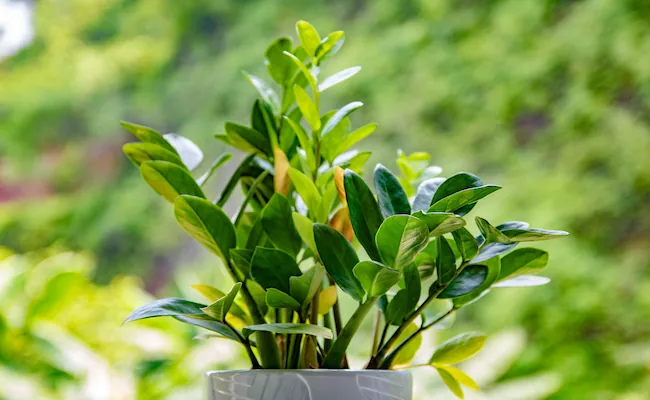
That’s when I actually sat down and figured out how often to water a ZZ plant properly, and honestly, the answer surprised me.
The short version: this plant wants a lot less water than your instincts tell you to give it. Let’s get into exactly how much, how often, and how to tell when it’s actually time.
Quick Answer Before We Go Deeper :
If you just need a number to work with right now:
- Spring and summer: every 2–3 weeks
- Fall: every 3–4 weeks
- Winter: once a month, sometimes less
But here is the thing a calendar is only a starting point. Your plant’s light, the pot it’s sitting in, and the room’s temperature all change that number quite a bit. I will walk you through each of those.
Why ZZ Plants Barely Need Water :
The ZZ plant (Zamioculcas zamiifolia, if you want to sound fancy at the nursery) comes from parts of eastern Africa where rain shows up rarely and unpredictably. To deal with that, it grew thick underground stems called Rhizomes that store water almost like a camel stores fat. When the soil around it dries out, the plant just pulls from those reserves instead of panicking.
This is exactly why watering on a fixed schedule causes trouble. You are topping up a tank that’s already full. When the roots sit in wet soil for too long with nowhere for the extra moisture to go, they lose access to oxygen and start rotting from below. By the time you notice yellow leaves, the damage below the soil line has usually been building for weeks already.
In my experience, almost every ZZ plant “problem” people write to me about traces back to watering too often, not too little.
How Often to Water a ZZ Plant Based on Light
This is the part most care guides skip entirely, and it’s honestly the biggest factor. A ZZ plant sitting in a bright room grows faster and drinks through its water reserves quicker. One tucked in a dim hallway barely grows at all, so it barely needs a drink.
| Light Level | How Often to Water | Why |
|---|---|---|
| Bright, indirect light | Every 2–3 weeks | Faster growth pulls moisture out of the soil sooner |
| Medium light | Every 3–4 weeks | Growth slows down, so does water use |
| Low light (office corner, north window) | Every 5–8 weeks | Almost no active growth means very little water gets used |
If your plant lives somewhere genuinely dim, don’t be surprised if it goes six or seven weeks between waterings without any trouble. That’s normal, not neglect.
Watering Through the Seasons :
Light is not the only thing shifting — the seasons change how fast that soil dries out too.
1. Spring:
As days get longer, your plant starts waking up. This is when I usually begin checking the soil weekly again after a lazy winter, and most of my plants settle into watering every 2–3 weeks.
2. Summer:
Peak growing season. Soil dries out fastest here, especially near a sunny window or in a warm room. Every 2–3 weeks is typical, sometimes a little sooner if your home runs hot.
3. Fall:
Growth starts slowing down around September in most climates. I usually stretch my checks to every 3–4 weeks during this stretch.
4. Winter:
The plant goes into something close to hibernation. Once a month, or even less, is completely fine. This is the season where people get into trouble the fastest, because they keep watering out of habit while the plant barely needs anything at all. If your home has forced-air heating, the top of the soil can look bone dry within a day while the roots underneath are still holding plenty of moisture from weeks back. Always check deeper than the surface before you decide to water.
Other Things That Change Your Watering Schedule :
1. Pot Material :
- Terracotta: porous, breathes, dries fastest. My personal favorite for this plant.
- Plastic: holds moisture much longer, so stretch your interval.
- Glazed ceramic: barely breathes at all, dries slowest, highest risk if you are not careful.
- Self-watering pots: honestly, I did avoid these for a ZZ plant. They keep soil constantly moist, which is the opposite of what this plant wants.
2. Pot Size :
A pot that’s much bigger than the root ball holds far more soil than the roots can actually pull from, and that extra soil stays wet for a long time. Stick to something only an inch or two wider than the current root mass.
3. Soil Mix :
Regular potting soil holds too much water for this plant’s taste. Mixing in 20–30% perlite, or just using a cactus/succulent blend straight from the bag, makes a real difference.
4. Temperature and Airflow :
Warm rooms speed up drying. A cool room (below 65°F) means your plant is barely using any water at all, so extend your interval regardless of what season it technically is.
5. Humidity :
Dry, air-conditioned rooms dry the surface fast but not necessarily the roots. Humid rooms slow drying down throughout the whole pot, which quietly raises your overwatering risk if you are not checking depth.
How to Actually Check If It Needs Water :
Skip the calendar and use one of these instead:
- The finger test: push a finger two to three inches into the soil. Any dampness at all, wait a few more days.
- The dowel test: push a wooden skewer to the bottom of the pot, pull it out. Clean and dry means the root zone has dried out too.
- The lift test: pick the pot up. A dry pot feels noticeably lighter than one you just watered a week ago.
- A cheap moisture meter: worth the ten or fifteen dollars, especially in winter when surface soil lies about how dry things really are underneath.
I’ll be honest, I lean on the lift test the most now because it takes about two seconds and I have done it enough times to know what “dry” feels like in my own pots.
How to Water a ZZ Plant the Right Way :
1. Top Watering :
- Pour slowly and evenly around the base, not just in one spot.
- Keep going until water runs out of the drainage holes.
- Let it sit and drain for a few minutes.
- Empty the saucer. Standing water at the bottom is one of the fastest ways to rot the rhizomes.
2. Bottom Watering :
Set the pot in a shallow tray of water for twenty to thirty minutes, let it wick up moisture, then pull it out and let it drain fully before putting it back in place. This works especially well if the soil has gone so dry that water just runs straight through it from the top instead of soaking in.
3. A Note on Water Quality :
If you notice white, crusty buildup on top of the soil over time, that is usually mineral deposits from hard tap water. This is genuinely common in a lot of homes, and switching to filtered water or letting tap water sit out overnight before using it can clear the problem up. It’s not urgent, but it’s worth knowing about if you have been wondering why the soil surface looks chalky.
Overwatered or Underwatered? Here’s How to Tell :
Don’t start with the leaves. Check in this order instead:
Step 1 — Feel the soil. Wet and heavy, or dry and light?
Step 2 — Check the base of the stems near the soil. Firm is good. Soft or mushy with a sour smell means trouble has already started.
Step 3 — Now look at the leaves.
| Sign | Overwatering | Underwatering |
|---|---|---|
| Leaf color | Yellow, soft | Stays green but dull, yellows late |
| Leaf texture | Limp, mushy | Wrinkled, crisp |
| Stems | Soft, dark patches | Shriveled but still firm |
| Soil | Wet a week or more later | Dry, pulling away from pot edges |
| Smell | Sour or musty | None |
Fixing an Overwatered ZZ Plant :
Caught early, this is easy to reverse. Stop watering entirely, move the plant somewhere brighter so the soil dries faster, and do not add water again until it’s dry at least two inches deep.
If it’s gone further and the stems near the base feel mushy or the soil smells off, you are likely dealing with early root rot. In that case:
- Take the plant out of its pot and gently knock off the old soil.
- Trim away anything soft, brown, or mushy with clean scissors, cutting back to firm tissue.
- Let it air-dry for a couple of hours before repotting.
- Repot into fresh, fast-draining mix and wait about a week before watering again.
Reviving an Underwatered ZZ Plant :
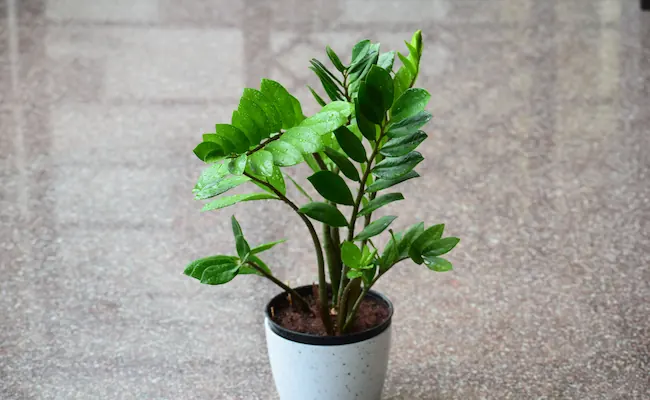
This one’s much less stressful to fix. Give it a slow, deep soak until water runs from the bottom, or bottom water it for twenty to thirty minutes if the soil has gotten so dry it’s repelling water. Most plants bounce back within a day or two, and honestly, this is the mistake I did rather you make than the other one.
How It Compares to Other Houseplants :
| Plant | Typical Watering | Overwatering Risk |
|---|---|---|
| ZZ Plant | Every 2–4 weeks | Very high if watered too often |
| Snake Plant | Every 2–6 weeks | Very high |
| Pothos | Every 1–2 weeks | Medium |
| Peace Lily | Weekly | Low |
If you have kept a snake plant alive without much drama, a ZZ plant will feel familiar. Coming from pothos, though, the adjustment takes a little getting used to you will water far less than instinct tells you to.
Final Thought :
If there is one thing I did want you to walk away with, it’s this: this plant’s toughness comes from the same rhizomes that rot when kept too wet. Respect that one balance, check the soil instead of the clock, and you will likely keep the same ZZ plant alive for years without much fuss at all. In my experience, the plants that struggle are almost never the ones that got forgotten for a few extra weeks they are the ones that got a little too much love.