Three gardening sites, three different answers for the same pepper plant. One says 12 inches, another says 18, and one swears by 24. So who is right?
Honestly, all of them can be, and it depends on a few things nobody explains well. Once you see how pepper plant spacing in raised bed gardens really works, picking the right number takes about two minutes.
Pepper Plant Spacing in Raised Bed: The Short Answer
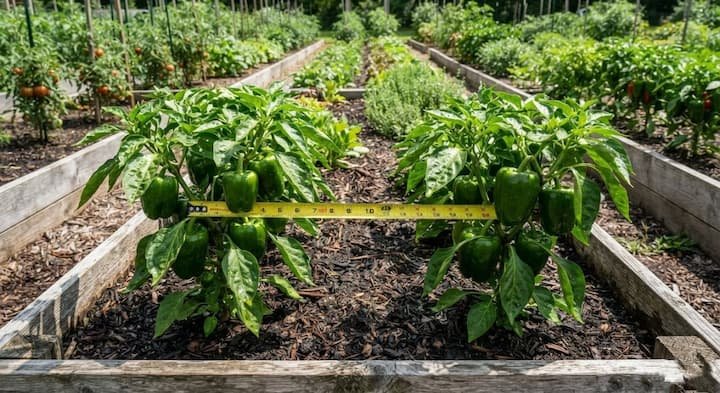
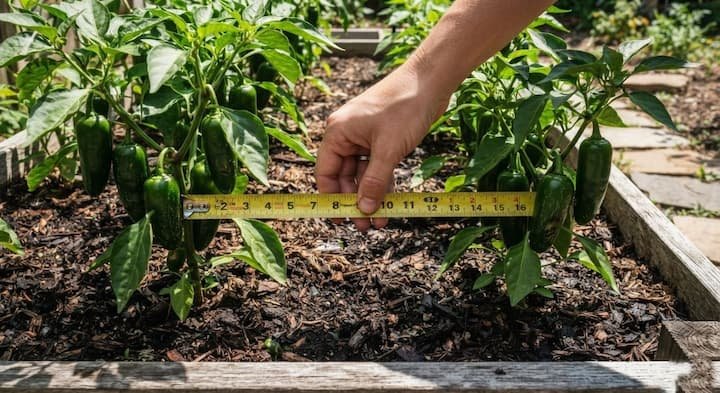
For most backyard beds, plant peppers 15 to 18 inches apart, measured stem to stem, with 30 to 36 inches between rows. That range suits bells, jalapenos, and most sweet types.
Nudge it up or down based on the plant:
- Compact peppers: 12 to 15 inches.
- Bells, jalapenos, and sweet types: 15 to 18 inches.
- Poblanos, pimentos, habaneros, and scotch bonnets: 18 to 24 inches.
- Super hots like ghost peppers: 24 inches or more.
Why Spacing Matters, Whether Too Close or Too Wide
Peppers compete for light, water, and nutrients, and crowded plants stay wet longer after rain, which invites fungus. They also want about 8 hours of sun, so shaded lower leaves mean less fruit and weaker color. Underground, roots fight for the same space too.
Planting too wide has a price as well:
- Bare soil lets weeds move in.
- You waste bed space you could be planting.
- Soil temperature swings more around lonely roots.
A little company helps, though. Neighbor plants shade the fruit, which prevents sunscald, and they hold each other up in strong wind.
Why Every Guide Gives a Different Number
When people ask how far apart to plant peppers, the answers split because the plants are not all the same size. Space for the mature canopy, not the small nursery pot, since a seedling in May can double its width by July.
Fruit weight adds to it, since loaded branches on bells and poblanos pull outward, and bell roots spread wider than the slim plant suggests. Species matter too.
Capsicum annuum types like bells and jalapenos are fairly slim, Capsicum chinense types like habaneros grow wide and bushy, and Capsicum baccatum plants shoot up tall.
On top of that, these shift the number a few inches either way:
- Climate and season length.
- Raised bed versus open row planting.
- Support method, whether stakes, cages, or nothing.
- The variety itself.
How Far Apart to Plant Peppers by Type
| Pepper type | Height | Width | In-bed spacing | Row spacing | Pot size |
|---|---|---|---|---|---|
| Compact or ornamental | Under 18 inches | 10-14 inches | 12-14 inches | 24 inches | 3-5 gallons |
| Bell | 3-4 feet | 15-18 inches | 15-18 inches | 30-36 inches | 5+ gallons |
| Jalapeno, serrano | 1-3 feet | 15-24 inches | 15-18 inches | 24-36 inches | 5 gallons |
| Cayenne, shishito | 2-3 feet | 15-24 inches | 12-18 inches | 24-36 inches | 3-5 gallons |
| Poblano, pimento | 2-3 feet | 18-24 inches | 18-24 inches | 30-36 inches | 5-10 gallons |
| Habanero, scotch bonnet | 3-5 feet | 24-48 inches | 18-24 inches | 30-36 inches | 5-10 gallons |
| Super hots | 4+ feet | 30-48 inches | 24-36 inches | 36 inches | 10-15 gallons |
I like giving jalapenos the full 18 inches, because the plant ends up much bigger than the fruit suggests. Cayenne and shishito can sit tighter since their leaves are small and the plant stays open.
Mild types like bells and banana peppers forgive small mistakes, while hot and super hot types punish crowding because they grow bigger and need longer seasons.
How Many Pepper Plants Fit in Your Raised Bed
Start with a quick check: bed area in square feet divided by spacing squared in feet (2.25 at 18 inches, 1.56 at 15 inches) shows the most plants that fit on paper. For a realistic count, take the bed length in inches, subtract 12 so stems sit 6 inches off the walls, divide by your spacing, round down, and add 1.
Use one row for beds under 3 feet wide and two staggered rows for 3 to 4 feet.
| Bed size | At 18 inches | At 15 inches | Layout |
|---|---|---|---|
| 2 x 8 feet | 5 | 6 | One row |
| 3 x 6 feet | 8 | 10 | Two staggered rows |
| 4 x 4 feet | 6 | 6 | Two staggered rows |
| 4 x 8 feet | 10 | 12 | Two staggered rows |
| 4 x 12 feet | 16 | 18 | Two staggered rows |
- Leave edge room for drip lines and mulch, since plants lean outward once fruit sets.
- Dense layouts squeeze 12 plants into a 4×8, but 8 to 10 feels better once mulch and picking space count.
- Square-foot gardeners give compact plants 1 square foot and big types 2 to 4 square feet.
- Hand test: if you can still reach between two fruit-loaded plants with one hand, the spacing works.
- Planning companions, mulch, or low cages? Add a few extra inches.
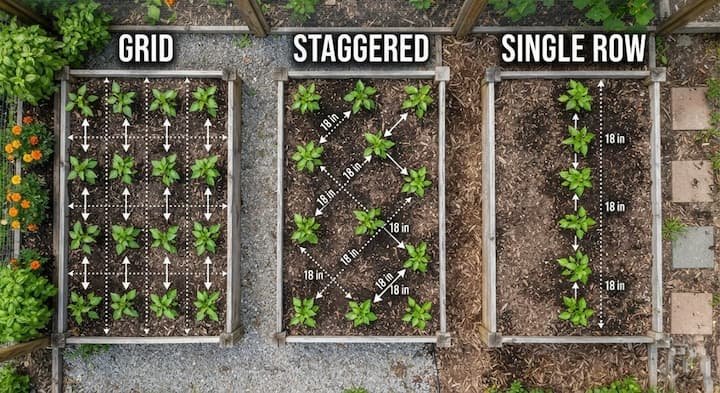
The Best Raised Bed Pepper Layout Patterns
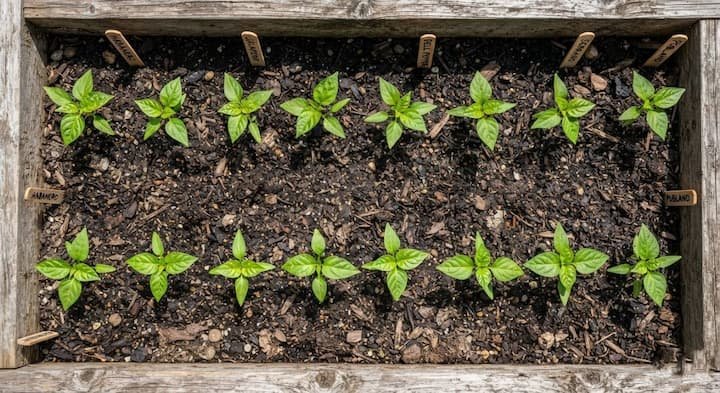
Three setups work for most beds:
- Grid: even squares, simple to measure, good for 4-foot beds.
- Staggered: every other plant shifted over, giving more air at the same plant count.
- Single or double row: single for beds under 3 feet wide, double for wider ones.
My go-to in a 4-foot bed is staggered rows, because you can reach the center from either side without stepping in, which matters even more if you are a community gardener sharing a plot. Put the biggest plants on the north side and smaller ones in front so nobody gets shaded.
Keep tomato cages off the south side of your peppers too, since a tall cage can block afternoon sun.
When Tighter Spacing Works and When It Backfires
Twelve inches is a special case, not a default. It works when all of these line up:
- Compact variety that stays under 18 inches.
- Short season, under 150 frost-free days.
- Full sun and leaves that dry fast.
- Picking every 3 to 5 days.
Under those conditions, pepper spacing in raised beds can run tighter because plants shade the soil and hold moisture. I think 15 inches is the safest tight number for most people.
Some gardeners train bells up a stake and prune the side shoots to plant 12 to 14 inches apart, though those plants can top 6 feet. Others pack peppers 9 to 10 inches apart, alternate tall and short types, and hold them up with a short Florida weave instead of cages.
In a humid summer or a season past 200 frost-free days, go wider. For a low-maintenance bed, wider spacing beats tight spacing plus extra support. Pick ripe fruit often, since leaving it on the plant slows new flowers.
Adjust Spacing for Climate and USDA Zones
Your climate changes the math. In short seasons (under 150 frost-free days), plants set closer together shade each other’s soil and can match the yield of wider plantings, so spacing for peppers in raised beds can shrink to about 15 inches.
In long, hot seasons (over 200 days) the same plants grow into sprawling shrubs and keep producing well into fall, so they need the wide end of the range.
Humidity and wind matter too: wet air calls for more airflow and pruned lower leaves, since dense plantings invite bacterial leaf spot and root rot, while windy yards favor slightly closer plants with stakes.
Heat adds to it: in hot, humid, or storm-prone weather, tight spacing costs more, because leaves stay wet longer and branches rub together under fruit weight.
- USDA Zones 4 and 5: short seasons, so 15 to 18 inches works, and slow-maturing varieties need the best spacing to ripen fruit.
- USDA Zones 6 and 7: stay at 18 inches for most types.
- USDA Zones 8, 9 and 10 (Gulf Coast, Southwest, Florida): go 18 to 24 inches, more for super hots.
Spacing in Pots and Grow Bags vs Raised Beds
Containers set the size limit for you. Plan on 3 to 5 gallons for compact types, 5 to 10 gallons for mid-size peppers like bells, and 10 to 15 gallons for habaneros and other super hots.
Two plants can share a pot only if it holds at least 10 gallons and both stay under 18 inches tall. For the full routine, see growing in pots and jalapenos in pots.
- Pots: one plant each, they dry out faster, so plan on watering 2 to 3 times a week in summer.
- Raised beds: shared roots and steadier moisture, and rich soil can support about 16 inches for plants that want 18.
Support, Pruning and Companions Inside Your Spacing
Pepper branches snap easily once they are loaded with fruit, so set the support at planting time:
- Stakes: simplest option for one plant.
- Cages: better for heavy bells.
- Twine line: works well for tight rows, retied every couple of weeks.
Trimming the lowest leaves with clean pruners lifts the canopy off the soil and lets air move through, and light pruning pepper plants stops branches from rubbing neighbors.
For pepper companion plants, basil, chives, and marigolds are great, but in my experience they only work in corners and along borders. Planted at every stem, they choke airflow and make watering messy.
Alyssum, zinnias, cosmos, scallions, garlic, and rosemary also fit, and tomatoes can sit nearby if you rotate them each year.
Watering, Mulch and Soil for Your Spacing
Closely planted peppers share roots, so they drink faster, while wider spacing grows deeper roots and slightly better drought tolerance.
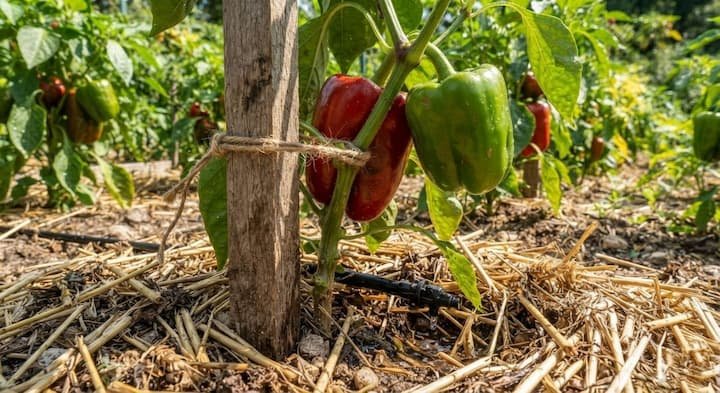
A drip line keeps the leaves dry, and I like one emitter at each stem, because a single line down the middle of the bed misses the edge plants. Watering pepper plants covers the full routine.
- Water: 1 to 2 inches a week during growth, delivered at the soil.
- Mulch: 2 to 3 inches of straw, kept a few inches off the stems.
- Soil: 2 to 4 inches of compost worked in, a pH between 6.0 and 6.8, and soil warmed to 60°F before planting.
- Feed: liquid organic fertilizer every 2 to 3 weeks.
- Clay soil: mix in perlite or coarse sand, since soggy roots kill peppers fast.
Go light on nitrogen at planting time, since too much makes leaves instead of fruit. A balanced pepper fertilizer and a loose pepper soil mix both get their own guides.
Step-by-Step: Planting Peppers at the Right Spacing
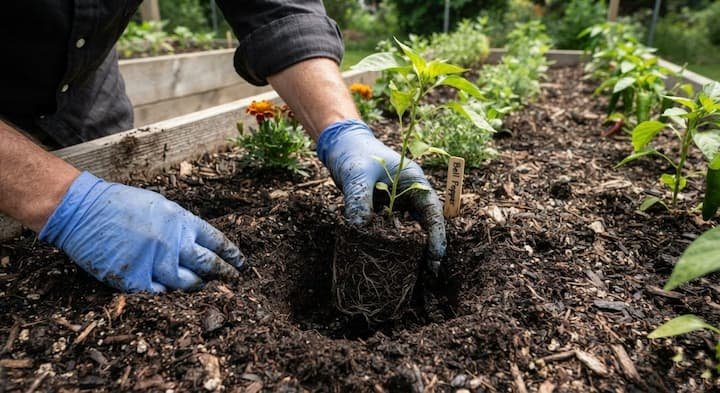
- Mark every spot with a tape measure and a marker stake, keeping stems about 6 inches off the bed wall, then set each support stake or cage now, before the roots spread.
- Dig each hole about 1.5 times the width of the pot.
- Set the plant at the same depth it grew in its pot, or slightly deeper if the stem is leggy.
- Water right away to settle the soil around the roots.
- Add 2 to 3 inches of mulch, keeping it off the stem.
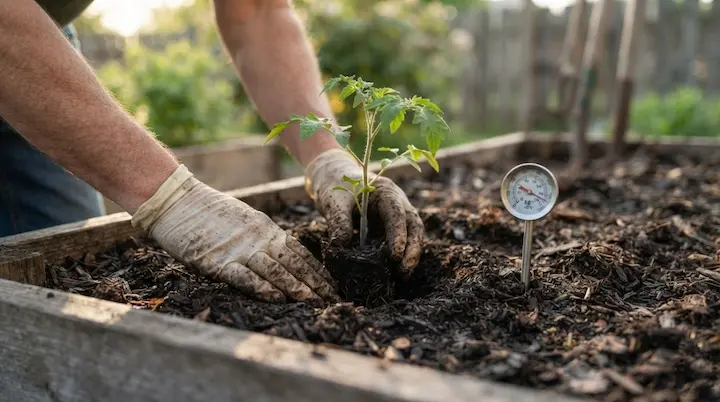
Transplant after the last frost, once the soil hits at least 60°F at 4 inches deep. A cloudy day helps cut transplant shock. Harden seedlings off for about a week first, starting with a few hours outside and adding more time each day, and check when to plant for timing in your zone.
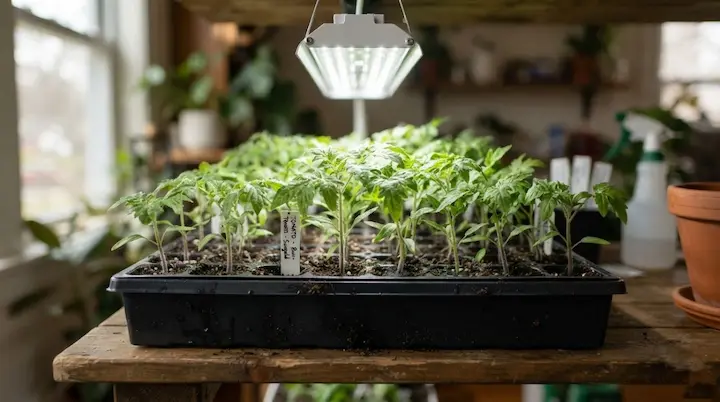
If you started your own plants about 8 weeks before the last frost, growing from seed covers that part.
- Use a soil thermometer instead of the calendar, since 65°F at 4 inches deep is ideal.
- Keep a row cover handy for a cold night after transplanting.
- Peel off peat or fiber pots, since they break down slowly.
- Water seedlings well before you move them.
- Sketch the layout on paper first, since moving established plants stresses the roots.
Signs Your Peppers Are Too Close or Too Far, and How to Fix It
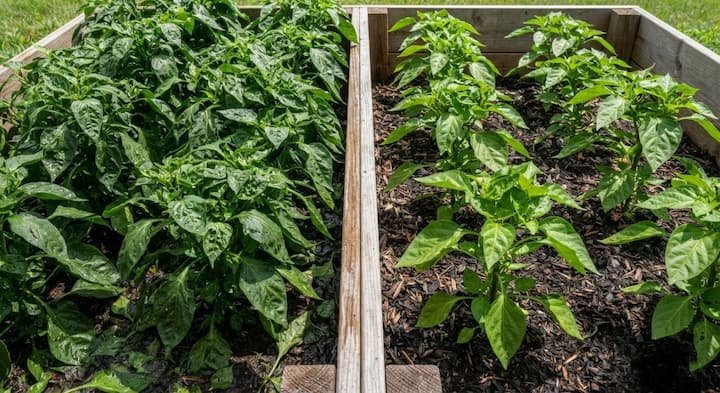
Plants tell you early if the spacing is off. Too close looks like this:
- Leggy stems and leaves that stay wet.
- Mildew spots and branches rubbing together.
- Fewer flowers as the season goes on.
Too far looks like this:
- Weeds filling the gaps.
- Bare, hot soil.
- Fruit with sunscald patches.
Curling leaves can show up in crowded beds, but heat, water swings, and pests cause them too, so read up on curling pepper leaves before you blame spacing alone.
To fix a crowded bed mid-season:
- Thin a few inner side shoots to open the canopy.
- Add a stake or cage before branches lean.
- Pull companions off the stems.
- Move a plant only in its first few weeks, on a cloudy day.
- Rework your raised bed pepper layout next season using the counts above.
Common Mistakes and Myths
- Copying field row numbers instead of adjusting pepper spacing in raised beds to a 4-foot width.
- Chasing plant count, even though spacing for peppers in raised beds pays off over a full season, not at planting.
- Skipping support because peppers look sturdy early on.
- Misreading the seed packet, since its spacing number means stem to stem.
- Assuming compact hot peppers can be packed endlessly tight, though light still has to reach the lower leaves.
One myth I want to clear up: planting sweet peppers next to hot ones will not turn this season’s sweet peppers hot, according to University of Maryland Extension. Crossing would show up in the seeds you save, not in this season’s fruit.
Final Thoughts:
Start with 18 inches for bells and most sweet types, shave it to 15 inches for compact plants, and give super hots 24 inches or more. Pepper plant spacing in raised bed gardens comes down to mature size, climate, and how easily you can reach the middle of the bed. Mark your spots with a tape measure before you dig, and the rest of the season gets easier.