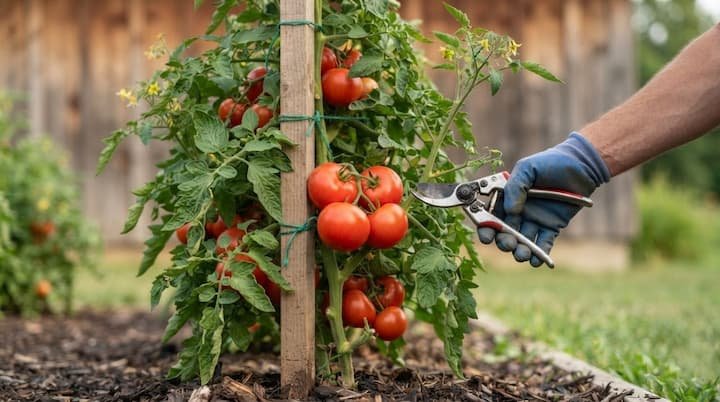
Most backyard gardeners toss a perfectly good pepper plant in the garbage every Fall, and it’s the one habit costing them the biggest early harvest of the next year.
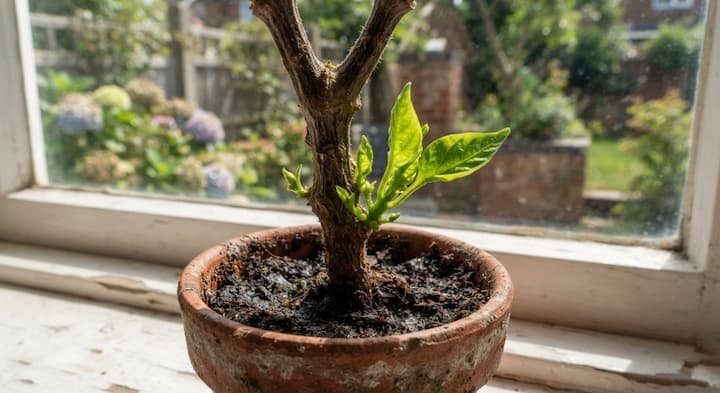
Learning how to overwinter pepper plants takes about an hour per plant and a cool spot indoors. Done right, that same plant wakes up in spring with a full root system and fruits weeks before any seedling.
Are Pepper Plants Perennials?
Yes, just not where most people garden. Peppers come from tropical climates with no winter, so one plant can live for years there. In USDA Zones 4, 5, 6, 7 and 8, winter kills them, which is why they get treated as annuals.
Cold hurts way before a frost shows up. University of Minnesota Extension says night temperatures below 60°F can weaken pepper growth, and it tells gardeners to wait until nights stay above 50°F before planting outside. Around 30°F the plant starts dying back, and a hard freeze below 32°F finishes it.
Why Bother With Overwintering Pepper Plants and When It Isn’t Worth It
I think the head start is the biggest reason. A plant with an established root system pushes out new branches fast in spring, so it flowers and fruits weeks ahead of seed-started plants.
The upsides:
- Earlier harvest and usually a bigger yield.
- No money spent on seeds or transplants.
- A rare or great-tasting plant stays in your yard, with the same genetics.
The downsides:
- Bugs can ride in on the plant.
- It takes space and about an hour per plant.
- Some plants won’t make it, and that’s normal.
Seed-grown plants start pest-free but need weeks indoors before they catch up. With a couple of cheap plants and no room indoors, starting from seed is easier.
Which Pepper Types Overwinter Best
Hot peppers are the easy win. Cayenne, jalapeños and similar types handle it better than bells and other sweet peppers, so if this is your first time to overwinter peppers, start with hot ones.
Species matters too. Capsicum annuum types (jalapeño, cayenne, most bells) take cold better, while Capsicum chinense types (habanero, ghost pepper, Carolina Reaper) sulk when it gets chilly.
Pick plants carefully:
- Choose the healthiest, most productive ones.
- Skip weak, diseased or worn-out plants.
- Rare varieties are worth the extra effort.
When to Start the Overwintering Process
Start before the cold, not after. Dig in when nights head toward 50°F, and no later than 45°F, since leaves drop and growth stalls around then.
Leave plants out as long as you can so the last peppers ripen, and time your picking jalapenos before the move. If a few fruits are still green, haul pots into a garage or shed on cold nights to buy a couple more weeks.
Rough windows, so check your local first frost date:
| USDA Zones | Move plants in around | Best fit |
|---|---|---|
| 3 and 4 | Mid to late September | Pots or bare-root indoors |
| 5 and 6 | Late September to mid October | Garage, basement or mudroom |
| 7 and 8 | Mid October to early November | Garage, or cold frame on mild nights |
| 9, 10 and 11 | Only when nights near 50°F | Outdoors with covers, or a greenhouse |
Choose Your Overwintering Method
The best method for overwintering pepper plants depends on your space and how cold your garage gets.
| Method | Temperature | Space | Best for |
|---|---|---|---|
| Dormant in a pot | 55-60°F | Medium | Garage, basement, mudroom |
| Bare-root in a box | 45-55°F | Small | Tight spaces, many plants |
| Houseplant with grow light | Room temp | Medium | Fresh peppers all winter |
| Cuttings | Room temp | Small | Saving a variety |
| Greenhouse or cold frame | Above 32°F | Large | USDA Zones 9, 10 and 11 |
| Grow tent with heater | 55-65°F | Medium | Cold zones, no warm spot |
Bare-root and cuttings cost the least, and a few cuttings make the safest backup for a dormant plant.
Where to put them:
- Garage or basement: the best spot for overwintering peppers indoors, if it stays above 32°F.
- Mudroom or unheated sunroom: works at 55-60°F.
- Heated room: plants stay awake and grow thin leaves without extra light.
- Community gardener with no garage: a warm windowsill works, just trim new growth.
- Windowless shed: only with a grow light, and only if it never freezes.
If your only space freezes, use a grow tent with a small thermostat-controlled heater.
Supplies You’ll Need
- Clean pot with drainage holes (0.5 to 3 gallons).
- Fresh, unopened potting mix, like a pepper soil mix.
- Clean pruners, a hose with a spray nozzle and a 3 gallon bucket.
- Insecticidal soap or neem oil.
- Small grow light with a timer and a min/max thermometer.
Before You Bring Them In: Pest Prevention Checklist
Pests are the number one reason this goes sideways. A single aphid can become a full infestation fast, and nothing indoors eats them. In my experience, a few days of prevention beats weeks of fighting bugs in January.
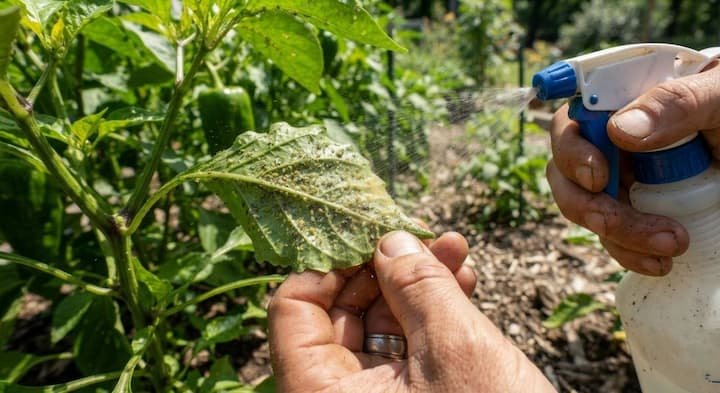
- Check leaf undersides, stems and soil for aphids, whiteflies, spider mites, scale and eggs.
- Spray neem oil or insecticidal soap a few days before the move, following the label.
- Use fresh bagged potting mix (never garden soil or compost, they carry pests) and a pot scrubbed with warm soapy water.
- Quarantine plants for 1 to 2 weeks, away from houseplants and your seed-starting area, and check them every day or two.
Method 1: How to Overwinter Pepper Plants in Pots
This dormant-pot method is the best place to start.
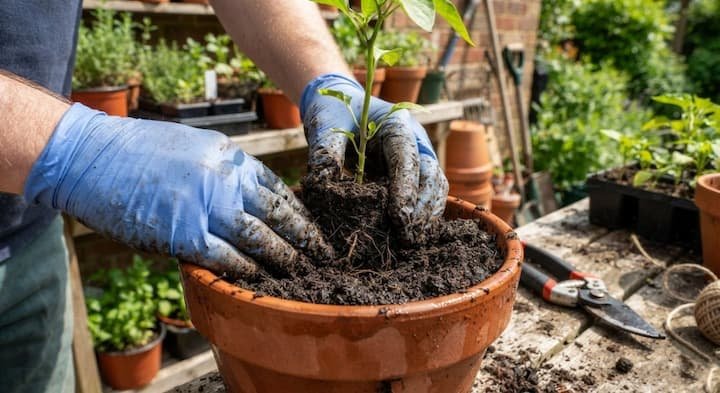
- Mix fresh potting soil with water until it feels like a wrung-out sponge, then add 1 to 2 inches to a clean pot.
- Pick every pepper and cut the plant back with clean pruners, leaving several nodes (or a 3 to 4 inch stump).
- Strip every leaf. Aphids hide in them, and new leaves regrow from the nodes.
- Dig up the root ball (for in-ground plants, spade around the base about the size of your pot), loosen the soil and hose the roots until almost bare. Old soil breeds fungus gnats.
- Trim the roots to fit the pot. Optional: dunk them a few minutes in 3 gallons of water with insecticidal soap.
- Set the plant in the center of the pot, stem about 1 inch below the rim, fill with damp mix and press lightly.
- Water gently and move it to window light at 55-65°F.
I like a 1 gallon pot because more plants fit on a shelf, though a bigger pot keeps more roots.
If the plant is already potted and pest-free, you can skip the root rinse: move it to a spot around 55°F, cut back on water, and prune it to a few Y-shaped branches once the leaves die off. Pinch off new growth every week or two, just like you’d prune your peppers in summer, with clean cuts above a node.
Method 2: Bare-Root Overwintering for Tight Spaces
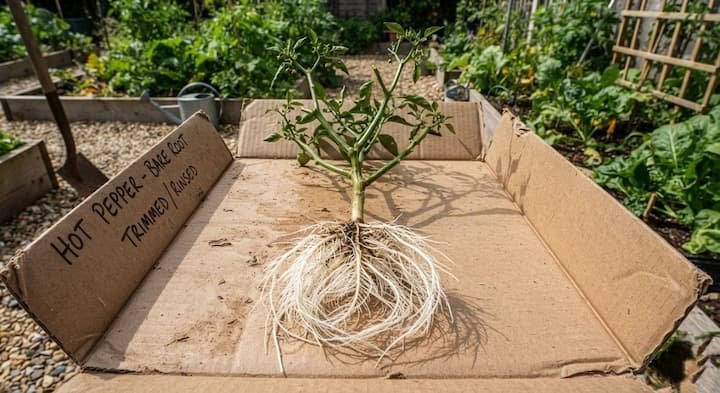
Bare-root saves the most space because you store trimmed plants without soil in a box or bag. Dig the plant up, rinse the roots clean, and cut branches back just above the nodes.
Store it at 45-55°F with a little light so it goes dormant. Some growers hang leafless plants in a 50-55°F closet and mist the roots weekly.
- Keep roots barely damp, never wet, and check them every couple of weeks.
- Leave some airflow, so skip the airtight bag.
- Trash any plant with slimy or moldy roots.
Six to eight weeks before planting outside, pot the plant up in fresh soil and treat it like a seedling.
Method 3: Houseplant and Grow Light Setup
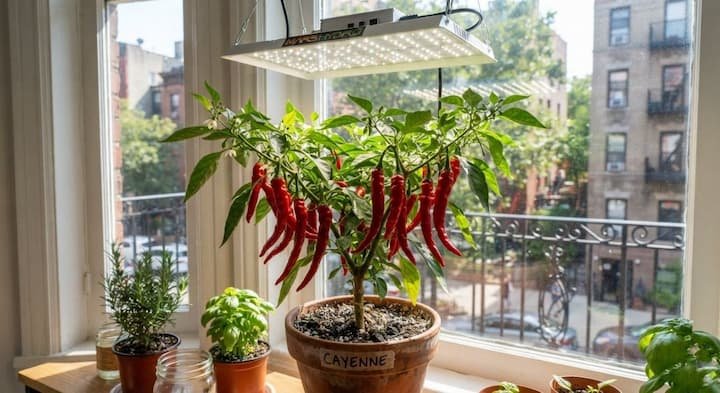
If you’d rather keep harvesting, overwintering peppers indoors as a houseplant is an option, and small varieties suit it best.
Repot into a drained pot that fits all the roots, trim anything damaged, and give it your sunniest window plus a grow light, since a pepper wants about 12 hours of daylight.
Water about 1 inch a week and feed with liquid organic fertilizer. Pest risk goes up because the plant stays active. I think most people do better with a dormant plant, unless they really want fresh cayennes in January. A warm room works if you only want it alive, just expect thin growth.
Method 4: Taking Pepper Cuttings
Cuttings save a variety without hauling a whole plant indoors, and each one is an exact copy of the parent.
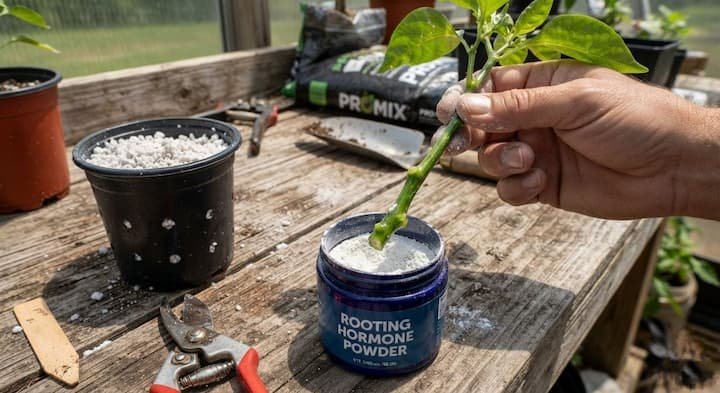
- Snip the top 4 to 5 inches off a stout, healthy stem and remove any peppers or flowers.
- Dip the cut end in rooting hormone.
- Plant it in moist coarse sand, vermiculite, or a peat and perlite mix.
- Keep it moist in bright, indirect light.
- After 3 to 4 weeks, once roots form, move it to its own pot of potting soil.
Leaving Peppers Outside in USDA Zones 9, 10 and 11
Outdoors only works where winter stays mild. When nights dip below 50°F you’ll see cold stress, so get protection ready early. Potted plants can go into a greenhouse, and in-ground plants need cover right where they stand.
- Floating row cover or burlap on cold nights.
- Thick mulch around the base helps keep pepper plants alive in winter by protecting roots from cold shock.
- Hot-water buckets nearby act as a heat sink.
- A cold frame with a string of lights for extra warmth.
- Well-draining soil, since soggy winter soil causes root rot.
In the Deep South, a light trim plus covers on frost nights is usually enough, and chinense types handle cold worst. If freezing nights stack up, move pots into the garage.
How to Keep Pepper Plants Alive in Winter: Water, Light and Temperature
Cool temps favor dormancy, so aim for 55-60°F. Warmer, and the plant keeps pushing leaves. Colder, and it gets stressed, so never let it hit 32°F.
- Water: only when the soil is dry, usually every 2 to 4 weeks. Your summer watering schedule will drown a dormant plant.
- Light: a window is plenty, or 2 to 3 hours a day under a small grow light on a timer, set 12 to 24 inches above the plant.
- Food: none, since fresh potting mix is enough.
- Trimming: new leaves can show up in 1 to 2 weeks, so trim every couple of weeks.
- Bare-root plants: mist the roots lightly instead of watering.
Overwatering looks like soggy soil, yellow leaves and mushy stems. Underwatering looks like shriveled stems and soil pulling away from the pot.
How to Tell If Your Plant Is Still Alive
A dormant pepper can look dead for weeks, so don’t toss it yet. I scratch a tiny strip of skin off the stem with my thumbnail. Green color underneath means it’s alive. Brown means that section is dead, so work down until you hit green.
A fully brown stem with mushy roots belongs in the trash. Otherwise keep the soil lightly moist and wait.
Common Problems and How to Fix Them
- Aphids or whiteflies: separate the plant, spray neem oil or insecticidal soap every 2 to 3 days, and prune off the new leaves they feed on.
- Spider mites: fine webbing and speckled leaves. Spray with soap and rinse the leaves.
- Fungus gnats: let the soil dry out, then drench the soil only with about 1 part 3% hydrogen peroxide to 4 parts water.
- Mold or root rot: too wet with poor airflow. Water less and add airflow.
- Brown or black stems: run the scratch test, then wait. Cutting back too early can cause this, so wait for leaves to drop first.
- Shriveling, dropping or curling pepper leaves: some leaf drop is normal after the move, but check water, temperature and pests if it continues.
Disease carries over too, so use fresh soil, a clean pot and good airflow.
Spring Wake-Up Schedule
About 4 to 8 weeks before your last frost date, start waking the plants up.
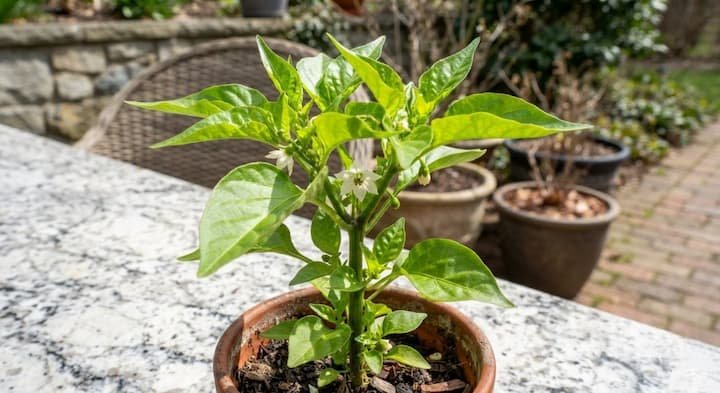
- Move them to a warmer, brighter spot, raise the temperature gradually and water normally, and expect new growth in about a week.
- Pot bare-root plants into fresh soil like seedlings, and cut off any dead wood while leaving the green stems.
- Up-pot a few weeks before going outside, with 3 to 10 gallons working for most varieties.
Check when to plant for your zone. Wait for new leaves before feeding, then go light. A balanced pepper fertilizer at half strength is plenty at first, since fresh roots burn easily.
Hardening Off and Moving Peppers Outside
Wait until nights stay above 50°F and days reach the mid 60s°F.
Then ease them out:
- Days 1 to 2: 1 to 2 hours in shade.
- Days 3 to 5: 3 to 4 hours of morning sun.
- Days 6 to 10: build up to a full day, and overnight if it stays above 55°F.
Bring them in any night below 55°F. Soft new leaves can scorch, so shade them from harsh afternoon sun at first. Before planting in a bed, check raised bed spacing.
What to Expect in Year Two and How Long Peppers Last
Expect earlier flowers and a bushier plant than any seedling gives you. Prune lightly in spring to shape it, and size up the pot as it fills out, like potted bell peppers.
Some readers report plants alive for 8 or more years. When stems get woody and yields drop for a couple of seasons, start fresh and keep a few cuttings as backup.
Mistakes to Avoid
- Waiting until a frost has already hit.
- Trying to overwinter peppers that were sick, weak or infested.
- Reusing old soil or an unwashed pot.
- Overwatering or fertilizing a dormant plant, or keeping it too warm so it grows leggy.
- Skipping the quarantine or going outside too early in spring.
Final Thoughts:
Now you know how to overwinter pepper plants without betting the whole plant on one cold night. Pick healthy ones, wash the bugs out before they come inside, keep them cool and mostly dry, and wake them up slowly in spring. My advice is to start with one or two hot pepper plants this Fall and go bigger next year. Worst case, you lose a plant. Best case, you’re picking peppers first on the block.