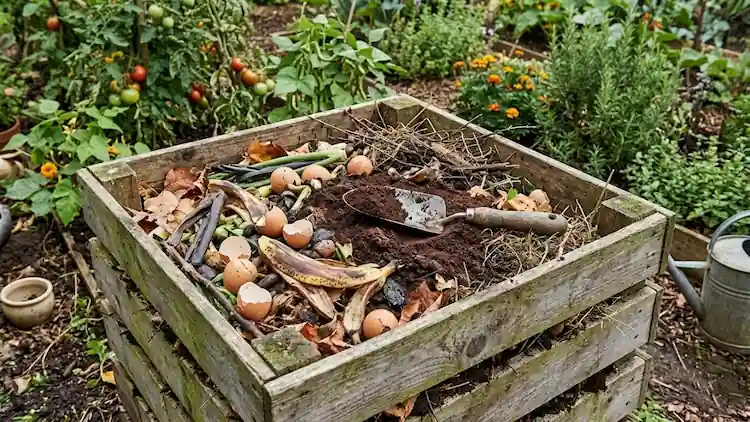
Every time I almost tossed a banana peel in the trash instead of the bin outside, I pictured it sitting in a landfill for years, sealed from air, slowly turning into methane instead of soil. That single thought changed how I look at kitchen waste.
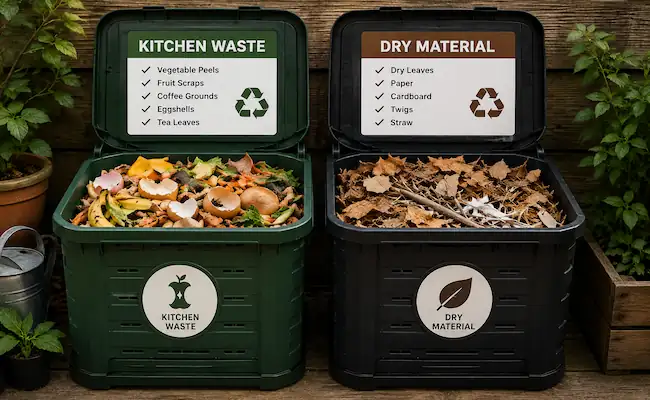
If you have ever stood over your bin wondering exactly what to put in your garden compost bin, you are not alone it’s one of the most common questions gardeners ask, whether you’re composting on a balcony in London or in a backyard pile in Texas. This guide walks through what belongs in your bin, what stays out, and how to strike the balance that turns scraps into something your soil will thank you for.
Greens and Browns: The Foundation of Every Compost Bin
Before you start throwing things in, it helps to understand the two basic groups every pile needs. “Greens” are nitrogen-rich materials fresh, wet, and often food-based.
“Browns” are carbon-rich materials dry, woody, and slower to break down. Getting greens and browns for composting roughly right is the single biggest factor in whether your bin turns into rich soil or a smelly, soggy mess.
Most home composters find that a mix leaning toward more browns than greens (roughly one part greens to two or three parts browns by volume) keeps things smelling earthy rather than rotten. I generally add a handful of dry leaves or shredded cardboard every time I add a bucket of kitchen scraps, and it makes a noticeable difference within a week.
| Category | Examples | What it adds |
|---|---|---|
| Greens (nitrogen) | Fruit and vegetable scraps, coffee grounds, fresh grass clippings, plant trimmings | Fuels microbial activity, speeds decomposition |
| Browns (carbon) | Dry leaves, straw, shredded cardboard, small twigs | Adds structure, absorbs moisture, prevents odor |
Kitchen Scraps That Are Safe for Backyard Composting
Your kitchen is honestly the easiest place to start backyard composting, since most of what goes in the bin here comes from food you’d otherwise throw away anyway. In my own kitchen, I keep a small covered container on the counter just for this.
- Fruit and vegetable peels: apple cores, carrot tops, potato skins, and citrus rinds (chop citrus first so it breaks down faster).
- Coffee grounds and paper filters: nitrogen-rich and mildly acidic, great in moderate amounts.
- Tea bags: only if they’re made from natural, plastic-free fibers.
- Crushed eggshells: they add calcium and break down faster when crushed small.
- Stale bread, rice, and pasta: add these in small quantities and bury them so they don’t attract flies.
- Nutshells: (except walnut, which can be toxic to some plants) slow to break down but harmless.
Yard and Garden Waste You Can Add
Whatever grows in your yard usually belongs back in your soil eventually, and this is where a lot of “brown” bulk comes from.
- Dry leaves: shred them with a mower first if you can; whole leaves mat down and block airflow.
- Grass clippings: add in thin layers, since a thick wet mat of clippings can turn slimy and smelly fast.
- Small twigs and branches: chop anything thicker than a pencil into pieces under 6 inches long.
- Spent flowers and plant trimmings: as long as the plants weren’t diseased or treated with strong pesticides.
- Weeds: fine to add, but only if your pile reliably heats up enough to kill the seeds (more on that below).
Paper, Cardboard and Natural Fibers as Compost Bin Materials
Paper products are some of the most overlooked compost bin materials, yet they’re often sitting right in your recycling bin already.
- Plain cardboard: tear off tape and glossy labels first, then shred or tear it into smaller pieces.
- Newspaper: scrunch it up loosely rather than adding flat sheets that clump together.
- Toilet and paper towel tubes: flatten and tear them so they break down evenly.
- Natural fiber scraps: cotton, wool, or hair, cut into small pieces, decompose well and add a surprising amount of nitrogen.
What Can You Compost? Materials to Leave Out
Knowing what can you compost matters just as much as knowing what to avoid, because a single wrong item can throw off an otherwise healthy pile.
- Meat, fish, bones and dairy: these attract rodents and create foul odors as they rot.
- Cooking oils and greasy food: they coat other materials and slow down decomposition.
- Diseased or pest-infested plants: home piles rarely get hot enough to reliably kill plant pathogens.
- Coal ash and charcoal briquettes: they often contain additives that are harmful to soil life.
- Glossy or coated paper: magazine pages and coated flyers can contain heavy metals in the ink and clay coating.
- Treated or painted wood: chemicals in the treatment can leach straight into your finished compost.
- “Compostable” plastics and bioplastic packaging: most of these need industrial composting facilities running at sustained high heat; in a backyard bin, they simply won’t fully break down.
Grey-Zone Items That Need a Little Extra Care
A few materials aren’t a flat “no,” but they do need thoughtful handling before they go in.
- Citrus, onion and garlic scraps: fine in moderation, since large amounts can temporarily slow down the beneficial microbes and worms in your pile.
- Wood ash: a small sprinkle can help raise a pile that’s gone too acidic, but too much will push the pH higher than most plants like.
- Pet waste: dog and cat waste is one of the trickiest grey-zone materials, since it can carry pathogens that survive a standard backyard pile. If you have a dog, it’s worth handling this separately with a dedicated method rather than mixing it into your regular bin I’ve laid out a full, safe approach to composting dog poop for an ornamental lawn that keeps pathogens well away from anything edible.
- Large branches or woody stems: they’re fine, but only once chopped down; whole branches can take years to break down on their own.
Balancing What to Put in Your Garden Compost Bin: The Ideal Ratio
Once you know the individual materials, the real skill is balancing them by volume, not just by type. According to the Cornell Waste Management Institute, the ideal starting carbon-to-nitrogen ratio for active composting sits around 30:1 meaning roughly 30 parts brown material for every part of green material by weight.
Too much nitrogen and the pile turns slimy and smells of ammonia; too much carbon and it barely heats up at all. Alongside this, most home piles do best at a pH between 6.0 and 7.5, since that’s the comfortable range for the bacteria and worms doing the actual breakdown work a handful of crushed eggshells or a light dusting of wood ash can nudge an overly acidic pile back toward balance.
You don’t need a lab scale to get close to this. A simple rule I follow: every time you add a layer of wet kitchen scraps, cover it with two to three times as much dry brown material. Over a few weeks, that habit alone solves most of the common odor and pest complaints people run into.
Layering it right from the start also saves you trouble later:
- Start with a coarse brown base: small twigs or straw at the bottom improve drainage and let air move up through the pile.
- Add a layer of greens: kitchen scraps or fresh grass clippings go next.
- Keep alternating: brown, green, brown, green, roughly matching the 30:1 balance above.
- Finish with a brown layer on top: this cuts down on fruit flies and keeps smells from drifting.
This balance matters beyond just your own garden, too. The U.S. EPA reports that wasted food is responsible for 58% of landfill methane emissions in the United States alone a powerful reminder that every scrap diverted into a working compost bin is doing real climate work, not just tidying up the kitchen.
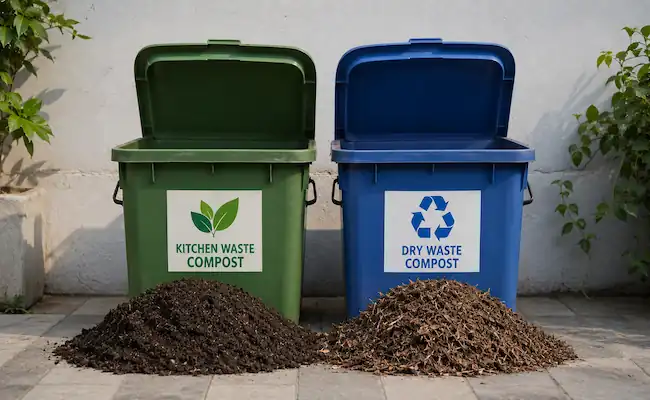
Turning, Moisture and Temperature: Keeping the Pile Alive
A compost pile is a living system, and it needs a bit of ongoing attention to keep the right conditions for decomposition.
- Turn it every 2 to 4 weeks: with a garden fork or shovel to reintroduce oxygen and speed things along.
- Keep it as damp as a wrung-out sponge: if it’s dry and crumbly, add water; if it’s soggy, mix in more dry browns.
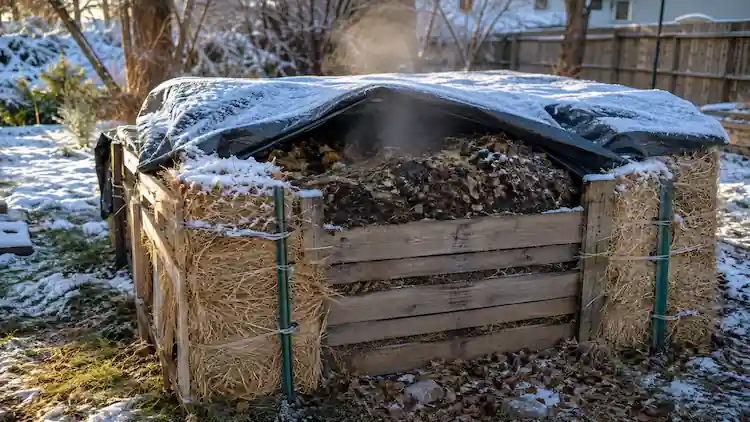
- Watch the core temperature: an actively decomposing pile typically runs between about 54ºC (130ºF) and 60ºC (140ºF) at its center, hot enough to break down weed seeds and most plant pathogens.
- Size matters: a pile smaller than about 3 feet by 3 feet often struggles to hold heat, especially in cooler climates.
If a bad smell shows up, it’s almost always fixable:
- Sharp, ammonia-like smell: usually too many greens; mix in more dry browns and turn the pile.
- Rotten-egg smell: a sign the pile has gone anaerobic from too much moisture; add browns and turn it to bring oxygen back in.
- Nothing happening at all, no heat: often too dry or too carbon-heavy; add water and a fresh layer of greens to restart microbial activity.
From Bin to Garden: Turning Scraps Into Soil
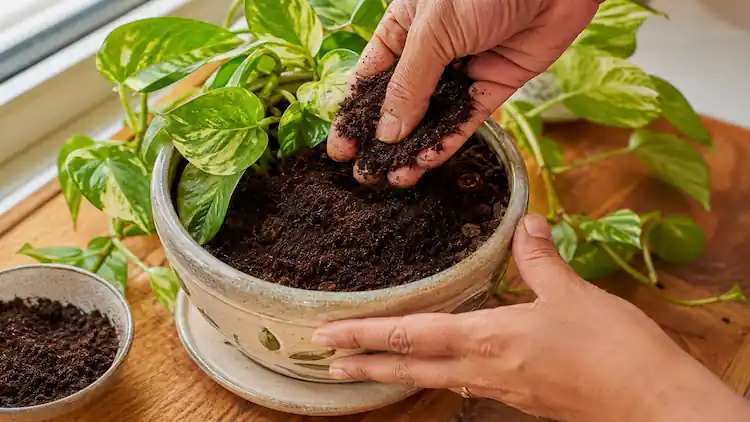
Once your pile has fully broken down into something dark, crumbly, and earthy-smelling, with no trace of the original scraps left, it’s ready to use as a soil amendment, mulch, or the base for a nutrient-rich compost tea.
If you’re just getting started and want the full step-by-step process from your very first layer to a finished, usable batch, I’ve walked through the entire method in my guide on how to make compost at home, which pairs well with everything covered here.
Final Thoughts:
Figuring out what to put in your garden compost bin really comes down to a simple habit: balance your wet, nitrogen-rich greens with plenty of dry, carbon-rich browns, keep meat, dairy, oils, and treated materials out, and give the pile a little air and moisture now and then. Once that rhythm feels natural, composting stops feeling like a chore and starts feeling like a quiet, ongoing act of care for your soil, your garden, and honestly, the planet too. Every peel, leaf, and eggshell you divert from the trash is doing more good than it looks like from the kitchen counter start small, stay consistent, and your garden will show the results.