You water on schedule, keep it near a window, and yet here you are again, staring at another yellow leaf.
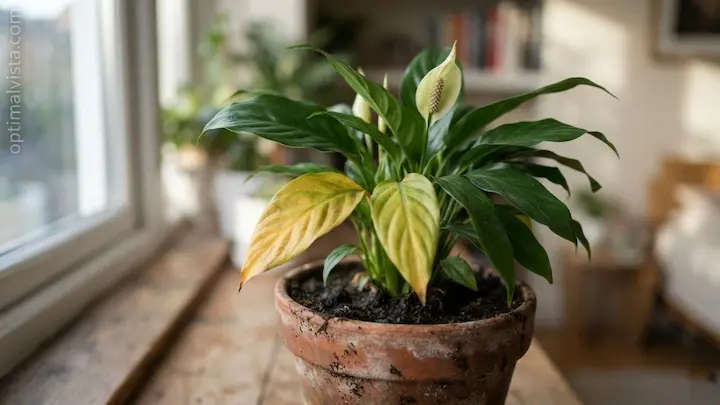
If you’ve been typing why are my peace lily leaves turning yellow into your phone at midnight, you’re not alone I get asked this more than almost anything else.
The good news? Once you know what to look for, the answer is usually staring right back at you.
Peace Lily Care Snapshot: What This Plant Actually Wants
Peace lilies (Spathiphyllum) come from the rainforest floor, so indoors they want shade-loving, humid conditions rather than a sunny windowsill. Here’s the baseline I keep my own plants at:
| Factor | Ideal Range |
|---|---|
| Light | Bright, indirect; no direct sun |
| Watering | When top 1-2 inches of soil are dry |
| Temperature | 65°F to 80°F |
| Humidity | 50% or higher |
| Soil | Well-draining, peat-based mix |
| Pot size | 1-2 inches wider than the root ball |
Outdoors, peace lily only survives year-round in USDA Zones 10 through 12. If you’re gardening in Zones 4, 5, 6, 7, or 8, this stays a houseplant except for a summer vacation on the backyard patio.
Normal Aging or a Real Problem?
Not every yellow leaf means trouble. In my experience, one or two lower leaves fading every month or so is just the plant retiring old growth to push new leaves the same slow fade you’d see on a zucchini or eggplant vine in the vegetable rows.
What actually signals peace lily leaves turning yellow from a real problem is a different pattern: several leaves losing color at once, or the newest leaf near the center changing color before it’s even fully opened.
That pattern is your cue to keep reading instead of shrugging it off.
Why Are My Peace Lily Leaves Turning Yellow? The Full List of Causes
Here’s every cause I’ve run into over six years of growing these, grouped by root issue:
Watering problems:
- Overwatering: soil stays soggy, roots suffocate, lower leaves yellow first.
- Underwatering: soil bone-dry for days, leaves droop then yellow with crispy edges.
- Poor drainage: a pot without a hole, or compacted soil, traps water even when you water correctly.
Light and temperature:
- Too little light: the plant sheds older leaves to save energy.
- Direct sun: bleaches leaves yellow with dry, papery patches.
- Cold drafts or heat vents: sudden yellowing on the side nearest a window or vent.
- Low humidity: dry air stresses leaf edges first.
Roots and pot:
- Root rot: mushy, foul-smelling roots from prolonged wet soil.
- Rootbound plant: roots circle the pot, soil dries fast, leaves droop and yellow repeatedly.
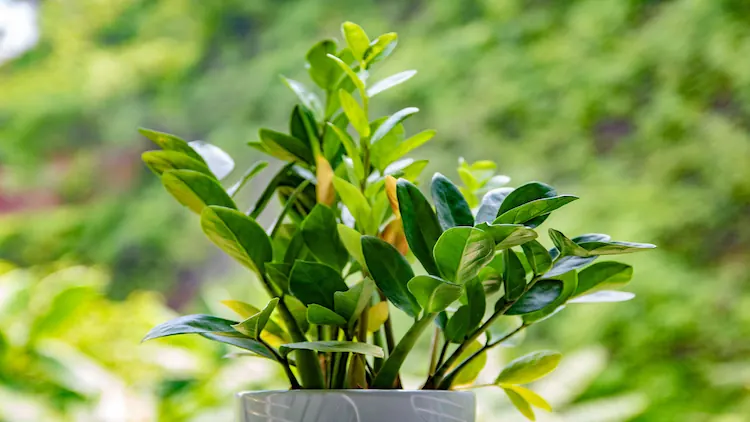
- Transplant shock: yellowing within 1 to 3 weeks of moving or repotting, similar to the adjustment period after repotting a zz plant.
Water and feeding:
- Hard tap water: fluoride and chlorine build up and cause yellow leaves on peace lily plants over time.
- Over-fertilizing: salt buildup burns roots, patchy yellow with brown tips.
- Under-fertilizing: pale, uniform yellow during peak growing months.
- Nutrient lockout: tight or alkaline soil blocks iron and magnesium, causing yellow leaves with green veins
Pests and disease:
- Spider mites, mealybugs, or scale – sticky residue or speckled yellow spots.
- Fungal or bacterial spots – irregular yellow patches around dark lesions.
That’s a long list, but you don’t need to test for all of them at once. Work in order: soil first, then water quality, then light, then pests. That sequence alone answers a peace lily yellow leaf problem nine times out of ten.
Wet Roots or Dry Roots? Read the Blade First
| Wet-Side Signs | Dry-Side Signs |
|---|---|
| Whole leaf yellows at once, feels swollen | Yellowing starts at leaf tips and edges |
| Pot still feels heavy days after watering | Pot feels light, soil pulls from the sides |
| Lower and inner leaves go first | Yellowing follows a wilt by a few days |
| Musty smell from the soil | Margins turn crispy and curl |
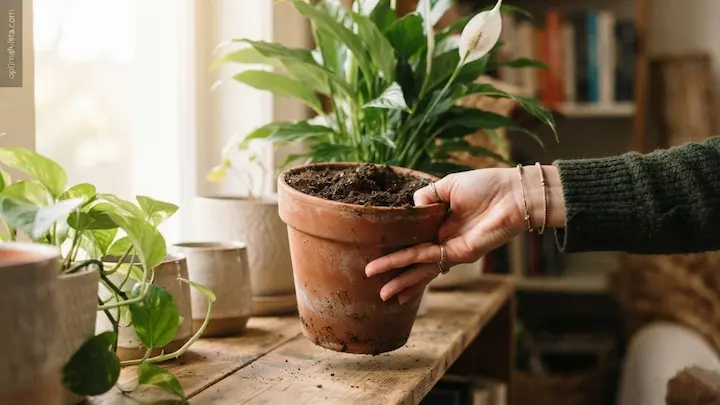
Lift the pot before you do anything else. A heavy pot days after watering means stop watering; a light pot means it’s thirsty. I do this every single time before I touch the fertilizer or move the plant near a window.
Four At-Home Tests to Confirm What’s Going On
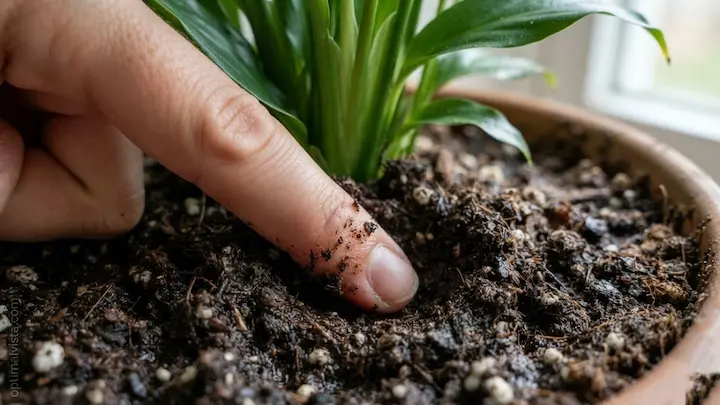
- The soak-and-clock test: Water thoroughly until it drains from the bottom, empty the saucer, then check the soil daily with a finger to 2 inches deep. The number of days until it’s dry again tells you your real watering rhythm a similar rhythm to the zz plant watering schedule if you keep one of those too.
- The knuckle-tap test: Rap the pot wall with a knuckle. A dull thud means wet soil; a hollow ring means dry soil.
- The tear test: Pull off a yellowed leaf and tear it in half. A wet, stringy tear points to soggy roots; a dry, papery snap points to plain thirst or natural aging.
- The tap-water test: If your tap water is hard or heavily chlorinated, switch to filtered or rain water for a month and watch the newest leaf color. It’s an easy way to rule out water quality without spending a cent.
How Urgent Is This? Three Flags to Watch
- Green flag (normal): One yellow leaf near the base every few weeks. Grab a clean pair of pruners, trim it off, and move on.
- Yellow flag (adjust care): Several leaves yellowing together, or dry, crispy edges. Fix light, water, or humidity within the week.
- Red flag (act now): Soft, mushy stems, a sour smell from the pot, or yellowing that’s reached the newest leaf. This calls for unpotting and checking the roots today, not next weekend.
Step-by-Step Reset Plan
- Trim yellowed leaves at the base with clean pruners.
- Check for drainage holes; empty any standing water from the saucer.
- Let the top 2 inches of soil dry before the next watering.
- If roots are mushy, unpot, trim the rot, and repot into fresh, well-draining mix.
- Move to bright, indirect light a few feet back from an east or north-facing window works well.
- Switch to filtered or rainwater if your tap runs hard.
- Hold off on fertilizer for 3 to 4 weeks while the plant stabilizes.
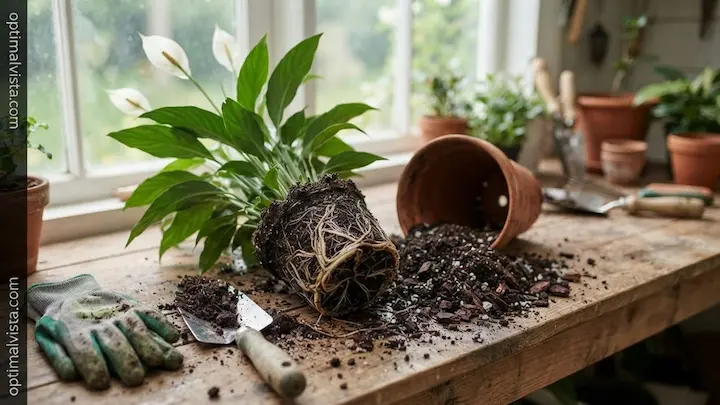
I usually see healthy new growth within 3 to 4 weeks once the root cause is fixed, though a full root-rot rescue can take 6 to 8 weeks before the plant looks like its old self again.
Preventing Yellow Leaves Before They Start
This is where most of my own trial and error happened, honestly:
- Water only when the top 1-2 inches of soil are dry check weekly instead of guessing by the calendar.
- Use a mix of 2 parts peat-based potting soil to 1 part perlite or bark for drainage, much like the soil mix that works for a zz plant.
- Feed lightly every 4 to 6 weeks in spring and summer with a balanced liquid fertilizer, or swap in worm castings for a gentler, natural feed, and skip it entirely in fall and winter.
- Flush the pot with about half a gallon of plain water every 2 to 3 months to clear mineral buildup.
- Run a small humidifier nearby if your home runs dry in winter.
- If it spends summer on the backyard porch, bring it in well before the first fall frost a peace lily turning yellow overnight is often just cold shock from one chilly night outside; our peace lily winter care guide covers that transition in detail.
A quick scientific note here: researchers at the University of Innsbruck studied how chlorophyll actually breaks down in aging Spathiphyllum leaves, confirming the yellow color comes from specific pigment breakdown products once the green chlorophyll is gone part of why a yellowed leaf never turns back green (source: NCBI/PMC study).
Separately, University of Illinois Extension research confirms that yellow leaves with green veins point specifically to iron or manganese deficiency tied to soil pH, not a watering issue at all (source: University of Illinois Extension).
Light & Water Matrix: Match Your Spot to a Schedule
Where the pot sits changes how often it needs water, and how much yellowing risk you’re carrying:
| Light Level | Typical Watering Gap | Yellowing Risk |
|---|---|---|
| Low (far from any window) | Every 10-12 days | High dim light plus overwatering is the top combo |
| Medium, indirect | Every 6-9 days | Low the sweet spot for most homes |
| Bright, indirect | Every 4-6 days | Moderate watch for dryness and mineral buildup |
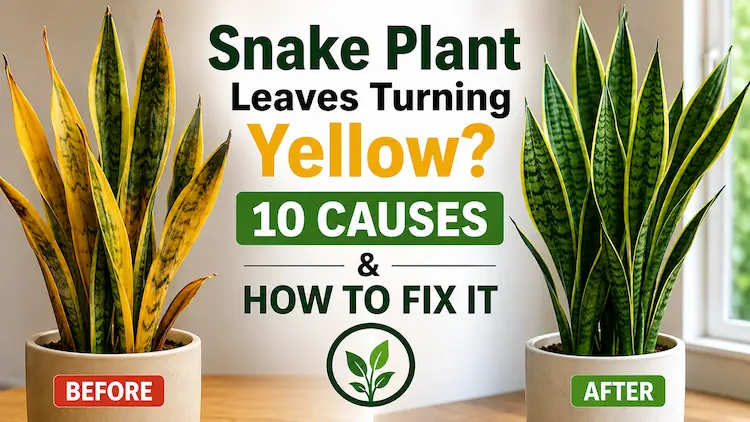
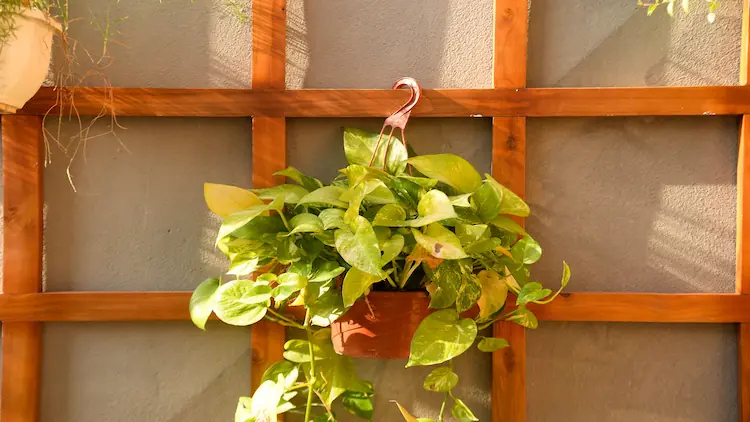
This same logic explains why pothos leaves turning yellow or a snake plant’s leaves turning yellow usually trace back to light and water too.
Peace Lily Care Calendar
A little seasonal planning prevents most of the yellowing I see:
| Season | What to Do |
|---|---|
| Winter (Dec-Feb) | Water less often, hold all fertilizer, keep away from cold drafts |
| Spring (Mar-May) | Resume feeding every 4-6 weeks, repot if rootbound |
| Summer (Jun-Aug) | Peak growth keep soil evenly moist, boost humidity if the AC runs |
| Fall (Sep-Nov) | Move closer to a window as daylight shortens, cut feeding to every 6-8 weeks, bring outdoor pots back in before frost |
Safety, Varieties, and When to Call In Help
- Peace lily sap is mildly irritating if chewed by pets or kids worth the same caution you’d use with a zz plant around cats, since both contain similar calcium oxalate crystals.
- Dwarf varieties like Little Angel yellow faster from underwatering since they dry out quicker than a full-size clump.
- If a plant that once anchored your living room as a centerpiece is still declining after 6 to 8 weeks of correct care, get a second opinion from a local nursery or a community gardener group.
- Bag diseased leaves for the trash instead of composting them, so pests or fungal spores don’t spread to your other houseplants.
The same diagnostic checklist works if your other yellow-leaf headache is a zz plant turning yellow instead.
Final Thoughts:
At the end of the day, figuring out why are my peace lily leaves turning yellow comes down to reading the plant instead of guessing. Check the soil weight, count the yellow leaves, and watch the newest growth that combination rarely lies. Fix the root cause, stay patient for a few weeks, and your peace lily should be back to its usual deep green self before you know it.