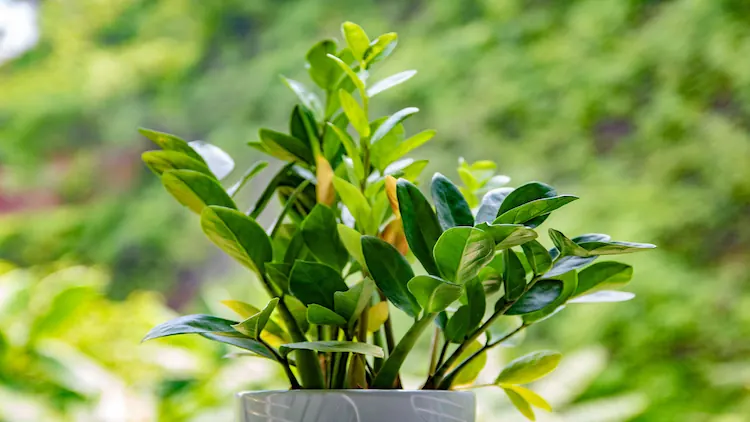
I get this question all the time from readers, and if you are standing over a plant that is supposed to be nearly impossible to kill, wondering why is my zz plant leaves turning yellow, you are not alone.
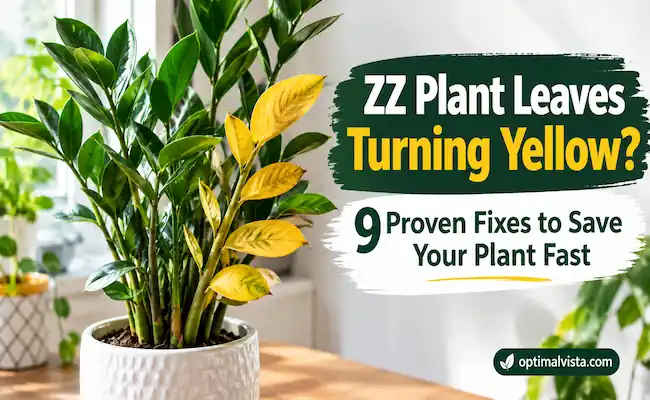
This hardy houseplant has a reputation for surviving neglect on a windowsill or office desk, so when those glossy leaves start fading, it feels personal.
The good news is that once you know what to check, most cases turn around within a few weeks.
Why Is My ZZ Plant Leaves Turning Yellow: The Main Causes
Yellowing on a Zamioculcas zamiifolia almost always traces back to one of these:
- Overwatering and root rot (by far the most common).
- Underwatering after weeks of neglect.
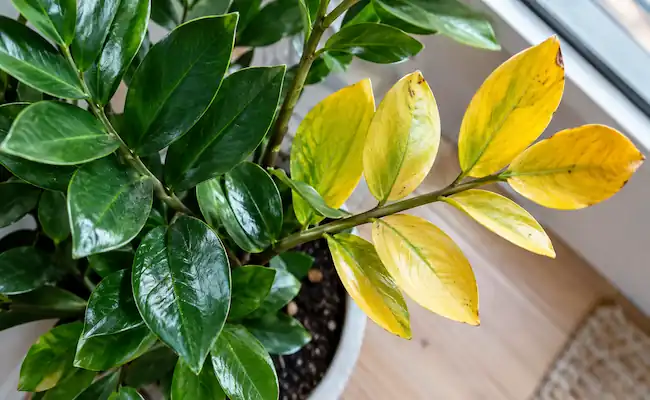
- Too much direct sunlight.
- Cold drafts or temperature stress.
- Nutrient deficiency or over-fertilizing.
- Pests like spider mites or scale.
- A rootbound pot or recent repotting.
- Simple old-leaf aging, which is not a problem at all.
According to NC State Extension’s Plant Toolbox, this plant stores water in thick underground rhizomes and should only be watered about twice a month in summer and once a month in winter, since it genuinely does not tolerate wet feet.
That single fact, more than anything else, explains what goes wrong with this popular centerpiece favor gift.
Overwatering Is Behind Most Cases of ZZ Plant Yellow Leaves
In my experience, this is the culprit nine times out of ten. ZZ plants are built almost like succulents, so extra water just sits in the pot and drowns the roots.
Signs of overwatering:
- Soil that stays damp more than a week after watering.
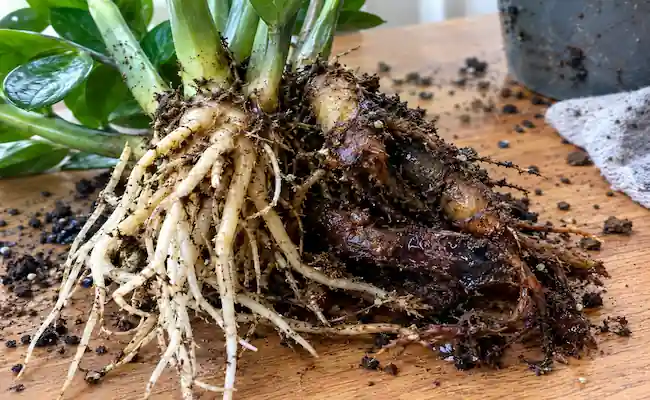
- A mushy or soft stem base near the soil line.
- A sour, swampy smell coming from the pot.
- Yellow leaves paired with drooping, not crisping, starting near the bottom.
What to do:
- Stop watering completely and check the roots.
- Trim dark, squishy, rotten rhizomes with clean pruners.
- Toss damaged material in the trash or garbage, not the compost bin.
- Repot into fresh, well-draining mix once the rot is removed.
Underwatering Can Also Cause ZZ Plant Leaves Turning Yellow
It sounds backward for a drought-tolerant plant, but if you have gone away for a month and forgotten to water, you will come home to yellow, wrinkled leaves too.
Signs of underwatering:
- Bone-dry soil several inches down.
- A pot that feels unusually light.
- Stems that feel thin and wrinkled, not mushy.
What to do:
- Give the plant a deep drink, roughly half a gallon for a standard 8 to 10 inch pot.
- Let the water drain fully from the bottom.
- Let the soil dry out again before the next watering.
Too Much Direct Sunlight
ZZ plants tolerate low light better than almost any houseplant on the market, which is exactly why people place them in bright windows without a second thought:
- More than four hours of direct sun a day can scorch the leaves.
- Scorched leaves turn yellow first, then crispy brown.
- Move the plant back from south or west facing windows.
- A sheer curtain filters harsh afternoon light well.
- Bright, indirect light near a shaded backyard-facing window works best for even color.
Temperature Stress and Cold Drafts
ZZ plants are tropical natives and do not handle cold well. Clemson Cooperative Extension notes that ZZ plants are sensitive to cold and should be kept above 60°F, since anything colder starts to stress the foliage.
- These plants are only reliably hardy outdoors in USDA Zones 9b through 11.
- Anyone gardening in Zones 4, 5, 6, 7, or 8 should treat this strictly as an indoor plant.
- Keep it away from drafty windows and exterior doors, especially as fall temperatures drop.
- A yellowing zz plant parked against a frosty window in January is almost always a temperature problem.
Nutrient Deficiency
Less common, but real. A pattern called interveinal chlorosis, yellow tissue with green veins on newer leaves, points to a nutrient issue rather than watering:
- Underfed plants show pale, yellowing leaves on new growth.
- Over-fertilized plants show the same yellow color from salt buildup at the roots.
- Feed once or twice during the growing season with a balanced, water-soluble fertilizer.
- Use half strength; this is one of the more overlooked causes of yellow leaves in plants that otherwise look well cared for.
Pests Can Also Leave You With a Yellowing ZZ Plant
Spider mites, mealybugs, and scale occasionally show up on stressed ZZ plants, piercing the leaves and draining their sap:
- Look for fine webbing between leaflets.
- Check for small brown bumps along the stems.
- A sticky residue on leaves usually means pests, not watering.
- Wipe leaves down with a damp cloth.
- Treat confirmed infestations with insecticidal soap or neem oil.
- Isolate the plant from neighbors on a crowded windowsill or plant shelf.
Rootbound or Recently Repotted Plants
A ZZ plant that has outgrown its pot, or one that was just repotted, can show yellowing too, even when watering is perfectly fine:
- Roots circling tightly around the inside of the pot signal rootbound stress.
- Yellowing that starts right after a move or repot is usually transplant shock.
- Give a newly repotted plant two to three weeks before changing anything else.
- Size up the pot only slightly, one to two inches wider, not more.
Is Some Yellowing Just Normal Aging?
Not every yellow leaf is a crisis. ZZ plants naturally shed their oldest growth as they put energy into new stems:
- One or two lower leaves yellowing slowly, with the rest of the plant looking healthy, is normal aging.
- Aging leaves yellow evenly and drop cleanly, without mushy stems or crispy patches.
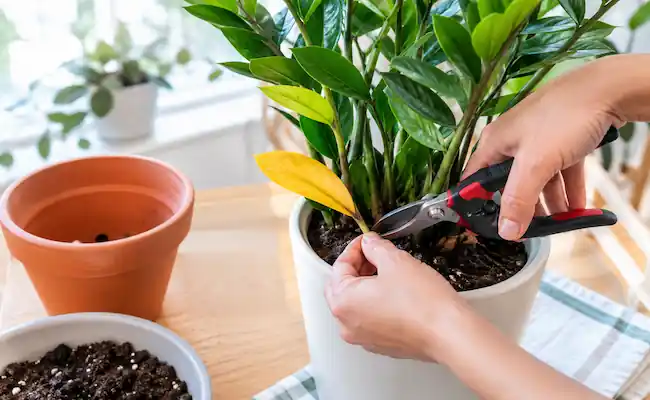
- Simply snip these off at the base with clean pruners and move on.
- This pattern needs no fix at all, just routine cleanup.
Match the Symptom to the Cause
| What You See | Likely Cause | What To Do |
|---|---|---|
| Wet soil, mushy stem base | Overwatering / root rot | Stop watering, trim rot, repot |
| Bone-dry soil, wrinkled stems | Underwatering | Deep water, resume normal schedule |
| Yellow with brown, crispy edges | Sun scorch | Move away from direct light |
| Yellowing near a cold window | Temperature stress | Relocate away from drafts |
| New leaves pale, veins green | Nutrient deficiency | Feed lightly, half strength |
| Webbing or sticky residue | Pests | Treat with neem oil |
| Yellowing right after repotting | Transplant shock | Leave alone for 2 to 3 weeks |
| One old lower leaf, rest healthy | Normal aging | Trim and ignore |
When to Worry vs When to Simply Wait
- Low urgency: one or two old lower leaves, plant otherwise firm and upright.
- Medium urgency: three or more leaves yellowing across different stems.
- High urgency: mushy stems, soggy soil, or a foul smell from the pot.
- High urgency: visible pests or sticky residue on multiple leaves.
- Low urgency: mild yellowing within the first two to three weeks after a move or repot.
How to Fix a ZZ Plant Turning Yellow, Step by Step
I always tell people to start with the roots before changing anything else, since that is where the real damage usually happens:
- Remove the plant from its pot and gently rinse off old soil.
- Inspect rhizomes and roots, trim anything soft, dark, or foul-smelling with clean pruners.
- Repot into fresh, well-draining potting mix with added perlite or coarse sand.
- Choose a pot with drainage holes, never one without.
- Snip off fully yellow leaves at the base to redirect the plant’s energy.
- Hold off watering for about a week so cut surfaces have time to heal.
- Propagate a cutting from healthy rhizome sections instead of tossing them out.
How Much and How Often You Should Water
This is where most zz plant leaves turning yellow problems start, so it is worth getting specific:
- Spring and summer: water once every two to three weeks.
- Use enough water to fully soak the soil until it runs out the drainage holes, about one to two cups for a 6 inch pot.
- Fall and winter: stretch watering out to once a month.
- Always check the top 2 inches of soil with your finger first.
- Whether you are a windowsill hobbyist or a community gardener managing a dozen pots, this plant would always rather be a little dry than a little wet.
How Long Until You See Recovery?
- Underwatered plants often perk up within a few days of a deep watering.
- Overwatered plants recovering from mild rot usually show new growth in 3 to 6 weeks.
- Severely rotted plants can take 2 to 3 months to fully rebound after repotting.
- Yellow leaves themselves will not turn green again; watch for new, healthy growth instead as the real sign of recovery.
Preventing This From Happening Again
- Use a pot only slightly larger than the root ball, since oversized containers hold excess moisture too long.
- Keep the plant in bright, indirect light year round for steady color.
- Try the Raven ZZ variety if you like darker foliage; it follows the same care rules.
- Remember that soggy soil rots roots fast in any plant, the same way it does for zucchini or eggplant in a raised bed outside.
- Catching a zz plant turning yellow early, before the rhizomes are damaged, makes recovery much faster.
- Keep pruned leaves and cuttings out of reach if pets or kids share the space; ZZ plant sap is considered toxic to dogs, toxic to cats, and toxic to babies if chewed on.
- Watch other houseplants too; Monstera leaves browning often traces back to the same watering and light mistakes.
Final Thoughts:
If you have been asking why is my zz plant leaves turning yellow, the answer is almost always sitting in the soil, not some rare disease. Check moisture first, then light, then temperature, and you will likely find your cause within minutes. I think that is the real reason this plant has such a good reputation, even when it struggles, it forgives you fast once you fix the one thing it actually needed.