Why are my bell peppers not turning red when the plant looks perfectly healthy?
Most backyard growers blame the weather, but the real culprit is often a timing mix-up or one small feeding mistake hiding in plain sight. A bell pepper can sit full-sized and glossy for weeks while nothing happens inside. Once you know what flips the switch, the fix is usually easy.
Why Are My Bell Peppers Not Turning Red? Start With the Science
Every red pepper starts out green. Green means the fruit is still immature and full of chlorophyll. Once the seeds mature, the plant breaks that chlorophyll down and builds carotenoid pigments, which make the reds, oranges, and yellows. Sugars climb too, which is why red peppers taste sweeter.
That bell pepper color change isn’t automatic, though. It depends on three things:
- Genetics: the variety decides which color the pepper finishes on.
- Environment: temperature, light, water, and feeding push the change along or stall it.
- Time: a lot more of it than most seed packets admit.
Understanding the Bell Pepper Color Change
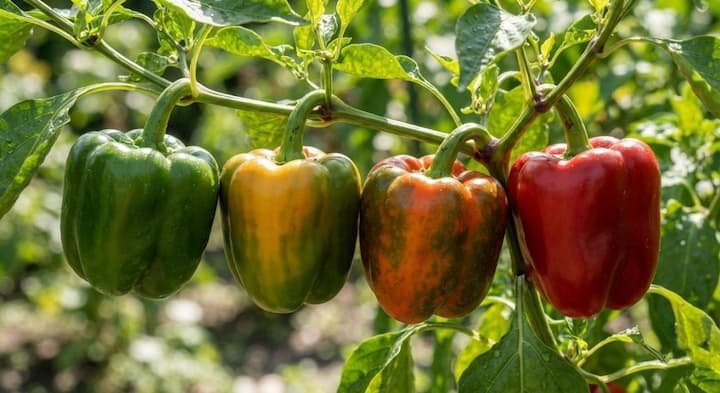
Peppers don’t jump from green to red overnight. They move through stages.
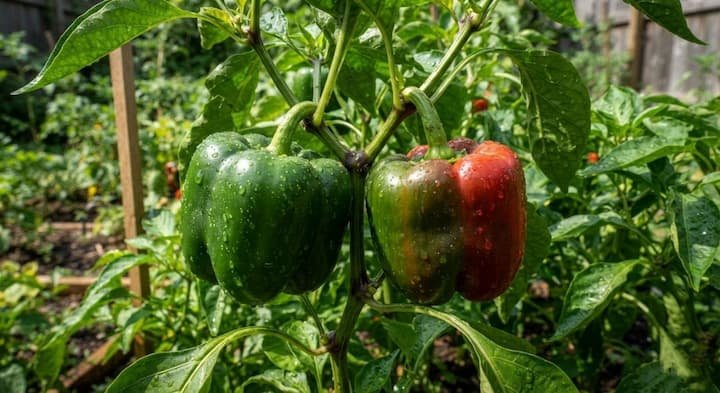
- Green: full size but immature and crisp.
- Blush: the first streaks of yellow, orange, or purple-brown show up.
- Turning: color spreads and sweetness builds.
- Fully red: even color with no green streaks, firm glossy skin, best flavor.
- Overripe: soft and wrinkled, so harvest or toss it.
Technical maturity (the harvest stage) hits about 40 to 45 days after fruit set. You can eat it, but it’s still green. Biological maturity comes 3 to 4 weeks later, once the seeds finish ripening, and that’s when the full color shows up.
Don’t panic if a pepper goes dark purple, brown, or almost black first. That muddy phase is anthocyanin pigment showing up while chlorophyll fades. Jalapeños do it all the time, and the guide on picking jalapenos shows what to look for.
The Days to Maturity Trap
Seed packets list days to maturity, and most people read that as days until red. In my experience, that number only gets you to the first edible green pepper after transplanting.
For red, add another 3 to 4 weeks of warm weather. That’s how plenty of gardeners end up with bell peppers stuck on green when fall rolls in.
Rough timeline from transplant (weather will shift these):
| Pepper type | Days to green fruit | Extra days to red | Total days |
|---|---|---|---|
| Sweet bell | 65 to 75 | 20 to 30 | 85 to 105 |
| Jalapeño | 60 to 70 | 15 to 25 | 75 to 95 |
| Serrano | 70 to 80 | 15 to 25 | 85 to 105 |
| Poblano | 65 to 75 | 20 to 30 | 85 to 105 |
| Cayenne | 70 to 80 | 10 to 15 | 80 to 95 |
| Habanero | 75 to 90 | 25 to 35 | 100 to 125 |
Most bell types need 12 to 16 weeks of warm weather between transplant and first frost, and varieties range from about 90 to 150 days overall.
Short season? Start seeds indoors about 8 weeks before your last frost (here’s how to start from seed), and transplant only once the soil has warmed and nights hold above 55°F.
Planting date matters too, and when to plant depends on your zone. Jot your transplant date in a notebook to count the weeks.
Wrong Variety: Some Bell Peppers Won’t Turn Red
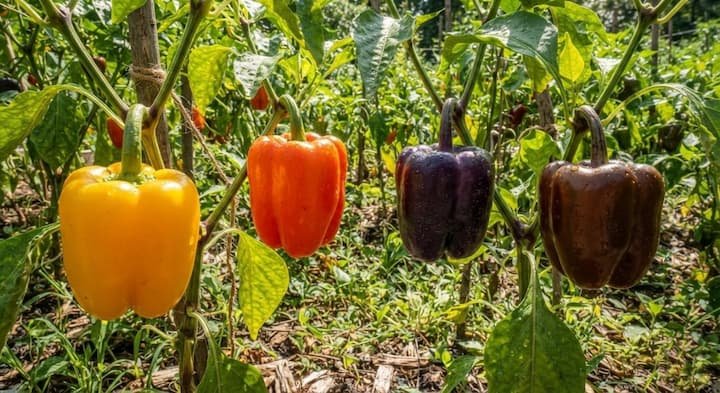
Sometimes you just grew a type that finishes in another color. Yellow, orange, purple, and chocolate types are bred to end in their own color, so those bell peppers won’t turn red no matter how long you wait.
- Banana, yellow wax, and cubanelle peppers finish yellow or yellow-green.
- Anaheim and poblano peppers are usually picked green, but they’ll go red if you leave them.
- Cayenne, habanero, and ghost peppers do turn red, but folks often pick them green.
- Thick-walled bells like King of the North and California Wonder need loads of sugar, so they run slower.
- Seeds saved from grocery store peppers are a gamble, since many are hybrids.
I think the cheapest fix is reading the seed packet. When you buy at a garden center, flip it over and look for the mature color line and the days to maturity.
If you want red in a short season, like USDA Zones 4 and 5, go with early, smaller, thinner-walled types such as Gypsy, Lipstick, Lady Bell, Bell Boy, or sweet Italian frying peppers. Fruit around 2 to 5 inches across changes color quicker than big blocky ones.
Temperature Problems That Stall Ripening
Peppers like days between 70°F and 85°F and nights above 55°F.
- Above 90°F: heat stress, flower drop, and slower ripening.
- Below 55°F at night: metabolism crawls and color change basically freezes.
- Big swings from hot to cold and back: these confuse the plant and delay ripening.
Oklahoma State Extension backs this up. Very little fruit set happens when days top 90°F or nights dip under 60°F, according to their pepper production fact sheet.
During a heat wave, peppers often just park themselves. I’ve watched plants sit frozen through two weeks of 95°F weather, then start coloring up once the nights cooled off in fall.
Here’s what helps:
- Row covers or an old sheet on cold nights.
- Straw mulch 2 to 3 inches deep to steady soil temperature.
- Raised beds in cooler areas, especially USDA Zones 4 and 5, since the soil warms faster.
Too Little or Too Much Sun
The leaves do the heavy lifting. They need 6 to 8 hours of direct sun to make the sugars that trigger the color change. Tall tomatoes or corn shading the pepper bed can quietly cause the whole problem.
Some sites say peppers need 12 to 14 hours of light. That’s daylight length, not direct sun. The fruit itself doesn’t need to bake, either. Peppers exposed to full blast on hot afternoons can get sunscald, those pale, papery patches, so a little leaf cover over the fruit is a good thing.
Too Much Nitrogen
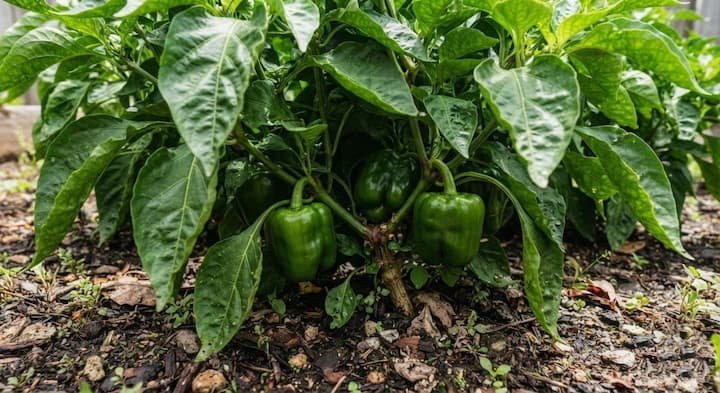
A high-nitrogen feed, the stuff you’d put on the lawn, tells a pepper plant to make leaves instead of ripening fruit. You get a gorgeous bush with fruit that never colors.
- Stop nitrogen once flowers open and fruit starts setting.
- Skip lawn fertilizer and fresh manure around peppers.
- Pull back if the plant is dark green, leafy, and light on flowers.
Potassium, Phosphorus, and Calcium
Once the plant is fruiting, it wants less nitrogen and more potassium and phosphorus. Phosphorus helps fruit form, and bone meal is an easy source. Potassium drives ripening and fruit quality. A shortage shows up as yellow edges on the lower leaves and fruit that ripens unevenly or not at all.
Potassium sulfate and a little wood ash work too, but go easy on the ash because it raises soil pH. My go-to is a fertilizer with lower nitrogen and higher potassium, and you can compare options in this pepper fertilizer guide.
Simple schedule:
- At transplant: a balanced feed with a light hand.
- When the first flowers open: switch to lower nitrogen and higher potassium, repeating every 3 to 4 weeks.
- 4 to 6 weeks before your first frost: stop feeding.
Calcium matters too. A shortage causes blossom end rot, and some gardeners add calcium nitrate two or three times a season to prevent it.
Epsom salt gets passed around as a color fix. Magnesium helps overall plant health, but it won’t speed up color on its own. Details in this post on Epsom salt.
Watering Mistakes
Peppers like steady moisture, about 1 to 2 inches of water a week. Overwatering is the bigger problem for color. A plant sitting in constant luxury has no reason to rush its seeds to maturity, so it stays in leaf mode.
Swinging between bone dry and soaked gives you small, misshapen fruit, and black, sunken patches on the bottom of a fruit mean blossom end rot from uneven watering.
I water deep a couple of times a week and mulch to hold the moisture. Late in the season, a little dryness nudges the plant to finish its fruit, but heavy drought early on just stunts it.
So switch gears gently:
- Cut back once fruit is full size.
- Let the top 2 inches of soil dry out between waterings.
- Water at the base, not over the leaves.
Here’s a watering schedule by growth stage.
Overcrowding, Heavy Fruit Load, and Root Damage
Crowded plants fight over light, water, and food. Space bell peppers about 18 inches apart so the leaves don’t shade each other.
In beds? See raised bed spacing. Too many fruits at once also slows ripening, since they compete for the same sugars.
- Pinch off the first flower at the crown, where the main stem first branches.
- Leave one strong bud per node and thin the rest.
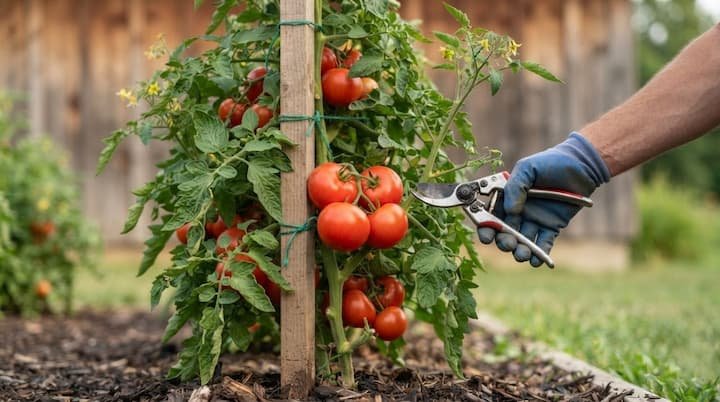
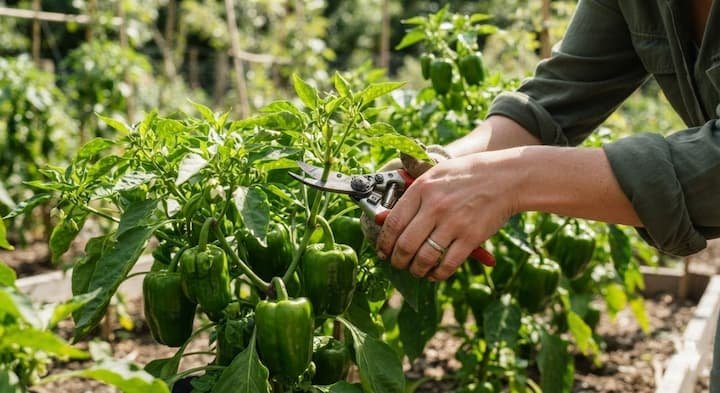
- Late in the season, top the plant: snip the growing tips with clean pruners, plus tiny flowers and baby peppers that can’t finish before frost.
- Stake or cage heavy plants so branches don’t snap under the fruit.
- Small peppers that color up early usually mean stress from drought, root binding, or pests.
Topping sends leftover energy into full-size fruit. More in pruning peppers.
Roots matter too. Rough transplanting sets a plant back for weeks. Move seedlings with the whole soil ball and don’t tear the roots.
Soil, Pests, and a Quick Diagnosis Chart
Peppers want loose, fertile, well-draining soil that’s slightly acidic, around pH 6.0 to 6.8. Heavy clay and soggy spots slow the roots down. Mix in compost, and add dolomite lime only if a soil test shows low pH. The pepper soil mix guide covers the recipe.
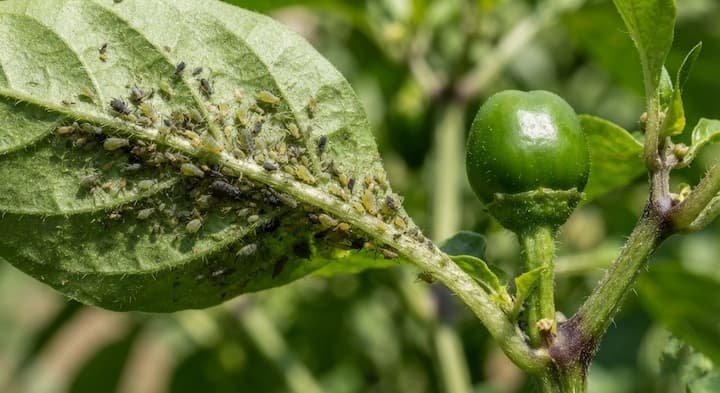
Aphids are the main pest tied to weak, discolored plants because they suck sap. Spray insecticidal soap on both sides of the leaves, rinse it off, and let ladybugs and lacewings handle the rest.
Match what you see to the likely cause:
| What you see | Likely cause | Fix |
|---|---|---|
| Full-size green fruit, healthy plant | Still on the clock | Wait 3 to 4 more weeks |
| Tons of leaves, few flowers, no color | Too much nitrogen | Stop high-nitrogen feed |
| Yellow edges on lower leaves, uneven color | Low potassium | Potassium sulfate or bone meal |
| No change after nights below 55°F | Cold stall | Row covers, harvest blushing fruit |
| Plant stalled in 90°F weather | Heat stress | Steady water, shade cloth |
| Fruit stays yellow or orange for weeks | Variety finishes that color | Check the seed packet |
| Yellowing, sticky, discolored leaves | Aphids | Insecticidal soap |
Bell Peppers in Pots and Greenhouses
Containers heat up and dry out fast. Dark pots can cook the roots on a 90°F afternoon. Use at least a 5-gallon pot per plant, pick a lighter color, and park it near a south-facing wall in fall to hold heat.
On cold nights, slide pots into a garage or onto a porch. Growing in pots walks through the setup.
Community gardener with a small plot? Pots on the sunniest corner can beat a shaded bed.
Greenhouse peppers run into different problems:
- Low light slows ripening, so a grow light or reflective panel helps.
- High humidity slows it too, and damp air can rot fruit before it colors.
- Vent on warm days, add a little heat on cold nights, and keep the leaves from crowding.
How to Ripen Bell Peppers Faster Before Frost
Count back 4 to 6 weeks from your first fall frost date (your local extension office can give you one) and start there. Here’s rough timing by zone, so swap in your own date:
- USDA Zones 4 and 5: mid to late August.
- USDA Zone 6: early September.
- USDA Zones 7 and 8: late September to early October.
Then run through this list:
- Stop all fertilizer, nitrogen especially.
- Top the plant and remove tiny flowers and baby fruit.
- Cut watering back a little.
- Trim lower leaves for airflow and light, which helps ripen bell peppers faster.
- Cover plants when a frost warning shows up.
Can You Ripen Peppers Off the Plant?
Yes, with one big rule: only peppers that already show a blush will ripen indoors. Harvest everything full-size before a hard frost, since frost turns leaves to mush and damages the fruit. Cut with sharp pruners instead of twisting, and pick in the morning while it’s cool.
- Leave about 1 inch of stem attached.
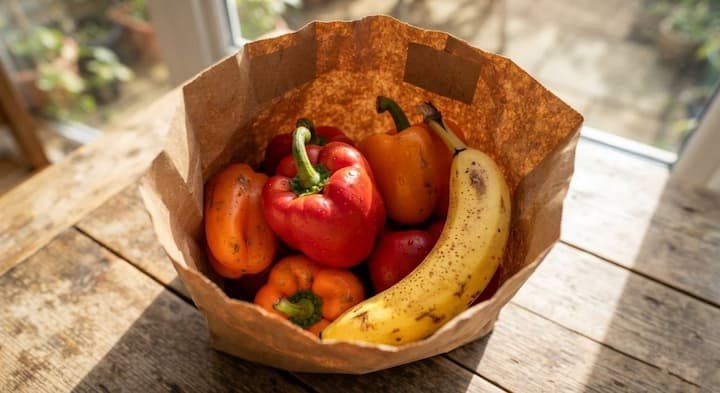
- Put blushing peppers in a paper bag with a ripe banana or apple, which give off ethylene gas.
- Keep the bag loosely closed in a warm room, 68°F to 77°F.
- Check every 2 days, since most color up within a week.
- Skip the fridge, because cold stops the process.
- Bell peppers stuck on green with zero blush are better eaten green than left to rot.
Keep picking ripe ones off the plant, too. Regular harvesting tells it to keep making fruit.
What to Do With Peppers That Stay Green
Green isn’t a failure. Green peppers are crisp, a little bitter, and great in stir-fries, fajitas, stuffed peppers, and salsa. Red ones are sweeter and carry more vitamin C and beta-carotene, but green still earns its spot.
- Store whole, unwashed peppers in a breathable bag in the crisper drawer.
- Slice and freeze them on a baking sheet, then bag them.
- Quick-pickle extras.
- Share a bumper crop with neighbors or a local food pantry.
- Soft, wrinkled, or moldy peppers go in the trash.
A few myths are worth dropping:
- Refrigerating does the opposite of ripening.
- Yellow doesn’t always mean red is coming, since some varieties stop there.
- A sunny windowsill only works on peppers that already have a blush.
- Epsom salt isn’t a ripening switch either.
Final Thoughts:
So, why are my bell peppers not turning red? Usually it’s time, variety, temperature, or too much nitrogen. Check the seed packet first, then count the weeks since fruit set. Cut the nitrogen, steady the watering, and top the plant before fall frost. If a pepper shows a blush, finish it in a paper bag. Even if it stays green, it still makes a good meal.