I still remember the first pothos I ever owned. It sat on my kitchen windowsill for almost a year, growing so slowly I honestly thought something was wrong with it. Turns out nothing was wrong with the plant. I just did not understand what it actually needed. Once I figured out the basics of pothos plant care, that same plant went from a sad little pot to vines trailing across my entire shelf in under six months.
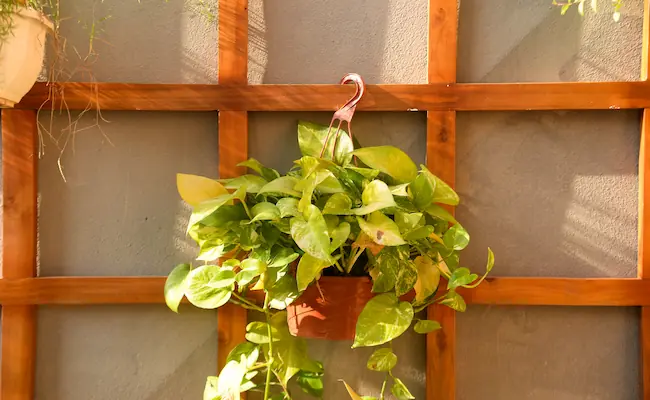
This guide is everything I have picked up over the years of growing pothos, mixed with a few things I learned the hard way. No fluff, no complicated science. Just what actually works.
What Pothos Actually Needs The Real Basics :
Before we go section by section, here is the short version of pothos plant care that covers almost everyone’s questions:
- Light: Bright, indirect light. It will survive in low light, but it will not grow much.
- Water: Only when the top 1-2 inches of soil feel dry to the touch.
- Soil: Loose and well-draining. Never heavy garden soil.
- Temperature: Comfortable room temperature, roughly 65-85°F.
- Feeding: Light feeder. A balanced fertilizer once a month in the growing season is plenty.
- Toxicity: Mildly toxic to cats, dogs, and humans if chewed or swallowed. Keep it out of reach.
Now let us go a little deeper into each one, because the details are where most people go wrong.
Light — The One Thing People Get Wrong :
Here is something nobody told me when I started: pothos surviving in low light and pothos actually thriving in low light are two completely different stories. Yes, it can sit in a dim corner and stay alive for years. But in my experience, that is not the same as growing well.
When a pothos does not get enough light, you will start noticing:
- New leaves coming in smaller than the old ones
- Long bare stretches of stem between leaves
- Variegated types (like Marble Queen or Manjula) slowly turning plain green
- Growth that basically stops for months
For real growth, place your pothos where it gets bright, indirect light most of the day. A spot a few feet back from an east or south-facing window works beautifully. Just keep it out of harsh afternoon sun, because direct rays will scorch the leaves and leave crispy brown patches behind.
If your home does not get much natural light, a simple grow light on a timer solves the problem within a couple of weeks. I have used one through winter and the difference in growth speed genuinely surprised me.
Watering — The Skill That Decides Everything :
If I had to pick one part of pothos plant care that matters more than everything else combined, it would be watering. Overwatering is, without question, the number one reason pothos plants die. Not neglect. Not low light. Overwatering.
The rule I follow is simple: stick your finger about two inches into the soil. If it feels moist, leave it alone. If it feels dry, go ahead and water thoroughly until it runs out the bottom of the pot, then let it drain completely.
Do not water on a fixed schedule. I made that mistake early on, watering every Sunday no matter what, and ended up with root rot. Your pothos does not care what day it is. It cares whether the roots have air to breathe.
Watering frequency roughly looks like this:
- Summer, bright light: every 7-10 days
- Winter, lower light: every 2-3 weeks
- Smaller pots and terracotta containers dry out faster than large pots or plastic ones
Signs of overwatering:
- Yellow leaves starting from the bottom
- Soft, mushy stems
- A musty smell coming from the pot
- Soil that stays heavy and wet for over a week
Signs of underwatering:
- Leaves curling inward or drooping
- Dry, papery texture
- Soil pulling away from the sides of the pot
Honestly, if you are ever unsure, wait one more day before watering. Pothos handles being slightly thirsty far better than sitting in wet soil.
Best Soil and When to Repot :
Pothos is not fussy about soil, but it does demand good drainage. In the wild, this plant grows up trees with its roots grabbing onto bark, so it is used to loose, airy conditions rather than dense, compact dirt.
A simple mix that has worked well for me:
- 60% regular potting soil
- 30% perlite or orchid bark
- 10% compost or worm castings
If that sounds like too much effort, a standard indoor potting mix with a handful of perlite mixed in does the job just fine.
When to repot:
- Roots are poking out of the drainage holes
- Water runs straight through without soaking in
- Growth has slowed down noticeably despite good care
- It has been about 18-24 months since the last repot
Choose a new pot only 1-2 inches wider than the current one. Going too big traps excess moisture around the roots and invites the same overwatering problems we just talked about.
Temperature and Humidity :
Pothos is genuinely relaxed about this part of care, which is one reason it is such a popular houseplant:
- Comfortable range: 65-85°F
- Avoid: Below 50°F (leaves brown and drop) and above 95°F (rapid water loss, wilting)
- Humidity: Average home humidity is enough. Higher humidity just means faster growth and larger leaves.
Misting sounds helpful but honestly does very little, since the moisture evaporates within minutes. If you want to genuinely raise humidity, group plants together or use a small humidifier nearby.
Feeding Your Pothos (Fertilizer) :
Pothos does not need much food to stay healthy, but a little feeding during the growing months speeds things up noticeably.
- Use a balanced liquid fertilizer, diluted to half the recommended strength.
- Feed once every 4-6 weeks from spring through early fall.
- Stop feeding completely in the colder months when growth naturally slows down.
Too much fertilizer causes crispy brown leaf tips and a white crust on the soil surface. If you see that, flush the soil thoroughly with plain water and skip feeding for a couple of months.
A Simple Month-by-Month Pothos Care Calendar :
I wish someone had given me this when I started, so here it is in plain terms:
- Spring (March-May): Growth picks up speed. Start feeding monthly. Good time to repot if needed.
- Summer (June-August): Peak growing season. Water more often, watch for fast-drying soil, prune leggy vines.
- Fall (September-November): Growth slows gradually. Reduce watering and feeding as light drops.
- Winter (December-February): Minimal growth. Water sparingly, stop fertilizing, keep away from cold drafts and heater vents.
Propagation — Turning One Plant Into Ten :
This is honestly the most rewarding part of pothos plant care. One healthy plant can turn into an entire collection with almost no effort.
Water method:
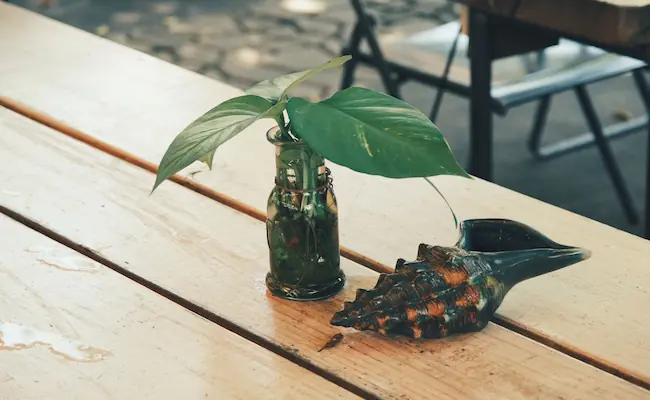
- Cut a 4-6 inch stem just below a node (the small bump where a leaf grows)
- Remove the bottom leaf or two so the node sits under water
- Place the cutting in a jar with room temperature water
- Set it somewhere with bright, indirect light
- Change the water every 5-7 days
- Roots usually appear within two weeks. Once they reach about 2-3 inches, move the cutting into soil
Soil method:
- Cut a stem with at least two nodes
- Remove the lower leaves
- Plant it directly into moist potting mix
- Keep the soil lightly moist for two to three weeks
- Roots typically form within a month
A small tip from my own experience: cuttings started in water struggle when later moved to soil, and cuttings started in soil struggle if you try to move them into water. Pick one method and stick with it for that cutting.
Popular Pothos Varieties and How They Differ :
Not every pothos behaves the same way, even though the care basics stay similar.
- Golden Pothos – The classic, most forgiving type. Handles low light better than any other variety.
- Neon Pothos – Bright lime green leaves. Needs good light to keep that neon color, or it fades to plain green.
- Marble Queen – Green and white marbled leaves. Grows slower and needs brighter light since the white parts cannot photosynthesize.
- Manjula – Wavy edges with cream and green patterns. Similar light needs to Marble Queen.
- Cebu Blue – Silvery blue-green leaves. Given something to climb, it eventually develops splits in the leaves.
- N’Joy – Compact grower with crisp white and green blocks of color.
If you want the fastest, most forgiving option for a beginner, Golden Pothos wins every time.
Trailing vs Climbing — Why Your Pothos Leaves Stay Small :
Here is something that took me a long time to understand. A pothos left to trail from a shelf stays in what is called its juvenile form, with small leaves. Give that same plant something to climb, like a moss pole, and it eventually shifts into a mature form with noticeably larger leaves and sometimes even natural splits.
If you want those big, dramatic leaves people show off online, training your vine up a support is really the only way to get there. It takes several months of patience, but the change is genuinely worth seeing.
Troubleshooting: What Your Pothos Is Trying to Tell You :
Every leaf change is basically your plant sending a message. Here is how I read them:
- Yellow leaves, starting from the bottom: Usually overwatering. Let the soil dry out fully before watering again.
- A single old leaf turning yellow occasionally: Completely normal aging. Nothing to worry about.
- Brown, crispy edges: Often tap water quality or low humidity. Try letting tap water sit out for a day before using it.
- Long bare stems with few leaves: Not enough light. Move it closer to a window and prune the leggy sections.
- Leaves losing their variegation: Also a light issue. Variegated leaves need more brightness than solid green ones.
- Drooping right after repotting: Normal transplant shock. It usually recovers within a week.
- Sticky leaves or tiny webs: Check for mealybugs or spider mites. Wipe leaves with a cloth dipped in rubbing alcohol, then treat with neem oil weekly for a few weeks.
Pothos vs Similar Looking Plants :
People confuse pothos with a couple of other trailing plants all the time, so here is a quick way to tell them apart:
- Pothos vs Philodendron: Pothos leaves feel thicker and waxier, with a slightly bumpy texture. Philodendron leaves are thinner, smoother, and more heart-shaped at the tip. New pothos growth also emerges from a papery sheath, while philodendron does not have this.
- Pothos vs Scindapsus (Satin Pothos): Scindapsus has a velvety, almost fabric-like texture and is technically a different genus entirely, despite the similar nickname.
Is Pothos Toxic to Pets and Humans?
Yes, and this part of pothos plant care matters a lot if you have curious pets or small children around. The plant contains calcium oxalate crystals throughout its leaves and stems. If chewed, these crystals cause burning, swelling, drooling, and irritation in the mouth and throat.
It is rarely life threatening, but it is genuinely uncomfortable, so keep it well out of reach. Hanging planters or high shelves work well if pets like to nibble on greenery. If ingestion does happen, contact a vet or poison control right away rather than waiting to see what happens.
Does Pothos Really Purify Air?
You will see this claim everywhere, and there is some truth to it, but it needs a little honesty attached. The original NASA study did show pothos removing certain toxins from sealed test chambers. In a normal home, though, you would need a large number of plants to make a measurable difference to your air quality. So grow pothos because it looks beautiful and is easy to care for, and treat any air-purifying benefit as a nice bonus rather than the main reason to own one.
Final Thoughts:
Pothos genuinely is one of the most forgiving houseplants you can bring home. It does not demand much, and once you understand what it actually wants instead of what people assume it wants, the growth speed can honestly surprise you.
Do not overthink this plant. Give it decent light, water it only when the soil actually asks for it, and let it be. Every mistake I made in the beginning came from doing too much rather than too little. Once I stepped back and followed the basics of pothos plant care instead of babying it every day, my plant finally started growing the way it was supposed to. Start simple, watch how your plant responds, and adjust from there. That is really all good pothos plant care ever comes down to.