If you have ever watched your Stromanthe Triostar go from a happy, colorful showpiece to a droopy, curling mess the moment the weather turns cold, you are not alone. I have grown this plant for years, and winter is the one season where it genuinely needs a different approach compared to spring and summer.
The good news is that once you understand what the plant is actually asking for, keeping it alive through the cold months is not complicated at all. This guide walks through everything related to Stromanthe Triostar winter care, from watering and light to temperature, humidity, and what to do if your plant already looks stressed.
Why Your Triostar Behaves Differently in Winter
Stromanthe Triostar comes from the rainforests of Brazil, where the temperature and daylight hours barely change through the year. Once you bring this plant into a home with heaters running, shorter days, and drier air, it senses the shift and slows down its growth. This is called dormancy, and it is completely normal.
During this slower phase, the plant does not need as much water, food, or even light as it did during summer. A lot of people keep caring for their Triostar exactly the way they did in July, and that mismatch between the plant’s needs and the care it is getting is the real reason behind most winter leaf problems. Once you understand this shift, the rest of Stromanthe Triostar winter care becomes a lot easier to figure out.
Watering: Less Is More
This is the part where most people get their Stromanthe Triostar winter care wrong. In summer, a Triostar might want water every four to six days. In winter, that same schedule can lead to a wet, heavy pot that the roots simply cannot use fast enough, and that is where root rot starts.
Here is what I actually check before watering in winter:
- Push a finger about two inches into the soil. If it still feels damp, wait a few more days.
- Lift the pot. A pot that still feels heavy usually still has water left in it.
- Watch the top leaves. Slight curling can mean the plant wants water, but check the soil first before assuming that is the reason.
As a rough guide, most indoor Triostar plants in winter need watering roughly every ten to fourteen days instead of weekly, though this depends heavily on your home’s temperature and the size of the pot. Always use room-temperature, filtered water if possible, since this plant is a little sensitive to hard tap water and can develop brown tips because of it.
Light Needs During Winter
Getting the light right is another key piece of Stromanthe Triostar winter care. Days get shorter in winter, and the sun sits lower in the sky, which means less light actually reaches your plant even if it is sitting in the same spot it always has. For good Stromanthe Triostar winter care, move the pot a little closer to a bright window, ideally an east or south-facing one, since direct harsh sun is less of a risk in winter than it is in summer.
If you notice the pink and cream patterns fading back toward plain green, that is usually the plant telling you it needs more light. On the other hand, if the edges of the leaves look scorched or bleached, pull it back a foot or two, since winter sun through glass can still be strong enough to burn leaves in the early afternoon.
If natural light in your home is genuinely poor during winter, a basic grow light for four to six hours a day makes a real difference and is far easier than constantly repositioning the pot.
Temperature: The Number That Matters Most in Stromanthe Triostar Winter Care
Stromanthe Triostar is a tropical plant with zero tolerance for cold. This is probably the single most important part of Stromanthe Triostar winter care, and it is also the part most articles gloss over without giving an actual number.
Keep the temperature between 65°F and 80°F (18°C to 27°C) for the healthiest growth. The plant can tolerate short dips, but anything consistently below 60°F (15°C) will cause stress, and below 50°F (10°C) you are likely to see permanent leaf damage or even plant death. A single night near a cold windowpane or a draft from a door can be enough to cause visible harm within a day or two.
A few spots to watch out for in a typical home during winter:
| Danger Zone | Why It Is Risky |
|---|---|
| Window sills at night | Glass gets much colder than room air after dark |
| Near entry doors | Cold drafts every time the door opens |
| Under AC or heater vents | Sudden temperature swings dry the plant out fast |
| Unheated porches or balconies | Night temperatures can drop below safe limits quickly |
If you keep your Triostar outdoors or on a balcony through part of the year, bring it inside well before the first cold night arrives, not after you already see damage. Waiting for a frost warning is usually too late.
Humidity: The Piece People Forget
Humidity is one part of Stromanthe Triostar winter care that gets overlooked far too often. Heaters and closed windows pull moisture out of the air, and a Triostar sitting in 20-30% humidity will start showing crispy brown edges within a couple of weeks, even if watering and light are both correct. This plant genuinely wants somewhere around 50-60% humidity to stay happy through winter.
A few ways to get there without spending much:
- Group it together with other houseplants, since they raise humidity for each other.
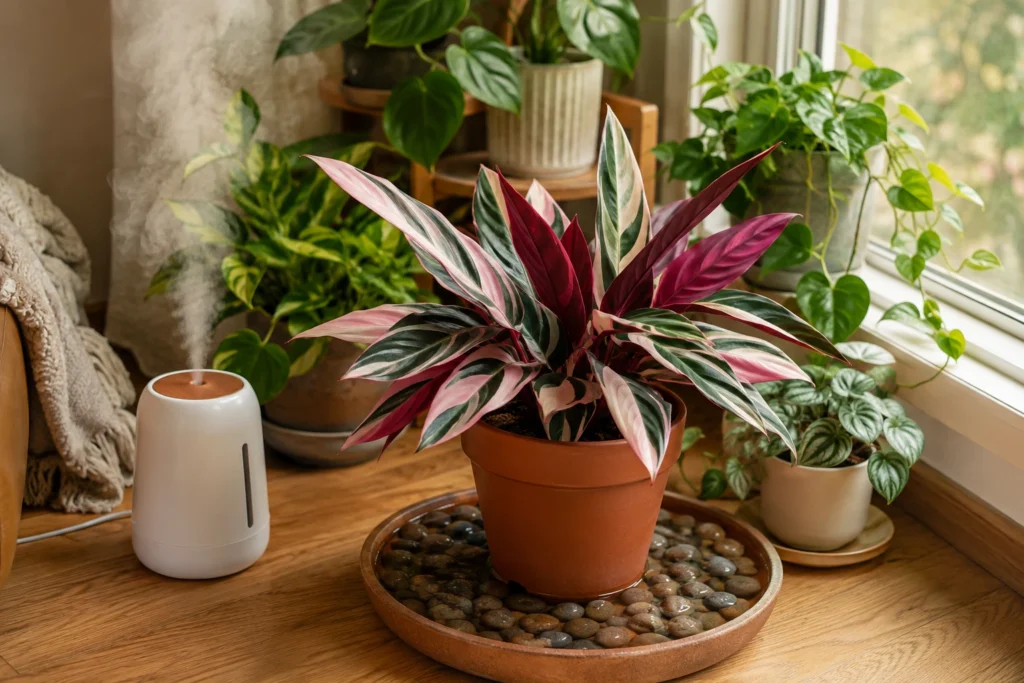
- Set the pot on a tray filled with pebbles and a little water, keeping the pot above the waterline, not sitting in it.
- Run a small humidifier nearby, especially in rooms with central heating.
- Bathrooms with a window often work surprisingly well if there is enough light.
Misting alone is not enough since the effect wears off within an hour, but it can help as a small addition to one of the methods above.
Should You Feed or Repot in Winter?
No, on both counts, and this is a part of Stromanthe Triostar winter care that gets skipped in a lot of guides. Getting this piece of Stromanthe Triostar winter care right saves you from a lot of avoidable root stress. The plant is not actively growing during winter, so any fertilizer you add just sits in the soil instead of being used, which can build up and burn the roots over time. Stop feeding by late autumn and start again once you notice new growth in spring.
Repotting works the same way. Moving a plant is stressful even in the best conditions, and doing it while the plant is already dealing with low light and cold air just adds another problem on top. Unless the roots are pushing out of the drainage holes or the pot has cracked, wait until spring to repot.
Common Winter Problems and How to Fix Them
These are the issues that come up most often once Stromanthe Triostar winter care gets even slightly off track.
| What You See | Most Likely Cause | What To Do |
|---|---|---|
| Brown, crispy leaf edges | Low humidity or hard tap water | Raise humidity, switch to filtered water |
| Leaves curling inward | Underwatering or cold draft | Check soil moisture first, then move away from drafts |
| Yellow, mushy leaves | Overwatering, roots sitting wet | Let soil dry fully, check for root rot at the base |
| Faded, plain green leaves | Not enough light | Move closer to a bright window or add a grow light |
| Tiny webs or speckled leaves | Spider mites, common in dry heated homes | Wipe leaves down, raise humidity, isolate the plant if needed |
| Sudden leaf drop | Cold shock from a draft or temperature swing | Move to a warmer, steadier spot immediately |
If your plant already has some damage from before you read this, do not panic. Trim off badly damaged leaves close to the stem so the plant is not wasting energy trying to repair them, fix whichever issue caused the problem, and give it a few weeks. New leaves during dormancy will be slow, but they will come.
Getting Ready for Spring
Once your Stromanthe Triostar winter care routine starts paying off, you will notice the plant signaling that it is ready to grow again. Once you start seeing longer days and maybe a new leaf unfurling, that is your sign the plant is coming out of dormancy. At that point, you can gradually go back to a normal watering schedule, resume feeding at half strength every four to six weeks, and this is also the right time to repot if the plant has outgrown its pot.
Final Thoughts :
None of this is complicated once you see the pattern. Your Stromanthe Triostar is simply asking for less water, more warmth, and a bit more humidity than it needed a few months ago. Most of the panic around brown edges and drooping leaves comes from sticking to a summer routine during a season the plant is trying to rest through.
Keep an eye on the soil before you water, keep the pot away from cold glass and drafts, and add humidity wherever you can. Do that consistently, and your Triostar will come out the other side of winter looking exactly like it did before the cold set in, maybe even a little fuller once spring growth kicks back in.