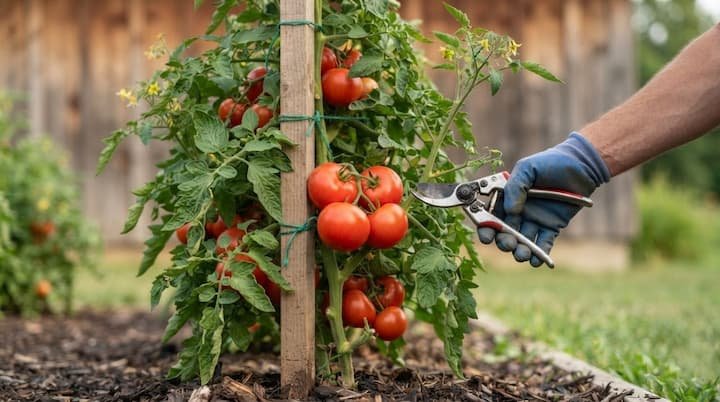
Ever wonder why one backyard jalapeno gives you a few sad peppers while your neighbor’s loads up all summer?
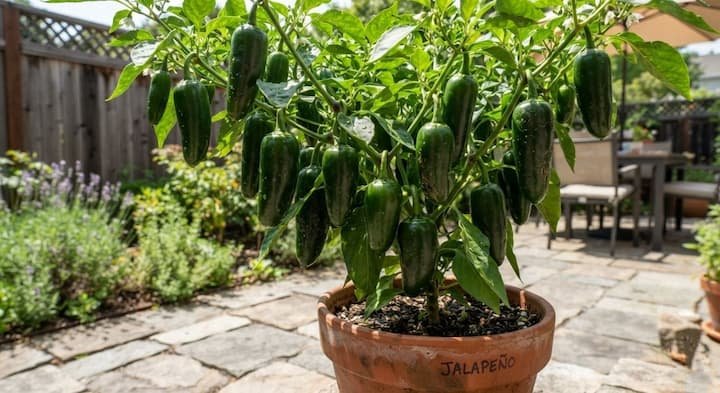
Pot size, soil, and timing decide almost everything. Here is how to grow jalapenos in pots so the plant stays healthy and keeps producing, even on a small patio, deck, or balcony, with no big garden bed.
Why Jalapenos Do So Well in Containers
Jalapenos stay compact, push out plenty of leaves, and load up with peppers, so they fit a pot better than a lot of other veggies. Growing jalapenos in pots also lets you drag the plant to a sunnier spot, or into the garage when a cold snap shows up in fall.
Here is what a container gives you:
- Space: a patio, deck, balcony, or sunny window is enough.
- Mobility: chase the sun, dodge frost, or escape a heat wave.
- Soil control: you pick the mix, so drainage and nutrients are in your hands.
- Faster warm-up: pots heat up quicker than yard soil, which can speed up early growth.
- Fewer ground pests: a raised pot keeps some soil critters off the plant.
- Beginner friendly: jalapenos in containers are one of the easiest first pepper crops.
Best Jalapeno Varieties for Small Spaces
Almost any jalapeno will live in a pot, but the variety changes heat and plant size. A standard jalapeno lands around 2,500 to 8,000 Scoville units. Jalapenos come from Mexico and carry plenty of vitamin C.
I like Jalafuego when I want hotter, thick-walled peppers from a plant that still stays manageable.
| Variety | Heat | Why Pick It |
|---|---|---|
| TAM Mild | Mild | Matures early, good for short summers |
| Early Jalapeno | Medium | Quick, reliable producer for beginners |
| Jalafuego | Hotter | Heavy yields and extra spice |
| Goliath | Medium | Big peppers, needs a roomy pot |
| NuMex Lemon Spice | Medium to hot | Golden-yellow color that looks great on a patio |
| Purple Jalapeno | Medium | Dark purple fruit, fun and productive |
How to Grow Jalapenos in Pots: Pot Size, Material, and Drainage
Pot size is the biggest yield factor. The bigger the pepper, the bigger the pot, and jalapenos sit right in the middle.
I think a 5 gallon pot is the sweet spot for one plant. Go smaller than 10 to 12 inches wide and deep and you will cut into your harvest. If you plan to overwinter the plant, step up to 10 gallons or more.
One jalapeno plant in a pot is plenty. Two plants crammed together just fight over water and food.
Pick your material based on your weather:
- Terracotta: breathes well but dries out fast.
- Plastic or glazed ceramic: holds moisture longer.
- Fabric grow bags: great airflow and no circling roots.
- Dark pots: can cook roots in hot afternoon sun, so shade them or go lighter in color.
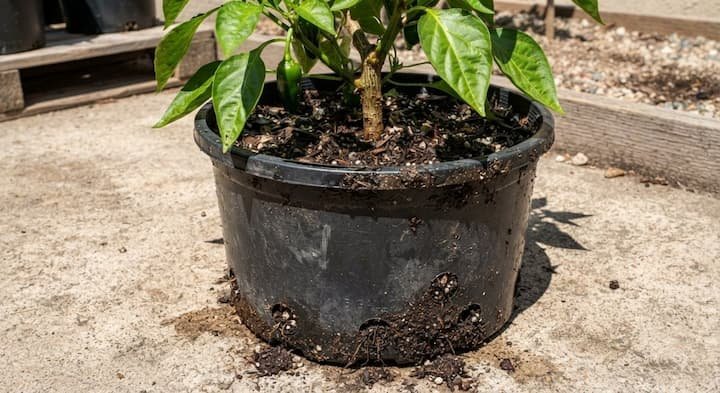
Drainage holes are non-negotiable. If your pot has none, drill a few. Set it on pot feet so water never sits in the saucer.
Potting Mix for Potted Jalapeno Plants
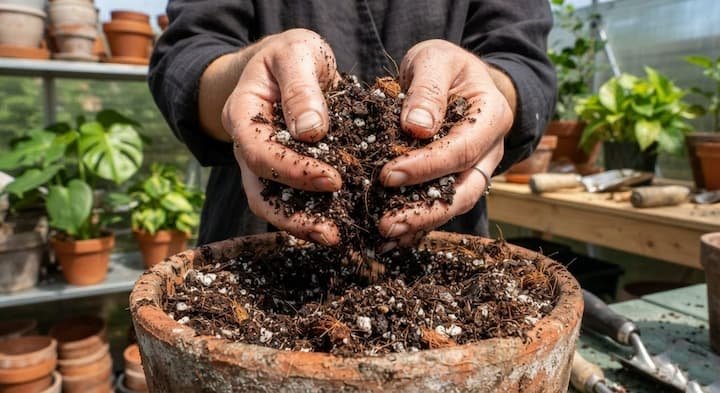
Skip yard dirt. It packs down in a container and chokes the roots.
Use a quality bagged potting mix, or build your own:
- 1 part potting soil.
- 1 part compost.
- 1 part peat moss or coco coir.
- 1 part perlite.
- Aim for a pH of 6.0 to 6.8
- Stir in a handful of compost or slow-release granules at planting for a strong start.
Buy bagged mix from a store with fresh stock, since old bags can hold insect eggs. Top it with an inch or two of mulch. It holds moisture and keeps the soil above 65°F, which jalapenos like.
If you want brand and recipe comparisons, check this pepper soil mix breakdown.
When to Start: Seeds or Seedlings
Seeds give you more varieties and cost less. Nursery seedlings save you about two months. Either way works.
For seeds, count back 6 to 10 weeks from your last frost date:
- USDA Zones 3, 4 and 5: start seeds indoors mid-March to early April, move outside late May to early June.
- USDA Zones 6 and 7: start late February to mid-March, move outside mid-May.
- USDA Zones 8, 9 and 10: start in January or February, move outside late March to April, or sow straight into the pot once frost danger is gone, then try a second round for fall.
Exact dates for your area are in this pepper planting dates guide. If you buy seedlings, grab bushy, dark green ones with no spots and no bugs under the leaves.
Starting Seeds Indoors
Seed starting is simple if you keep it warm and bright:
- Plant 2 to 3 fresh seeds per cell, about 1/4 inch deep, and thin to the strongest sprout.
- Hold the soil at 80°F to 90°F with a heat mat.
- Expect sprouts in 4 to 7 days.
- Use a humidity dome until they pop up.
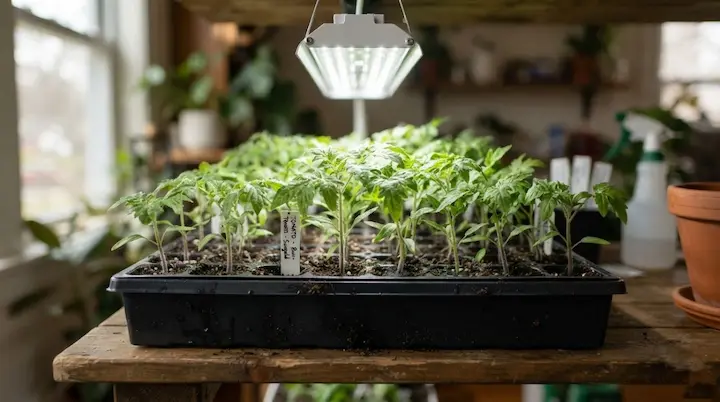
- Run a grow light 12 to 16 hours a day, a few inches above the tops for tube lights, or 12 inches and up for strong LEDs (check the label).
A sunny window alone gives leggy seedlings. At 2 to 3 weeks, once they have two sets of true leaves, move them into 3 to 4 inch pots. That small step up helps them grow faster than jumping straight to a huge pot.
Hardening Off and Transplanting
Seedlings raised indoors need a week or two to get used to real sun and wind. Start with 1 to 2 hours in shade, then add sun and time each day. Wait until nights stay above 50°F before the final move.
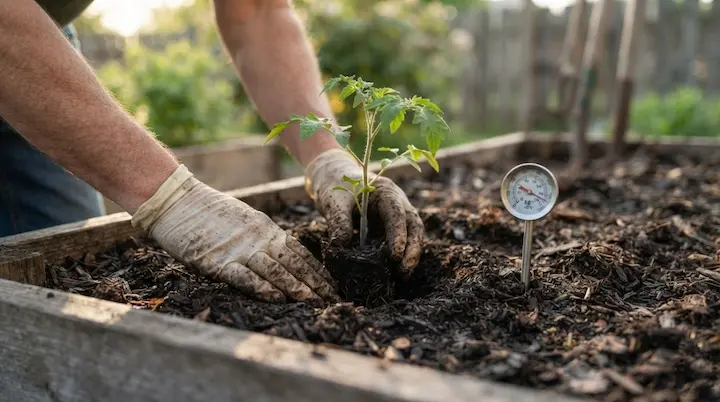
- Fill the final pot with mix, leaving 1 to 2 inches below the rim.
- Plant at the same depth the seedling grew in its nursery pot.
- Firm the soil lightly and water deeply right away.
- Tuck basil or alyssum along the edge, or read up on pepper companion plants.
Move seedlings up as soon as they outgrow the 3 to 4 inch pots, usually around 4 to 5 inches tall.
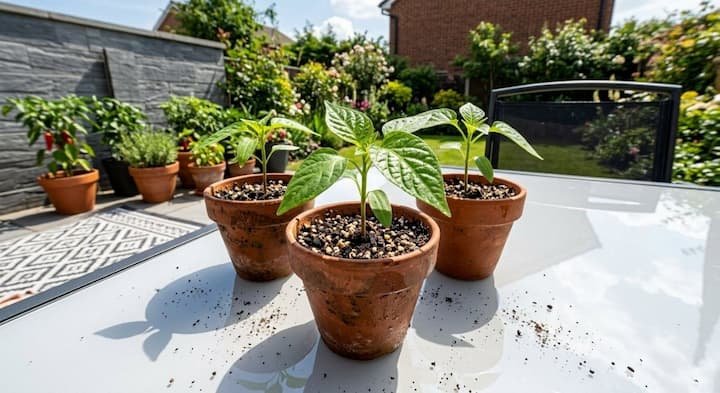
Sun, Heat, and Placement for Growing Jalapenos in Pots
Jalapenos want 6 to 8 hours of direct sun. Daytime temps between 70°F and 85°F are ideal, and nights should stay above 60°F. In my backyard, the plants that got a little afternoon shade in July held onto way more flowers.
Where you put the pot matters:
- Patio: a jalapeno plant in a pot loves a south or west facing wall that stores heat.
- Balcony: block strong wind and anchor tall pots so they do not tip.
- Indoors: use a south-facing window plus a grow light, turn the pot every few days so it grows straight, and shake the plant gently to pollinate.
- Hot spells: pale, papery patches on peppers mean sunscald, so add shade cloth for a few hours.
- Critters and pets: park the pot where dogs, cats, or squirrels cannot tip it or nibble the plant.
Watering Jalapenos Without Drowning Them
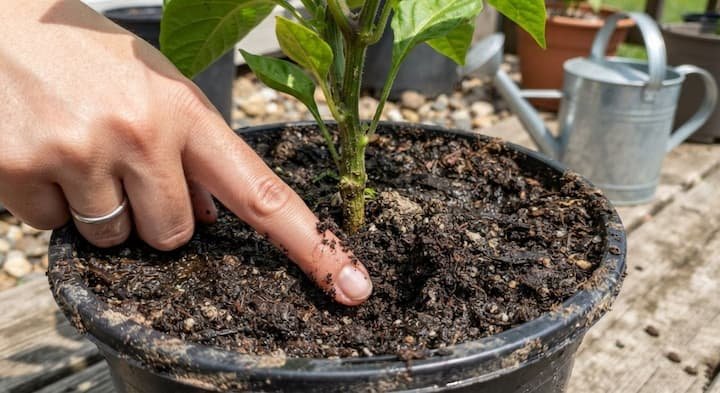
Jalapenos in containers dry out faster than ground plants, so check them every day once summer heat hits. Water by feel, not by calendar:
- Push a finger 1 to 2 inches down, and water only if it feels dry.
- Pour until water runs out the bottom.
- Water in the morning or evening, at the base, not over the leaves.
- In July heat, a 5 gallon pot may need roughly 1/2 to 1 gallon every day or two.
- In cool spring weather, every 3 to 4 days may be plenty.
- Self-watering pots help in a heat wave, but still check the soil.
Yellow lower leaves with wet soil point to overwatering. Crispy, drooping leaves that perk up after a drink mean the pot got too dry. Our pepper watering schedule goes deeper on timing.
Feeding Schedule That Actually Works
Guides disagree here. Some start feeding 2 to 3 weeks after transplanting, others wait 4 to 6 weeks if the mix already has nutrients. I skip fertilizer for the first month in a fresh mix, then start light.
- Seedlings: nothing, or quarter strength if the mix is plain.
- Growth stage: balanced feed like 10-10-10 or 5-10-5 every 2 to 3 weeks.
- Flowering and fruiting: switch to lower nitrogen and more phosphorus and potassium, like 5-10-10.
- Too much nitrogen: you get big leaves and few peppers.
- Liquid vs granular: liquid works fast but can overfeed, slow-release granules rarely burn.
- Potted jalapeno plants lose nutrients with every watering, so feeding matters more than it does in a yard bed.
Magnesium and calcium usually come with a good mix. Use Epsom salt only when you see a magnesium problem, and compare options in this pepper fertilizer guide.
Pruning, Topping, and Support
Gardeners argue about pruning. Some pinch the top at 6 to 8 inches for a bushier plant. Others saw no yield change and quit. I top mine once at about 8 inches and then leave them alone.
- Remove dead leaves and suckers on the main stem.
- Cut leaves that touch the soil, since splash spreads disease.
- Do not strip the plant bare, because leaves shade the peppers.
- Stake or use a small cage, since plants often pass 2 feet and get top-heavy.
- Tie with soft cloth strips, not wire.
For step-by-step cuts, see pruning peppers.
Pests and Diseases
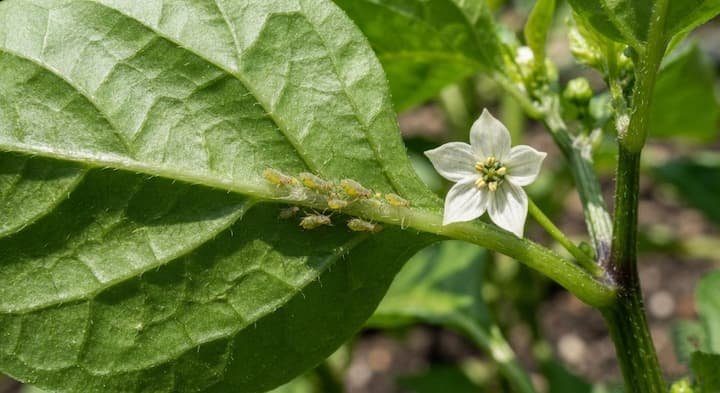
Look under the leaves once a week.
- Aphids: blast with water, then use insecticidal soap or neem oil, or bring in lacewings.
- Spider mites: fine webbing in dry heat, treat with a water spray and soap.
- Whiteflies: yellow sticky traps help.
- Prevention: marigolds and basil nearby bring in helpful bugs, and disease-resistant varieties cut trouble even more.
- Bees: spray in the evening, not midday, so you do not hit pollinators.
- Bacterial spot: brown or black spots, so remove those leaves and skip overhead watering.
- Powdery mildew: give the plant airflow and spacing.
- Root rot: fix drainage and stop overwatering.
Common Problems and Quick Fixes
Most trouble comes down to water, heat, or feed. Twisting leaves? Read about curling pepper leaves.
| Problem | Likely Cause | Fix |
|---|---|---|
| Yellow lower leaves | Overwatering, low nitrogen, or old age | Check moisture first, then feed lightly |
| Curling leaves | Heat, too much light, overwatering, or low calcium | Check moisture, add shade, water evenly |
| Flowers dropping | Heat, cold nights, uneven water | Add shade, water steadily |
| Flowers but no peppers | Poor pollination, hot nights | Shake plant or use a small brush |
| Small, stubby peppers | Pot too small, low feed, heat | Bigger pot, regular feeding |
| Black joints on stems | Normal darkening | Nothing needed |
| Pale papery patches | Sunscald | Afternoon shade |
| Brown, shriveled pepper bottoms | Uneven watering, low calcium | Water evenly |
Blossom drop has a clear science behind it. NC State Extension explains that peppers fail to set fruit when nights run above 75°F or below 55°F, or when days climb past 90°F, because pollen turns tacky.
Mistakes that sink most first-timers:
- A pot that is too small.
- Garden soil in the container.
- Watering on a calendar.
- Less than 6 hours of sun.
- Heavy nitrogen once flowers show up.
Harvesting: When and How
Here is the rough timeline: seeds sprout in 4 to 7 days, plants move outside around week 6 to 8, and the first peppers show up 60 to 80 days after transplanting (about 4 months from seed). A healthy plant in a 5 gallon pot often gives 25 to 35 peppers over a season.
- Pick when peppers hit 3 to 5 inches and feel firm and shiny.
- Some guides say wait for red, but green is fine; green is milder, red is sweeter and hotter.
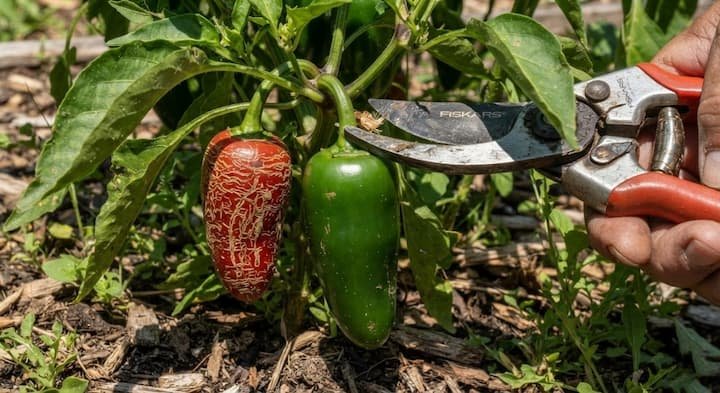
- Tan lines on the skin, called corking, are normal on ripe peppers.
- Cut with pruners and leave a short stem, since pulling can snap branches.
- Let the soil dry a bit more between waterings while peppers ripen if you want extra heat, but do not wilt the plant.
- For milder peppers, water evenly, pick green, and scrape out the seeds and white ribs before cooking.
- Wear gloves when handling a big batch, and keep your hands away from your eyes.
I always pick a few green ones early, because it keeps the plant putting out new flowers. Timing tips are in this guide on picking jalapenos.
After the Harvest: Storing, Seeds, and Winter
Fresh peppers keep 1 to 2 weeks in the fridge. Freeze them whole or sliced, pickle them, dry them for powder, or turn them into salsa, hot sauce, roasted peppers, or poppers.
- Save seeds: use fully red peppers, dry the seeds on a plate with good airflow, then store in a cool, dry container.
- Skip hybrid seeds: they will not grow true next year.
- Annual or perennial: in USDA Zones 4, 5, 6, 7 and 8 jalapenos act as annuals, while Zones 10 and 11 can keep them going for years.
- Winter plan: before the first frost, rinse the leaves, cut the plant back by about a third, and move the pot to a bright window or under a grow light, above 45°F. Water less and watch for aphids, and expect some leaf drop while it adjusts; the full routine is in this guide to overwinter peppers.
- Old soil: refresh it with all-purpose fertilizer next spring, and toss diseased soil in the trash instead of the compost, then scrub the pot with soapy water before reuse.
Final Thoughts:
Now you know how to grow jalapenos in pots from seed to harvest. Pick a 5 gallon container, use a loose mix, give the plant 6 to 8 hours of sun, and water by feel. Keep the feeding light, watch the nights, and pick often. Do that, and one pot can keep your backyard kitchen stocked with salsa peppers well into fall.