
What if the curl itself is telling you exactly what went wrong?
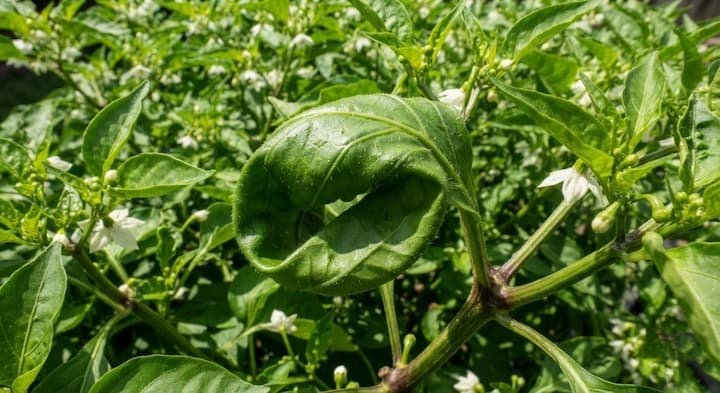
Pepper plant leaves curling is rarely random. A leaf folding up like a taco points at heat or thirst, while one rolling down often points at wet roots or tiny bugs. Learn to read the shape and you can fix most plants within a few days.
How to Read the Curl Before You Touch Anything
Curling pepper leaves can look alike at first glance, and the wrong treatment on the wrong cause makes things worse. Don’t spray or feed anything yet.
Spend five minutes noting where the curl started, new growth or old, one side or the whole plant.
| What you see | Where it shows up | Likely cause |
|---|---|---|
| Folds up like a taco, flat again by morning | Whole plant | Heat or thirst |
| Rolls down, feels soft, soil stays wet | Whole plant | Overwatering or poor drainage |
| Tight downward curl, sticky film or bugs underneath | New growth tips | Aphids or whiteflies |
| Twisted, leathery, bronze new leaves | Growing tips | Broad mites |
| Dark green, thick, curled inward | Whole plant | Too much nitrogen |
| Crumpled new leaves with bent edges | Newest leaves | Calcium trouble |
| Bumps and whitish crystals underneath | Mostly older leaves | Edema |
| Mottled light and dark green patches | Random leaves | Virus |
| Stiff, spoon-shaped cupping and twisted tips | Young leaves | Herbicide |
Run these quick checks before picking a cause:
- Push a finger 2 inches into the soil and lift the pot to feel its weight.
- Look under leaves for bugs, webbing or sticky residue, using a magnifier if you have one.
- Count how many plants are curling. One plant points to a local problem, while every plant points to conditions like weather or watering.
- Note when the pepper leaf curl started, and whether a heat wave, cold night, heavy feeding, spray, repotting or new compost came right before it.
Curling isn’t the same as wilting or cupping. Wilted leaves droop flat and perk up after a drink, curled ones fold or roll along the edges, and cupped ones bowl inward like a spoon.
A little curl can also be normal. Some varieties simply grow that way, and a mild fold on a hot afternoon with flat leaves by morning isn’t a problem.
Overwatering: Why Curling Pepper Leaves Often Start in the Roots
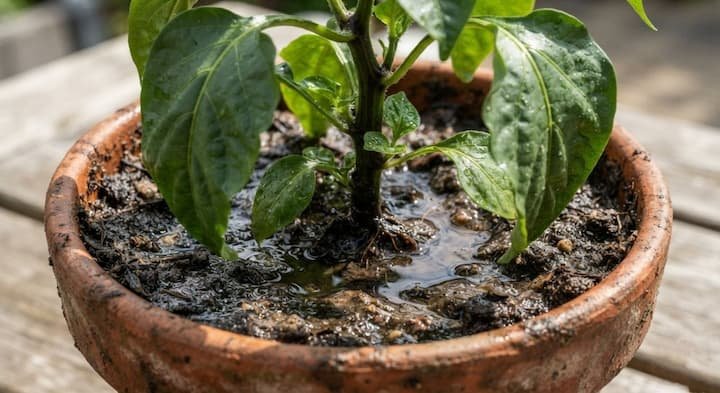
Soggy roots can’t breathe. They rot, stop pulling in water, and the plant looks thirsty even though the soil is wet. Leaves roll downward and feel soft instead of crisp. Most of the time the real culprit is drainage, not how often you water.
I trust a finger and the weight of the pot over any moisture meter.
Here’s the fix:
- Let the top 2 inches of soil dry before watering again.
- Drill drainage holes or move to a pot that has them, at least 3 gallons and ideally 5, and make sure existing holes aren’t clogged.
- Mix perlite into potting soil at 20 to 30 percent, and trim black or mushy roots with clean pruners if rot shows up.
A steady watering schedule and a loose pepper soil mix make this cause mostly disappear.
Heat, Sun and Wind Stress
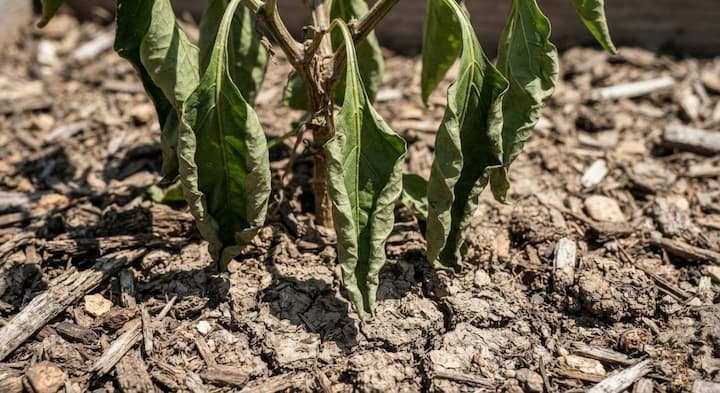
Thirst makes leaves fold up along the middle rib. It’s a survival move, not a disease. Pepper leaves curling up at 3 p.m. that look fine at sunrise are just heat stress. A dry pot feels light and the leaves feel stiff and papery.
Gardeners in USDA Zones 7 and 8 see this every July once backyard afternoons pass 90°F.
- Water deeply in the early morning until it runs out the bottom, then mulch 2 to 3 inches of straw or wood chips.
- Hang 30 to 40 percent shade cloth when highs stay above 90°F.
- Pepper leaves curling up only in the afternoon? Water deeply the next morning and check for flat leaves at sunrise.
- Move pots off hot concrete and out of steady wind.
Wind does the same thing, because plants roll their leaves to lose less water. Container plants on a breezy patio get hit hardest, especially in small bell pepper pots that dry out fast. In my experience, afternoon shade does more than extra water once the day climbs past 95°F.
In desert and deep South yards where days hit 100°F, plants can stall and put out small, curled new leaves. Afternoon shade, mulch and deep morning water keep them alive until fall brings better fruit set.
Cold Snaps, Transplant Shock and Grow Lights
Peppers are tropical plants. Soil colder than 55°F slows the roots way down, and nights under 60°F can cup the leaves upward like little boats. Indoors, cold drafts from an air conditioning vent do the same thing. Gardeners in USDA Zones 4, 5, 6, 7 and 8 all get a cold snap after transplanting in spring, so check the planting dates for your area before moving anything outside.
Transplant shock looks similar. A seedling raised indoors and dropped straight into full sun can curl and even scald, leaving pale white spots. Repotting also disturbs the roots for a few days, so use a loose mix and water gently.
A pinch of mycorrhizal fungi helps new roots recover faster. Harden plants off over 7 to 10 days, add more sun each day, and cover them with row cover when nights drop below 60°F. If you grew them yourself, the guide on starting from seed covers the indoor stage.
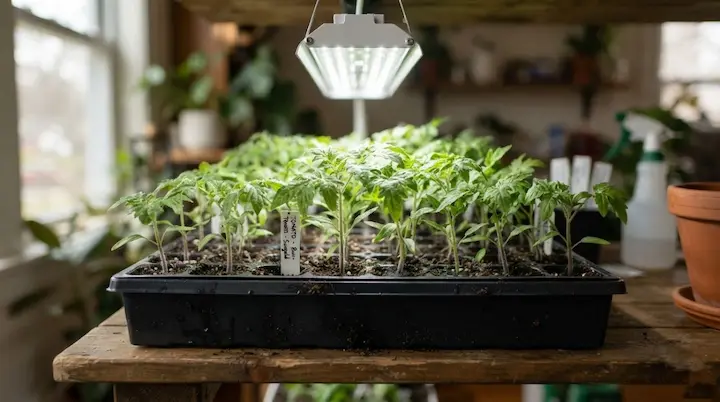
Grow lights cause the classic taco-shell curl when they sit too close, and tender seedlings get hit first. Keep lights 12 to 18 inches above the leaf tops, on a timer for 12 to 16 hours, never 24/7.
Sap Suckers Behind Leaf Curl on Pepper Plants
Pests feed on tender new tissue, and their saliva throws the growth off. The curl usually starts on a few leaves or branch tips instead of the whole plant evenly.
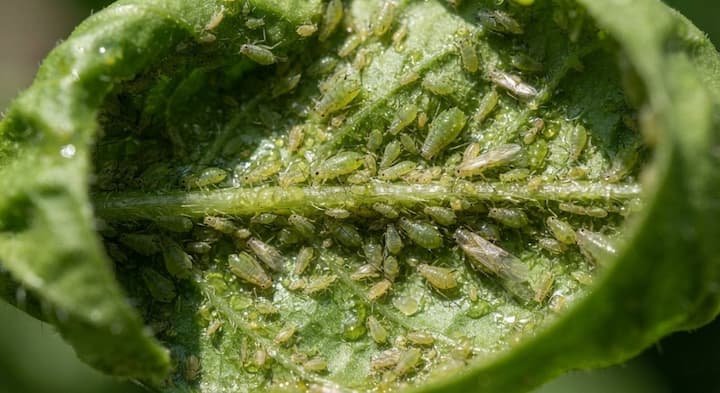
Aphids hide underneath as soft, pear-shaped dots in green, black or white, and leave sticky honeydew behind. Whiteflies lift off in a little cloud when you tap a branch. Thrips leave silvery streaks and bent tips.
Spider mites add fine webbing and a speckled bronze look, and they love hot, dry weather. Leafhoppers cause similar damage. Outdoors, skip broad-spectrum sprays, since they kill the good bugs first.
- Knock bugs off with a strong hose jet three mornings in a row.
- Spray 1 tablespoon of castile soap in a quart of water on every leaf surface, undersides included, in the evening.
- Plant alyssum, basil or marigolds nearby, since these companion plants bring in ladybugs and lacewings.
- Check neighbors too, since leaf curl on pepper plants often spreads from tomatoes or eggplant growing next door.
Broad Mites, the Pest You Can’t See
Broad and cyclamen mites are too small to spot with your eyes. New growth comes out twisted, blistered, leathery and bronzed, and the growing tip can die off.
Extension researchers at the University of Florida note that as few as 10 mites on one pepper plant can cause injury. They also hitchhike in on garden center transplants.
I think of broad mites whenever new leaves look deformed instead of just curled.
- Isolate the plant and put the worst tips in the trash, not the compost.
- Apply a sulfur-based miticide or spinosad every 5 to 7 days for three rounds, following the label.
- Keep new plants apart from the rest for a couple of weeks.
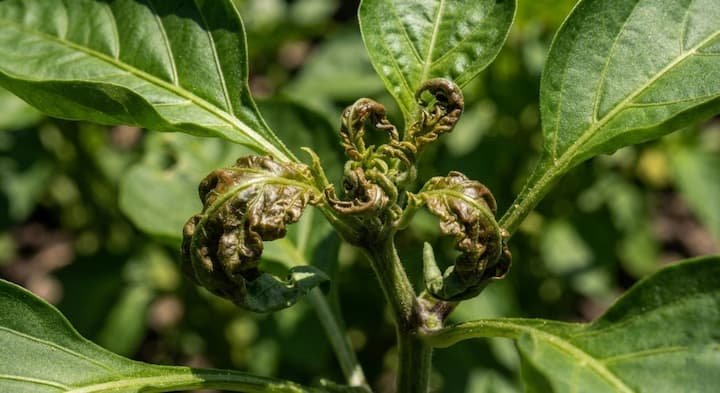
Feeding Mistakes: Calcium, Nitrogen, pH and Salt Buildup
Leaves curl when the nutrient balance is off. Too much nitrogen gives dark, thick leaves that curl inward on weak stems. A calcium shortage shows up on the newest leaves, which crumple and bend upward, and sometimes the fruit gets blossom end rot.
Most soil has plenty of calcium. Peppers just can’t reach it when the pH is off, so aim for 6.0 to 6.8. Below 6.0, phosphorus locks up too, and stems and leaf undersides turn purple along with the curl.
Too much potassium or nitrogen can also block calcium and magnesium, and low magnesium shows as yellowing between veins on older leaves. White crust on the soil and burnt edges point to salt buildup from heavy feeding.
- Test soil pH before adding anything, and retest every year or two. A leaf tissue test helps when nothing else explains the curl.
- For low calcium, work in a calcium-magnesium supplement or bone meal.
- For nitrogen overload, pour twice the pot’s volume of plain water through it and skip feeding for 2 to 3 weeks.
Once flowers set, switch to a balanced feed and use a pepper fertilizer guide for amounts. Add Epsom salt only when magnesium is truly short. For a quick boost while the soil catches up, mist leaves with diluted balanced fertilizer or seaweed spray.
Plant Edema and Other Odd Causes
Edema happens when roots take in water faster than the leaves can use it. You’ll see bumpy blisters, a whitish crystal texture underneath and curled edges. It’s most common indoors and isn’t contagious.
Annuum types like bell peppers and jalapenos get it more than habaneros. A small fan helps, and so does skipping water on cool, cloudy days when the soil is still damp.
A few less common causes are worth a look:
- Root-bound plants in small pots get distorted leaves and slow growth, so repot into a bigger container.
- Grubs chewing roots in container soil can be picked out by hand.
- Bacterial infection adds brown, circular spots, so remove the worst leaves and keep soil from splashing up.
- Poor pollination on indoor plants shows up as dropped flowers, and a gentle shake helps.
- Some varieties also curl a bit while the new growth stays healthy.
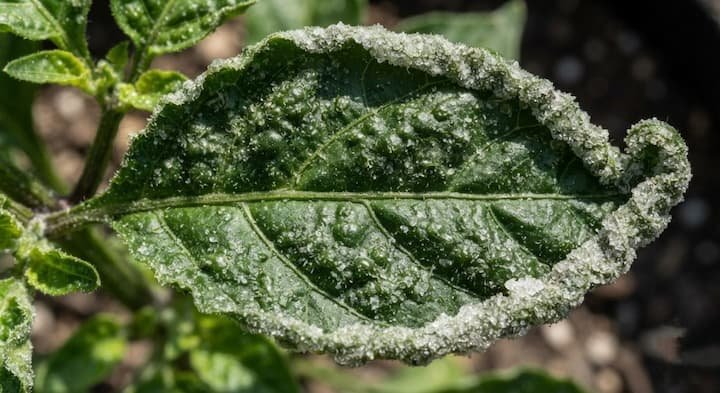
Viruses, Fungus, Herbicide Drift and Spray Burn
Mosaic viruses cause curl along with mottled light and dark green patches, yellow streaks and sometimes dark rings or yellow bull’s-eyes. Nothing cures them, since the virus lives throughout the plant, so plant resistant varieties where virus pressure is high.
Aphids, thrips and dirty tools spread it:
- Pull the plant and bag it in the trash.
- Wipe pruners with 70 percent rubbing alcohol or a 10 percent bleach mix between plants.
- Wash your hands after handling tobacco, since tobacco mosaic virus lives on it.
Fungal trouble likes humid weather and crowded plants. Spots show up first, then the edges curl as the leaf weakens. Open up the canopy, water at the base and remove sick leaves.
Herbicide looks different. Young leaves cup stiffly like spoons and the tips twist, while stems and roots look fine. Flowers and tiny fruit may also drop right after a nearby treatment. Drift from a neighbor’s lawn spray is common, but residue also hides in grass clippings, manure, hay and bagged compost.
Skip clippings from a treated yard, and plant a hedge as a buffer if spraying happens nearby.
Your own sprays can burn leaves too. Neem or soap applied in midday sun, or above 90°F, scorches and curls them, so spray in the evening.
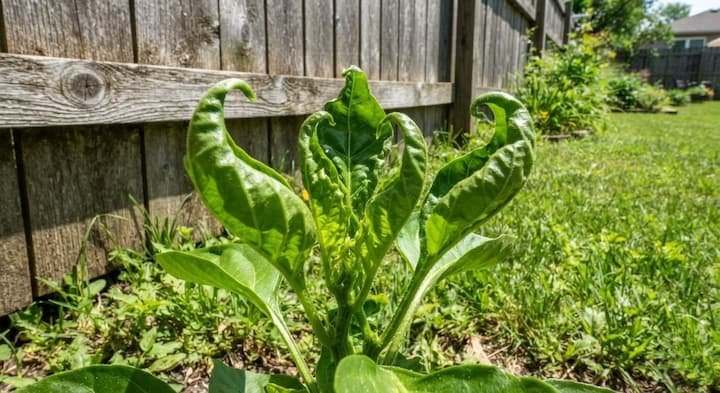
Seedlings, Container Plants and Backyard Beds
Seedlings with leaves curling up under lights usually have a light distance or temperature problem. Container plants lean toward drainage, hot patios and small pots.
Backyard beds deal with weather, clay and drift. Indoor plants lean toward edema and stale air.
- Only one variety curls while the rest look fine: that variety may be more sensitive, so check for mites.
- Top growth curls right after moving outside: suspect sun and wind shock, then check for aphids.
- Curl plus dropping flowers: look at heat stress first, then pests.
- Leaf rolls from the tip toward the base: water stress is the best first guess.
- One leaf, stem and all, loops like a roller coaster while its neighbors look normal: often a one-off from past stress, so leave it if new growth stays healthy.
A 7-Day Plan for Pepper Plant Leaves Curling
I change one thing at a time, starting with the cheapest and most common cause. Fix five things at once and you’ll never know which one worked.
- Day 1: Check soil moisture and drainage, and fix watering first.
- Day 2: Check light and temperature, then shade or move the plant.
- Day 3: Inspect leaf undersides with a flashlight and hose off pests.
- Day 4: Test pH, and hold off on fertilizer until you know the number.
- Day 5: Flush the pot if you suspect salt or nitrogen overload.
- Day 6: Isolate or pull anything that looks like a virus.
- Day 7: Compare the newest leaves with the ones from Day 1.
If the newest leaves come in flat after any day, stop there and just watch. Pepper plants need time, and over-caring with extra water, feed and spray adds new stress.
Will Curled Leaves Flatten Out, and Should You Cut Them Off?
Pepper leaf curl on old leaves usually stays even after you fix the problem. Judge the plant by the new growth.
| Cause | What recovery looks like | Typical timing |
|---|---|---|
| Thirst or heat | Leaves relax | A few hours to a day |
| Overwatering | New leaves come in flat | One to two weeks |
| Aphids or whiteflies | Clean, flat new leaves | One to two weeks after bugs are gone |
| Broad mites | Normal tips, old damage stays | Several weeks |
| Nutrient problems | New leaves look normal | A few weeks |
| Virus | No recovery | Doesn’t reverse |
Leave healthy-looking curled leaves alone, since they still make food for the plant. Cut only leaves covered in pests or disease, using clean pruners, and the guide to pruning pepper plants shows where. A mild curl barely touches the harvest, but heavy damage on new growth cuts fruit set, and virus plants give small, poor fruit.
I think most people pull plants too early. Pull one only if the curl comes with stunting, black mushy stems or a virus pattern that doesn’t improve after two or three weeks of proper care. Start fresh in a new pot with new soil, or rotate to a different bed, and replant with clean seed or healthy transplants.
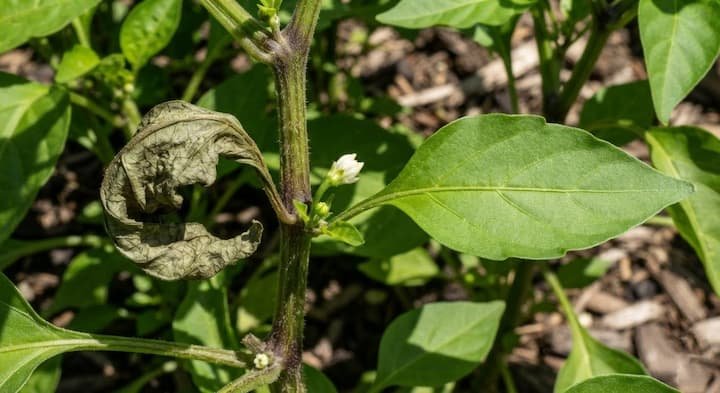
Keeping Leaves Flat Next Season
Steady conditions beat emergency fixes every time.
- Keep soil slightly moist, never soaked or bone dry, and mulch to even out moisture.
- Feed with a balanced fertilizer every 2 to 3 weeks and hold pH at 6.0 to 6.8.
- Spray diluted neem every 14 days during the growing season, in the evening.
- Rotate pepper beds every 2 to 3 years, and use fresh potting mix each season for pots.
- Use drip irrigation or self-watering containers to keep moisture steady.
- Prune a little each year to open the canopy, and give plants airflow with proper raised bed spacing.
I keep a cheap notebook with watering dates, weather and odd symptoms, and flip through it every fall. After one season the patterns jump right out.
Final Thoughts:
Pepper plant leaves curling looks scary, but most cases come down to water, heat, bugs or feeding. Read the shape, check the soil and the undersides, and change one thing at a time. New growth is your report card, so judge the plant by that and not by old leaves that stay bent. Give it two weeks of steady care and you’ll know if it’s winning. Start with your watering, since it fixes more cases than anything else.
Pingback: Epsom Salt for Pepper Plants: Dosage, Timing & Mistakes