A pepper plant can wilt in soaking wet soil and wilt again in bone-dry soil. Same droopy look, opposite fix. That mix-up is why so many backyard plants never reach a good harvest. So how often to water pepper plants?
There is no single answer, but there is a simple pattern. Here is the full breakdown, from seedlings to fall cleanup.
What Peppers Need From Water and Why It Matters
Peppers are nightshades, like tomatoes and eggplant. They want 6 hours of sun and soil that drains well. A fixed Tuesday and Saturday routine ignores soil, heat, humidity, wind and rain, so it fails.
Uneven moisture causes real damage:
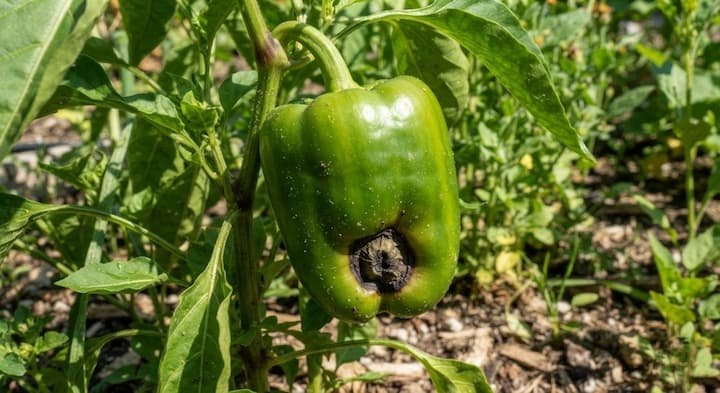
- Dry spells followed by a heavy soak lead to blossom end rot, those sunken black spots on the fruit bottom.
- Flowers drop when soil swings between dry and soaked.
- Stressed plants catch fungal disease and root rot more easily.
- Steady moisture builds sturdier plants and bigger fruit.
I think uneven watering is the number one reason pepper plants disappoint, ahead of bugs and feeding.
How Pepper Roots Work and Why Deep Soaks Win
About 70 percent of pepper roots sit in the top foot of soil, though some push 3 to 4 feet down in loose ground.
Heavy soaks every few days pull roots deeper, while light daily sprinkles keep them shallow and the plant struggles in the first hot week. Soil type shifts this too, since sandy soil drains fast and clay holds water.
5 Simple Ways to Check Soil Moisture
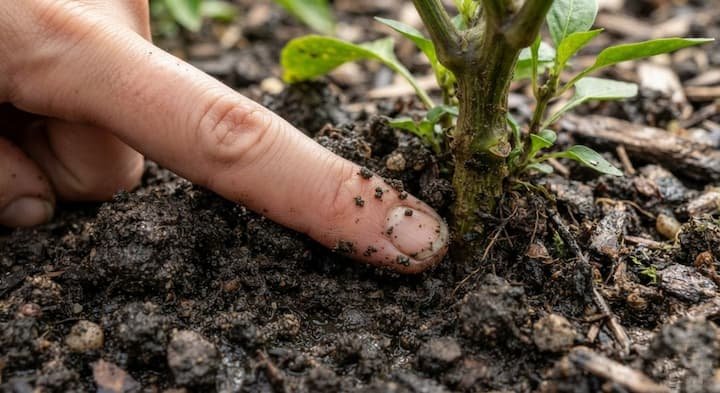
- Finger test: push a finger 1 to 2 inches down. Dry and crumbly means water, cool and damp means wait.
- Pot lift: a light pot needs water, a heavy one does not.
- Stick test: push a wooden stick 6 inches down for 30 seconds. A wet stick means moisture is there.
- Moisture meter: probe 2 inches down and aim for the moist band.
- Rain gauge: log rainfall beside your pepper plant watering schedule, then finger check the next morning, since light rain can leave soil dry below the mulch.
I like the pot lift best because it takes two seconds and works on every container.
How Often to Water Pepper Plants at Each Growth Stage
A pepper plant does not drink the same amount all season. A tray of tiny seedlings needs light, frequent attention, while a loaded plant in July wants a deep soak. The biggest beginner mistake is using one routine from start to finish.
Treat the table below as a starting point, then adjust it for your soil, pot size and weather.
Check the top 1 to 2 inches of soil first, every time:
| Stage | How often | What to watch |
|---|---|---|
| Seed tray | Keep warm and moist, check daily, bottom water when edges look pale | Soggy surface, algae, fungus gnats |
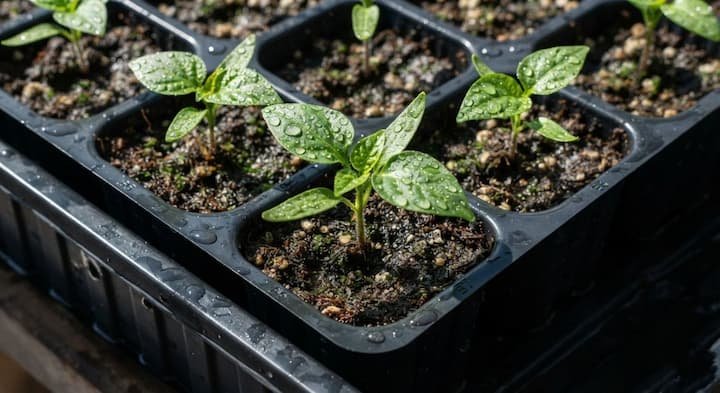
| Seedlings | Every 1 to 2 days, bottom water 10 to 15 minutes, mix damp not wet | A feather-light tray |
| New transplants | Water well before and after planting, then check daily for a week | Midday droop that fades by evening |
| Vegetative growth | Soak when the top 1 to 2 inches dry, often 1 to 3 times a week | Pale color, shallow roots |
| Flowering and fruiting | Keep moisture steady, no dry-then-soaked swings | Flower drop, small fruit |
| Late season | Ease back as nights cool | Cold, soggy soil |
Heat mats dry trays fast, so check cell edges daily. For seed starting, see bell pepper seeds, and for garden center transplants, see when to plant.
How Much Water Do Peppers Need Per Plant?
University of Minnesota Extension says that if peppers miss 1 inch of rain in a week, soak the soil thoroughly at least once that week.
In gallons:
- 1 inch of water over 1 square foot is about 0.6 gallons.
- One plant with 18 by 24 inches of room needs roughly 2 gallons a week, rain and hose combined.
- An empty tuna can near the plant shows what the hose delivered.
- For a pot, skip the math and water until it drains from the bottom.
Give that total in 1 or 2 deep soaks instead of daily sprinkles.
Watering Peppers in Pots vs Garden Beds
Beds hold moisture longer than containers, though raised beds drain faster than open ground. For layout, see raised bed spacing.
Pots dry from every side and swing between wet and dry faster than beds. Container roots also have less room, so yields run lower than in the ground.
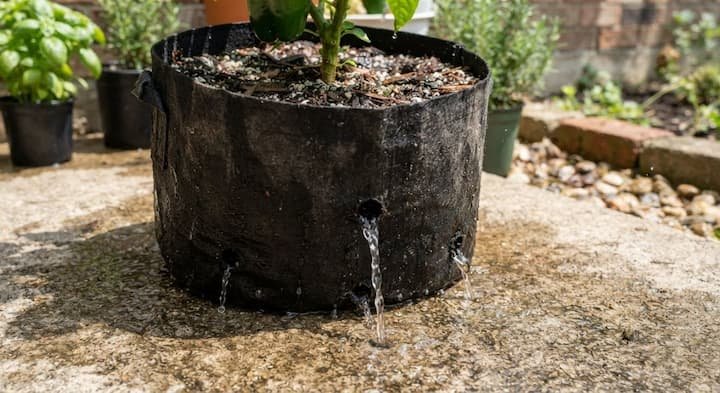
My fabric pots dry faster than my plastic ones, so those get checked first, and terracotta wicks water out fast too. Black plastic can heat the root zone. At around 65°F, a pot may need water once a day. Past 85°F, plan on two checks a day.
- Use a 5-gallon pot or a half whiskey barrel, 12 to 24 inches deep, since smaller pots dry fast.
- Pour slowly until water runs from the drainage holes (drill more if needed), and never leave the pot in a full saucer.
- Self-watering pots stretch checks to every 2 to 3 days, but the reservoir can grow algae or breed mosquitoes.
Straw on top slows evaporation. More container tips are in container bell peppers.
Soil Type and Potting Mix
Soil moves the watering interval more than any other factor. Sandy soil drains fast, so water more often in smaller amounts. Loam with compost holds water and still drains.
Clay holds water a long time, so water less often but deeply. A community gardener on a shared plot often gets loose, sandy fill, so plan extra soaks. Mixing finished compost or worm castings into beds improves drainage.
In pots, mixes with peat moss or coco coir hold moisture, while sandy mixes drain too fast. If a mix dries out completely, water runs down the sides, so set the pot in a tub of water for 20 to 30 minutes. See best soil mix.
Weather, Season and Climate Changes
The honest answer to how much water do peppers need shifts with the weather. Heat, wind, dry air and a heavy fruit load all raise demand. Spring soil is cool and wet, so water only when it is truly dry. Midsummer needs the most, and fall pulls demand back down.
Heat waves call for extra soaks, cool snaps for fewer.
- USDA Zones 4, 5 and 6: rain helps a lot, so one deep soak a week often does it, plus one in a heat wave.
- USDA Zones 7 and 8: two or three soaks a week in summer.
- Zones 9 and 10, plus the dry Southwest: daily or every other day in peak heat, and mulch is a must.
- Mountain states and hot interior valleys: dry air pulls water out fast, so expect 2 or 3 soaks a week.
- Humid or monsoon weather: soil dries slowly, so check before every watering.
Slopes and shaded corners dry differently, so adjust to your yard.
Best Way and Best Time to Water
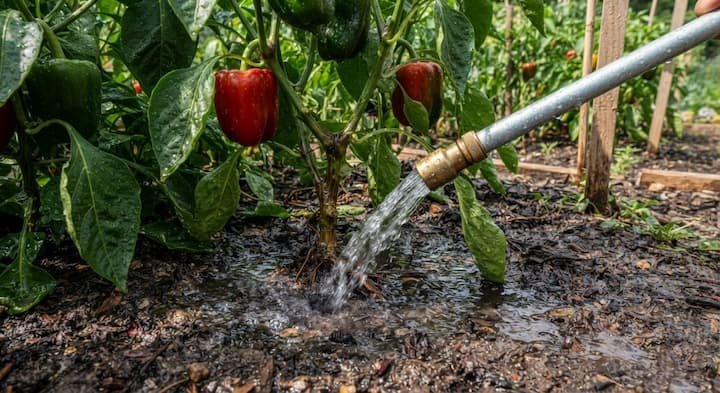
Water the base, not the leaves, because wet foliage invites powdery mildew and early blight, and splashing soil carries spores upward. A soaker hose, drip line or long wand beats an overhead sprinkler.
Let water run slow for 3 to 5 minutes so it soaks in. Morning is best since roots drink before the heat and leaves dry fast, and evening works for pots if the foliage stays dry. I water around 7 a.m., before the backyard heats up.
Mulch and Other Ways to Save Water
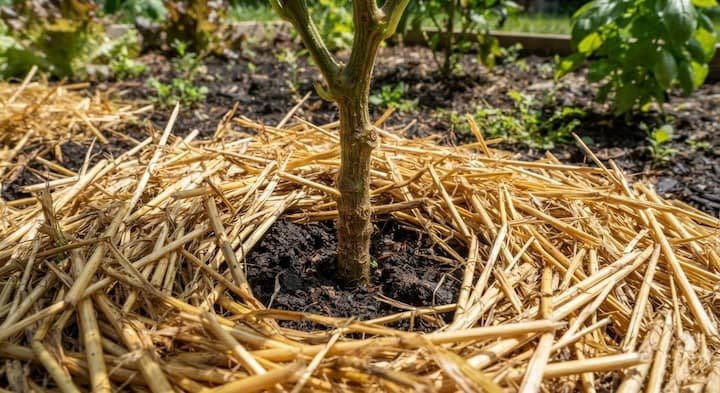
Mulch is the cheapest fix for a thirsty bed. It also cools roots, blocks weeds and can cut watering needs by a third or more.
- Spread 2 to 4 inches of straw or dried leaves, 1 to 2 inches off the stem, and top it up in midsummer.
- Wait until soil hits 70°F to 75°F, since mulch on cold soil slows roots.
- Use black plastic mulch to hold moisture, shade cloth for scorching afternoons, and a windbreak for drying wind.
An old trash can with a tight, screened lid makes a cheap rain barrel. In my experience, straw beats grass clippings, which mat down and turn slimy.
Overwatered Pepper Plants vs Underwatered vs Heat Wilt
Drooping can mean three different things, so check the soil before grabbing the hose.
| Problem | Soil and pot | Leaves | Recovery |
|---|---|---|---|
| Underwatered | Dry top 2 inches, light pot | Dull, crisp edges | Perks up after a deep soak |
| Overwatered | Soggy, heavy pot, sour smell, fungus gnats | Yellow lower leaves, curl | Stays limp in wet soil |
| Heat wilt | Soil still moist | Afternoon droop | Recovers by evening |
Do not chase afternoon droop with water, since hot leaves lose moisture faster than roots refill it. Wilting in wet soil means root stress. One-sided wilt or black stem lesions point to disease, not water.
- Overwatered pepper plants: stop watering until the top 2 inches dry. Slide a potted plant out, trim brown mushy roots with clean pruners and repot in fresh mix. In clay beds, loosen the soil with compost, and in stuck pots, drill bigger drainage holes.
- Underwatered: skip the flood. Soak slowly, or bottom soak a pot for 20 minutes.
Water Problems: Blossom End Rot, Flower Drop and Leaf Curl
Blossom end rot shows as bruised fruit bottoms that turn sunken and black, because dry spells followed by heavy soaks block calcium. Flowers drop and fruit cracks for the same reason. Leaf curl can come from wet roots, thirst or heat, so check the soil first (see leaf curl causes).
Underwatered plants stay small and ripen slowly, while too much water flushes nutrients out of the soil and cuts flowering. Soggy soil also cuts off oxygen, and root rot follows.
Does Less Water Make Peppers Hotter?
Mild drought stress can raise capsaicin, the compound behind the heat. Research backs this for big, pungent habanero types, not every hot pepper, and the same swings cause blossom end rot and cracked skins.
If you try it, wait until fruit is setting and let soil dry a bit more between soaks, never skip them. Harvest timing plays a part too, so see picking jalapenos.
Water Quality: Tap, Well and Rain
Plain tap water works fine, since chlorine fades within hours and most tap water sits near neutral pH. Hard water can leave a mineral crust in pots over a few seasons, and water-softener water adds salt that hurts roots.
Flush pots with plain water now and then to rinse out fertilizer salts, then see best fertilizer for feeding. Let very cold well water warm in a bucket first. Rainwater is free and works great, just keep barrels covered so mosquitoes stay out.
Indoor Peppers and Overwintering
Indoor and grow-light pots dry slower than patio pots, so go by weight and water when the top 2 inches are dry. In USDA Zones 4, 5, 6, 7 and 8, pull pots inside before the first fall frost hits 32°F.
An overwintering plant goes semi-dormant and needs just enough water to keep roots barely damp, since soggy winter soil is the fastest way to lose it.
For the steps, see overwinter pepper plants. Hydroponic setups skip pot watering, but roots still need oxygen, so run an air stone.
Drip, Soaker Hoses and Other Watering Tools
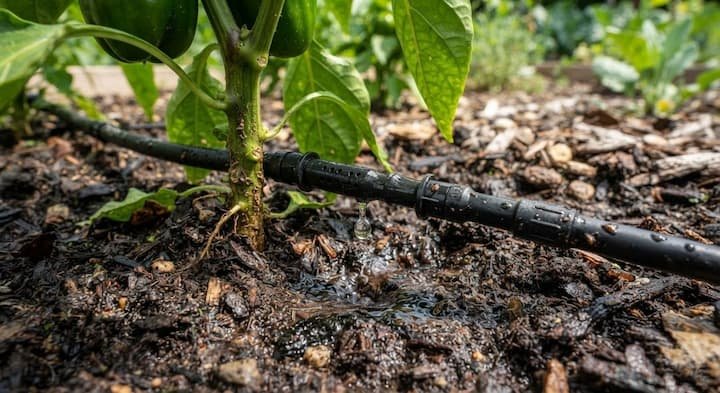
A small drip or soaker kit starts around $20, puts water at the roots and wastes far less than overhead spraying, and one emitter per plant is usually enough.
Emitters put out half a gallon to 2 gallons per hour at 10 to 20 psi, so run them 20 to 30 minutes each morning on a timer, since 10 minutes leaves roots dry, and rub clogged emitters clean weekly. For trips, a bottle with a tiny hole in the cap, a buried clay olla or a bucket wick makes watering peppers in pots a lot easier.
I switched to drip two summers ago, and hose time dropped to almost nothing.
Watering Needs by Pepper Variety
- Bell and sweet peppers: big fruit and higher rot risk, so they favor even moisture.
- Jalapenos and serranos: middle of the road, fine in a 5-gallon pot (see jalapenos in pots).
- Habaneros and super-hots: tall canopies and heavy fruit drink more in heat.
- Compact Thai chiles and ornamentals: small pots, so expect daily checks.
Common Watering Mistakes to Avoid
- Watering on a fixed calendar and ignoring the soil.
- Light daily sprinkles that keep roots shallow.
- Spraying leaves and fruit with an overhead sprinkler.
- Skipping drainage holes or leaving pots in a full saucer.
- Mulching cold spring soil or piling mulch against the stem.
- Watering a drooping plant without checking the soil first.
- Letting the root ball go bone dry during flowering.
- Putting a full-size plant in a tiny pot.
A Pepper Plant Watering Schedule by Season
Use this as a starting point, then trust the soil:
- Spring: once a week or less in beds, with daily checks on seedlings and new transplants.
- Early summer: one deep soak a week when rain is short, and a daily check for pots.
- Midsummer, over 90°F: add a second soak in beds, and water pots daily or twice daily.
- Fall: ease back as nights cool, but keep moisture steady while the last fruit ripens.
- All season: skip a scheduled soak if soil is damp, and log dates, rain and plant response, since every plant differs.
Final Thoughts:
So, how often to water pepper plants? Check the top 1 to 2 inches, soak deeply, and adjust for pots, soil and weather. Beds often need one or two soaks a week, while pots may need water daily in summer. Keep moisture steady, mulch well, and the plants will pay you back with more peppers. Start tomorrow with a finger test.