Most orchid owners kill their plant with a watering can, not neglect.
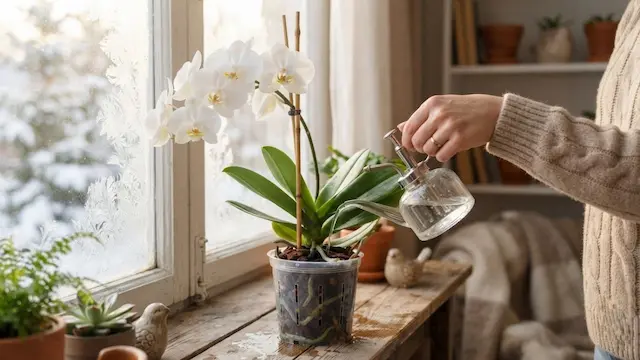
If you’ve noticed your orchid looking tired every January even though nothing else changed, the habit hurting it is usually the one you never adjusted from summer.
I’ve grown orchids on my windowsill for six years now, and figuring out how often to water orchid in winter turned out to be the single fix that saved most of my collection.
Why Your Orchid’s Water Needs Drop Once the Weather Turns
Orchids don’t just “slow down” in winter out of habit there’s real biology behind it, and once you understand it, the whole schedule makes a lot more sense.
- Dormancy sets in: Growth stalls, so roots pull in far less moisture than they did in July.
- Evaporation slows: Cooler indoor air keeps the potting mix damp much longer between waterings.
- Daylight shrinks: Less light means less photosynthesis, and less photosynthesis means less water demand.
- Humidity drops indoors: Central heating can pull household humidity down into the 20–30% range, even if it’s damp outside.
Here’s a fact I didn’t know until I looked it up myself: most common houseplant orchids, including Phalaenopsis, use something called CAM photosynthesis. Their stomata the tiny pores on the leaves open mostly at night instead of during the day, which already cuts water loss compared to a typical houseplant, according to plant growth research shared by the St. Augustine Orchid Society.
That built-in water-saving trick becomes even more obvious once winter light levels drop further.
How Often to Water Orchid in Winter, By Type
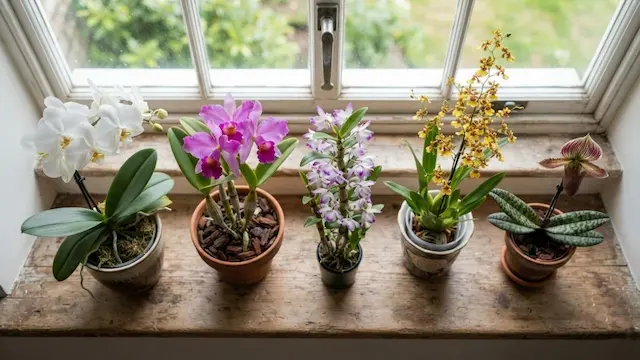
There’s no single number that works for every plant on a windowsill, so I’ve broken down an orchid winter watering schedule by the varieties most home growers actually own.
| Orchid Type | Winter Watering Frequency | Notes |
|---|---|---|
| Phalaenopsis (moth orchid) | Every 10–14 days | Most common houseplant orchid |
| Cattleya | Every 14–21 days | Prefers to dry out almost completely |
| Dendrobium | Every 14–21 days | Likes a dry rest to trigger blooms |
| Oncidium | Every 10–14 days | Pseudobulbs store extra moisture |
| Paphiopedilum (slipper orchid) | Every 7–10 days | No pseudobulbs, dries out faster |
If you own a mixed collection like I do, this is the exact chart I keep taped inside my supply cabinet from October through March.
Does Your Potting Mix Change the Timeline?
Yes, and it matters more than most new growers realize.
- Bark mix dries out fastest stay closer to the 7–10 day end of the range.
- Sphagnum moss holds moisture for two weeks or longer, so check before assuming it’s time.
- Semi-hydroponics or LECA setups often need just a weekly top-up, even in a heated house.
How to Tell It’s Actually Time to Water
Skip the calendar and use your senses instead this is the real skill behind watering orchids in winter.
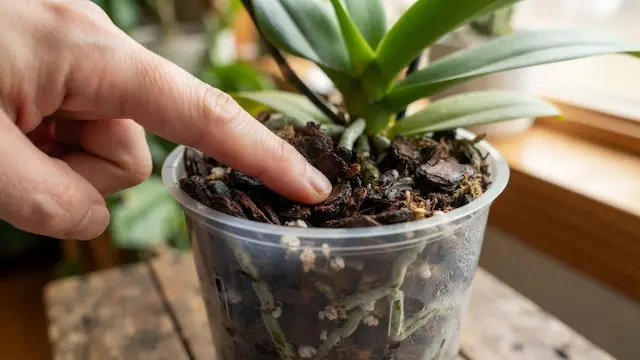
- Finger test: Push a finger about an inch into the mix. Dry at that depth means it’s time.
- Weight test: Pick up the pot. Light means dry; still heavy means it’s holding water.
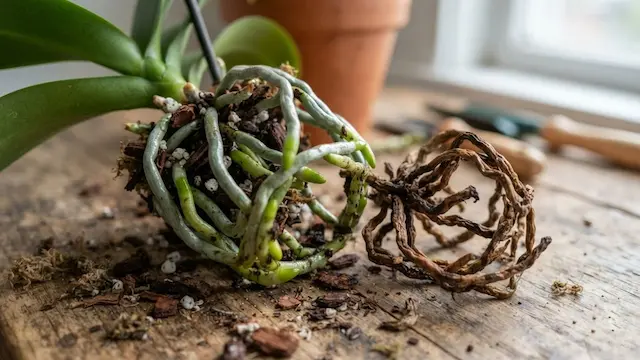
- Root color checklist: Green or silvery-white roots hold a healthy color and are hydrated. Brown, mushy roots mean overwatering. Shriveled, grayish roots mean underwatering.
- Leaf test: Wrinkled leaves paired with yellowing usually point to overwatered, rotting roots underneath. Wrinkled leaves that still look green and firm otherwise usually mean the plant just needs a drink.
- Smell test: If the potting mix smells sour or musty when you lean in close, that’s root rot talking, not a sign you should water sooner.
Adjust for Your Home and Climate
Your house isn’t a greenhouse, and that changes the math:
- Central heating dries indoor air fast, even if your outdoor climate is naturally humid.
- If your orchid sits near a drafty window and nighttime temps outside drop toward 32°F, move the pot a foot or two back from the glass.
- Growers in USDA Zones 4, 5, 6, and 7 are running the heat all winter, so indoor orchids there dry out faster than you’d expect. In Zone 8 and warmer, indoor air often stays a touch more humid on its own.
- Central air conditioning cycling on and off does the same thing as heating every time it kicks on, it pulls a little more moisture out of the room, so a mix that felt damp yesterday can be dry today.
- If you live somewhere naturally humid in winter, you may need to stretch even the 10–14 day range further, since the mix simply won’t dry as fast no matter what your thermostat is doing.
- If you’re a community gardener wrapping up Fall chores in the backyard, remember orchids don’t go dormant outdoors the way your Zucchini or Eggplant beds do they come inside and follow an entirely different clock.
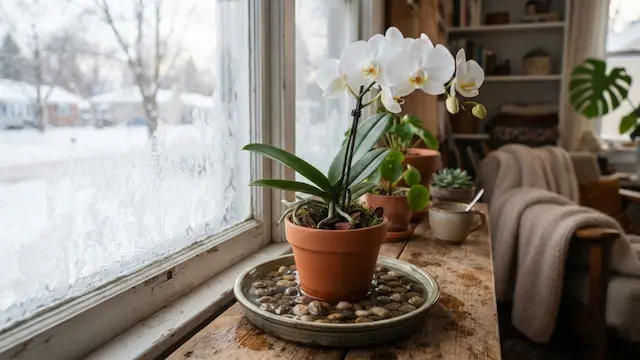
- A shallow pebble humidity tray under the pot adds moisture to the air around the plant without touching the roots directly, which helps offset dry heating.
Skip the Ice Cube Trick
I get asked about this constantly, so let me save you the trouble: dropping ice cubes straight onto the potting mix isn’t a great long-term habit. Ice sits right at the root zone and can shock tropical roots used to steady, room-temperature moisture.
If you want a measured amount, melt the cubes first or just use lukewarm water from the tap. Your orchid doesn’t care about convenience it cares about consistency.
The Right Way to Actually Water
Once you know it’s time, do it properly:
- Use lukewarm water, never straight cold from the tap.
- Water in the morning so the foliage and crown dry out before nightfall.
- Soak the pot in the sink for 10–15 minutes, then let it drain completely never let it sit in a saucer of standing water.
- A 6-inch pot usually needs less than a cup of water; you’re soaking the medium through, not filling a gallon jug.
- Keep water off the leaves and out of the crown to avoid rot.
Fixing Common Winter Watering Mistakes
| Symptom | Likely Cause | Fix |
|---|---|---|
| Mushy, brown roots, bad smell | Overwatering | Remove from pot, trim rotted roots with clean pruners, repot in fresh mix |
| Dry, shriveled, grayish roots | Underwatering | Soak thoroughly, then shorten the gap between waterings |
| Wrinkled, shriveled leaves | Underwatering | Increase frequency slightly, confirm the mix isn’t bone-dry |
| Yellowing lower leaves | Natural aging or overwatering | Compare against root color before assuming the worst |
| Flower buds dropping | Sudden temperature swing or overwatering | Stabilize location, cut back on water |
Overwatering isn’t a minor issue the American Orchid Society notes that more orchids are lost to incorrect watering than to any other single mistake.
If you’re already seeing yellowing leaves, I’ve gone deeper on that separately in my orchid leaves turning yellow post, since it isn’t always a watering problem.
The 3 Things That Actually Matter
I think the biggest mindset shift is this: orchid watering frequency in winter isn’t about hitting a fixed number of days, it’s about matching water to a plant that’s genuinely doing less work than it was in summer.
Once you stop watering on autopilot and start checking the mix, the roots, and the weight of the pot instead, you’ll water less and lose fewer plants that’s exactly what changed for my own windowsill collection.
Before you get lost in the details above, here’s what I’d tell a friend picking up their first orchid:
- Water every 10–14 days for most orchids, and less often for moss-potted, Cattleya, or Dendrobium plants.
- Check the mix, the pot’s weight, and the roots before trusting a calendar.
- Ease off fertilizer, skip the ice cubes, and ramp back up once new growth appears.
Fertilizing While You Cut Back on Water
You don’t stop feeding your orchid in winter, you just ease off. Cut fertilizer to about half strength and feed once a month instead of every watering.
Less growth means less appetite, and heavy winter feeding just builds up salts in the mix that can burn roots later.
Getting Ready for Spring
Watch for new root tips turning green or a fresh flower spike forming that’s your cue to gradually return to a weekly watering rhythm.
Bring fertilizer back up to full strength at the same pace you increase watering, not before, since feeding a plant that’s still mostly dormant just wastes fertilizer and risks burning the roots.
It’s also a good window for repotting if the mix looks broken down; toss the old bark in the trash rather than reusing it. I walked through this full transition, plus the specific quirks of the most popular houseplant orchid, in my Phalaenopsis orchid winter care guide.
Orchids also tend to become the holiday centerpiece on a lot of tables around December, which is exactly when new owners start second-guessing their watering.
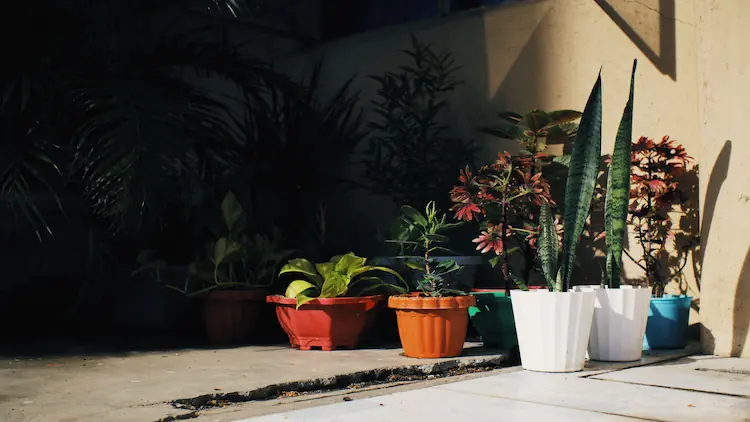
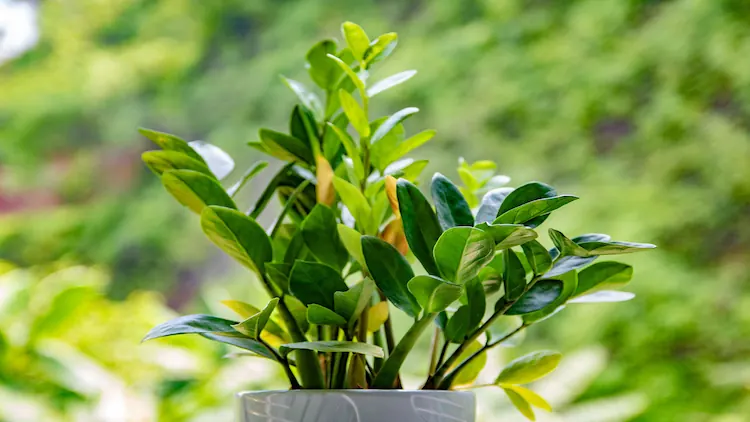
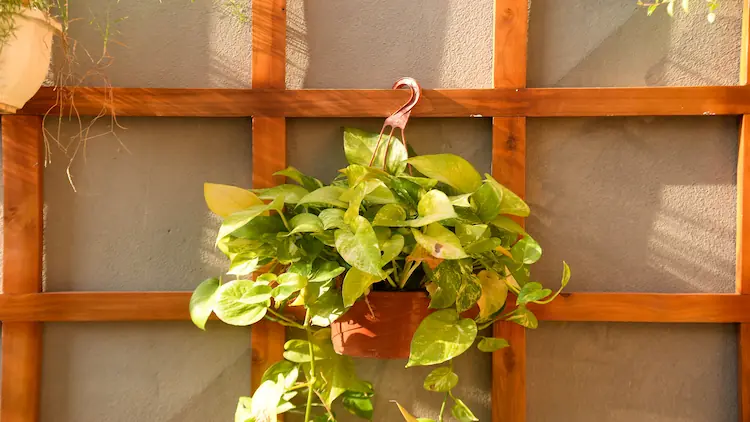
If other houseplants are sharing that windowsill, remember each one runs on its own clock I’ve covered how often to water a peace lily in winter, pothos in winter, snake plant in winter, and ZZ plant in winter separately, since none of them follow the orchid’s schedule.
Final Thoughts:
So, how often should I water my orchid in winter? For most home growers, every 10 to 14 days is the safe starting point, and you let your specific orchid, pot, and home adjust that number from there. Once you settle into a real rhythm for how often to water orchid in winter, the rest of your plant’s care gets a lot easier to manage.