Every winter I get the same message from a few friends: their peace lily looked amazing all summer, and now it’s drooping, or the leaves are going yellow, and they don’t know why.
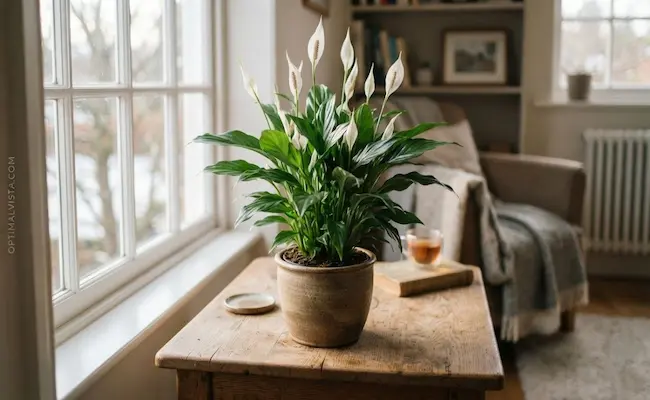
Almost every time, the answer comes down to watering. If you’re trying to figure out how often to water peace lily in winter, the short answer is a lot less than you think, and definitely less than you’re doing right now.
I’ve been growing houseplants for about six years, and winter watering mistakes are still the #1 thing I see kill an otherwise healthy peace lily.
Why Your Peace Lily Slows Down Once Fall Arrives
Once Fall sets in and daylight hours shrink, your peace lily’s growth slows down big time.
It’s not dying, it’s just resting. With less sunlight coming through the window, the plant photosynthesizes less, which means it pulls up far less water through its roots.
Less light also means less transpiration, so the water that’s already in the soil sticks around longer instead of evaporating off.
University of Vermont Extension backs this up their houseplant specialists note that winter care for all houseplants starts with reducing water, since people tend to “over-love” their plants with too much water this time of year, and recommend using a moisture meter instead of guessing (UVM Extension).
That single piece of advice changed how I water almost everything in my house.
What Actually Changes Your Watering Peace Lily in Winter Routine
There isn’t one fixed number that works for every home. Your peace lily winter watering schedule, and honestly your peace lily watering frequency at any time of year, depends on a handful of things happening in your yard, backyard porch, or living room right now.
| Factor | Effect on Watering |
|---|---|
| Indoor heating (radiators, forced air) | Dries soil faster water a bit sooner |
| Pot size and material | Terracotta dries faster than plastic or ceramic; smaller 6–8 inch pots often need water every 7–10 days, while larger 12+ inch pots can stretch to 14–18 days |
| Soil type | Loose, well-draining mix holds less moisture than dense soil for more on getting the mix right, this best soil for a ZZ plant guide covers the same drainage principles that apply here |
| Room temperature | Cooler rooms (60°F–65°F) need less water than warm rooms |
| Light exposure | Less winter light = slower growth = less water |
| Variety | Variegated peace lilies need slightly more light and a touch more water than solid green types |
How much water your peace lily needs also comes down to pot size, not just the season a small 6-inch pot dries out much faster than a big 2-foot tub, so don’t water both on the same schedule.
If you live anywhere in USDA Zones 4, 5, 6, 7, or 8, your peace lily has to live indoors once frost shows up it can’t handle anything near 32°F outside.
So the plant depends entirely on you, not the weather, once winter hits. Pot sizes for peace lilies usually run from about 6 inches for a small plant up to 2 feet across for a big, mature one that’s become the centerpiece favorite in someone’s living room.
How Often to Water Peace Lily in Winter
Here’s the number people actually want: most peace lilies need water about once every 10 to 14 days during winter, roughly half as often as summer. But that’s a starting point, not a rule.
A plant sitting close to a heating vent might need water every 7 to 8 days. One sitting in a cool, humid guest room might go 2 to 3 weeks without needing a drink at all.
University of Kentucky Cooperative Extension makes a similar point their horticulture team notes that in winter, plants may only need watering once every two to three weeks, and that it’s better to water thoroughly less often than to water a little bit every day (UK Extension). I think that’s the single biggest mindset shift for anyone switching from summer to winter care.
Keep in mind a peace lily isn’t as forgiving as some other houseplants here something like a ZZ plant in winter can go three full weeks without blinking, but a peace lily will droop and complain a lot sooner if you stretch it too far past its own schedule.
Quick Reference: Watering Frequency by Condition
| Your Situation | Water Roughly Every |
|---|---|
| Near a heat vent, radiator, or dry warm room | 7–8 days |
| Average room (65°F–72°F, normal humidity) | 10–14 days |
| Small pot (6–8 inches) | 7–10 days |
| Large pot (12+ inches) | 14–18 days |
| Cool room with a humidifier or grouped plants | 18–21 days |
3 Easy Ways to Check If Your Peace Lily Needs Water
Forget the calendar. Here’s what I actually use, and what any community gardener with a shelf full of plants will tell you works better than guessing:
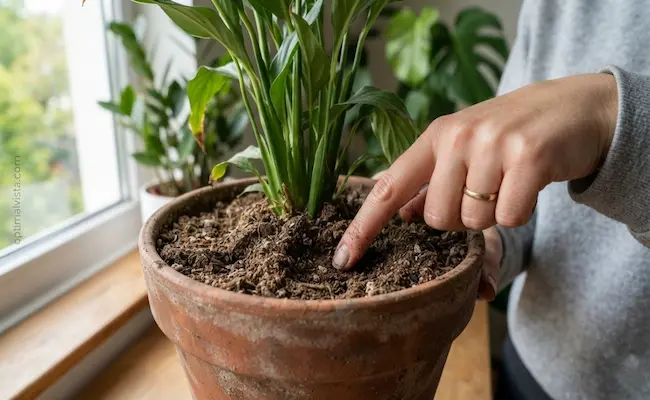
- Finger test: Push a finger 1 to 2 inches into the soil. If it feels dry at that depth, water. If it’s even slightly damp, wait a few more days.
- Weight test: Lift the pot. A pot with dry soil feels noticeably lighter than one with moist soil once you’ve done it a few times, you’ll know the difference by feel alone.
- Moisture meter: A cheap probe that gives you a straight reading instead of relying on your finger. Worth it if you tend to second-guess yourself.
Step-by-Step: Watering Your Peace Lily the Right Way
- Use room-temperature water: Peace lilies are sensitive to cold water, and it can shock the roots. Filtered or distilled water is even better since peace lilies are prone to brown leaf tips from chlorine and fluoride in tap water the same reason you’d want to use filtered water on a pothos or a snake plant in winter if you’re watering those on the same kind of schedule too.
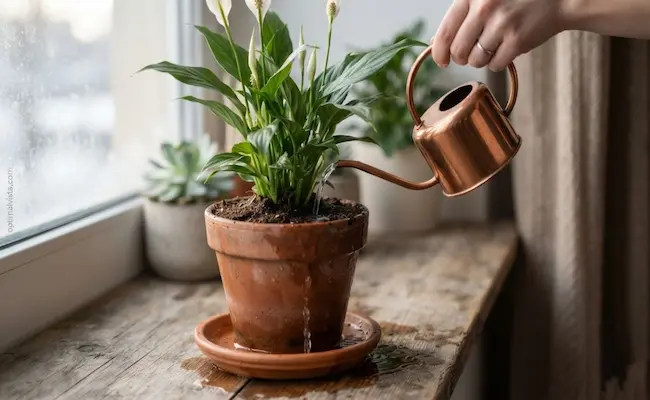
- Water thoroughly, not lightly: Pour until water runs out of the drainage holes. For a peace lily in a 12-inch pot, that’s usually close to half a gallon.
- Empty the saucer right away: Standing water under the pot leads to root rot fast don’t let the roots sit in it.
- Try bottom watering occasionally: Set the pot in a basin of water for 10 to 15 minutes and let the soil wick up moisture from below. It’s a nice alternative to top watering, especially for a badly compacted pot.
- Water in the morning: not right before bed, so the plant has all day to absorb it before temperatures drop at night.
Overwatering vs. Underwatering: Signs You Shouldn’t Ignore
| Overwatering Signs | Underwatering Signs |
|---|---|
| Yellow leaves, especially older lower ones | Brown, crispy leaf edges |
| Sour or moldy smell from the soil | Leaves droop but bounce back fast after watering |
| Mushy, dark stems near the soil line | Soil visibly pulls away from the pot’s sides |
| Leaves droop even though the soil is wet | Growth stalls and leaves look dull, not glossy |
Not every yellow leaf means overwatering, either. If it’s one older, lower leaf turning yellow while the rest of the plant looks fine, that’s just natural aging nothing to fix.
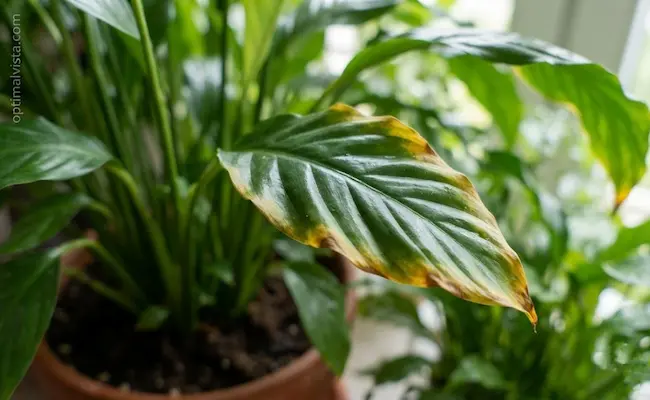
But if several leaves across the plant turn yellow around the same time, especially newer ones, that’s your sign to cut back on water and check the roots. If you want the full picture on telling the difference, I’ve broken down why peace lily leaves turn yellow in more detail elsewhere.
How to Fix an Overwatered or Underwatered Peace Lily
- If it’s overwatered: Stop watering completely for about a week. Pull the plant out gently and check the roots if they’re dark, mushy, or smell bad, trim them off with a clean pair of pruners and repot into fresh, well-draining mix.
- If it’s underwatered: Soak the pot in a basin of room-temperature water for 15 to 20 minutes rather than dumping a huge amount on top at once, then go back to checking the soil every few days.
- Either way: Don’t just toss the damaged leaves in the trash without figuring out the cause first the leaves are basically telling you exactly what went wrong.
Extra Winter Care Tips for a Healthy Peace Lily
- Pause fertilizing until spring a resting plant doesn’t need the extra nutrients, and it can actually cause stress.
- Boost humidity with a pebble tray, a small humidifier, or by grouping a few houseplants together kind of like setting up a mini community garden corner in your living room.
- Keep it 6 feet away from heating vents, radiators, and drafty windows.
- Give it bright, indirect light, ideally near an east or west-facing window, since winter light is weaker overall.
- Wipe the leaves occasionally with a damp cloth so they keep their deep green color and can actually use what light they’re getting.
- Skip repotting until spring unless the plant is badly rootbound same rule I’d give you for the how-often-to-water-pothos-in-winter crowd, honestly, since most tropical houseplants follow the same seasonal logic.
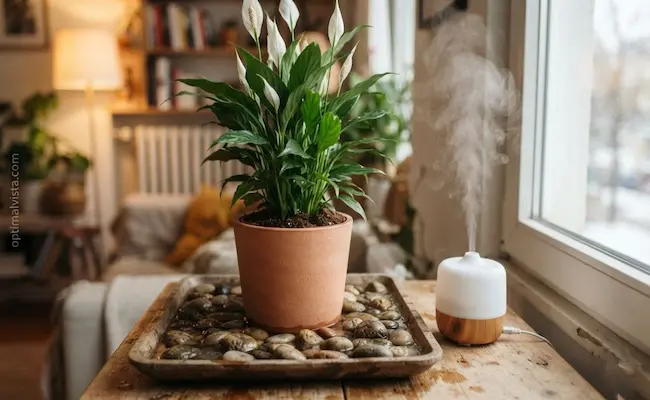
For everything beyond just watering, I’ve got a full peace lily winter care guide that covers light, humidity, and temperature in more depth.
If you’re juggling a few different houseplants this season, my snake plant winter care guide follows a lot of the same logic, just with different tolerance levels.
Final Thoughts:
At the end of the day, how often to water peace lily in winter isn’t about following a rigid calendar it’s about checking the soil, watching the leaves, and adjusting for your own home’s heat and humidity. Get that right, and your peace lily stays healthy, glossy, and green as a true centerpiece favorite right through to spring, without a single overwatering scare along the way.