You water on schedule, keep the pot near a bright window, and everything looks fine until one morning you spot it: a leaf gone soft and pale yellow.
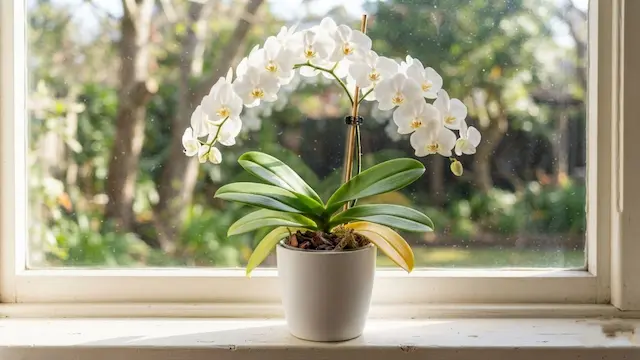
If you’re asking why are my orchid leaves turning yellow, you’re not alone; it’s one of the most common questions I get from fellow orchid owners.
The good news is that most causes are fixable once you know exactly what to look for.
Why Are My Orchid Leaves Turning Yellow? The Real Causes
Not every yellow leaf means your orchid is dying. There’s rarely one single reason why orchid leaves turn yellow usually it’s one (or a mix) of these:
- Natural aging of older leaves.
- Too much direct light (sunburn).
- Underwatering (dehydration).
- Overwatering and root problems.
- Low temperatures or cold drafts.
- A sudden change in environment.
- Hard water or chemical buildup.
- Poor fertilizing (nutrient deficiency).
- Too much fertilizer.
- Disease or infection.
- Pests.
That’s a long list, but once you rule things out one by one, it’s a lot less overwhelming. Let’s go through each one.
Natural Aging: Is Some Yellowing Actually Normal?
Yes, and this one trips up a lot of new growers. Orchids naturally shed their oldest, lowest leaves to redirect energy toward new growth or a fresh flower spike. This is a normal part of the plant’s life cycle, not a problem to fix.
- Only the bottom, oldest leaf is affected.
- Yellowing progresses slowly, over weeks.
- New growth elsewhere looks healthy and green.
Fix it: Nothing to fix here. Let the leaf finish yellowing and fall on its own, or wait until it’s loose before removing it.
Too Much Light Turns Orchid Leaves Yellow and Bleached
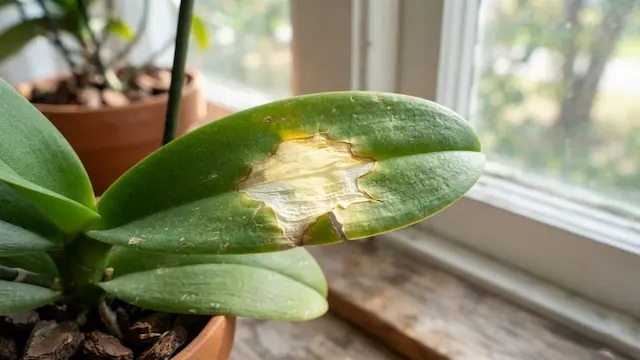
An orchid leaf turning yellow with a washed-out, almost white-yellow patch (not an overall fade) usually means too much direct sun, not disease. This is different from a plant that isn’t getting enough light, which tends to grow dark, floppy leaves instead.
- Bleached or scorched patches on leaves facing the window.
- Leaf feels papery or crisp in the affected spot.
- Happens fastest on south-facing windowsills, even in a sunny backyard sunroom.
Fix it: Move the pot a few feet back from direct sun, or shift it to an east- or west-facing window where it gets bright but indirect light.
Underwatering: When Not Enough Water Turns Leaves Yellow
It’s not just overwatering a thirsty orchid turns yellow too, though the leaves usually look dry, wrinkled, and thin rather than soft and mushy.
- Leaves feel papery or shriveled, not swollen.
- Roots look silvery-gray and shrunken instead of plump.
- Potting mix has been bone-dry for more than a week.
Fix it: Soak the pot in a sink of room-temperature water for about 10-15 minutes, then let it drain fully before setting it back on the saucer.
Overwatering Causes Yellow Orchid Leaves
In my experience, overwatering is the single biggest culprit I see, and it’s the one that causes yellow orchid leaves the fastest. Orchid roots need air between waterings; sit them wet too long and they suffocate, which shows up as yellow, limp leaves up top.
A mature Phalaenopsis in a 5-inch pot usually needs less than half a cup of water at a time, roughly once a week, less in winter.
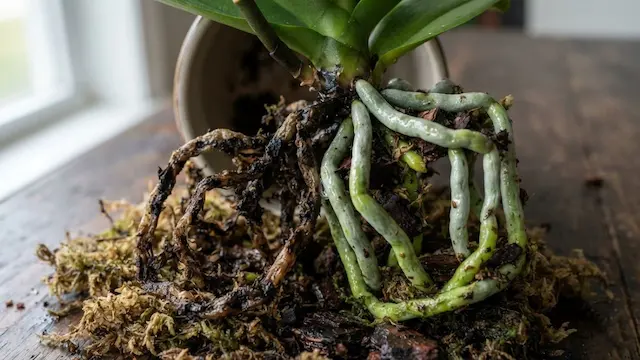
- Healthy roots look plump and silvery-green when dry, bright green when watered.
- Overwatered roots turn mushy, brown, or black.
- Standing water in the outer pot or saucer is a red flag.
Fix it: Push a finger an inch into the mix before watering again if it’s still damp, wait.
A Sudden Change in Environment: Repotting or Relocation Shock
Orchids don’t love change. A new home from the store, a move to a different room, or a fresh repotting can trigger stress-related yellowing, especially if roots were disturbed.
- Yellowing shows up within days of the move or repot.
- Otherwise healthy leaves, no spots or mushiness.
- Often paired with a bit of leaf droop.
Fix it: There’s not much to do but wait it out give the plant a stable spot with consistent light and humidity, and avoid the urge to repot or move it again too soon.
Hard Water and Chemical Buildup
Tap water heavy in chlorine or dissolved salts can crust up the potting mix and stress the roots over time, showing up as yellowing leaf tips.
- White or yellow crust on the surface of the bark or moss.
- Yellowing that starts at leaf tips and edges.
- More common in homes with hard well water.
Fix it: Switch to filtered water, rainwater, or water left out overnight to let some chlorine evaporate before use.
Low Temperatures Behind Yellow, Cold-Stressed Leaves
Cold drafts stress orchids before you’ll notice much else, and yellowing often follows soon after. If your orchid sits near an AC vent, a drafty windowsill, or a door that opens to the yard all winter, that’s likely your answer.
| Orchid Type | Daytime Temp | Nighttime Minimum |
|---|---|---|
| Warm-growing (Phalaenopsis, Vanda) | 70°F to 85°F | 60°F |
| Intermediate (Cattleya, Oncidium) | 65°F to 75°F | 55°F |
| Cool-growing (Cymbidium, Dendrobium) | 60°F to 70°F | 50°F |
I keep my own Phalaenopsis at least 2 feet away from drafty windows every winter, and it’s made a real difference. If you live in USDA Zones 4, 5, 6, or 7, your orchid is almost certainly an indoor plant year-round; even in Zone 8, nighttime lows can dip below 50°F in fall.
If you’re not sure how to transition your plant for the colder months, our guide to Phalaenopsis orchid winter care walks through the whole process.
Poor Fertilizing and Nutrient Deficiency in Orchids
A lack of nutrients especially magnesium, nitrogen, or iron is a quiet but common reason orchid leaves keep turning yellow even when your watering routine is solid.
Two things worth knowing here:
- Magnesium sits at the center of the chlorophyll molecule: and when it’s lacking, older leaves yellow first while veins can stay green longer a pattern documented by the American Orchid Society.
- Nitrogen deficiency triggers a similar response: plants break down chlorophyll in older leaves to move nitrogen toward new growth, a process researchers call nitrogen remobilization, as outlined in this peer-reviewed plant science study.
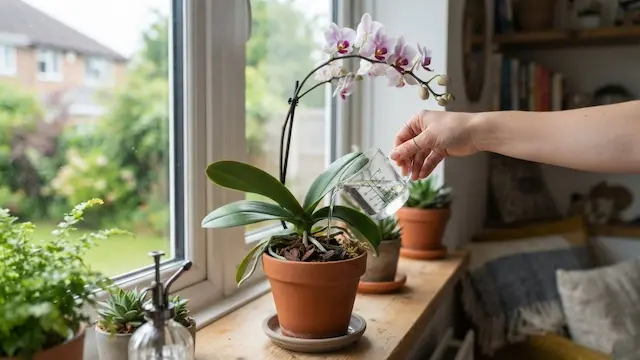
I like using a diluted, balanced, water-soluble fertilizer every other watering while the plant is actively growing, then backing off once flowers drop.
If you’re already brewing your own plant food for other pots, a bit of compost tea with molasses (diluted well) can work as a gentler, organic top-up between regular feedings.
Too Much Fertilizer: Yes, Overfeeding Causes Yellowing Too
More feeding doesn’t mean a healthier plant. Excess fertilizer builds up as salts in the potting mix and blocks the plant from taking up iron a condition called chlorosis.
- White, crusty salt buildup on the pot’s surface or bark.
- Yellowing paired with an otherwise well-watered, well-lit plant.
- Happened shortly after a feeding increase.
Fix it: Flush the pot thoroughly with plain water to wash out built-up salts, then cut your fertilizer strength by half going forward.
Disease Can Also Turn Orchid Leaves Yellow Fast
Disease is less common than watering or light issues, but it needs the fastest response. Yellowing paired with spots, mushy tissue, or a bad smell usually points here.
- Black spots: usually black rot, a fungal issue.
- White powdery patches: powdery mildew.
- Brown spots: bacterial brown spot (or sunburn, so check the light first).
- Water-soaked, foul-smelling leaves: bacterial soft rot, which spreads fast.
- Root rot: a fungal root infection, often following overwatering; roots turn brown, black, and mushy, and it’s worth reading up on root rot in houseplants, since the treatment (trimming rotted tissue, repotting into fresh, fast-draining mix) is nearly identical across most potted plants, not just orchids.
If you spot any of these, isolate the plant right away so it doesn’t spread to neighbors on the same shelf. I think acting fast here is non-negotiable I learned that the hard way after losing a Cattleya to soft rot years ago.
Use sterile pruners or a clean, sharp blade to cut away all affected tissue, sterilizing the blade between cuts.
A light dusting of cinnamon on the cut works as a natural antifungal, or use a fungicidal drench for anything more serious.
Pests Behind Yellowing Orchid Leaves
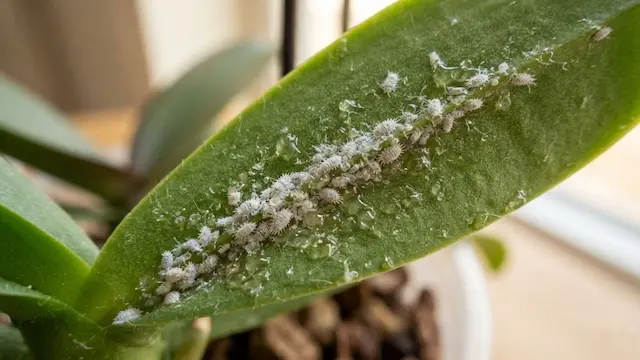
An unnoticed pest problem will show up as yellow spots, sticky residue, or stippled patches before you ever see the bugs themselves.
Common ones on orchids include:
- Aphids.
- Mealybugs.
- Scale.
- Spider mites.
- Thrips.
- Whiteflies.
Check under the leaves and around the base every couple of weeks, especially if you’re a community gardener swapping cuttings and pots with others that’s a common way pests hitch a ride indoors.
A single orchid leaf turning yellow near where the pests are clustered is often your first real clue something’s wrong. Wipe leaves down with a damp cloth mixed with a few drops of neem oil and a squirt of dish soap.
Should You Remove Yellow Leaves From Your Orchid?
Not necessarily. Unless disease is involved, a yellow leaf isn’t actively hurting the plant, and you can leave it alone until it naturally drops. That said, plenty of gardeners trim them off simply because the color bothers them, and that’s fine too.
- If the leaf is loose and pulls away easily, just remove it by hand.
- If it’s still firmly attached, use sterile pruners or scissors and cut close to the base.
- Always sanitize your tools between plants to avoid spreading anything.
- Toss diseased leaves in the trash/garbage never the compost pile, since fungal spores can survive.
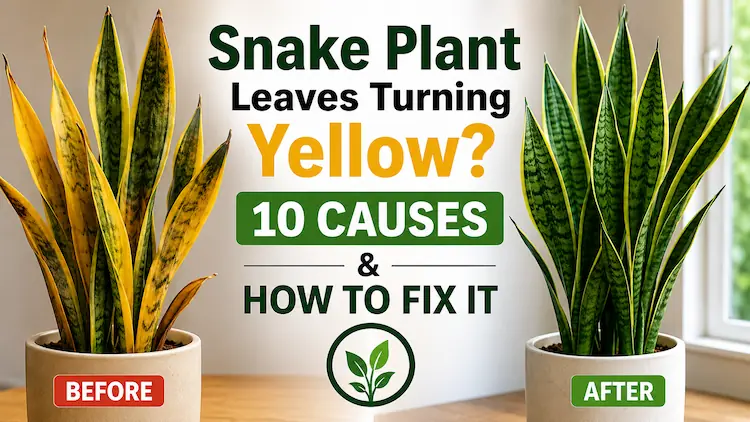
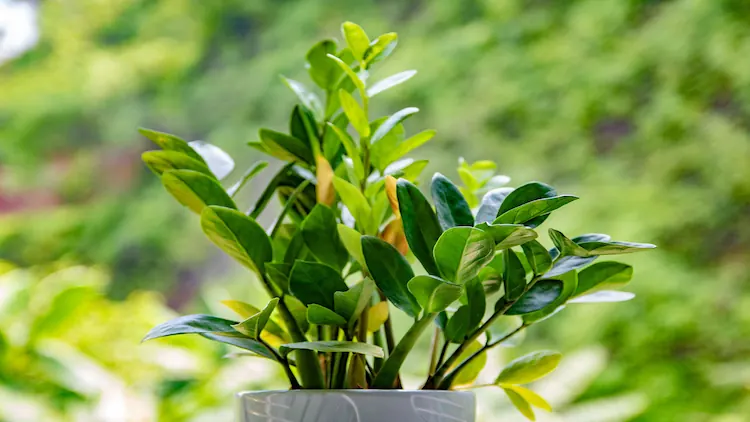
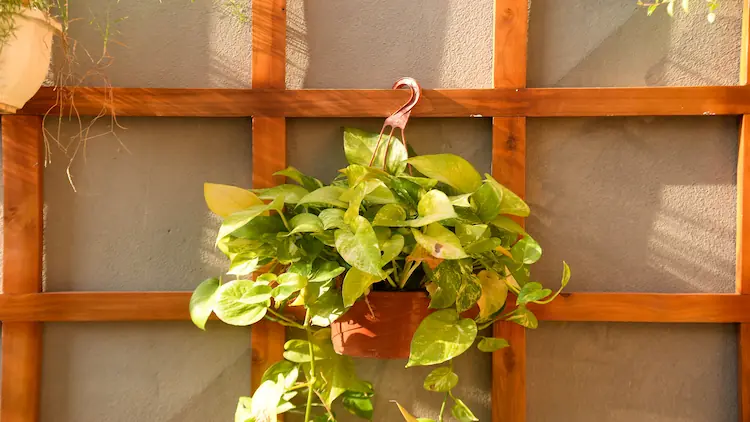
This isn’t unique to orchids, either. I’ve noticed the exact same pattern with almost every houseplant I grow. My pothos leaves turning yellow, my peace lily leaves turning yellow, even my snake plant and ZZ plant leaves turning yellow have taught me the same lesson: the cause is nearly always one of the reasons above.
Final Thoughts:
At this point you should have a solid answer to why are my orchid leaves turning yellow why orchid leaves turn yellow almost always traces back to light, water, temperature, fertilizer, disease, or pests. I’ve grown orchids for six years now, and yellow leaves still catch my eye every time, but once you know what to check, fixing it is usually straightforward.
why are my orchid leaves turning yellow , orchid leaves turning yellow , yellow orchid leaves , orchid leaf turning yellow , why orchid leaves turn yellow