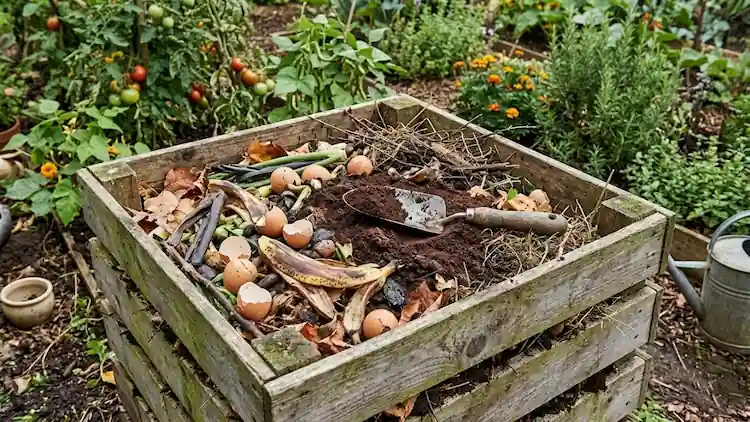
Can you really turn what your dog leaves behind on the grass into something useful for your flower beds, or is that just something dog owners tell themselves to feel better about scooping? People who watch me work in my own backyard ask me this almost every week, and honestly, the answer is not as simple as tossing the waste into a bin and walking away.
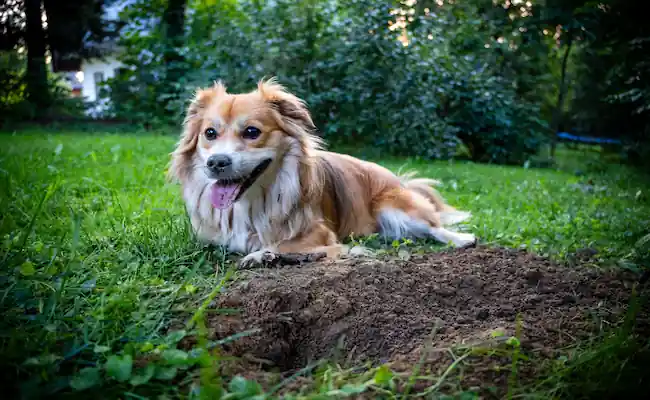
If you want to learn how to compost dog poop safely for ornamental lawn use, you first need to understand what you are actually dealing with, because dog waste behaves nothing like kitchen scraps or grass clippings once it goes into a pile.
Why You Can’t Compost Dog Waste Safely the Same Way as Kitchen Scraps
Here is something that surprised me the first time I came across it: the Environmental Protection Agency officially classified pet waste as a “nonpoint source pollutant” back in 1991, placing it in the same category as oil runoff and chemical drainage. With an estimated 60 million dogs in the United States alone, producing close to 16.4 billion pounds of waste every year, this is not a small side issue tucked away in a corner of the yard it is a real environmental concern that touches almost every backyard in the country.
The problem is not the poop itself, it is what lives inside it. Regular compost piles built from vegetable peels, leaves, and grass clippings rarely get hot enough, or stay hot long enough, to destroy what is hiding in dog waste.
Before you start any project meant to compost dog waste safely, it helps to know that most home piles top out well below the temperature needed to do this job properly.
What’s Actually Hiding in Your Dog’s Waste
Public health and parasitology research point to a fairly long list of organisms that can survive in feces and the surrounding soil far longer than most people assume:
- Roundworm eggs (Toxocara canis), which stay infectious in soil for years rather than weeks, as documented by researchers studying parks and playgrounds “NCBI/NIH“
- Giardia, which resists drying out, chlorination, and fairly wide swings in temperature.
- Salmonella and E. coli, both of which need sustained heat above roughly 55°C (131°F) before they are reliably destroyed.
- Cryptosporidium, Leptospira, hookworms, and tapeworms, several of which can persist in feces or soil for months at a time.
Some cities now run a separate pet waste composting program instead, precisely because standard yard-waste programs flatly refuse it in their organics bins — the risk of contaminating an entire finished batch of compost is simply too high for them to accept it “City of Bothell, WA“.
How to Compost Dog Poop Safely for Ornamental Lawn Use
Once you understand the risks, the actual method becomes much clearer, and it comes down to one non-negotiable factor: temperature.
The USDA’s own composting guidance, along with the EPA’s Process to Further Reduce Pathogens standard, calls for holding a pile at 55°C (131°F) for a minimum of three consecutive days to reliably kill parasite eggs and harmful bacteria “USDA Agricultural Marketing Service“. A cool backyard pile that never climbs past 38°C (100°F) simply will not do this job, no matter how long you leave it sitting there.
Here is a quick comparison of the realistic options, since not every method suits every yard:
| Method | Reaches Pathogen-Killing Heat? | Best Used For |
|---|---|---|
| Dedicated hot compost bin (kept separate from kitchen compost) | Yes, if actively managed | Ornamental beds, non-edible lawn areas |
| Buried pet waste digester | No real heat cycle, relies on soil microbes | Small yards where compost won’t be reused |
| Bokashi fermentation | No heat, uses fermentation instead | Pre-treatment before burial only |
| Standard backyard compost pile | Rarely | Not recommended for dog waste at all |
| Municipal or commercial composting facility | Yes, consistently | Best option where curbside pet-waste pickup exists |
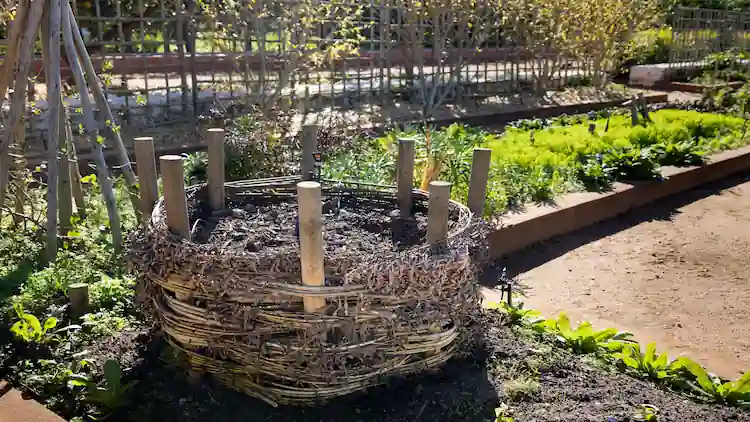
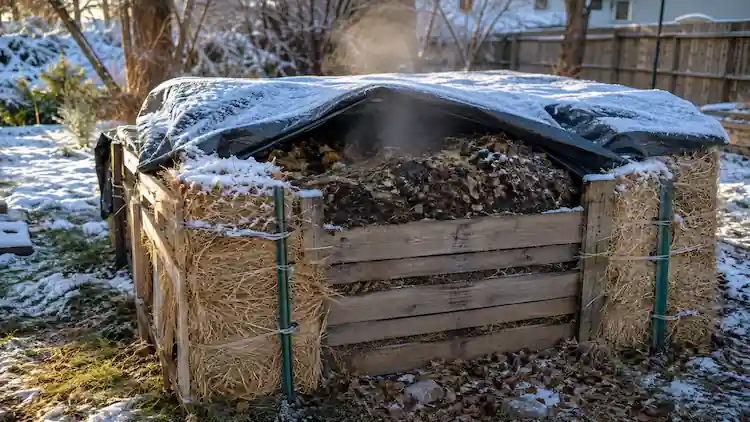
If a dedicated hot bin is the route you choose, keep it entirely separate from anything that will ever touch your vegetable patch or raised garden beds. Layer the waste with plenty of “brown” material such as dried leaves or straw, at roughly a 4:1 ratio of browns to waste, and build the pile at least 3 feet by 3 feet by 3 feet (about 1 cubic meter) so it can actually generate and hold heat. Turn it every few days so every part of the pile eventually passes through that hot center.
How to Make Dog Poop Compost for Lawn and Ornamental Borders
This dog poop compost for lawn use should always be treated as a soil amendment for ornamental areas only, never anything you intend to grow food in.
A University of Connecticut extension review of home composting notes that backyard piles often never reach the 54–60°C (130–140°F) range needed for reliable pathogen control, which is exactly why the finished material should stay well away from vegetable beds and herb gardens “UConn Plant and Soil Health Center“.
A few practical steps I follow every season:
- Choose a spot at least 30 feet (about 9 meters) away from any well, pond, stream, or vegetable bed, since nitrogen and phosphorus runoff from pet waste is a documented contributor to algal blooms in nearby waterways.
- Use a bin with a tight, secure lid to keep rain out, since excess moisture cools the pile and slows everything down.
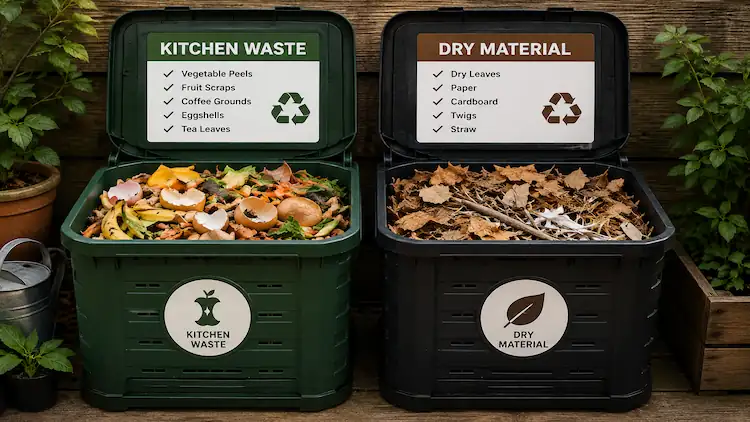
- Add waste along with dried leaves, shredded cardboard, or straw, never fresh grass clippings alone, which can turn slimy and cold.
- Check the internal temperature with an actual compost thermometer rather than guessing, aiming to hold 55°C (131°F) for at least three straight days.
- Apply your dog poop compost for lawn edges and ornamental borders only, and never anywhere close to vegetable rows or herb pots.
Building a Dog Waste Compost for Ornamental Garden Beds, Step by Step
I set my bin up in a corner far from anything edible, and the distance matters more than most people expect at first. Once the pile has held its heat for the required stretch, let it cure for a full six to twelve months before it ever touches soil, even ornamental soil.
That long curing window is really what turns raw waste into a dog waste compost for ornamental garden use you can actually trust, giving any surviving organisms far more time to die off naturally.
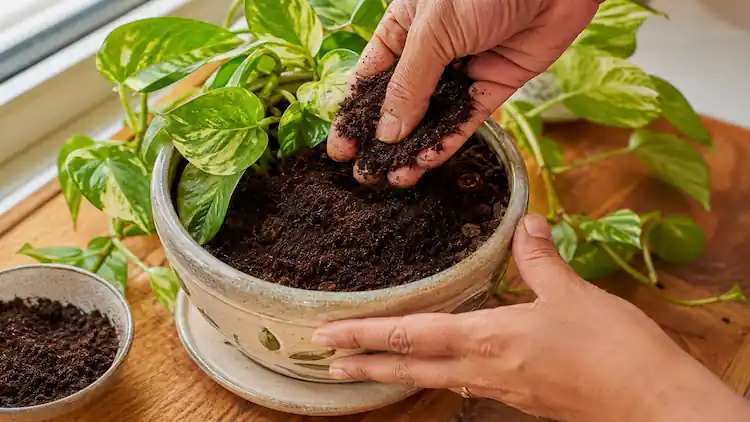
- Apply the finished dog waste compost for ornamental garden beds like roses, flowering shrubs, or ornamental grasses, tucking it a few inches below the mulch layer rather than leaving it exposed.
- Wear gloves every time you handle the finished material, even after curing, and wash your hands and tools thoroughly afterward.
- Spread it thinly around the base of plants rather than piling it directly against stems, the way you would with any rose feeding routine.
- Keep a light layer of mulch on top so the compost isn’t sitting exposed where kids or pets could come into direct contact with it.
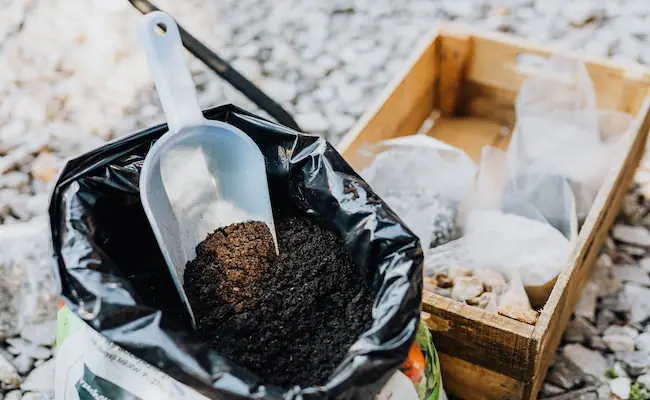
Pet Waste Composting Rules Every Owner Should Follow
A few habits make the whole process genuinely safer, not just safer on paper:
- Never use finished compost on lawn areas where children or pets play barefoot or roll around, since even properly heated material can carry some residual risk.
- Look into local pet waste composting programs before assuming your municipal green bin will accept dog waste, since most will not.
- Keep the bin well away from perennials you plan to cut and bring indoors, since those borders often sit close to patios and walkways.
- Skip the whole project during freezing winter stretches, since a pile sitting below 4°C (40°F) barely decomposes and will not reach a pathogen-killing temperature at all.
- Keep separate tools any time you compost dog waste safely at home, and never let them cross over with your kitchen compost or vegetable-bed tools.
If all of this sounds like more effort than you expected, that is a fair reaction. A properly managed hot bin needs monitoring, patience, and a thermometer you actually check on a regular basis. For many households, especially ones with young children or a small yard, a municipal pet-waste composting program where one exists, or simply bagging and binning the waste, remains the safer everyday choice.
I only run my own bin because I have the space, the time, and enough distance between my compost corner and anywhere my grandkids play.
Final Thoughts:
At the end of the day, learning how to compost dog poop safely for ornamental lawn areas comes down to respecting three things: heat, distance, and patience. Skip any one of those and you are not really composting the waste, you are just relocating a health risk to a different part of your yard. Done properly, with the right temperature held for the right number of days and kept well clear of anything edible, it can genuinely give your ornamental beds a nutrient boost without putting your family or your local water supply at risk. Done carelessly, it simply isn’t worth the shortcut.