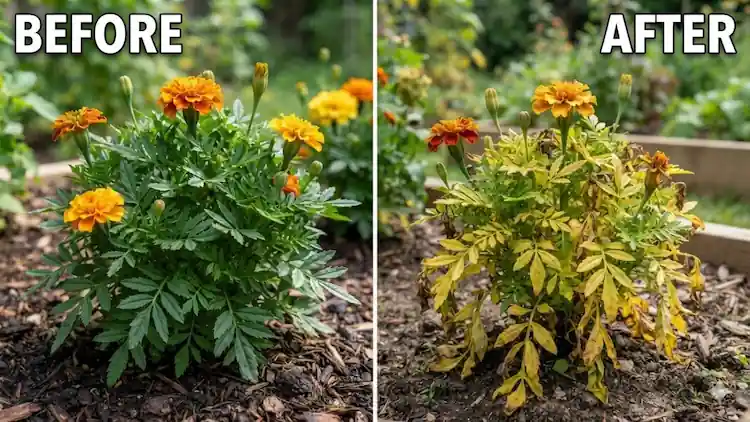
I still remember spotting tiny gray bumps on a branch in my backyard and figuring it was just rough bark. Turns out that tree had Japanese Maple Scale feeding on it for months. This pest hides in plain sight, and by the time you spot thinning leaves or a dying branch, the damage is usually further along than you’d guess. Here’s everything I’ve learned about catching it early, treating it right, and keeping your yard’s favorite tree healthy.
Japanese Maple Scale Identification: What Those Bumps Really Are
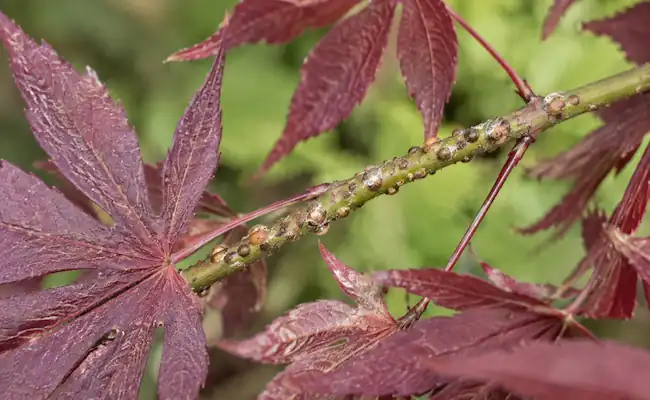
Up close, you might mistake it for odd bark texture at first. These insects are small, oyster-shell shaped, about 1 to 1.8 millimeters long, and show up as brown, gray, or white-coated bumps along twigs and branches. In heavy cases, you’ll find them clustered on the leaves too.
My go-to trick before I panic: flip one off with a fingernail. If it lifts away clean, that’s scale. If the tissue rips instead, you’re dealing with a gall, not an insect.
A quick way to size up how bad things are:
- Mild: A handful of scattered bumps near twig unions or bark cracks, tree still looks fine overall.
- Moderate: Noticeable clusters along several branches, some yellowing leaves nearby.
- Severe: A crusty, bumpy white texture covering large sections of bark, with visible branch dieback.
The scale insects on Japanese maple trees are also easy to confuse with oystershell scale, so here’s a simple side-by-side.
| Feature | Japanese Maple Scale | Oystershell Scale |
|---|---|---|
| Size | Smaller, thinner | Larger, wider |
| Color | Brown/gray, waxy white coating | Brownish-gray, mottled |
| Host range | Maples, dogwoods, elms, magnolias, lilacs | Wide variety of shrubs and trees |
The Life Cycle Nobody Talks About
Winter is spent as mated, immature females under their waxy covers. Come spring, those covers hide purplish eggs that hatch into flat, wingless crawlers, which walk the stems until they settle, pierce the bark with a wire-like feeding tube, and start pulling sap out of the tree.
Per Purdue University’s Plant and Pest Diagnostic Lab, this insect produces two generations a year in most northern states, with crawlers active from early May through June, then again mid-August through September (source: Purdue Extension).
In warmer regions, University of Georgia researchers note populations can push out two to four generations annually (source: UGA Extension). That long, drawn-out crawler window is exactly why this bug is so stubborn to control.
If you garden in USDA Zones 4, 5, 6, 7 and 8, expect your first crawler wave in late spring once nighttime temperatures stay reliably above 50°F, with a second wave showing up in late summer. Here’s roughly how that plays out by region:
| Region / Zones | First Crawler Wave | Second Crawler Wave |
|---|---|---|
| Cooler Zones 4-5 | Late May to June | Early-mid September |
| Mid Zones 6-7 | Mid May to June | Mid August to September |
| Warmer Zone 8 and south | Early May onward | Two extra waves possible through fall |
Host Plants Beyond Japanese Maples
I used to think this bug only bothered maples not the full picture. It also shows up on:
- Dogwoods
- Elms
- Magnolias
- Lilacs
If you’ve got a mixed backyard planting, don’t assume your dogwood is safe just because the scale started on the maple next to it.
What’s Driving the Infestation in Your Yard
A stressed tree is basically an open invitation. A few things I’d check first, whether you’re a community gardener or just tending a small yard:
- Dry spells: warm, dry summer stretches speed up scale reproduction.
- Poor pruning habits: heavy or improperly timed cuts stress the tree and open entry points. If you’re not confident with a saw, have pruners who know timing handle the bigger cuts.
- Tight spacing: low airflow creates a humid pocket scale insects love.
- Overfeeding with nitrogen: lush new growth is basically a buffet.
- New plants from the nursery: always inspect before bringing anything new home, and quarantine it a couple weeks first. Quick checklist:
- Check twig unions and bark cracks under good light.
- Look underneath lower branches, not just top growth.
- Skip anything with a bumpy, crusty texture on the stems.
- Keep new plants at least 3 feet from established trees at first.
A Japanese Maple Scale infestation rarely comes out of nowhere it’s almost always tied to one of these stress factors piling up over a season or two.
Signs Your Tree Is in Trouble
Watch for these together, not just one in isolation:
- Thin, patchy foliage instead of that full canopy color you’re used to
- Branch and twig dieback, especially on one side of the tree
- A sticky coating (honeydew) followed by black sooty mold
- A gradual, season-over-season decline in vigor
If leaves are browning without any bark bumps, that might be a separate issue check our piece on why Japanese maple leaves turn brown. And if the whole tree looks like it’s failing fast, our guide on a Japanese maple dying covers other causes that mimic scale damage.
Treatment Options From Mild to Severe
Japanese Maple Scale treatment really depends on how far things have progressed, so I’ve broken it down by severity.
Mild infestations (a few branches):
- Scrub the scales off gently with a soft brush dipped in soapy water.
- Prune out the worst twigs and bag them for the trash instead of tossing them in your yard waste pile.
Moderate infestations:
- Apply horticultural oil during the dormant season, typically once winter temperatures stabilize above 32°F for a few days in a row.
- Mix according to label rates usually around 2 to 4 tablespoons of oil per 1 gallon of water for a light dormant spray.
- Reapply during the early crawler window in late spring.
Severe infestations:
- Systemic insecticides with active ingredients like acetamiprid, buprofezin, or pyriproxyfen work best when timed to the crawler stage, before the waxy shell forms.
- Many arborists pair a light horticultural oil with these products for better coverage.
- Avoid spraying anything while the tree is flowering oil especially can harm visiting bees during the few hours it takes to dry.
Don’t compost infested prunings the way you might toss extra zucchini or eggplant vines onto the pile. Scale-covered branches should go straight into the trash, since the insects can survive on cut wood. For what’s actually safe to add otherwise, see our guide on how to make compost at home.
DIY vs Calling a Professional Arborist
| Situation | Best Approach |
|---|---|
| A handful of bumps, tree otherwise healthy | Manual removal + soapy water, DIY friendly |
| Multiple branches affected, some dieback | Horticultural oil program, DIY with careful timing |
| Trunk and major limbs covered, dieback spreading | Call a certified arborist for systemic treatment |
| Tree already losing large sections of canopy | Professional evaluation removal may be more cost-effective than treatment |
Not sure which category fits? A quick phone photo sent to a local extension office or arborist saves you a wasted season of guessing.
Prevention Tips for Every Season
- Spring: Inspect new growth and twig unions as leaves emerge.
- Fall: Clean up fallen leaves and debris around the base of the tree before winter; this is also a good time to double check bark for any late-season crawlers before the color show ends.
- Winter: Apply dormant oil while the tree is fully dormant.
- Year-round: Keep 3 feet of spacing between shrubs where possible, water consistently, and avoid heavy nitrogen fertilizer.
Worth knowing: stressed trees fighting scale sometimes develop secondary problems. If leaves are wilting in a pattern that doesn’t quite match scale damage, it’s worth ruling out something like verticillium wilt see our article on how to treat Japanese maple verticillium wilt.
Bringing in Natural Predators
Ladybugs, lacewings, and small parasitic wasps all feed on scale naturally. I’ve had decent luck planting a few flowering perennials near affected trees to draw these predators in on their own, rather than buying and releasing them.
If you do go the broad-spectrum insecticide route for a severe case, it’ll likely wipe out these helpful bugs too, so save the strongest chemicals for situations that truly need them.
Will My Tree Recover?
Most trees bounce back within one to two growing seasons once the crawler stage is under control and nothing else is stressing them. Watch for fresh, evenly colored leaf growth in spring as your best sign of recovery. If dieback keeps spreading a full season after treatment, bring in a professional rather than keep waiting it out.
Final Thoughts:
Whether you’re a longtime community gardener or just someone who planted a Japanese maple as the centerpiece of your backyard, staying ahead of Japanese Maple Scale really just comes down to regular inspection and catching it before it spreads past a branch or two. Check your bark a few times a season, treat early based on how bad things actually look, and skip the guesswork by calling in a pro once it reaches the trunk. Do that consistently, and your tree should keep giving you that fall color show for many years to come.