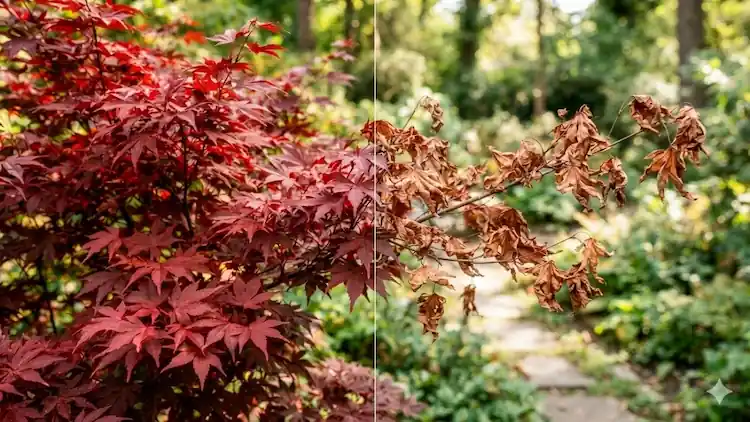
Ever walked out to your yard with your coffee and found your marigolds looking half-dead overnight? I have. More times than I’d like to admit, honestly. Marigolds are supposed to be the easy flower, the one you plant and mostly forget about, so when they start wilting or the color drains right out of the leaves, it feels personal.
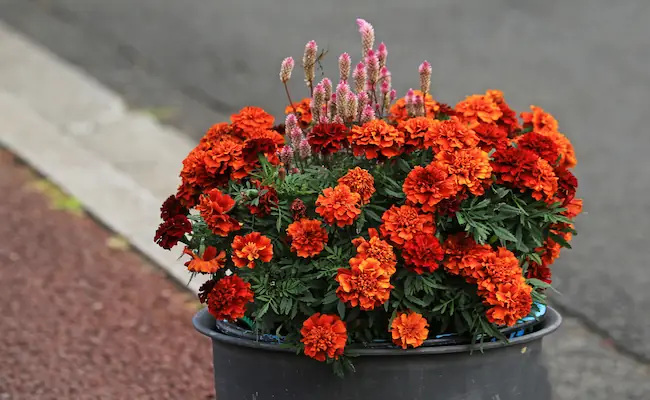
If you’re asking yourself why are my marigolds dying and turning yellow, you’re not doing anything unusually wrong I’ve been growing these in my own backyard for years, across USDA Zones 5 and 6, and I’ve made just about every mistake there is to make with them.
Why Are My Marigolds Dying and Turning Yellow in My Own Backyard?
Most of the time it comes down to one of a handful of things water, soil, sun, pests, or a fungus that showed up because the plants sat wet too long.
I’ve learned that the trick isn’t memorizing a giant list of possible causes. It’s learning to read what the plant and the soil are telling you together, because the same symptom can mean two completely opposite problems.
How I Diagnose a Marigold Plant Dying Before I Do Anything Else
Before I reach for fertilizer or a fungicide, I check two things how the plant looks, and how the soil actually feels 2 inches down. That combination tells you almost everything.
| What I See | Soil Feels Like | Likely Cause |
|---|---|---|
| Wilting, yellow leaves | Wet, heavy, or soggy | Overwatering or root rot |
| Wilting, crispy leaves | Dry, crumbly | Underwatering |
| Yellow leaves, bottom-up | Normal moisture | Nutrient deficiency |
| Spots, webbing, sticky film | Normal moisture | Pests or fungal disease |
| White powder coating leaves | Normal, poor airflow | Powdery mildew |
I keep this in my head every time I’m out in the yard, because a marigold plant dying from too much water and one dying from too little can look almost identical from ten feet away. The soil is the tiebreaker.
Watering Mistakes Behind Marigolds Wilting and Turning Brown
I’ll be honest nine times out of ten when I’ve had marigolds wilting and turning brown, watering was the actual root of it. Marigolds like about 1 inch of water a week, and they want the top inch or two of soil to dry out between waterings.
Container plants are thirstier, especially in a pot sitting on a hot patio, and might need a full gallon every couple of days once temperatures climb past 85°F.
- Overwatering shows up as mushy stems, yellow leaves, and a sour smell from the soil.
- Underwatering shows up as crispy leaf edges and a plant that perks up an hour after you water it.
- Marigolds wilting and turning brown right after transplanting is usually shock, not disease give it a week before you panic.
Root Rot and Poor Drainage in Heavy Soil
This is the one that gets community gardener friends of mine every single season, especially in clay-heavy plots.
Root rot is caused by soil-borne fungi like Pythium and Rhizoctonia that thrive in waterlogged conditions, and a University of Wisconsin plant disease fact sheet backs this up it notes that reducing soil moisture is the single most important step in saving a plant once root rot has set in, since these organisms simply can’t take hold in soil that drains properly.
If I suspect it, I pull one plant and look at the roots. Healthy roots are white and firm. Rotted roots are black, slimy, and fall apart in your hand.
Once I see that, I know improving drainage matters more than anything else working compost into the bed, or moving future plantings into raised beds where I control the soil mix from the start. A layer of mulch also helps keep moisture levels even instead of swinging between soaked and bone-dry.
Nutrient Deficiencies and Marigold Leaves Turning Yellow
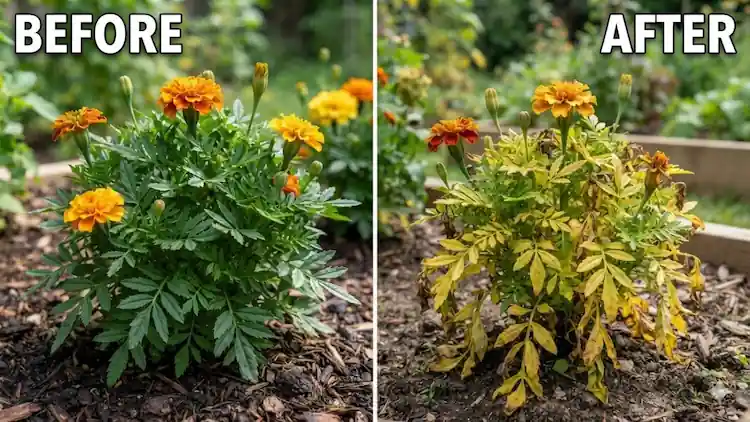
When I see marigold leaves turning yellow starting from the bottom of the plant and working up, while the soil moisture looks fine, I stop blaming water and start thinking nutrients. A light monthly feeding with a balanced 10-10-10 fertilizer usually solves it.
Too much fertilizer, though, causes the opposite headache huge green leaves and almost no blooms, since the plant puts all its energy into foliage instead of flowers.
- Marigold leaves turning yellow with pale, weak growth: likely nitrogen deficiency, feed lightly.
- Marigold leaves turning yellow but soil is soggy: that’s water, not nutrients don’t fertilize a wet plant.
- Purple-tinted leaves in cool weather: usually a phosphorus issue, not a disease.
Sunlight, Heat, and Cold Stress
Marigolds are sun lovers, plain and simple. Mine sulk badly if they get less than 6 hours of direct light, growing leggy with barely any color to show for it. On the other end, once daytime temperatures sit above 95°F for several days straight, I see midday wilting even in well-watered plants that’s heat stress, and it usually bounces back once evenings cool off.
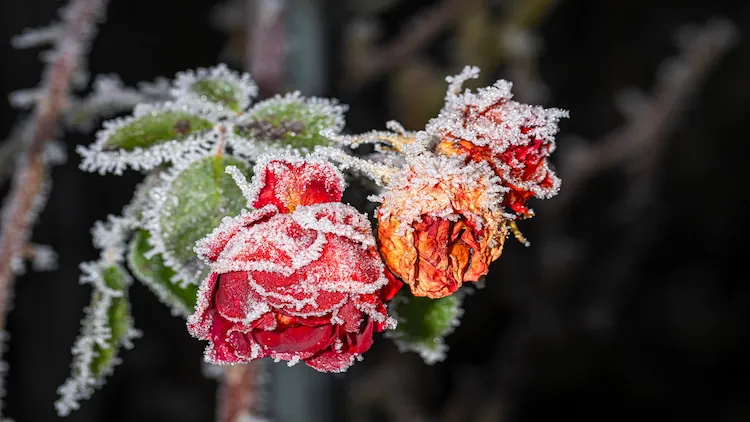
Cold is the other extreme. Marigolds are tender annuals and can’t handle temperatures below 32°F. Once that first hard frost hits in my zone, that’s the end of the season for them, no amount of fixing brings them back from that.
Pests I’ve Actually Found on My Marigolds
Pests are rarely the main reason a marigold dies outright, but a heavy infestation weakens the plant enough that other problems pile on:
- Aphids: clusters on new growth, sticky residue on leaves, a strong hose spray usually knocks them off.
- Spider mites: fine webbing and speckled leaves, worse in hot, dry stretches.
- Slugs and snails: ragged holes in young seedlings, especially after a wet night.
- Japanese beetles: chewed flowers and foliage, easiest to just hand-pick into a bucket of soapy water.
Fungal Diseases Behind a Marigold Plant Dying
Beyond root rot, a marigold plant dying from fungal disease usually shows up as powdery mildew, a white dusty coating on the leaves that thrives when plants are crowded with poor airflow, or Botrytis blight, which turns flower buds brown and mushy in cool, damp weather.
I space my plants further apart than the tag suggests and water at the base instead of overhead, and that alone has cut my fungal problems by more than half. Any leaves or flowers I remove because of fungus go straight in the trash, never the compost pile, since spores can survive that process.
Transplant Shock and Seedling Damping-Off
If you started marigolds from seed indoors and they suddenly collapsed at the soil line, that’s likely damping-off, a fungal issue that hits young seedlings in cool, overly wet potting mix.
There’s no fixing an infected seedling, but using sterile potting mix and giving trays good airflow prevents it from spreading to the rest of the tray. Older transplants set directly into the yard usually just need consistent moisture for the first week or two while their roots settle in.
Natural End-of-Season Decline
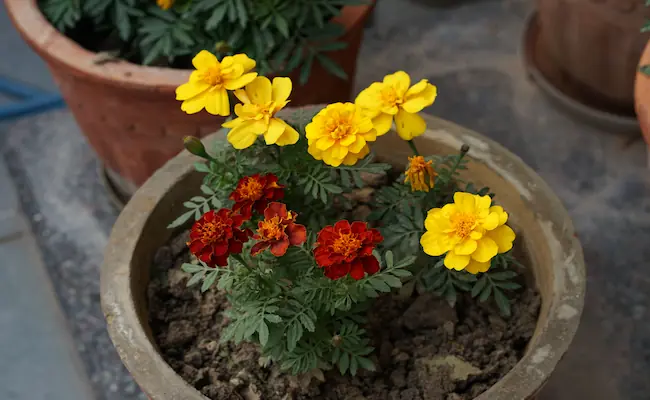
Sometimes a marigold isn’t sick at all it’s just Fall, and the plant is winding down the way every annual does. Reduced blooming, some yellowing, and slower growth as the season turns are completely normal, not a disease to chase down.
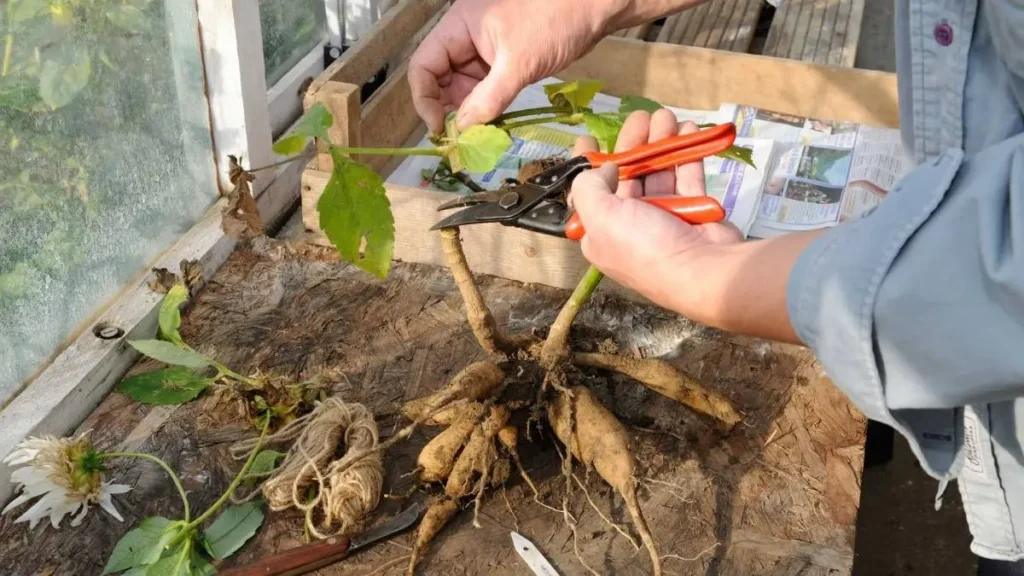
This is actually a great time to deadhead and do a round of light pruning, the same way I handle the rest of my perennial beds before winter sets in. If frost is in the forecast early, I’ll cover tender plants overnight with a cheap frost blanket the same way I’d protect anything else from an early cold snap it buys a few extra weeks of color for a fall centerpiece or garden party favor before the season truly ends.
How to Save Dying Marigolds: My Step-by-Step Recovery Method
Once I’ve figured out the actual cause, here’s how to save dying marigolds using the method that’s worked for me more times than not:
- Pull the plant gently and inspect the roots white and firm means recoverable, black and mushy means the plant is likely a loss.
- For root rot, trim away the damaged roots, replant in fresh, well-draining soil, and hold off watering heavily for about a week.
- For underwatering, water deeply and slowly rather than a quick splash, letting it soak down a full 6 to 8 inches.
- For nutrient issues, feed lightly and give it two weeks before judging results.
- For pests or fungus, treat immediately and remove affected material to the trash, not the garden bed.
I generally give a struggling marigold about two to three weeks to show real improvement. If it’s still declining after that, it’s usually kinder to pull it and replant marigolds grow fast enough from seed or a nursery six-pack that starting over often beats nursing a lost cause, especially with half the growing season still ahead of you, the same way I’d rather start fresh with a new zucchini or eggplant transplant than baby a stunted one all summer.
Final Thoughts:
At the end of the day, figuring out why are my marigolds dying and turning yellow always comes back to matching the symptom to the soil, not just the leaf color. Check the roots, check the moisture, and work from there that one habit has saved more of my marigolds than any product I’ve ever bought.