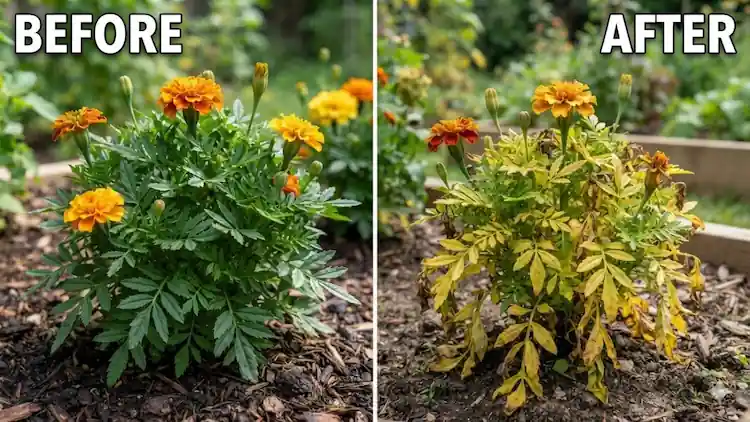
I still remember the morning I walked into my backyard and found my Japanese maple looking like someone had taken a blowtorch to half the leaves overnight. One clear, calm evening was all it took. If you’re trying to figure out how to protect a Japanese maple from frost before that happens to you, the good news is it doesn’t take much just the right timing and a few cheap supplies you probably already have in the garage.
Why These Trees Take Frost So Personally
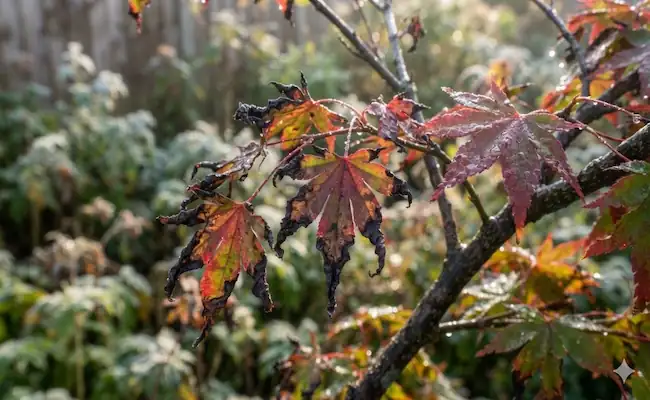
Japanese maples have thin, delicate leaves, and that’s exactly why they’re so quick to show damage. According to SDSU Extension, once air temperatures drop to 32°F or below, water inside plant cells can freeze, expand, and rupture the cell walls, which is what causes those blackened, crispy leaves you see the next morning (source).
The tricky part is timing. A dormant tree in the middle of winter barely notices frost. During dormancy, water inside the cells actually moves out into the spaces between them and freezes there instead, which the tree can handle just fine.
But once new leaves push out in spring, or if a late fall freeze catches the tree before it’s dropped its leaves, that’s when things go wrong. Iowa State Extension actually lists Japanese maple as one of the species most likely to show cold damage compared to other yard trees though it also notes most established trees bounce back within a few weeks (source).
There’s also a difference between a light frost and what extension agents call a “hard freeze,” which is 28°F or lower. A light frost usually just scorches the tips of the leaves. A hard freeze can go much deeper, damaging entire branches and, in rare cases, even the bark and trunk on a young tree. That gap between 32°F and 28°F is exactly why checking the actual forecast, not just guessing, matters so much this time of year.
Not Every Japanese Maple Reacts the Same Way
Something I learned the hard way not all cultivars handle cold the same. The lacy, weeping types are the babies of the family; the upright green varieties can shrug off a lot more.
| Variety | Hardiness Zone | Frost Sensitivity |
|---|---|---|
| Bloodgood | 5–8 | Moderate |
| Sango-kaku (Coral Bark) | 5–8 | Moderate |
| Dissectum (Laceleaf/Weeping) | 5–8 | High |
| Acer japonicum types | 4–7 | Low |
If you’re a community gardener planning what to plant this Fall, this table alone can save you a headache next spring.
How to Protect a Japanese Maple From Frost Through Fall and Spring
This is really a two-season job. In USDA Zones 4, 5, and 6, both fall and spring frosts matter. If you’re gardening in Zones 7 or 8, spring is usually your only real worry:
In the Fall: stop fertilizing by late summer so the tree isn’t pushing tender new growth right before cold weather hits. Add a 2 to 3 inch layer of mulch around the base to insulate the roots, keeping it a few inches back from the trunk.
In the Spring: this is when frost damage on Japanese maple trees is most common, because new leaves are unfolding right when a late cold night can sneak in. Keep an eye on the forecast once buds start swelling, and be ready to cover the tree on any night the temperature is expected to dip near freezing.
Frost Damage, Sunscorch, or Something Else?
Not every brown leaf is frost. I always tell people to think back was there a cold night recently, or has it just been hot and dry? Frost damage shows up fast, usually within a day of a cold snap, and it hits the newest growth first. Sunscorch develops more slowly along leaf edges during hot spells.
If the discoloration looks patchy or spreads oddly instead of following a cold night, it might be worth reading up on japanese maple leaves turning brown or checking for something more serious like verticillium wilt, which can mimic cold damage but needs a completely different fix.
Here’s a quick way to tell them apart:
- Frost damage: shows up within a day of a cold night, hits new leaves first, leaves feel dry and crisp.
- Sunscorch: develops slowly over hot, dry days, mostly along the leaf edges.
- Verticillium wilt: one branch or one side of the tree wilts while the rest looks fine, often with no clear weather trigger.
Most tree specialists agree on one thing here: don’t rush to conclusions the same day. Cold injury usually looks worse in the first 24 to 48 hours than it actually is, once the tree has a chance to shake it off.
Potted Trees Need Extra Attention
If your Japanese maple is living in a pot on the patio instead of planted in the yard, its roots are far more exposed than a tree in the ground the container walls basically hand the cold straight to the root ball.
Move potted trees against the house or into a garage overnight during a hard freeze, and wrap the pot itself in burlap or an old blanket for extra insulation. Grouping several containers together also helps them hold warmth as a cluster instead of each one losing heat on its own.
Simple Ways for Japanese Maple Cold Protection
Here’s what actually works for japanese maple frost protection, no fancy equipment needed just stuff you can grab from around the house or a quick trip to the garden center:
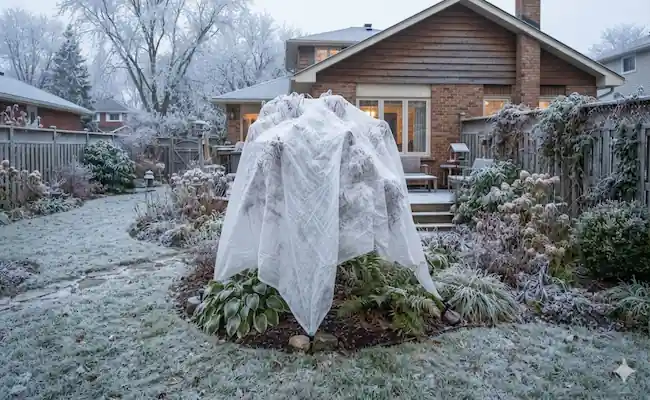
- Use breathable frost cloth: ideally a lightweight 1 to 1.5 oz per square yard fabric, not plastic sheeting plastic traps cold air against the leaves and can make things worse. Drape it all the way to the ground so the warmth from the soil gets trapped underneath too, then pull it off again once the sun’s up.
- Water the tree a day before a predicted frost: Moist soil holds heat better than dry soil and releases it slowly overnight, which helps buffer the root zone (source).
- Set up a simple windbreak: using burlap screens or even stacked patio furniture on the side facing the wind.
- Choose a sheltered spot: near a fence or wall when planting, ideally facing east so morning sun warms the tree gently.
- Skip late-season pruning: cutting branches too close to frost season encourages tender new shoots that are the first to get hurt.
Any of your neighborhood pruners will tell you the same thing: timing your cuts matters as much as the cut itself when it comes to protect Japanese maple from frost damage over the long run.
If Frost Already Got to It
Don’t panic and don’t grab the shears right away. Recovery takes time, and rushing it usually does more harm than the frost itself:
- Week 1: Leaves may look blackened or shriveled. Leave everything alone this is just the cosmetic damage showing.
- Weeks 2–3: Bend a few twigs gently; live wood flexes, dead wood snaps. Some leaves will drop on their own.
- Weeks 4–6: Watch the buds. Swelling or tiny green shoots at this point are a good sign the tree is pushing out new growth.
- After 8 weeks: If a branch still shows nothing, scratch a small bit of bark with your fingernail. Green underneath means it’s alive; brown and dry means that section is done and safe to prune.
If an entire season passes with no color or growth on a limb, that’s usually your answer.
Once you’re sure which branches are dead, prune them back to a healthy bud and toss the debris in the trash or, better yet, work it into your own pile if you make compost at home. While you’re out there inspecting branches, it’s also a smart time to check for pests like japanese maple scale, since a stressed tree is more likely to attract them. And if entire limbs stay bare with no green color returning after a full season, it might be worth reading about japanese maple dying to figure out if it’s time to start over.
Final Thoughts:
At the end of the day, learning how to protect a Japanese maple from frost really comes down to watching the forecast and covering the tree on the nights that matter. I’ve kept the same maple alive in my own backyard for years using nothing fancier than an old bedsheet and some common sense timing. Your tree, whether it’s the centerpiece of your garden or just a backyard favorite, deserves that same little bit of care each Fall and Spring.