Ever notice how some ZZ plants sail through an entire winter looking untouched while another one on the same windowsill turns yellow after just two weeks?

The real answer to how often to water zz plant in winter has less to do with the calendar and more to do with your home’s light, heat, and pot size. Get the timing wrong and you’re looking at root rot by February.
Get it right, and this plant barely needs you at all.
Why Your ZZ Plant Barely Needs Water Once Winter Hits
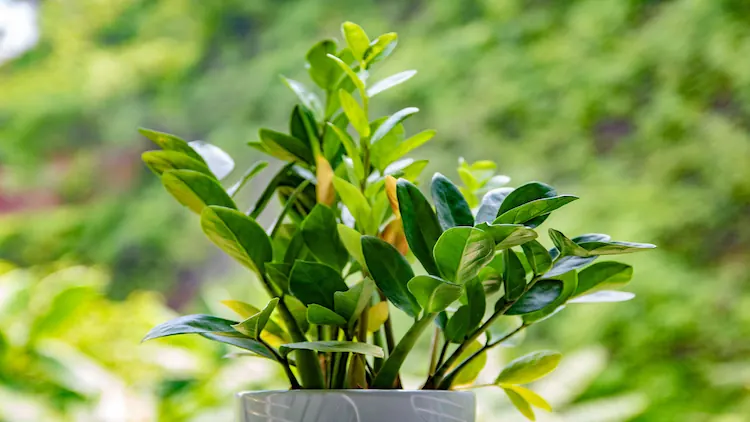
Your ZZ plant (Zamioculcas zamiifolia) isn’t lazy in winter it’s dormant. Growth slows to a crawl, daylight hours shrink, and the soil in its pot stays damp for days longer than it did back in July.
I’ve kept ZZ plants on windowsills in three different apartments, and every single one slipped into this same quiet mode the moment the heat clicked on for the season.
Here’s what’s actually happening underground and in the leaves:
- Growth slows dramatically, so roots pull far less moisture out of the soil.
- Cooler room temperatures slow evaporation, so soil that dried out in 5 days back in summer might take 15 or more in winter.
- Shorter daylight hours cut back photosynthesis, which lowers water loss through the leaves (a process called transpiration).
- Less active growth means the plant simply has nowhere to “send” extra water even if you give it.
According to NC State Extension’s Plant Toolbox, the ZZ plant stores water inside a thick underground rhizome, which is exactly why it can coast through weeks of dry soil without any real stress. In practice, a healthy ZZ plant can go up to 6 to 8 weeks without any water at all during winter dormancy before it shows real signs of stress, which is far longer than almost any other common houseplant.
How Often to Water ZZ Plant in Winter: By Pot Size, Light, and Home Heat
The general rule is once every 3 to 4 weeks, or about once a month. But watering a ZZ plant in winter really comes down to reading your own setup rather than following one fixed number.
In my experience, small pots dry out faster than you’d expect once the furnace kicks on in October, while a big floor-standing pot in a cool room can go over a month without a single drop.
| Your Situation | Typical Frequency |
|---|---|
| Small pot (4–6 inches), low light | Every 4–5 weeks |
| Medium pot (6–8 inches), medium light | Every 3–4 weeks |
| Large pot (8–12 inches), bright indirect light | Every 3 weeks |
| Home with dry, forced-air heat | Check soil weekly; water only when dry |
| Cooler room (60°F–65°F) | Every 4–5 weeks |
| Young or newly potted ZZ | Every 3–4 weeks (roots are still small) |
| Mature, established, root-bound ZZ | Every 4–6 weeks (rhizome storage is bigger) |
A young ZZ plant with a small rhizome hasn’t built up much of a water reserve yet, so it can dry out a little faster than an older, established plant that’s been in the same pot for a few years. This holds true across varieties too a Raven ZZ with its dark, almost-black leaves follows the same seasonal slowdown, though I break down its specific quirks in a separate Raven ZZ care guide.
If you want the shift from Fall into full winter dormancy mapped out month by month, I put together a full season-by-season watering guide that goes deeper than this quick table.
Checking the Soil: How to Tell When It’s Actually Time to Water
Don’t just trust a chart blindly check the pot itself. This is how any community gardener eventually learns to read a plant instead of guessing on a schedule:
- Push a finger 1 to 2 inches into the soil; if it still feels cool or damp, wait longer.
- Push a wooden skewer to the bottom of the pot and pull it out damp soil clinging to it means it’s not time yet.
- Lift the pot before and after watering so you learn the weight difference between dry and wet soil.
- Use a cheap moisture meter if you’d rather skip the guesswork entirely.
- Watch the leaves for slight wrinkling or a duller, lighter green color this is a late sign your plant is thirsty.
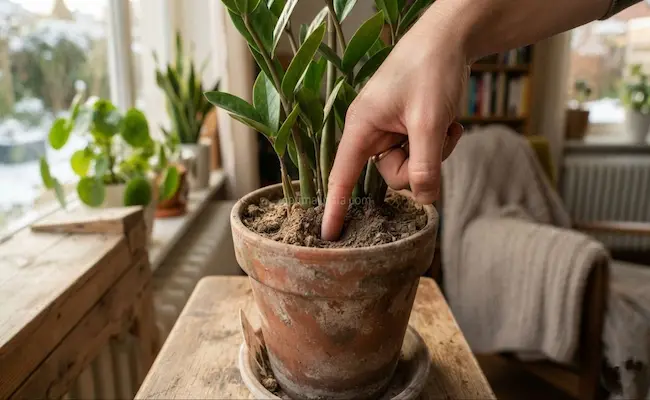
How Much Water to Give And How to Give It
Once you’ve confirmed the soil is actually dry, water thoroughly instead of giving it a light splash. Use room-temperature water and let it run all the way through the drainage holes so the whole root ball gets soaked evenly.
| Pot Size | Water Amount |
|---|---|
| 4–6 inch pot | 1–2 cups |
| 8 inch pot | 2–3 cups |
| 10–12 inch pot | Up to half a gallon |
A few habits that make a real difference:
- Watering a ZZ plant in winter is best done in the morning or early afternoon, so the soil isn’t sitting cold overnight.
- Dump the saucer underneath never let the pot sit in standing water.
- Skip watering during a cold snap or right before a freezing night.
- Keep the plant in a spot between 60°F and 75°F, away from drafty windows or doors.
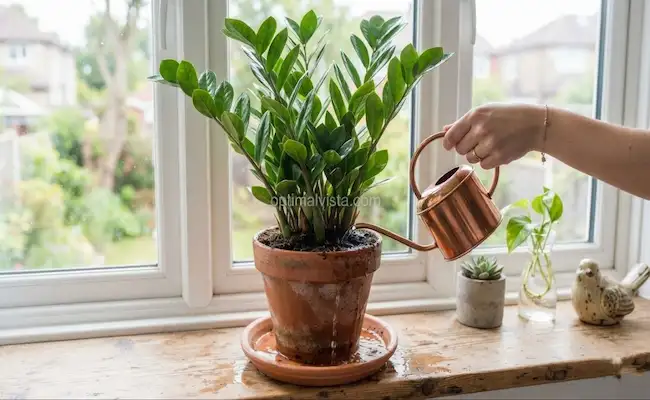
Overwatering vs. Underwatering: Signs, Fixes, and What Yellow Leaves Really Mean
Overwatering is by far the bigger risk in winter, since the plant simply can’t use up water at the rate it did in summer.
Watch for:
- Yellow, soft, or mushy leaves.
- A sour or moldy smell coming from the soil.
- Black or brown, rotted-looking roots when you check the rootball.
If you catch it early, pull the plant from the pot, trim off any rotted roots with clean pruners, toss the dead material in the trash, and repot in a fresh, well-draining mix.
If yellowing is your main concern right now, I’ve broken down every possible cause in why ZZ plant leaves turn yellow. Recovery is slow in winter expect 4 to 6 weeks before you see real new growth, since the plant is still dormant while it heals. Underwatering shows up differently wrinkled or curling leaves, brittle stems, and a plant that looks tired but perks back up within a day or two of a good soak.
A badly underwatered plant takes a little longer, usually 1 to 2 weeks of consistent, correctly timed watering before the leaves plump back up completely.
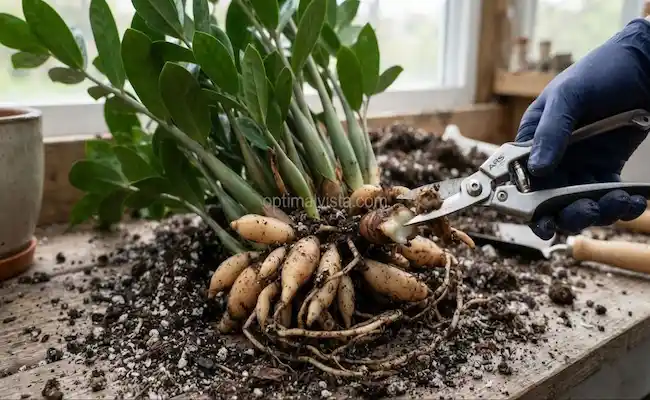
How Much Water a ZZ Plant Needs in Winter: Extra Care Habits
A few other seasonal habits directly shape your watering routine:
- Stop fertilizing from around November through February dormant roots don’t use up nutrients, and leftover fertilizer salts can build up fast in dry soil.
- Skip repotting until new growth starts back up in spring; if you’re not sure your plant is even due, I laid out the exact signs and timing in when to repot a ZZ plant.
- Stick with a well-draining mix year-round, since soil that holds water too long is what turns a normal winter slowdown into root rot I go through the exact blend I use in best soil for ZZ plant.
- If you’re gardening in USDA Zones 4, 5, 6, 7, or 8, this plant has to stay indoors all winter, since outdoor temperatures well below 45°F will damage it quickly.
- Only USDA Zones 9 and 10 let a ZZ plant handle brief winter chill outdoors at all.
- Self-watering pots or grow lights change the math a little grow lights can nudge the plant out of full dormancy, so check soil moisture every 2 to 3 weeks instead of waiting the full month, and skip self-watering reservoirs entirely in winter since they keep the soil too consistently damp.
The University of Washington’s Miller Horticultural Library backs this up directly, noting growers should skip fertilizer in fall and winter and only water once the top inch of soil turns dry which lines up almost exactly with what most windowsill growers find works in practice.
I go into more depth on drafts, humidity, and light placement in a full winter care checklist, and if you’re curious how the same zone logic plays out for other potted plants, I’ve also mapped out which zones let potted plants survive winter outdoors.
Can a ZZ Plant Live Outdoors Through Winter?
Only if you’re in a warm-enough zone. Cold water and cold soil are this plant’s real enemies even more than cold air itself. It’s the same logic backyard gardeners use when covering a zucchini or eggplant bed before the season’s first hard frost: protect it before the cold actually arrives, not after.
One more note for the yard: ZZ plant sap is toxic if chewed, so keep pots out of reach of pets the same way you’d fence off chrysanthemums from curious cats and dogs in your backyard.
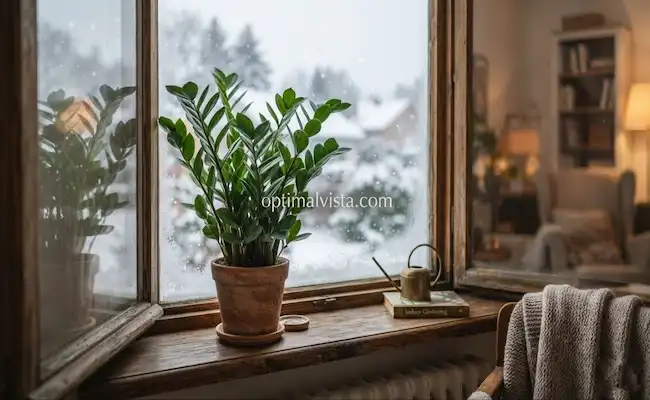
Common Mistakes in a ZZ Plant Winter Watering Schedule
Most of these mistakes come from applying old summer habits to ZZ plant water needs during winter, when everything about the plant has slowed way down:
- Watering on a fixed weekly schedule instead of checking the soil first.
- Using cold tap water straight from the faucet.
- Letting the pot sit in a full saucer instead of proper drainage.
- Fertilizing during dormancy just out of habit.
- Repotting mid-winter “just because it’s due”.
- Keeping the plant near a heater vent or a drafty window.
- Ignoring changes in your home’s environment a new humidifier, a different room, or the furnace finally kicking on all shift how fast soil dries, so the same fixed number stops working the moment your setup changes.
A watering routine built around soil checks instead of guesswork will save you more plants than any single tip on this list.
Final Thoughts:
At the end of the day, how often to water zz plant in winter isn’t a fixed number it’s a habit of checking the soil before you reach for the watering can. Keep it between 60°F and 75°F, water only when the top 2 inches are dry, and skip the fertilizer until spring. Do that, and this rhizome-fed survivor will favor you by outlasting almost everything else on your windowsill.