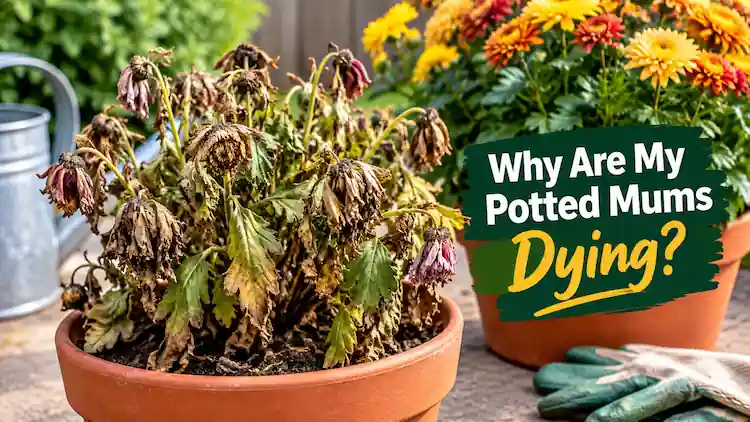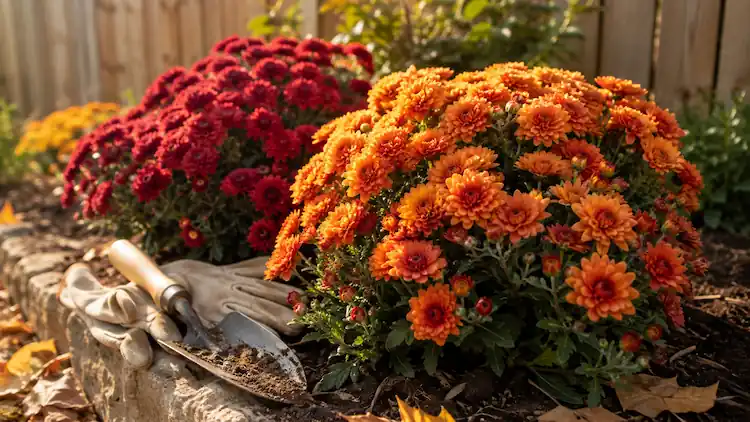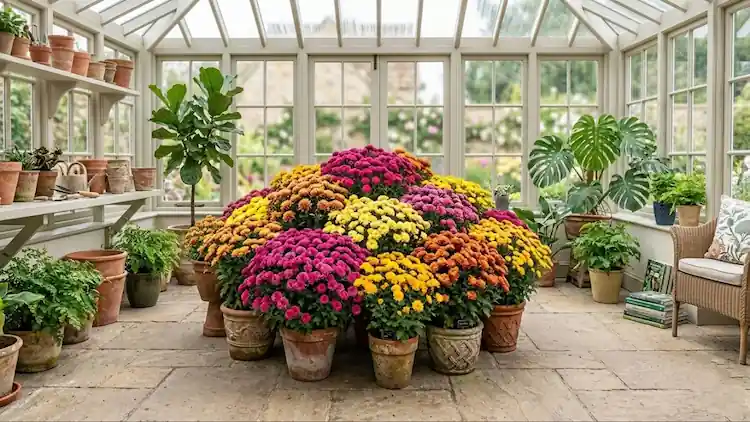
You bring home a gorgeous mum in October, it dies back by December, and you’re left wondering if you did something wrong or if that was just the end of the road. So can potted mums survive in winter, or are you better off tossing the pot once the color fades?
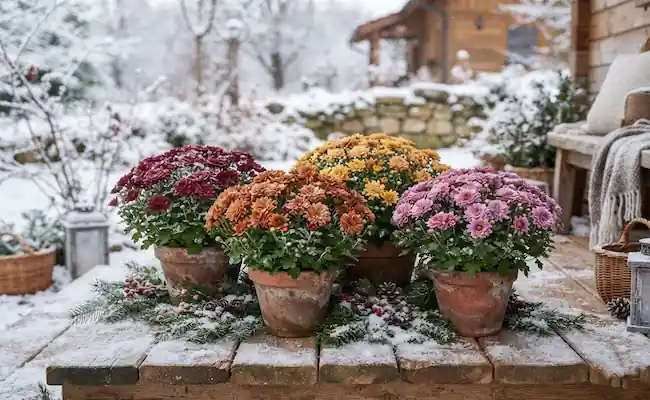
The honest answer is: it depends on what kind of mum you bought and how much effort you’re willing to put in. I’ve overwintered dozens of potted mums over the years, and the ones that made it through had one thing in common I matched the method to my zone instead of guessing.
Can Potted Mums Survive in Winter? It Depends on the Type
Not every mum sold in September is built the same. Florist mums, the ones with tight, showy blooms sold for quick fall color, are bred for looks, not toughness, and rarely survive outdoors. Garden mums, sometimes labeled “hardy,” are true perennials that can come back for years if given a fair chance.
A 2023 review in Frontiers in Plant Science points out that cold tolerance in chrysanthemums varies significantly by cultivar and genetics, which is exactly why one neighbor’s mums come back every spring while another’s don’t (source). Before you plan anything, check the plant tag for the scientific name or ask at the garden center whether it’s a florist or garden variety this one detail decides almost everything else.
Check Your USDA Zone Before You Decide
Your zone matters more than any single trick you’ll read online. Here’s a simple breakdown:
| USDA Zone | Best Method | Why |
|---|---|---|
| USDA Zone 8 and up | Outdoor, protected spot | Winters rarely drop below 20°F |
| USDA Zones 5, 6 and 7 | Cold frame or heavy wrap | Freezes are common but not extreme |
| USDA Zone 4 and below | Bring indoors | Ground and pots freeze solid for months |
If you’re not sure which zone you’re in, a quick search of your zip code on the USDA hardiness map settles it in under a minute.
Winter Prep Steps for Every Method
No matter which route you take, every mum needs the same head start before the cold sets in:
- Prune stems back to about 4 to 6 inches once flowering stops.
- Stop fertilizing by early fall so the plant can harden off naturally.
- Check under leaves for aphids or mites before moving pots anywhere.
- Move mums into a bigger pot if roots are circling the drainage holes.
The pot itself matters too. Terracotta looks nice on a porch, but it dries out fast and cracks in hard freezes because the material itself absorbs moisture and expands when it freezes.
Plastic and thick ceramic containers hold moisture better and insulate the roots more evenly through winter, and if you’re buying new pots specifically for overwintering, a wider, deeper container gives roots more insulating soil around them than a shallow, narrow one a gallon or two of extra soil volume genuinely makes a difference on the coldest nights.
Overwintering Outdoors in Mild Zones
If you’re in a milder climate, you can often skip moving pots at all and just protect potted mums from frost right where they sit:
- Add 2 to 3 inches of mulch, straw, or shredded leaves on top of the soil.
- Wrap the pot in burlap or an old blanket to insulate the root zone.
- Drape frost cloth over the plant on nights near 32°F, then remove it in the morning.
- Tuck pots under a porch roof, deck, or against a south-facing wall out of the wind.
This backyard approach works well as long as you’re consistent about covering plants before a cold night, not after one. It’s the same basic logic I use to keep tender annuals going a little longer too my notes on protecting marigolds from frost use almost the identical mulch-and-cover routine, just on a smaller flower.
Using a Cold Frame for Extra Protection
For growers in the middle zones, a cold frame is one of the most reliable ways to overwinter potted mums without bringing them inside:
- Set the pots inside the frame and bury them halfway in loose soil or mulch for insulation.
- If space is tight, you can even transplant mums directly into the frame’s soil for the season.
- Open the lid on sunny days to prevent heat buildup, and close it before nightfall.
- Water sparingly, about once every four to six weeks, since dormant roots need very little.
A cold frame acts like a mini greenhouse, buffering temperature swings that would otherwise stress the roots.
Bringing Mums Indoors for Winter
In colder zones, this is usually the surest way to keep potted mums alive over winter, especially for florist varieties:
- Pick a cool, bright spot between 40°F and 50°F, like an unheated garage or enclosed porch.
- Avoid areas near heating vents, since dry warm air stresses dormant plants.
- Water only when the top 2 to 3 inches of soil feel dry.
- Wait to move plants back outside until nighttime lows stay reliably above freezing.
I always keep mine near a window with indirect light rather than in a totally dark closet, just so I’m not guessing about their condition all winter.
Watering Through Dormancy Without Killing the Roots
Watering mistakes during dormancy sink more mums than actual cold does. Roots in containers are especially vulnerable because there’s no surrounding soil mass to buffer temperature or hold steady moisture, unlike mums planted in your backyard beds.
Research from Rutgers’ agricultural extension confirms that container-grown roots freeze and lose hardiness at higher temperatures than roots protected in the ground, which is exactly why potted mums need more careful handling than in-ground ones (source).
A few rules of thumb:
- Dormant plants need water roughly once a month, sometimes less.
- Soggy, waterlogged soil causes root rot faster than mild drought ever will.
- Always check drainage holes are clear before winter sets in.
Spring Transition and Getting Blooms Again
Once nights stay above freezing, it’s time to slowly wake the plant back up:
- Harden mums off gradually, a few hours outside at a time over one to two weeks.
- Repot into fresh potting mix if roots look cramped or the old soil has broken down.
- Restart a light, balanced fertilizer once you see new green growth.
- Expect it to take several weeks of active growth before flower buds reappear, so don’t panic if there’s no color right away.
If you’d rather grow them straight in your yard next year instead of pots, my guide on how to keep mums blooming through fall picks up right where this one leaves off.
Troubleshooting Common Winter Problems
- Leggy, weak growth in spring: usually too little light indoors during dormancy.
- No new buds by late summer: often a sign the plant broke dormancy too early and got stressed by a late freeze.
- Yellow, mushy leaves: almost always overwatering, not cold damage.
- Plant looks dead but base is still firm: give it a few more weeks before giving up; mums are slow to show new growth.
- Whole plant collapsed after one hard freeze: unprotected mums survive frost in containers far less often than in-ground plants, since the entire root ball is exposed instead of just the surface, so next season lean toward earlier protection rather than waiting.
For anything that looks more like pest damage than winter stress, my notes on marigold pests and diseases cover treatments that work the same way on mums.
A Few Extra Backyard Notes
Mums are mildly toxic if pets chew on them, so keep pots up off the ground if a dog or cat has access to your patio or yard. If wind is more of an issue where you garden than straight cold, the staking and windbreak tricks in my Japanese maple frost protection guide translate surprisingly well to top-heavy potted mums too. And don’t throw healthy pruned stems in the trash they compost well.
If you’re managing a pile through the cold months, this guide on compost decomposition in winter is worth a look, and once spring feeding starts back up, worm castings are a gentle way to fertilize without burning tender new roots.
If you’re still unsure whether your plant is even the type worth this effort, my breakdown of chrysanthemums as perennial or annual is a good place to double-check before you commit a whole winter to it. A community gardener I know swaps notes on which mum varieties made it through the coldest nights, and honestly, that kind of local trial and error beats any single article, including this one.
Final Thoughts:
So, can potted mums survive in winter? Yes, but only if you match the method to your zone and stay consistent with watering and protection instead of setting it and forgetting it. A garden mum given the right care in USDA Zones 4 through 8 has a real shot at coming back next fall, while a florist mum is more of a gamble no matter what you do. Either way, the small weekly checks matter far more than any single trick.