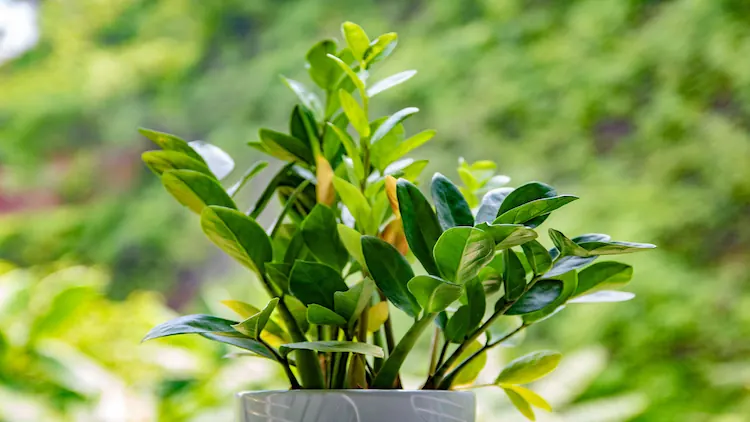
Ever wonder why your ZZ plant looked perfect all summer and then suddenly started dropping leaves the day you turned the heat on? It’s not bad luck, and it’s not a bad plant. Most of what people blame on winter is really just old habits catching up with them
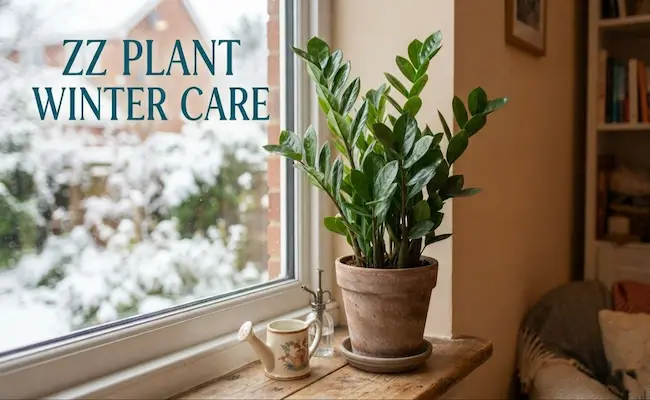
Good zz plant winter care means changing almost everything about your routine once the days get short watering less, moving the pot, and paying closer attention to temperature. I’ve killed one ZZ plant this way myself before I figured out what was actually going on, so I get why this trips people up.
A quick fact before we get into it: ZZ plants (Zamioculcas zamiifolia) are native to the dry grasslands of eastern Africa, which is exactly why they store water in thick underground rhizomes instead of relying on regular rainfall, according to North Carolina State Extension’s plant toolbox. That storage system is the whole reason winter watering rules are so different from summer.
Why ZZ Plant Winter Care Looks So Different
In summer, your ZZ plant is actively growing, so it’s pulling water and nutrients out of the soil at a decent clip. Once fall arrives and daylight hours drop, the plant slows way down and enters something close to dormancy. Growth basically stops.
This is the part that trips people up the most, because the plant still looks alive and green, so it’s easy to assume it needs the same care as always.
It doesn’t. During dormancy, the rhizomes hold onto whatever moisture they’ve already stored, and the roots barely take up anything new. If you keep watering on your usual summer schedule, that water just sits in the pot with nowhere to go, and that’s when root rot starts. Winter care for ZZ plants really comes down to reading the plant instead of following a fixed calendar.
Care Requirements at a Glance for the Cold Months
Before we get into the details, here’s the short version you can pin to the fridge or save on your phone:
| Care Factor | Winter Target |
|---|---|
| Watering | Every 4 to 6 weeks, only once soil is dry 3 inches down |
| Light | Bright, indirect near an east or south window, or a grow light for 8 hours a day |
| Temperature | 65°F to 75°F; never let it sit below 55°F |
| Humidity | A pebble tray helps but isn’t required; skip misting |
| Fertilizer | None from October through March |
Watering: The Number One Winter Mistake
I’d say watering is where most people mess up their zz plant winter watering schedule, and it’s an easy fix once you know the pattern:
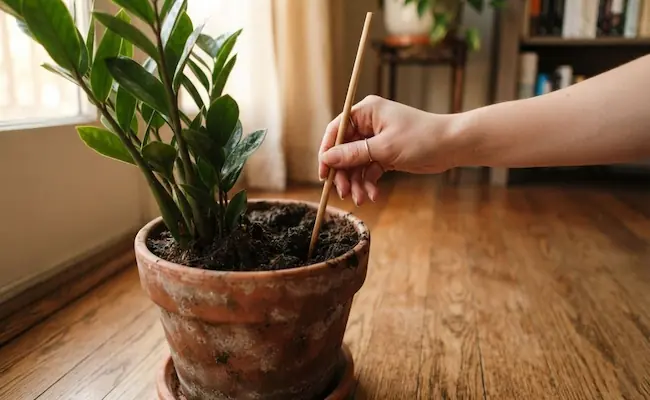
- Check the soil with your finger or a wooden chopstick down to about 3 inches before you even think about watering.
- Wait until the pot feels noticeably lighter than it does right after a normal watering.
- In winter, most homes only need watering once every 4 to 6 weeks, sometimes closer to 8 weeks in cooler, more humid houses.
- When you do water, soak it thoroughly until water runs out the drainage hole, then dump the saucer right away never let the pot sit in standing water.
- Shriveled stems or leaves that feel thin and floppy usually mean you’ve gone too long without water, not too short.
One thing I’ve noticed with my own plant is that the soil surface dries out fast even when the middle of the pot is still soaking wet, so don’t judge by looking at the top alone.
Light Needs During the Short Days
ZZ plants are famous for tolerating low light, but “tolerating” and “thriving” aren’t the same thing. Once fall hits and sunlight gets weaker, a spot that worked fine in summer can turn into a dim corner by December. When that happens, the plant starts stretching toward whatever light it can find, and you end up with long, weak stems and leaves spaced way too far apart.
Here’s what actually helps with zz plant winter light needs:
- Move the pot closer to an east or south-facing window where it gets bright, indirect light without getting scorched by direct afternoon sun.
- Rotate the pot a quarter turn every week or two so it grows evenly instead of leaning.
- If your home doesn’t get much natural light in winter, a small LED grow light placed about 12 to 18 inches above the plant, run for around 8 hours a day, makes a real difference.
- Wipe dust off the leaves with a soft, damp cloth once a month dust blocks light the plant can’t afford to lose right now.
Temperature and Drafts
ZZ plants come from warm, tropical regions, and they have zero natural defense against cold. Keep the room somewhere between 65°F to 75°F if you can. They can handle brief dips down to about 60°F, but anything below 55°F starts putting the plant at real risk, and prolonged exposure near 32°F or below can cause permanent damage.
A few placement habits that matter more than people think:
- Keep leaves from touching cold window glass, especially overnight.
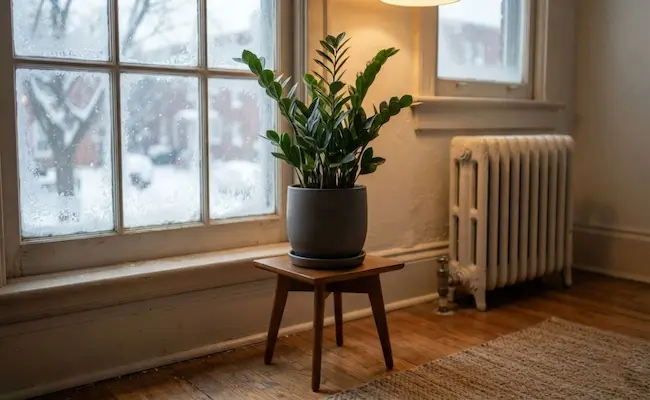
- Don’t set the pot near heater vents, radiators, or fireplaces the dry blasting heat is just as harmful as cold drafts.
- If you’ve got cold tile or stone floors, raise the pot up on a small stand instead of leaving it directly on the floor.
- Avoid moving the plant back and forth between a warm room and a cold one; that kind of temperature swing stresses it more than one steady, slightly cooler spot would.
If you brought your ZZ plant outside for the summer on a porch or in the backyard, this is your reminder to bring it in well before the first frost, especially if you’re gardening in USDA Zones 4, 5, 6, or 7, where nighttime temps can drop fast once fall sets in.
Humidity: Helpful, But Not Critical
Indoor heating dries the air out fast in winter, and that can show up on your ZZ plant as brown leaf tips. That said, ZZ plants aren’t nearly as humidity-hungry as something like a fern, so don’t overthink this one.
A pebble tray under the pot pebbles plus a little water, with the pot sitting above the waterline, not in it adds gentle humidity as the water evaporates. I’d skip misting the leaves though. Wet foliage sitting in cool, low-light winter conditions is basically an invitation for fungal spots, and it’s not worth the tradeoff.
Fertilizing, Cleaning, and Pruning
Stop fertilizing completely once fall arrives, and don’t start again until you see new growth in spring, usually around March. Feeding a dormant plant doesn’t help it the salts just build up in the soil and can burn the roots since the plant isn’t using those nutrients anyway.
Skip repotting during winter too. That’s a stressful process best saved for spring or summer when the plant can actually recover from it. If you do want to expand your plant collection, this is a much better season to learn how to propagate a ZZ plant from healthy cuttings instead, since you can start the process indoors and have it ready to pot up by spring.
Pruning is fine in winter if you’re dealing with leggy, stretched-out growth from low light. Use clean, sharp pruners and cut just above a healthy leaf node. And if you’re growing the darker-leafed cultivar, checking out a dedicated Raven ZZ plant guide can help you figure out if uneven light is why the new leaves are coming in green instead of that deep black color everyone wants.
Troubleshooting Common Winter Problems
| Symptom | Likely Cause | What To Do |
|---|---|---|
| Yellow leaves, soft stems | Overwatering | Let soil dry fully, check roots for rot |
| Wrinkled, shriveled stems | Underwatering | Water thoroughly, then resume normal check schedule |
| Brown, crispy leaf tips | Low humidity or heater proximity | Add a pebble tray, move away from vents |
| Dark, mushy roots | Root rot | Trim damaged roots, repot in dry, well-draining mix |
| Leggy, stretched growth | Not enough light | Move closer to window or add a grow light |
If you’ve got pets wandering around your yard or living room, keep in mind that ZZ plants contain calcium oxalate crystals, which is why it’s worth reading up on whether they’re toxic to dogs or toxic to cats before moving the pot to a lower shelf for winter.
According to the ASPCA’s Animal Poison Control database, the sap can cause mouth and stomach irritation if chewed on, so this is worth a quick check if you’re a community gardener with animals in the house. And if there are kids around too, it’s worth a quick read on ZZ plant safety around babies before you start rearranging pots for the season.
Pests to Watch For in Winter
Dry indoor heat from your furnace or radiator is exactly the kind of condition spider mites and mealybugs love. Every time you wipe dust off the leaves, take a second to check the undersides and the spots where leaves meet the stem.
A damp cloth wipe-down usually knocks out a small infestation before it spreads, so you don’t need to reach for a pesticide over a handful of bugs caught early.
Reviving a ZZ Plant That’s Already Struggling
If you’re past prevention and some damage is already done, don’t panic ZZ plants are tougher than they look and can bounce back from a rough patch.
- Root rot: Pull the plant from the pot, trim away any dark, mushy roots with clean scissors, let the remaining rhizome air-dry for a day, then repot in fresh, well-draining soil and hold off watering for a week or two.
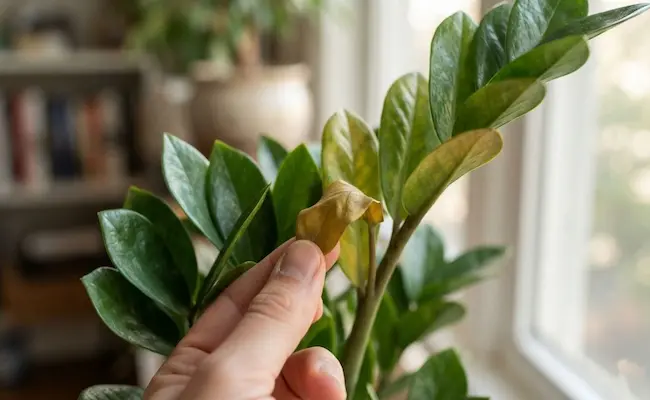
- Frost-damaged leaves: Trim off anything that’s gone black or mushy, move the plant to a warmer spot right away, and be patient new growth usually waits until spring even though the rhizome underground is often just fine.
- A plant that’s dropped most of its leaves from stress: Keep it warm, give it decent light, water sparingly, and give it time; ZZ plants can regrow from the rhizome even after looking almost bare.
A Few Extra Winter Habits Worth Building
Think of this as a checklist you can run through once a month while you’re doing other Fall chores, like clearing zucchini and eggplant beds out of the backyard or hauling leaf trash and garbage bags to the curb:
- Check soil moisture with your finger before assuming it needs water.
- Wipe down leaves and check the undersides for pests like spider mites, which show up more in dry indoor air.
- Confirm the plant isn’t within a foot or two of a heat vent.
- Rotate the pot for even color and growth.
Final Thoughts:
At the end of the day, zz plant winter care isn’t about doing more it’s about doing less, and doing it more carefully. Cut back on water, chase whatever light you can find, keep the temperature steady, and leave the fertilizer alone until spring. My own plant looks better every winter now that I stopped babying it the way I would in July. Get those basics right, and your ZZ plant will sail through the cold months and bounce back strong the moment spring growth starts again.