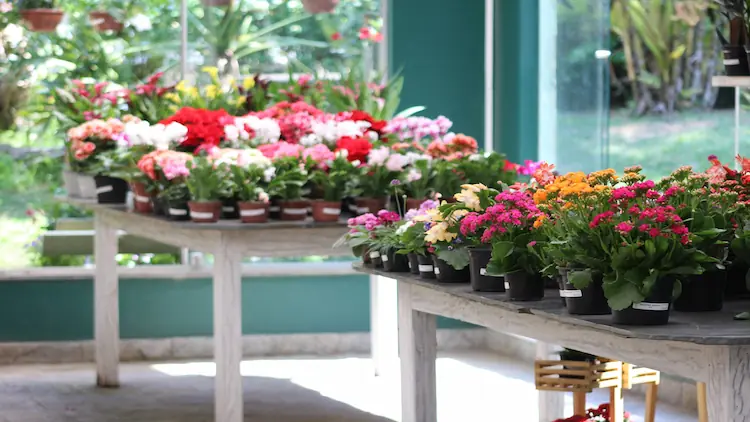
Snake plants get sold as the plant nobody can kill, and they sit on almost every porch and living room shelf in the country.
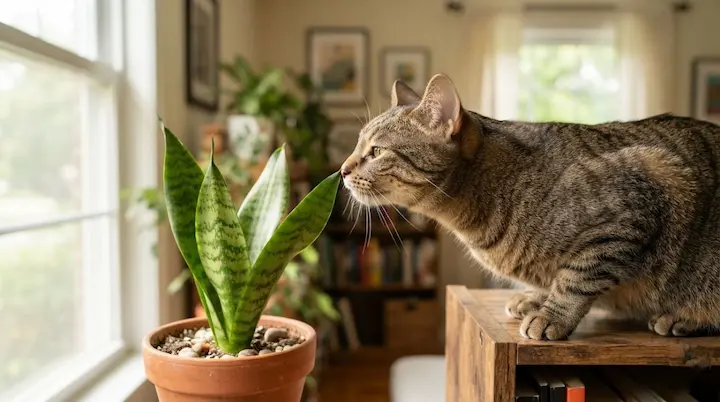
Yet the little tag stuck in the pot barely mentions pets. So, are snake plants toxic to cats, or is it just internet panic? The answer comes down to one natural compound inside those stiff green leaves, and it changes where the plant should live.
Are Snake Plants Toxic to Cats? The ASPCA Verdict
Yes, they are. The ASPCA lists the snake plant as toxic to both cats and dogs, and the toxic principle is a group of compounds called saponins. Per the ASPCA’s snake plant listing, the clinical signs are nausea, vomiting, and diarrhea.
The reaction usually runs mild to moderate. Touching the leaves or brushing past the pot does nothing, which makes the snake plant poisonous to cats only when they chew it.
Snake plants are native to West Africa, and they’re popular because they’re hardy, forgiving, and fine in low light. One thing that trips people up is the name.
Botanists moved the plant from Sansevieria to Dracaena, so newer tags say Dracaena trifasciata, older ones say Sansevieria, and mother-in-law’s tongue is the same plant. Laurentii with its yellow edges, Cylindrica, Moonshine, and the rest all come from the same family, and I treat every variety as toxic and plan around it.
Why Is a Snake Plant Poisonous to Cats?
Saponins are the plant’s built-in defense. Snake plants make them to keep insects, microbes, fungus, and hungry animals away. When a leaf gets torn or chewed, the compound is released along with the leaf’s juice, and it tastes bitter.
That’s why plenty of cats take one bite, make a face, and walk away. I think that bitter taste is the reason most cats only nibble.
The leaves, and the juice inside them, are what your cat can actually reach, so that’s where the risk sits. One chewed tip usually means an upset stomach.
Repeat chewing is a bigger problem, because the cat keeps taking in more of the compound. Cats also favor leaves that sway, and a tall snake plant with leaves 2 to 4 feet long looks a lot like a toy.
Signs of Snake Plant Poisoning in Cats
Snake plant poisoning in cats mostly looks like a stomach bug. Signs usually show up within a few hours, though every cat is different, and mild cases often settle down in a day or two. Here’s a simple way to sort what you see.
| What you see | How serious | What to do |
|---|---|---|
| Drooling, lip licking, acting nauseous | Mild | Remove the plant and watch closely |
| One episode of vomiting or loose stool | Mild | Offer water, call your vet if it keeps happening |
| Low energy, hiding, skipping meals | Moderate | Call your vet the same day |
| Repeated vomiting, blood, trouble breathing | Serious | Emergency vet right away |
A true allergic reaction is rare, but cats can react to plants, so any breathing trouble or swelling means a vet call.
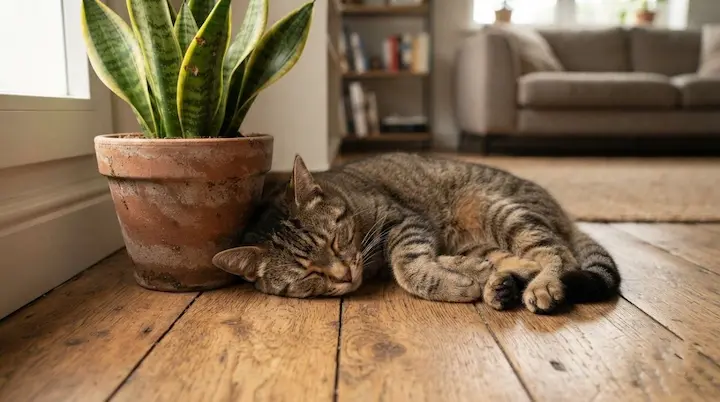
How Serious Is It? Who Is Most at Risk
A tiny nibble and a shredded leaf are two very different situations. Risk goes up with:
- Kittens: small bodies, endless curiosity, and they chew everything.
- Senior cats: less reserve to handle vomiting and dehydration.
- Cats with a long-term health condition: they can get sicker from the same amount.
- Repeat chewers: a habit means a bigger dose over time.
Can a cat die from it? A small amount isn’t expected to be fatal, and most cats recover with basic care. The real danger is dehydration from repeated vomiting, which hits kittens and senior cats hardest.
If your cat took one bite and seems normal, keep watching for the next day and call your vet if anything changes.
What to Do If Your Cat Ate a Snake Plant
Stay calm and work through these steps.
- Move your cat away and check the mouth for leftover leaf pieces.
- Note what happened: which part, roughly how much, and when. Snap a photo of the plant, since your vet will ask.
- Call your vet. After hours, try ASPCA Animal Poison Control at (888) 426-4435 or Pet Poison Helpline at (855) 764-7661. Both can charge a consultation fee, so ask first.
- Skip the home remedies. Don’t make your cat vomit unless a vet tells you to.
- Watch and wait: keep fresh water out, keep the plant out of reach, and note any new signs.
When to Call the Vet Right Away
Go straight to the clinic if you see any of these:
- Vomiting again and again.
- Diarrhea for more than a day.
- Drooling that won’t stop.
- Blood in vomit or stool.
- Trouble breathing.
- Your cat ate a snake plant and skips meals for a full day.
- Hiding, weakness, or wobbling.
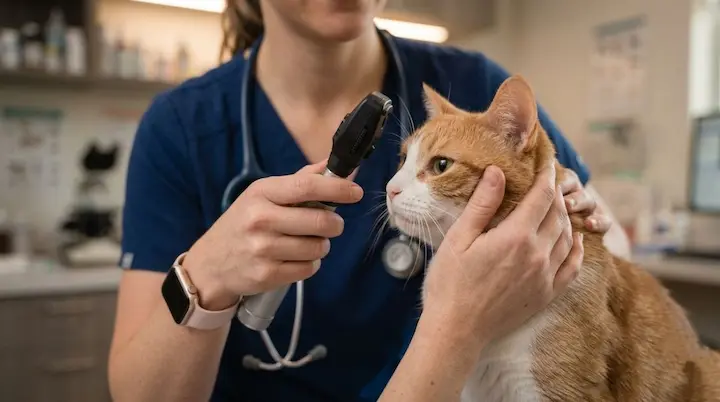
At the clinic, expect a physical exam, questions about what and how much was eaten, and often anti-nausea medicine plus fluids if your cat is dehydrated.
The exam fee alone is often around $100 in many areas, and treatment adds to that, so ask for an estimate. If you carry pet insurance, check whether it covers accidental poisoning.
How to Keep Your Cat Away From Snake Plants
No single trick works every time, so stack two or three.
- Use a room with a door: Snake plants handle low light, so a spare bedroom works fine. Keep the door shut, and keep the plant away from food bowls, the litter box, and favorite furniture.
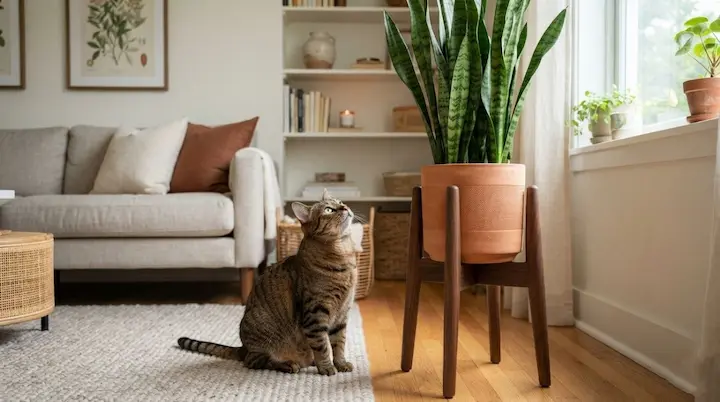
- Go high: A plant stand or hanging planter at least 5 feet off the floor works, as long as it’s nowhere near a shelf or cat tree your cat can launch from. A heavy 1-gallon ceramic pot also beats a light plastic one.
- Cover small plants: A glass cloche or a closed terrarium keeps curious paws out.
- Try a bitter spray: Bitter apple pet sprays are made for this, and the label tells you how often to reapply. Test one leaf first, since some sprays mark the color. A mix of one part vinegar to three parts water on the leaves is a cheap backup.
- Skip essential oils and spicy tricks: Citrus oils can hurt cats, and cayenne can burn eyes and paws.
- Plant cat grass: Put a pot of it near the spot so the chewing urge has a safe target. It’s a fiber-rich snack, so it does your cat some good too.
- Give your cat more to do: A window perch, a puzzle feeder, and daily play cut down on bored chewing. Hand over a treat when your cat ignores the plant, so leaving it alone pays off.
Cats chew plants from boredom, curiosity, or a craving for something green and fibrous. In my experience, sprays work better when cat grass sits nearby, because the cat has an easier target. Still, no deterrent is 100% reliable, so if your cat keeps going back, the plant should go.
Can You Still Keep a Snake Plant With a Cat?
It depends on your cat more than the plant. A cat that walks past every pot without a glance can share a home with a snake plant on a high shelf, as long as you watch how it acts around the plant for the first few weeks. A chewer can’t. After six years of gardening, I’ve seen plenty of leaves covered in tooth marks, and the chewers rarely quit.
You’ll also hear that snake plants clean the air. That NASA study was run in sealed lab chambers, not living rooms, so I wouldn’t risk a sick cat for it.
If you do keep one, a few basics help:
- Check the label on any soil, fertilizer, or pest spray for pet safety, and keep bags and bottles in a closed cabinet.
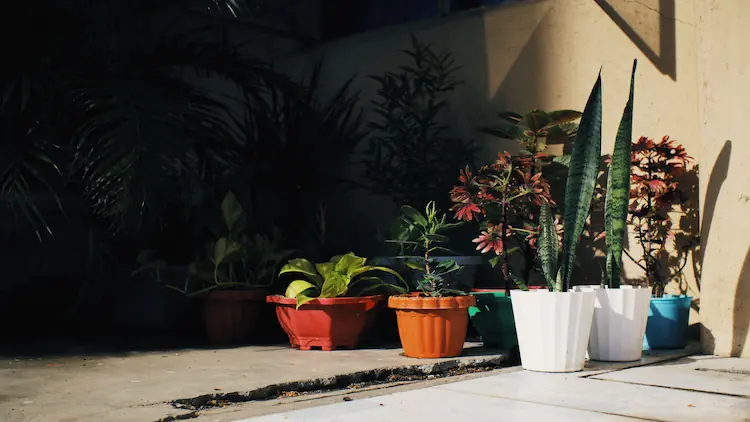
- Bring it inside for Fall. Snake plants live outdoors year-round only in USDA Zones 9, 10, and 11. In USDA Zones 4, 5, 6, 7, and 8, move the pot indoors when nights drift toward 50°F, well before the first frost at 32°F. Summer pots in the backyard or yard also draw neighborhood cats.
- Trim smart. Use clean pruners and drop cut leaves in a lidded garbage can, not an open compost pile where a cat can dig them out.
Once the plant is out of reach, regular care still matters. Overwatering causes most problems, so the schedule for watering in winter is worth a look, and if leaves go pale or soft, this page on yellowing leaves helps. The winter care tips cover light and temperature for the cold months.
Cat-Safe Houseplants to Grow Instead
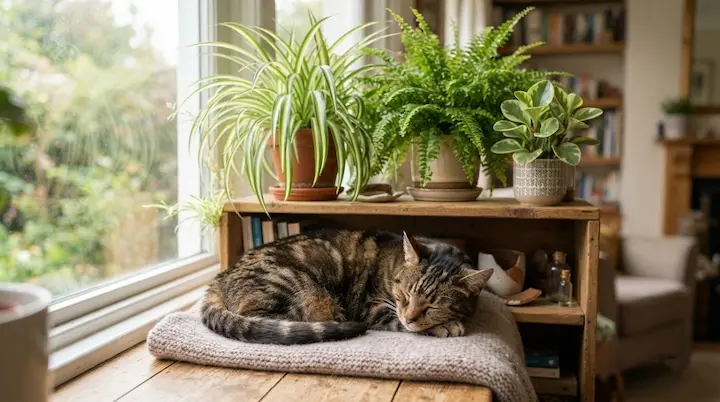
If you want green without the worry, cat-safe houseplants are the easy fix. Check any plant against the ASPCA toxic and non-toxic plant list before you buy it at the garden center, since tags can be wrong.
I like peperomia for shelves because the color runs from deep green to silver stripes and it stays small.
| Plant | Light | Care level |
|---|---|---|
| Peperomia | Bright, indirect | Easy |
| Bird’s nest fern | Low to medium | Easy, likes humidity |
| Money tree | Bright, indirect | Easy |
| Parlor palm | Low to medium | Easy |
| Chinese money plant | Bright, indirect | Easy |
| Spider plant | Bright, indirect | Easy |
| Boston fern | Medium, indirect | Moderate, needs humidity |
| African violet | Bright, indirect | Moderate |
Other Common Houseplants That Are Toxic to Cats
Snake plants aren’t the only problem on the shelf. Watch for these too:
- Aloe vera: the latex layer causes vomiting, low energy, and diarrhea.
- Jade plant: vomiting, low energy, and wobbling.
- Monstera: calcium oxalates burn the mouth and cause drooling and trouble swallowing.
- Peace lily: the same oxalate problem as monstera.
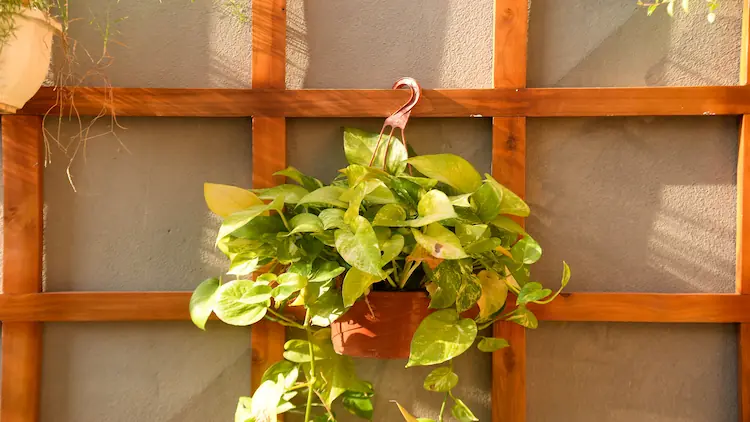
- Pothos: oxalates again, with heavy drooling.
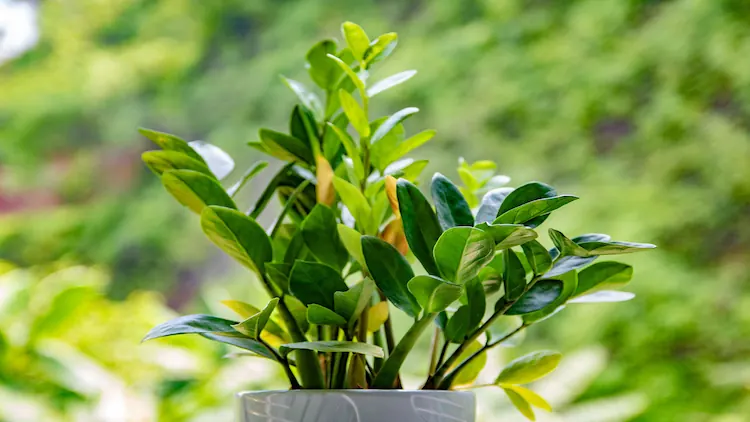
ZZ plants belong on this list too. The ZZ plant toxicity post breaks down what to expect.
Dogs, Babies, and Other Household Members
Dogs react to the same saponins with the same stomach upset, so a home with both pets should follow the same rules. One cat-care site says dogs tend to get hit harder than cats, but the ASPCA lists both with the same signs.
Here’s how ZZ and dogs compares. Small kids put everything in their mouths too, so if a crawling baby lives in your home, read about ZZ around babies and keep every pot out of reach.
Final Thoughts:
So, are snake plants toxic to cats? Yes, mildly, and the risk is mostly a rough stomach for a day or two. Keep the plant out of reach, learn the warning signs, and call your vet or ASPCA Animal Poison Control if your cat chews a leaf. If the chewing continues, swap in a cat-safe option and enjoy the greenery without the worry.