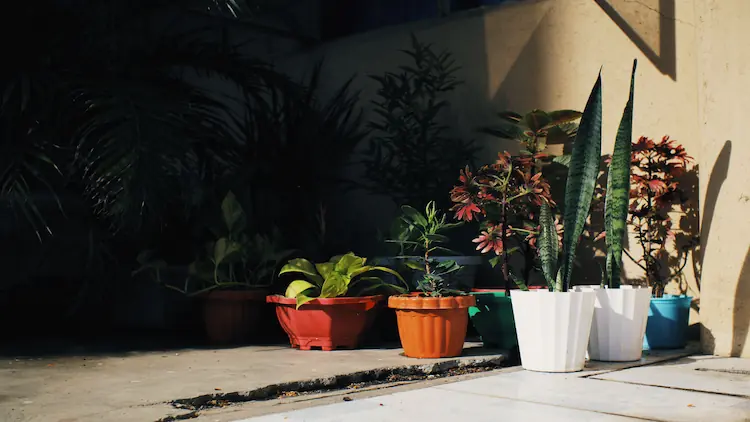
Ever notice how your snake plant just sits there for months once the heater kicks on, barely growing, maybe looking a little tired around the edges?

You’re probably not doing anything wrong. Snake plant winter care isn’t really about babying the plant more it’s about doing less, but doing it the right way. Most people accidentally hurt their plant in winter not from neglect, but from treating it like it’s still summer.
I’ve seen this play out more times than I can count, and once you understand what’s happening underground, the fix is almost embarrassingly simple.
Why Snake Plants Slow Down Once Fall Hits
Snake plants are succulents at their core, and once the days get shorter after Fall settles in, the plant reads that as a signal to conserve energy. Growth slows way down, sometimes stopping completely for weeks at a time. This isn’t the plant dying it’s the plant resting.
Interesting side note: snake plants use CAM photosynthesis, meaning they release oxygen at night instead of during the day like most houseplants. NASA’s Clean Air Study confirmed this back in 1989, part of why people love keeping them in bedrooms (source).
During winter dormancy, all that energy-saving means the plant needs far less water and light than it did in July.
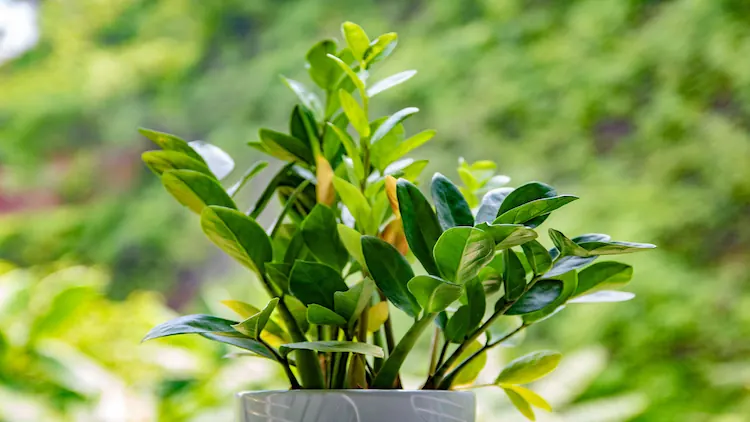
If you’ve also got a ZZ Plant going dormant on the same windowsill, you’ll notice the same pattern both plants basically shut the lights off and coast until spring.
Summer vs Winter Care at a Glance
| Factor | Summer | Winter |
|---|---|---|
| Watering | Every 2-3 weeks | Every 4-8 weeks |
| Light | Bright indirect | Max available light, grow light optional |
| Temperature | 70°F-90°F | 60°F-80°F, never below 50°F |
| Fertilizer | Every 4-6 weeks | None at all |
| Humidity | Not fussy | Watch for dry, heated indoor air |
Snake Plant Winter Care: Getting the Watering Right
This is where good winter care for snake plants actually lives or dies. In my experience, watering mistakes cause more damage in December and January than any cold snap ever will.
Here’s the routine I stick to:
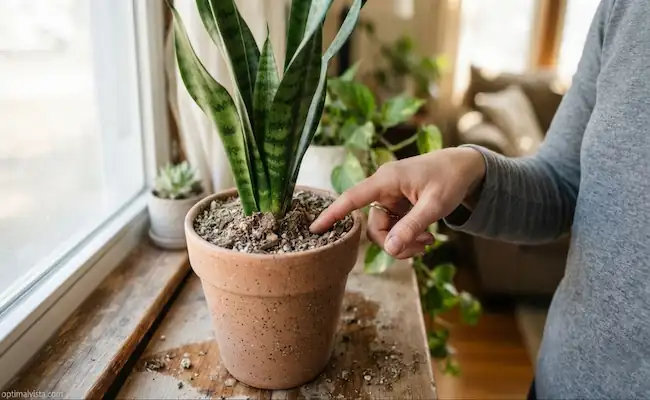
- Stick a finger 2 inches into the soil before you even think about watering.
- If it’s dry that far down, water slowly and deeply.
- For a standard 10-inch pot, that’s roughly half a gallon poured in stages so it drains through properly.
- Wait 4 to 8 weeks between waterings, depending on how warm and dry your house runs.
- If you’re in a colder USDA zone running the heat hard (Zones 4-6), lean toward the 8-week end; milder winter zones (8 and up) can stay closer to 4-5 weeks.
- Always use room-temperature water, never straight from a cold tap.
Iowa State University Extension puts it plainly: overwatering is the fastest way to kill a sansevieria, since soggy soil in cold weather leads directly to root rot (source).
I lost a beautiful variegated snake plant this way one January, and honestly, it still bugs me. If you’re watering on the same schedule you’d use for a ZZ plant, you’re in the right ballpark both plants want you to basically forget about them for a month.
Temperature and Light During the Cold Months
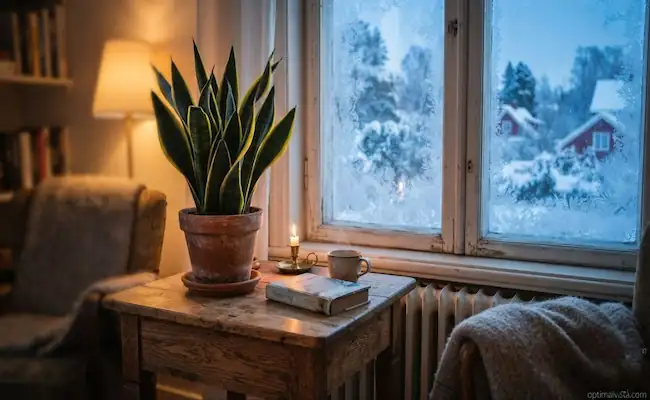
Snake plants can’t handle frost, period. Anything close to 32°F will damage the leaves permanently, and even sustained temps below 50°F cause soft, discolored spots. Keep your plant in a room that stays between 60°F and 80°F, and pull it back a foot or two from any window that gets properly cold at night.
If you’re outdoors in USDA Zones 10 through 12, your snake plant can technically live outside year-round. Everywhere else Zones 4, 5, 6, 7, and 8 it needs to come inside before the first real cold snap, no exceptions.
Light matters more in winter, not less, since the days are shorter:
- Put it in your brightest east- or south-facing window.
- Wipe dust off the leaves every couple weeks so they can absorb what light is available.
- If your home is genuinely dark, run a small LED grow light 6 to 8 inches above the leaves for 6 to 8 hours a day a plain full-spectrum white bulb works fine, no need for anything fancy.
Sansevieria Winter Care: Humidity, Soil, and Skipping the Fertilizer
Heated homes turn into deserts in winter, and sansevieria winter care means paying attention to that dry air before it shows up as crispy leaf tips.
- Set a pebble tray under the pot, or run a small humidifier nearby.
- Skip misting it barely raises humidity and can invite fungal spots instead.
- Fertilizer is a hard no from October through March, since a dormant plant can’t use the nutrients and they just build up and burn the roots.
- Keep the soil mix drainage-heavy: two parts potting soil, one part perlite, one part coarse sand or bark, so water never pools around the roots.
Should You Repot in Winter?
Short answer: no, unless it’s an emergency.
- Repotting disturbs roots right when the plant has the least energy to recover, so save it for spring.
- The only exception is active root rot repotting immediately is the only way to save the plant then.
- Terracotta pots breathe and dry out faster, a real advantage in winter when overwatering is the biggest risk.
- Plastic or ceramic pots hold moisture longer, so stretch your watering gaps out even further if that’s what you’re using.
- Keep pots off cold floors and windowsills too set them on a small stand or trivet so the roots aren’t sitting right against cold glass or tile all night.
Do Different Varieties Need Different Winter Care?
Mostly, the rules stay the same across the board, but a few small differences are worth knowing:
- Laurentii and Black Gold hardy: forgiving, and show stress signs clearly, so they’re easiest to read.
- Hahnii (bird’s nest type): smaller root system, dries out faster, so check soil moisture a little more often.
- Cylindrica: thicker leaves store more water, can comfortably go on the longer end of the watering window.
- Highly variegated types with lots of yellow or white color tend to be slightly more sensitive to cold than solid green ones.
Mistakes That Quietly Kill a Snake Plant in Winter
I’d bet most of the sad, mushy snake plants I’ve seen come down to one of these:
- Sticking to a summer watering schedule instead of checking the soil first.
- Fertilizing “just in case,” which stresses roots that are already dormant.
- Leaving the plant near a drafty window or an AC-turned-heating vent.
- Watering in the evening, so leaves and crown stay wet overnight.
- Repotting mid-winter when the plant has zero energy to recover with.
If you’re a community gardener who also overwinters other potted plants, you’ve probably seen the same pattern play out with potted mums or other tender perennials the plants that struggle almost always got too much water and too little airflow, not too little attention.
Pests and Fungal Issues to Watch For in Winter
Dry, heated indoor air is exactly what certain pests love, so don’t assume winter means a pest-free season:
- Mealybugs: look like tiny white fluff tucked in leaf crevices.
- Spider mites: thrive in dry air and leave fine webbing behind.
- Powdery mildew: a fungal issue that shows up more in winter; remove affected leaves and improve airflow with a small fan.
- Wipe leaves down every couple of weeks with a damp cloth so you catch problems early, before they spread.
A simple spray of mild soap and water handles most minor infestations. For anything stubborn, neem oil is a safe, plant-friendly option.
Signs of Trouble and How to Fix Them
| What You See | Likely Cause | What To Do |
|---|---|---|
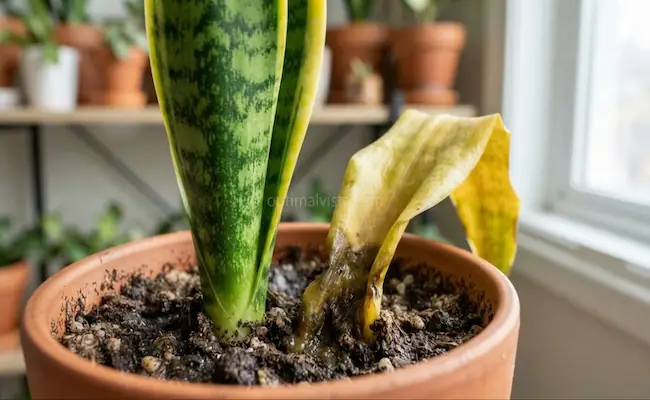
| Mushy, black base | Root rot from overwatering | Stop watering, trim rotted roots with clean pruners, repot in dry mix |
| Yellowing, soft leaves | Too much water | Cut back watering, check that the pot drains |
| Brown, crispy tips | Air too dry | Add a humidifier or pebble tray |
| Curling or wrinkled leaves | Underwatering or cold stress | Water deeply once, check for drafts |
If you’re seeing yellow instead of brown or mushy, that’s usually a different story our full snake plant leaves turning yellow guide breaks down all the causes, since yellowing can mean overwatering, cold damage, or just an old leaf aging out naturally.
Reviving a Plant With Cold or Water Damage
If you’ve already got a struggling plant on your hands, don’t toss it just yet:
- For root rot: unpot the plant, cut away every black or mushy root with clean pruners, let the remaining roots air-dry for a day, then repot in fresh, dry soil.
- For cold-damaged leaves: trim off any soft, collapsed sections back to firm, healthy tissue damaged parts won’t recover on their own
- Hold off on watering for about 3 days after any repotting or trimming.
- Don’t fertilize a recovering plant: it has fewer roots to absorb anything, and the salts can burn what’s left.
How to Care for a Snake Plant in Winter When It Lives Outdoors
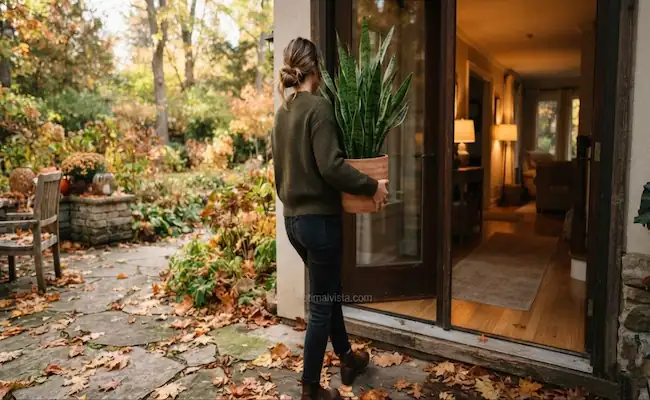
If your snake plant spent the summer in the Yard or Backyard, it needs a plan before the first frost like pulling your zucchini and eggplant pots in before a hard freeze rather than leaving them out overnight.
Here’s how I handle the transition every year:
- Bring it inside once nighttime temps hover around 55°F, don’t wait for an actual frost warning.
- Inspect every leaf, front and back, for bugs or eggs before it touches your other plants.
- Wipe leaves down with a damp cloth and a drop of mild dish soap.
- Set it in your brightest indoor spot and expect a few weeks of slow adjustment.
Knowing how to care for a snake plant in winter when it’s been outdoors all summer really just comes down to timing that move correctly. Toss any leaves that are already damaged straight in the trash rather than composting them, since fungal spots can spread.
A Few Winter Care Myths Worth Busting
- “Never water a snake plant in winter” not true, it just needs a lot less, not zero.
- “It always needs a grow light in winter” only if your natural light is genuinely poor; a bright window is often enough.
- “Snake plants can’t be killed” dormancy just makes them low-maintenance, not indestructible; cold, wet soil will still finish them off.
Handy, Budget-Friendly Tools for Winter Care
You don’t need to spend much to make this easier on yourself:
- A cheap soil moisture meter around ($8-10) takes the guesswork out of the finger test.
- A small tabletop humidifier ($20-30) handles the dry-air problem without running all day.
- A basic clip-on LED grow light ($15-20) covers you if your only window is weak.
Snake Plant Cold Weather Care: When to Ease Back Into Spring
Snake plant cold weather care isn’t forever you’re watching for a couple of clear signals that it’s time to loosen up again. Once you notice a new leaf pushing up from the soil, or the days have gotten noticeably longer, you can start watering slightly more often and add fertilizer back in at half strength.
Don’t rush it. A little patience here goes a long way toward getting that bright green color and sturdy new growth back by late spring.
Final Thoughts:
Snake plant winter care really comes down to one idea: less is more. Water less, skip the fertilizer, keep it warm, and give it whatever light you’ve got. I think that’s what makes this plant a favorite for beginners and pros alike it forgives almost everything except cold, wet soil. Follow the basics here, and your plant will sail through winter and reward you with fresh growth once spring rolls around. Looking to round out your plant collection? Check our guide to the best indoor plants for every home.