
Why do two gardeners in the same town plant peppers a week apart and get totally different harvests?
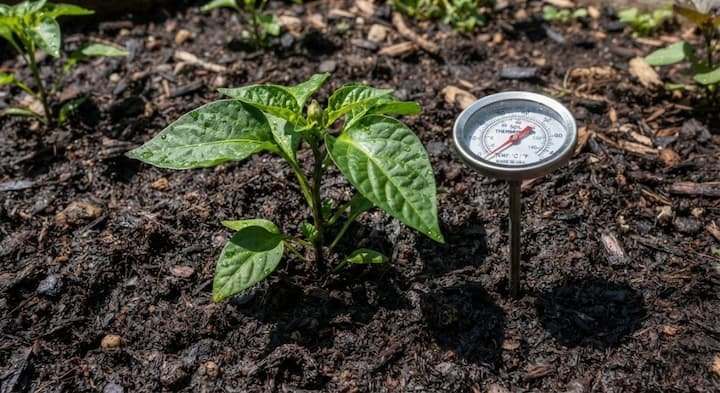
It comes down to soil heat, frost dates, and one early-spring mistake. Knowing when to plant peppers in your yard takes the guesswork out of the whole season. This guide walks through each step, from seed trays to the first fall frost.
Why Peppers Are Fussier Than Tomatoes
Peppers come from warm parts of Central and South America, and they act like it. Cold soil doesn’t just slow them down. It can stunt a plant for the whole season, and a stunted pepper never catches up to one that got a warm start. Tomatoes sulk and then bounce back. Peppers hold a grudge.
I think the biggest mistake new growers make is rushing. A pepper set out two weeks early usually finishes behind one set out on time. Getting the best time to plant peppers right matters more than any fertilizer or trick you’ll try later.
Find Your Last Frost Date First
Everything else counts back or forward from your average last spring frost date. That’s the typical date of the last 32°F night in your area. Your pepper planting time hangs on it.
Here’s how to find it:
- Type your zip code plus “last frost date” into a frost date calculator.
- Check your local county extension office, since they have real numbers for your county.
- Ask a neighbor or a community gardener who has grown in your area for years.
Keep in mind it’s an average. Hills, low spots, and a yard next to a big paved area can all shift your real date by a week or more.
Soil and Night Temperatures That Give the Green Light
A calendar gets you close. The soil makes the final call. Guides split between 60°F and 65°F because one is the survival line and the other is the growing line:
- Minimum soil temperature: 60°F, and peppers stall below it.
- Ideal soil temperature: 65°F to 70°F.
- Night air temperature: holding above 55°F.
- Daytime sweet spot: 70°F to 85°F.
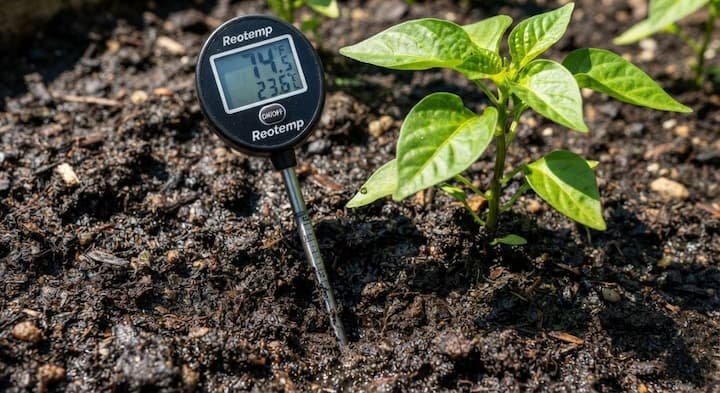
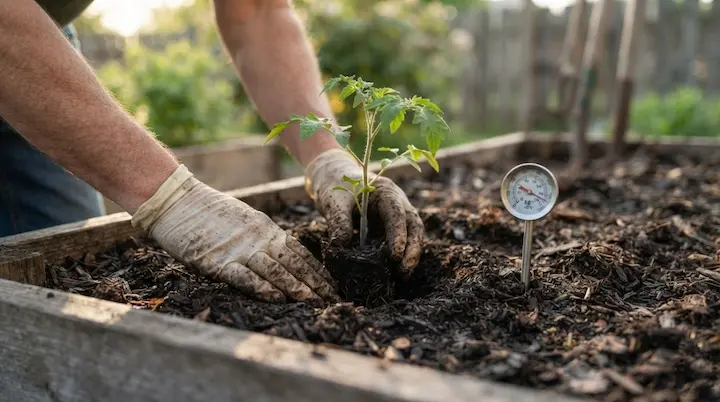
Push a soil thermometer 2 to 4 inches deep in the morning, when the ground is coldest. I like a cheap thermometer over guessing, because a warm afternoon can fool you while the soil is still at 52°F.
That’s the real rule for when to transplant peppers: warm soil and warm nights, not just one sunny day.
When to Plant Peppers by USDA Zone
The USDA splits the country into 13 hardiness zones based on winter lows, and each one gets a different window. Most backyard growers in USDA Zones 4, 5, 6, 7 and 8 will start seeds somewhere between mid-January and mid-March.
These dates use 8 to 10 weeks indoors and a transplant about 2 weeks after the last frost.
| USDA Zone | Average last frost | Start seeds indoors | Transplant outside |
|---|---|---|---|
| Zone 3 | Late May to early June | Late March to early April | Mid June |
| Zone 4 | Mid May | Early to mid March | Late May to early June |
| Zone 5 | Early May | Late February to early March | Mid to late May |
| Zone 6 | Late April | Mid to late February | Mid May |
| Zone 7 | Early April | Late January to early February | Late April |
| Zone 8 | Late March | Mid to late January | Mid April |
| Zone 9 | Late February to March | December to early January | March |
| Zones 10 and 11 | Little to no frost | See the hot climate section | Fall or late winter |
These are rough averages. Swap in your own frost date from the last section and shift everything to match.
When to Start Pepper Seeds: Counting Back From Frost
Peppers need a long head start. Count back 8 to 10 weeks from your last frost date for sweet peppers, and 10 to 12 weeks for slow hot varieties. Some guides say 6 to 8 weeks, which can work for quick bell types, but extra time gives slow seedlings a cushion.
Say your last frost is May 1. Eight weeks back is March 6, and ten weeks back is February 20. Start seeds anywhere in that window. Going earlier doesn’t help, because seedlings stuck in tiny pots turn leggy and root-bound. In my Zone 6 backyard, I aim for the middle of the window.
Germination Setup: Heat, Light and Depth
Pepper seeds are slow and a little picky. Keep the setup simple:
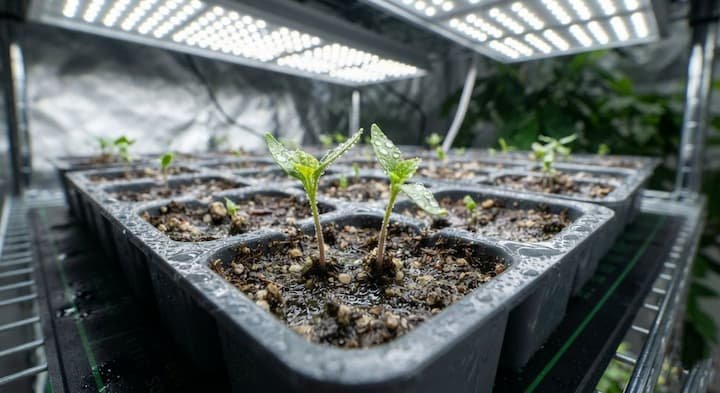
- Plant seeds ¼ inch deep in seed-starting mix, not garden dirt, in trays with drainage holes.
- Hold the tray at 75°F to 85°F with a heat mat. Sprouts show in 7 to 14 days, but without a mat it can drag to 3 weeks.
- Keep a clear dome on until sprouts show, then take it off.
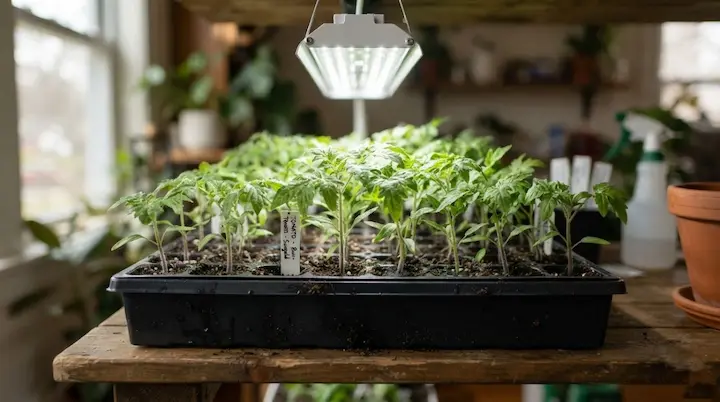
- Run grow lights 14 to 16 hours a day, about 2 to 3 inches above the seedlings.
- After sprouting, drop the room to 70°F to 75°F and keep nights above 60°F.
A windowsill alone gives tall, floppy seedlings. If you’re starting bell types, the full steps for growing from seed go deeper on sowing.
Direct Sowing vs Nursery Transplants
Direct sowing outside only works in USDA Zones 9 and up, where summer is long enough for fruit to ripen. Anywhere colder, you’d run out of season first.
The best time to plant peppers bought from a nursery is the same as for homegrown seedlings.
once nights hold above 55°F. Look for:
- Short, stocky stems instead of tall, thin ones.
- Dark green leaves with no yellow patches.
- No flowers or fruit yet, since a plant blooming in a tiny pot is already stressed.
Hardening Off Without Shocking Seedlings
Seedlings raised indoors have thin leaves that burn in direct sun and wind. Hardening off teaches them to handle the real yard. Give it 7 to 14 days:
- Days 1 to 3: 1 to 2 hours in shade, out of the wind
- Days 4 to 6: 3 to 4 hours with gentle morning sun
- Days 7 to 10: half a day in full sun
- Days 11 to 14: all day, and overnight if nights stay above 55°F
In my experience, skipping this step costs about a week of growth and sometimes bleaches the leaves white.
When to Transplant Peppers: Transplant Day Checklist
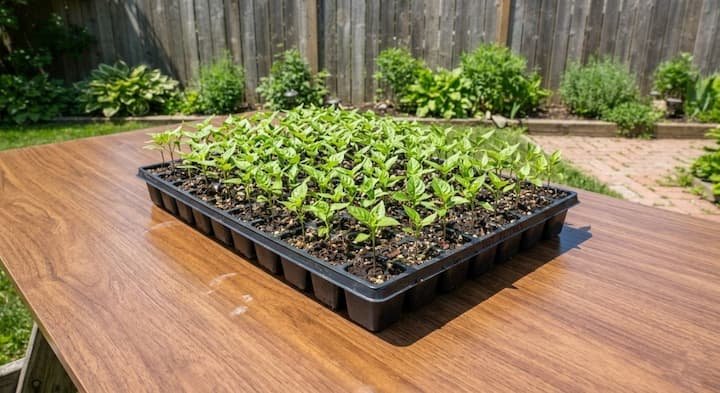
Pick an overcast day, or wait until late afternoon, so the sun doesn’t hit new plants at full strength.
Then run through this list:
- Move seedlings out once they’re 4 to 6 inches tall.
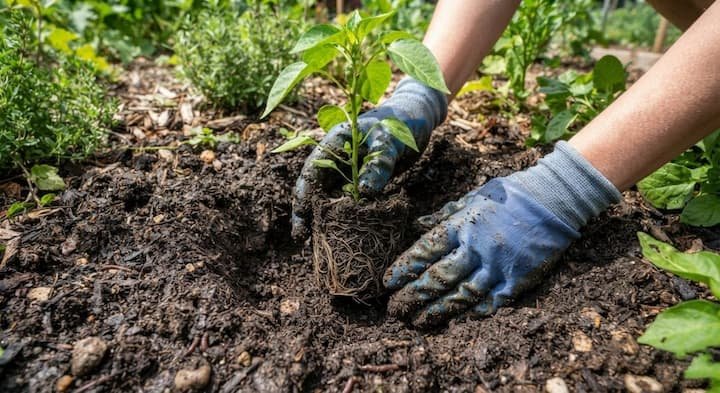
- Dig the hole a bit wider than the root ball and ease the plant out gently.
- Set each plant at the same depth it sat in the pot.
- Space plants 18 to 24 inches apart.
- Mix a balanced starter fertilizer, like 10-10-10, into the hole.
- Water deeply right away.
- Add a stake or small cage now, before roots spread.
- Pinch off the first flowers for a week or two so the plant builds roots before fruit.
Container and Raised Bed Timing
Pots and raised beds give you a little calendar wiggle room:
- Use a 5-gallon pot about 12 inches wide for standard plants, and 10 gallons for big ones you plan to overwinter.
- Dark pots and raised beds warm up faster than flat ground.
- Pots can go outside a bit earlier, since you can drag them into the garage on a cold night.
- Raised beds follow the same 18 to 24 inch rule, and raised bed spacing covers tight layouts.
- For pots, read up on container bell peppers.
Planting Earlier in Cold Zones
Short seasons in USDA Zones 3, 4 and 5 call for a few tricks:
- Black plastic mulch warms soil 8°F to 10°F faster than bare ground, so lay it 2 weeks before transplanting.
- Wall-O-Water style cloches let you transplant 3 to 4 weeks earlier, which in Zone 5 can mean early April instead of early May.
- Row cover at 1.5 oz weight gives 4°F to 6°F of frost protection, and a lighter 0.5 oz cover handles light frosts.
- Short-season growers with super-hot varieties can start seeds as early as January.
Hot Climates: Fall Planting and Heat Limits
In USDA Zones 9, 10 and 11, heat is the problem. Peppers drop blossoms when daytime temperatures stay above 90°F to 95°F, so a spring planting often pauses in midsummer.
Many southern gardeners flip the calendar and grow a fall crop instead:
- Here’s when to start pepper seeds for fall: June to July.
- Transplant in August and harvest through November and December.
- Use light shade cloth over the afternoon sun during heat waves.
- Skip black pots in hot yards, because they cook the roots.
- In Zones 10 and 11, peppers can live as perennials, and an overwintered plant can crop 4 to 6 weeks ahead of a new seedling.
Sweet vs Hot Peppers: Days to Maturity and Last Safe Date
| Pepper type | Start seeds before last frost | Harvest after transplant |
|---|---|---|
| Bell and sweet peppers | 8 to 10 weeks | 60 to 90 days |
| Hot peppers | 8 to 10 weeks | 90 to 150 days |
| Super-hots | 12 weeks or more | 120+ days |
Days to maturity on a seed packet count from transplant day, not from seed day. That changes your last safe planting date. Iowa State University Extension says peppers go out in mid-May in central Iowa, and the last practical planting date is around June 20.
Do a quick check for your own yard:
- Take your transplant date.
- Add the days to maturity from the packet.
- Add 14 days of buffer.
- The total has to land before your first fall frost at 32°F.
If it doesn’t fit, pick a faster variety.
Early and Late Planting Mistakes and Quick Fixes
- Planting too early gives stunted plants and curling leaves. Cover them with row cover or wait for warmth.
- Skipping hardening off causes white, scorched leaves.
- Pepper planting time follows the soil, not the date on the calendar.
- Leggy seedlings mean weak light. Lower the grow lights closer to the plants.
- Small, sparse peppers usually mean low sun, uneven watering, or planting too late.
- A surprise cold snap is easy to fix: cover plants with buckets or row cover overnight.
I’ve lost seedlings to a late May frost that the forecast missed by a few hours. A stunted pepper often restarts once the soil warms, but it will lag a couple of weeks behind.
Early Care That Protects Your Timing
These habits keep plants going after planting:
- Water new transplants every 1 to 2 days for the first 2 weeks, then deep water every 3 to 4 days at the base, as covered in watering peppers. Steady moisture also prevents blossom end rot.
- Pick a spot with 6 to 8 hours of direct sun.
- Spread 2 to 3 inches of straw mulch once the soil is warm.
- Work in 2 to 3 inches of compost before planting, and aim for a pH of 6.0 to 6.8 using the best soil mix.
- Cut back nitrogen once flowers show, using a pepper fertilizer with lower nitrogen.
- Plant basil, marigolds, and onions nearby as pepper companions.
- Skip spots where peppers or tomatoes grew in the last 2 years, and rinse off aphids with soapy water.
Harvest Timing and Fall Frost Protection
Sweet peppers start producing about 60 to 90 days after transplanting. Pick every 5 to 7 days, because regular picking tells the plant to keep going.
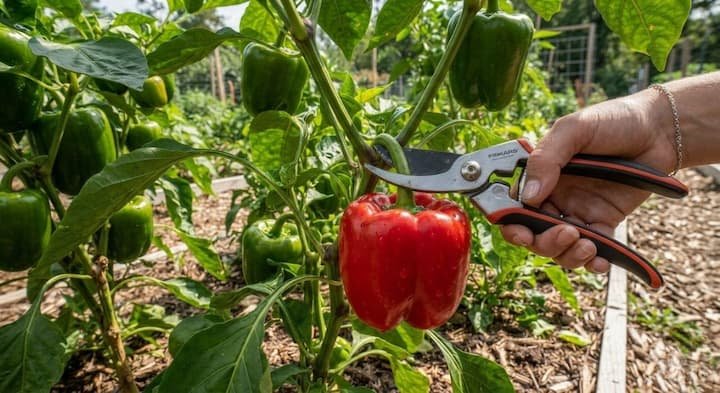
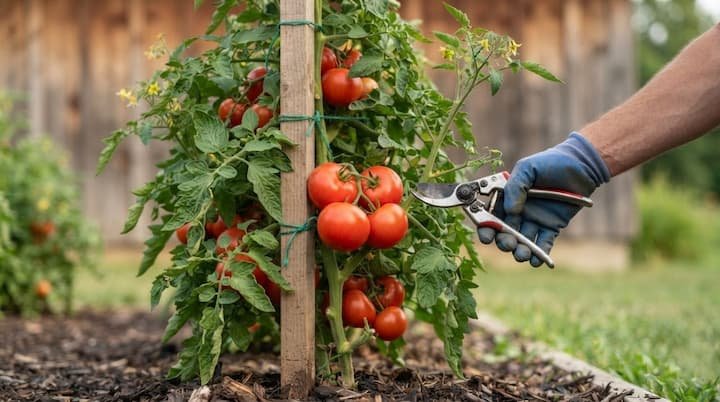
I like to snip fruit with pruners instead of pulling, since yanking can snap branches. Green fruit is milder and grassier, ripe color is sweeter, and hot types get hotter. If yours are not turning red, give them more time and warmth.
Start watching forecasts in late August in Zone 5, September in Zones 6 and 7, and October in Zones 8 and 9. When a 32°F night shows up, you have three options:
- Cover plants with row cover or old sheets.
- Pick everything, since green peppers ripen on the counter in 1 to 2 weeks.
- Dig up a favorite plant and pot it, then try overwintering peppers indoors.
Toss diseased plants in the trash, not the compost pile.
Final Thoughts:
Knowing when to plant peppers comes down to three checks: your last frost date, soil above 60°F, and nights above 55°F. Count back for seeds, harden off the seedlings, and plant on a mild overcast afternoon. Do that and your plants will grow instead of sulking. Grab a soil thermometer this week, mark your calendar, and your backyard peppers will have a real shot at an early, heavy harvest.
Pingback: How to Grow Jalapenos in Pots: 6 Tips for Big Harvests
Pingback: When To Pick Jalapenos: 6 Signs for Best Flavor!