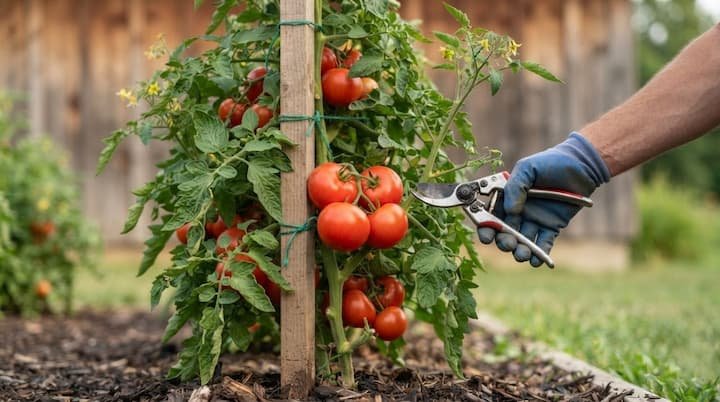
Ever notice how one pepper patch stays clean while the one next door gets chewed up by aphids?
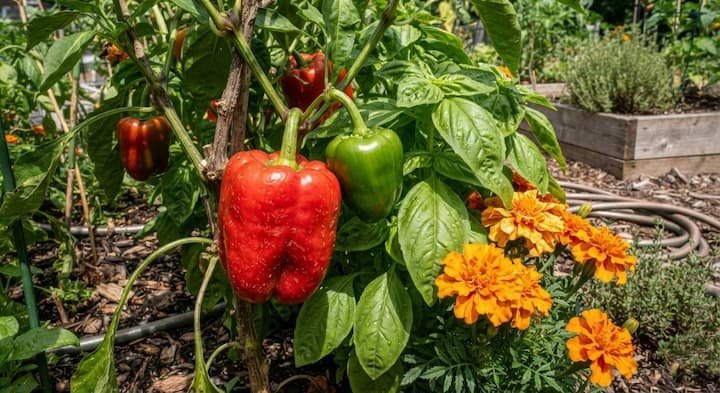
Often it’s not luck. It’s what’s growing around them. The right bell pepper companion plants bring in bees, scare off bugs, shade fruit from scorching sun, and feed the soil. The wrong ones steal food and spread disease. Here’s what actually works in a backyard, and what’s just garden folklore.
Does Companion Planting Really Work for Peppers?
Companion planting means growing different plants side by side so they help each other. Does it work? Partly. Some pairings have real research behind them, and a lot of what you read online is plain garden folklore.
In one 14-week study on organic sweet pepper in Brazil, researchers counted 40 parasitoids (tiny wasps that kill pests) in plain pepper rows, 98 in rows with basil, and 130 in rows with marigolds. The idea that basil makes peppers taste sweeter, though, is a story, not data.
I think the smart way to treat all this is as a nudge, not a cure.
What Bell Peppers Need From Their Neighbors
Peppers want 6 to 8 hours of sun, steady water, slightly acidic soil (pH 6.0 to 6.8), and a long warm season of up to 90 days. The roots stay shallow and the plants eat a lot. Pollination is the touchy part.
Flowers can drop when days pass 90°F or nights fall under 60°F, and they still need bees to set fruit. That’s why people keep asking what to plant with bell peppers in the first place. If you’re still at the seedling stage, start with how to grow from seed.
Benefits of Planting Peppers With Other Crops
The right neighbors can do eight jobs at once:
- Pest control: strong-smelling herbs and alliums confuse aphids, whiteflies, and hornworm moths.
- Predator habitat: flowers feed ladybugs, lacewings, hoverflies, and tiny wasps, so you spray less.
- Better pollination: blooming herbs bring bees to your pepper flowers.
- Free nitrogen: beans and peas pull it from the air for the soil.
- Sun protection: a little leaf cover helps stop sunscald on fruit.
- Weed and moisture control: low plants work like a living mulch.
- Disease prevention: chives and garlic help cut mildew and gray mold.
- More food per square foot: fast crops fill the gaps while peppers grow.
Best Bell Pepper Companion Plants: Herbs
Herbs are the easiest place to start.
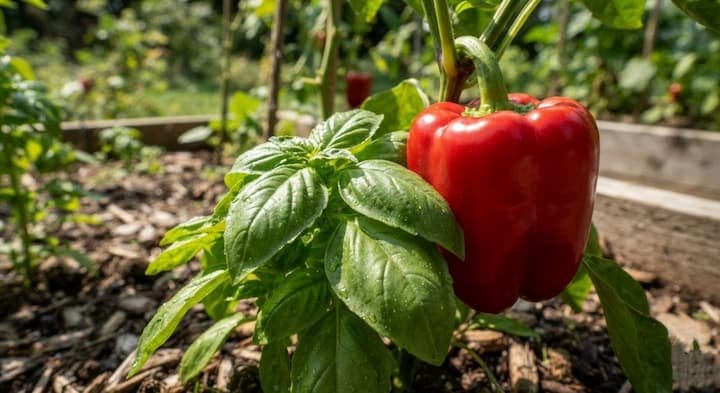
- Basil: plant it 10 to 12 inches away, about a week after the peppers go in. Italian, Thai, or holy basil all work, and the scent also bothers spider mites and thrips. I like to let every other basil plant flower, since the blooms pull in bees, and keep the rest pinched for pesto.
- Chives and scallions: onion-family scent throws off aphids and hornworm moths. Chives are perennial, so they come back every year. Tuck them 4 to 6 inches from the stems.
- Garlic: repels aphids, fights fungus, and takes almost no room.
- Chamomile: draws hoverflies and wasps, but it gets tall, so keep it at row ends.
- Dill, parsley, and cilantro: they earn their spot once they bloom, when hoverflies and parasitic wasps move in. Give them 6 to 12 inches.
- Oregano and marjoram: low ground cover, kept 8 to 10 inches back and trimmed often.
- Rosemary and thyme: keep them in a border within a few feet, not inside the bed, because perennial herbs get bushy and shade out annuals. Creeping rosemary stays low, so it’s the one to try closer in.
Flowers That Protect Your Peppers
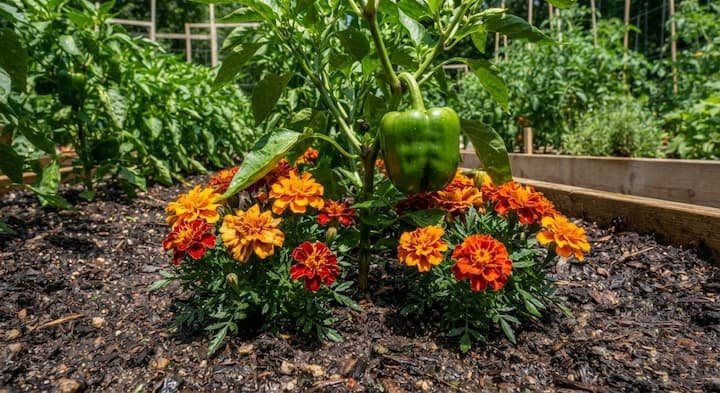
Flowers add color and do real work. In my experience, French marigolds are the easiest win in the whole bed. Their roots release compounds that suppress root-knot nematodes, and the smell keeps whiteflies and aphids away.
- Marigolds: plant every few feet, 12 to 18 inches from peppers. Compact French types beat the tall ones. One study even tested marigold tea against pepper leaf blight.
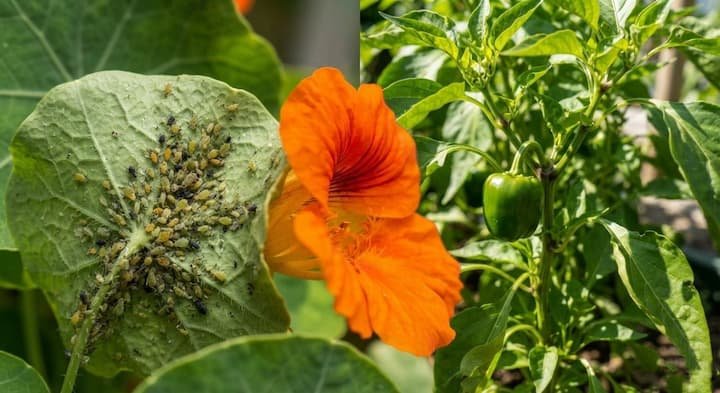
- Nasturtiums: aphids love them more than peppers. Grow them on a trellis at the edge and pull any infested plant.
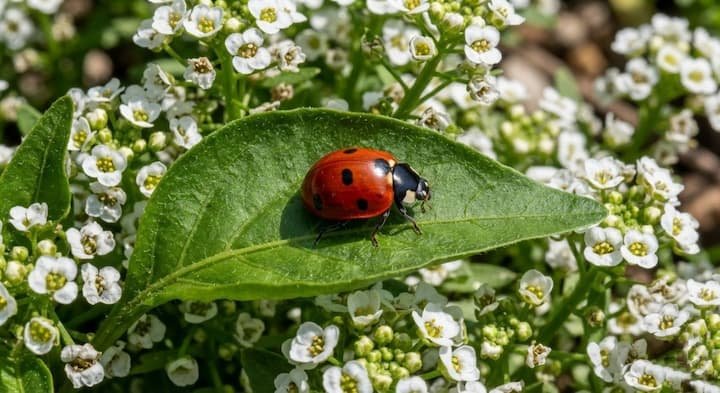
- Sweet alyssum: low, nonstop blooms that attract ladybugs and lacewings. Plant along the row, where it also holds down weeds and reseeds itself.
- Petunias: they repel aphids and hornworms and look great in planters nearby, especially in warm climates.
- Calendula and geraniums: their scent bothers hornworms, thrips, and Japanese beetles, and the blooms bring pollinators.
- Sunflowers and phacelia: bee magnets. Keep sunflowers 3 to 4 feet back (dwarf types are easier) and phacelia 24 inches away. Phacelia blooms after 45 to 60 days and dies back into a natural mulch at frost.
- Borage, cosmos, and yarrow: big plants for the corners, 24 to 36 inches back. Borage is an annual that reseeds and pulls minerals up from deep soil. Plain white yarrow works best.
- Wildflower mix: the hands-off option. Scatter a regional mix a few yards from the bed.
Vegetable Neighbors That Save Space
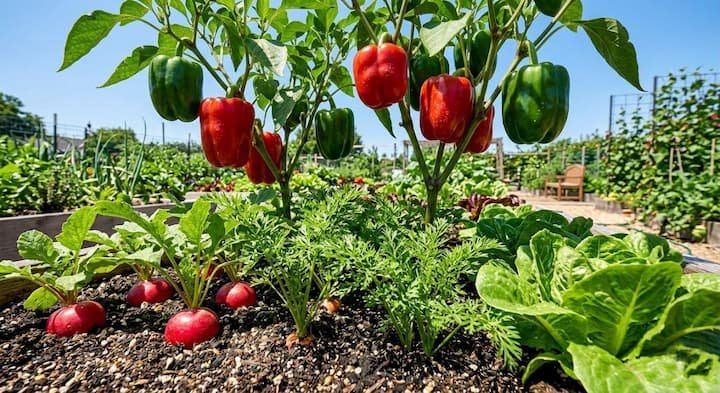
Short on room? Think about what grows well with bell peppers right at ground level. Every community gardener working a 4 by 8 plot knows space is the real limit.
- Carrots and beets: roots go down while peppers grow up, so seed them 6 inches from the base. Carrots take about as long as peppers (around 90 days), while beets finish in as little as 50.
- Radishes: ready in 30 days, which means up to 3 rounds, 6 to 8 inches away.
- Lettuce and spinach: they like the shade peppers cast. Sow them 6 to 10 inches out and harvest before the bushes close in.
- Onions and leeks: they fit too, with onions at 6 to 10 inches. Yellow onions repel the most bugs.
- Chard: plant it 12 inches away, and snap its outer leaves all season.
- Eggplant and baby greens: eggplant goes 12 to 18 inches away, and baby greens fill any gap.
- Cucumbers: they work only on a trellis.
- Asparagus: it can sit at the edge since it doesn’t compete, but it’s a permanent crop, so give it its own spot.
Beans and Peas for Free Nitrogen
Peppers eat a lot of nitrogen, and legumes make it. Sow bush beans at planting time, 4 to 6 inches apart and 8 to 12 inches from the peppers. Summer peas work too, on the north side with a trellis and 12 inches of space.
Skip pole beans, since they climb and shade the plants. Don’t overdo it either, because extra nitrogen gives you leaves instead of fruit. Check the best pepper fertilizer before adding more feed.
Can You Plant Tomatoes and Peppers Together?
Garden sites flat-out disagree on this one. Tomatoes and peppers like the same sun, water, and heat, but they’re both nightshades, so they share hornworms, aphids, and blight.
I grow both in one bed with about 2 feet between them and basil filling the gaps. Peppers go on the south side of the tomato trellis so tomato leaves give some afternoon shade.
Follow three rules:
- Keep at least 24 inches between them.
- Leave room for air to move through the leaves.
- Never put a nightshade (tomato, pepper, eggplant, potato) in the same spot for 3 years.
Hot Peppers Next to Bell Peppers
Hot and bell peppers want the same soil, sun, and feeding, so they mix easily at 12 to 18 inches apart. There’s one catch: pollen crosses between them. Your bell fruit this year won’t turn spicy, but seeds you save from it can.
If you save seed, bag a few blooms or keep the varieties well apart.
What to Plant With Bell Peppers for Each Problem
Match the neighbor to what’s bugging you:
- Aphids: nasturtiums as a trap, plus alyssum, dill, and chives.
- Hornworms: basil, scallions, and calendula.
- Root-knot nematodes: French marigolds, planted every few feet.
- Poor fruit set: let basil or cilantro bloom, then add alyssum, cosmos, or phacelia.
- Sunscald: a tall tomato trellis or a sunflower 3 to 4 feet away, on the side that takes the afternoon sun.
Not sure if it’s sunscald or heat stress? Compare it with the causes of leaves curling. Neighbors can’t fix blossom end rot or bacterial spot, which come from uneven watering and wet leaves.
Pepper Neighbors at a Glance
This chart puts the main neighbors in one place, so you can plan a bed in a couple of minutes. Each row shows what the plant does, how far to keep it from the base of the pepper, and when it goes in the ground.
Transplant day just means the day your peppers hit the soil. Start with two or three rows, not all eight.
| Plant | Main job | Distance from pepper | When to plant |
|---|---|---|---|
| Basil | Repels aphids, brings bees | 10 to 12 inches | 1 week after peppers |
| French marigold | Fights nematodes and aphids | 12 to 18 inches | Transplant day |
| Nasturtium | Aphid trap | Edge of bed or trellis | Transplant day |
| Sweet alyssum | Feeds ladybugs and lacewings | Every couple of feet in the row | Transplant day |
| Dill, parsley, cilantro | Feed predators when blooming | 6 to 12 inches | Seed around young peppers |
| Chives, scallions | Scent masks peppers | 4 to 6 inches | 1 to 2 weeks after |
| Lettuce, spinach | Shade and living mulch | 6 to 10 inches | 1 to 2 weeks after |
| Bush beans | Free nitrogen | 8 to 12 inches | Seed with peppers |
Plants to Keep Away From Your Peppers
Spend two minutes on what not to plant with bell peppers and you’ll dodge most of the problems:
| Plant | Why to skip it |
|---|---|
| Fennel | Releases compounds that stunt nearby plants (give it its own bed, where it still draws helpful insects) |
| Broccoli, cabbage, kale, kohlrabi | Heavy feeders that compete for food and prefer neutral soil |
| Apricot trees | Share a fungal disease with peppers |
| Potatoes | Same family, same pests and blight |
| Strawberries | Can drag down pepper vigor |
| Corn | Shades sun-loving peppers (worth trying only in very hot yards, on its east side) |
| Zucchini and winter squash | Sprawl over peppers (trellised cucumbers are fine) |
| Black walnut trees | Release juglone, which nightshades dislike |
How Far Apart Should Neighbors Be?
Spacing advice online runs from 6 to 36 inches because it depends on the plant. Peppers themselves want 18 to 24 inches apart.
Neighbors fit these gaps:
- Roots and greens (carrots, beets, radishes, lettuce): 6 to 8 inches
- Low herbs and flowers: 8 to 12 inches
- Tomatoes: 24 inches
- Tall flowers like sunflowers and borage: 24 to 36 inches
For tight beds, check the numbers for raised bed spacing.
When to Plant Each Companion
Pepper transplants go out once nights stay warm and the soil is near 65°F. Check when to plant for your area, then build around that date:
- Early spring, before peppers: rosemary, thyme, marjoram, and sweet alyssum.
- Same day as peppers: marigolds, bush beans, carrots, beets, onions, and dill.
- 1 to 2 weeks later: basil, lettuce, spinach, and scallions.
- Every 2 to 3 weeks all summer: radishes and baby greens.
Sample Bed Layouts That Work
Mix compost or well-rotted manure into the whole bed first, so everyone has enough food. Then mix the plants in a pattern instead of separate rows, which confuses pests
Keep the pepper in the center of each zone:
- 4 by 8 raised bed: 5 peppers down the middle, 18 inches apart. Basil beside the 2nd and 4th, marigolds at both ends, lettuce in front, scallions and radishes behind, alyssum in the corners.
- In-ground row: pepper, basil, pepper, marigold, and repeat. Add a carrot strip 6 inches in front and nasturtiums on a trellis at the ends.
- Tight on room? Stick with what grows well with bell peppers at ground level, like radishes, lettuce, and chives.
Companion Plants for Peppers in Pots
Use at least a 5-gallon pot per pepper, or 10 gallons if basil shares it.
Pots dry fast, so water more often and keep neighbors small: basil, French marigolds, alyssum, and chives around the rim.
Compact varieties favor small spaces. From my own pots, basil, marigolds, and alyssum are the only three that never fought the pepper for room. The full setup is in the guide to bell peppers in pots.
Zone and Climate Tweaks
Across USDA Zones 4, 5, 6, 7 and 8, the big question is shade versus heat. In Zones 4, 5 and 6, seasons are short, so skip the shade makers and let peppers soak up every hour of sun.
A short season is also why fruit stays green, which is covered under not turning red. In Zones 7 and 8 and warmer, shade from tomatoes or a dwarf sunflower can protect fruit once highs pass 95°F. Rosemary only survives winter in the ground in the warmer zones, so in colder yards grow it in a pot and bring it inside.
Common Mistakes With Pepper Companions
- Planting too tight. Crowded beds hold moisture and invite mildew, so leave airflow and use clean pruners to prune pepper plants when they bush out.
- Picking companion plants for peppers by looks instead of water needs. Rosemary likes dry soil, while peppers want steady moisture (see the watering schedule).
- Forgetting what not to plant with bell peppers when you scatter a seed mix. Read the label first.
- Adding ten kinds at once. Start with three, and if you can only pick one, make it French marigolds.
- Putting mint straight in the bed. It spreads everywhere, so keep it in a pot.
- Growing perennial herbs inside the annual bed.
- Letting borage, cosmos, and nasturtiums run wild.
- Expecting neighbors to replace watering, feeding, and checking leaves.
Fall Cleanup and Next Season
Once frost (32°F) ends the season, cut spent plants at the base with clean pruners or loppers and leave the roots in the soil to feed it. Diseased leaves go in the garbage, not the compost.
Plant garlic in Fall right where the peppers were, and don’t disturb the roots as you go. Mark where the nightshades grew so they move next year. Want to keep your best plants going? Try to overwinter peppers in pots indoors.
Final Thoughts:
Good bell pepper companion plants don’t need a fancy plan. Pick basil, a few French marigolds, and something low like lettuce, give everything room, and keep the heavy feeders far away. I would start with just those three this season and see what changes in your yard. Add more next year, and let the Fall cleanup set up your next bed.