Ever walked out to your backyard on a warm September morning and noticed your marigolds look like someone dusted them with flour overnight? I’ve had that exact moment more than once, usually in late summer when the days are still warm but the nights start cooling off fast.
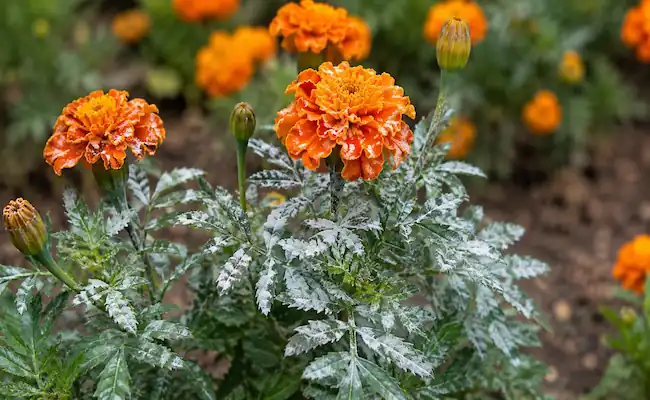
That grayish-white coating isn’t dirt, and it definitely isn’t going away on its own if you just wait it out. In this article, I’m going to walk you through exactly how to treat powdery mildew on marigolds naturally, using the same steps I use in my own yard, plus what actually works, what doesn’t, and how to keep it from coming back season after season.
Quick Visual Identification: What Does Powdery Mildew Look Like on Marigolds?
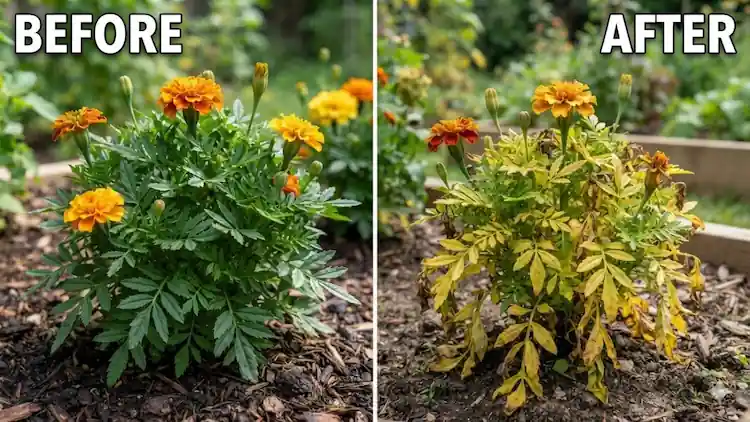
Before you treat anything, you want to be sure of what you’re looking at. Powdery mildew on marigolds usually shows up as:
- A white to light-gray, powdery coating on the top of the leaves, almost like baby powder or flour.
- Fuzzy or web-like patches that spread outward in circular blotches.
- Leaves that curl, twist, or look slightly distorted, especially new growth.
- Yellowing leaves underneath the coating, sometimes dropping off entirely if the infection sits for weeks.
- Stems and flower buds coated in the same white film once the disease gets severe.
According to the University of Minnesota Extension, infected plants can look like they’ve been “sprinkled with baby powder or covered in cobwebs,” and severe cases may reduce flowering and stunt growth, even though the disease itself is common and rarely fatal on its own.
If you’re seeing angular gray spots that stay boxed in by the leaf veins instead of spreading freely across the surface, that’s actually downy mildew, a different disease entirely, and it needs a different approach.
Why & What Causes Powdery Mildew on Marigolds
I get asked this constantly by neighbors: “I water my marigolds every day, why do they still get this?” Here’s the thing powdery mildew doesn’t need standing water on the leaf to infect it, which throws a lot of people off.
The disease is caused by a group of closely related fungi that are usually host-specific, meaning the strain that hits your marigolds isn’t the same one bothering your neighbor’s roses, zucchini, or eggplant in the vegetable rows nearby. As the NC State Extension (Forsyth County Center) explains, most of the time these fungi are host-specific, so a single pathogen infects one or a few closely related plant species.
What it actually needs to thrive is:
- High humidity in the air, not necessarily wet leaves.
- Warm days paired with cooler nights classic late-summer and fall weather.
- Poor air circulation, common in crowded beds or containers packed too tightly.
- Shade or partial shade, where leaves stay damp longer after morning dew.
Spores travel on the wind and land on susceptible foliage, and once conditions are right, the fungus germinates on the leaf surface within hours, well before you ever notice the powdery coating. By the time you spot it, the colony has already been building for a few days.
How to Treat Powdery Mildew on Marigolds Naturally
This is the part everyone actually wants, so let’s get into it. I split this into two camps: organic and DIY remedies you can mix up in your own kitchen or garage, and commercial products if you’d rather not measure and mix yourself.
Organic and DIY Remedies:
1. Potassium bicarbonate spray:
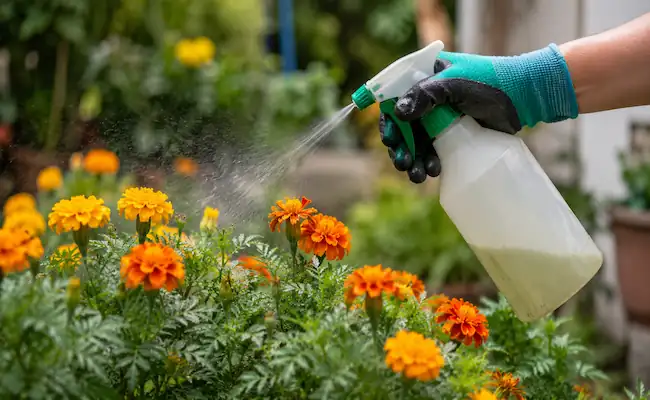
This is my go-to, and it’s the one with the strongest research behind it. A study published through PubMed found that weekly potassium bicarbonate applications significantly reduced powdery mildew severity, cutting infected plant tissue from over 90% in untreated plots down to roughly 10% with consistent spraying. Mix about 1 tablespoon of potassium bicarbonate into 1 gallon of water, add a few drops of horticultural oil or dish soap to help it stick, and spray both sides of the leaves early in the morning.
2. Milk spray:
Diluted milk (about 40% milk to 60% water) sprayed weekly has shown mildew-suppressing results in several field trials, likely from the natural proteins reacting with sunlight to create a mild antiseptic effect on the leaf surface. It’s cheap, it’s safe around kids and pets, and I’ve used it on marigolds along my raised beds with decent results.
3. Neem oil:
Mix 2 tablespoons of neem oil with a teaspoon of mild liquid soap per gallon of water. It works as both a fungicide and a mild insect deterrent, which is handy since aphids love weakened, mildew-stressed plants.
4. Horticultural oil:
On its own, ultra-fine horticultural oil has performed as well as some conventional fungicides in university trials, and it’s one of the more reliable homemade powdery mildew spray options if you want to skip baking soda altogether.
5. Prune and remove infected leaves:
Grab your pruners and cut away the worst-hit foliage. Bag it and put it in the trash or garbage bin don’t toss it in your compost pile, since spores can survive there.
A quick note on baking soda: it’s the most talked-about home remedy, but the research on sodium bicarbonate alone is weaker than most garden blogs suggest, and potassium bicarbonate consistently outperforms it in trials. I’d treat baking soda as a backup, not your first choice. If you want a broader breakdown of what actually stops it versus what’s just internet folklore, that’s really the heart of how to get rid of powdery mildew naturally on any flowering annual, not just marigolds.
Chemical and Commercial Solutions:
If the natural powdery mildew treatment route isn’t cutting it, or the infection has spread past a few leaves, commercial options include:
- Sulfur-based fungicides: effective but should never be applied within 2–3 weeks of an oil spray, or you risk burning the foliage
- Myclobutanil or triforine fungicides: labeled specifically for ornamental flowers like marigolds
- Potassium bicarbonate commercial products: (MilStop, Kaligreen, Armicarb) these carry OMRI listings for organic growing and are EPA-registered, unlike raw baking soda
- Copper-based fungicides: useful but can stain hardscaping and should be used sparingly
Always read the label. Fungicides won’t reverse existing white spots they only protect new, healthy growth going forward, which is why timing matters more than the product itself.
Mistakes to Avoid When Treating Powdery Mildew
- Spraying in full midday sun: Oil and soap-based sprays can scorch leaves in direct 85°F+ heat. Spray in the early morning or evening instead.
- Overhead watering in the evening: Wet foliage overnight extends the window fungal spores have to germinate.
- Composting infected leaves. This just reintroduces spores back into your yard next season.
- Crowding your marigold beds: Give plants 8 to 12 inches of spacing so air can actually move between them.
- Mixing sulfur and oil sprays too close together: This combination is a classic way to burn otherwise healthy leaves.
- Ignoring it because “it won’t kill the plant” : True in most cases, but a heavy infection weakens the plant enough that other pests and stresses can finish the job.
How to Stop Powdery Mildew From Coming Back
Prevention is honestly easier than treatment, and it’s where most community gardener plots go wrong. A few habits that have kept my beds mostly clear year after year:
- Water at the base of the plant, early in the day, so foliage dries before evening.
- Space marigolds properly and thin out crowded areas by midsummer.
- Choose a sunny spot powdery mildew is far more aggressive in shaded or partially shaded corners of the yard.
- Rotate where you plant marigolds each season if you’ve had repeat infections.
- Clean up and discard all plant debris at the end of fall, since the fungus overwinters on dead leaves and stems.
- Look for mildew-resistant marigold varieties when you’re buying seed packets next spring, especially if marigolds are your centerpiece color along the border.
If you already mulch your beds each season, keep at it a proper layer of mulch helps regulate soil moisture and reduces the splash-back that stresses plants, similar to the approach I cover in my guide on the best mulch for winter plant protection. And if your marigolds share a bed with anything else that struggles once fall arrives, my post on perennials to cut back before winter covers the same debris cleanup logic that keeps mildew spores from overwintering.
Can Powdery Mildew Kill Your Marigolds?
Rarely, and that’s backed by research, not just my own backyard experience. According to a University of Nebraska–Lincoln Extension publication, powdery mildew is rarely fatal to plants, even in fairly severe cases. What it does instead is reduce flowering, stunt new growth, and make the plant look unattractive enough that most gardeners pull it anyway out of frustration.
The real risk isn’t death it’s a weakened plant heading into the first frost with fewer reserves, which matters if you’re trying to get color out of your beds right up until the season turns.
Recommended Gear & Shopping List
Here’s what I actually keep on hand for treating and preventing powdery mildew in my own yard:
| Item | Approx. Cost | Why You Need It |
|---|---|---|
| Potassium bicarbonate powder | $12–$18 | Base ingredient for the most effective DIY spray |
| Handheld pump sprayer (1–2 gallons) | $15–$25 | For even, controlled application on leaves |
| Neem oil concentrate | $10–$16 | Dual-purpose fungicide and pest deterrent |
| Bypass pruners | $20–$35 | Clean cuts when removing infected foliage |
| Horticultural oil | $10–$15 | Alternative or companion treatment to bicarbonate sprays |
| Garden gloves | $8–$12 | Basic protection while handling sprays and infected debris |
| Mildew-resistant marigold seed packets | $3–$6 | Long-term prevention for next season |
If you’re already stocked up on winter gear for the beds, a lot of the same setup you’d use for winterizing roses in cold climates works fine here too sprayers and pruners do double duty. And once your marigold beds go dormant, my guide on winterizing raised garden beds walks through clearing out exactly the kind of debris that lets fungal spores survive to next season.
Final Thoughts:
At the end of the day, learning how to treat powdery mildew on marigolds naturally comes down to catching it early, choosing the right spray for how bad it’s gotten, and fixing the humidity and spacing issues that invited it in the first place. My marigolds still get a light dusting most Augusts, and I’ve made peace with that a quick potassium bicarbonate spray on a Sunday morning usually keeps things in check through fall.
If you’re gardening in USDA Zones 4 through 8, the same crowding-and-shade factors USDA’s own Agricultural Research Service documented in ornamental bedding plants apply directly to your marigold beds, so spacing and airflow matter just as much as whatever spray you reach for.