
Ever walked past a small, colorful apple hanging from a garden tree and wondered if it belongs in a fruit bowl or a compost bin? That question are crab apples safe to eat raw comes back every autumn, especially for families who have one of these ornamental trees growing near the driveway or back fence.
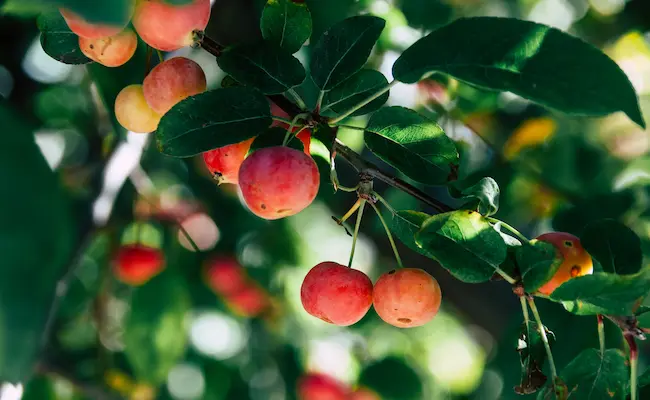
The short answer is reassuring, but there is more to the story than a simple yes or no, and getting the details right matters, both for people and for pets sharing the same backyard.
What Makes Crab Apples Edible or Just Ornamental?
Crab apples belong to the same genus as the apples sold in grocery stores, Malus. The dividing line is size, not species: any fruit under roughly 2 inches (5 cm) across is called a crab apple, while anything larger is simply an apple.
Many crab apple trees were bred purely for their spring blossoms and cheerful fall color, which is why so many varieties produce fruit that looks pretty but tastes disappointing. Still, the fact that most crab apples are edible surprises a lot of homeowners who assumed the fruit was purely decorative.
A quick way to remember it:
- Crab apples edible straight off the tree are usually the larger cultivars, such as Dolgo or Whitney.
- Size is the deciding factor, not color, since crab apples come in yellow, green and deep red.
- Most backyard crab apples edible after a simmer with sugar, even when the raw fruit is too sharp to enjoy on its own.
Are Crab Apples Safe to Eat Raw?
Here is the part that puts most minds at ease: the flesh of a crab apple carries no toxins. The only part worth avoiding is the core and seeds, exactly as with a supermarket apple. Crab apple seeds contain a small amount of a compound called cyanogenic glycoside, which the body converts into cyanide when broken down National Library of Medicine.
The amount in a handful of seeds is tiny, and swallowing one or two by accident is not a medical emergency. The real issue with eating crab apples raw is usually flavor rather than safety most varieties are sharply sour, and a few are almost unpleasantly bitter straight off the branch.
So, Can You Eat Crab Apples From Any Tree You Find?
Not automatically, and this is where a bit of caution earns its keep. Can you eat crab apples from a tree growing on public land, in a neighbor’s yard, or along a hiking trail? Only if the fruit can be identified with real confidence.
Roadside or park trees are sometimes treated with pesticides, and a handful of other small red or yellow fruits can look deceptively similar to an untrained eye some ornamental berries used in hedging are genuinely toxic. If there is any doubt about the tree’s identity or its spray history, it is far safer to admire it and move on.
Crab Apple Safety Tips Before You Forage
Following a few basic crab apple safety tips before picking anything off an unfamiliar tree saves most of the guesswork:
- Cut one fruit open first a true crab apple shows a core with small seeds, never a single pit like a cherry or plum.
- Check that the tree has not been sprayed recently, particularly along public paths or commercial landscaping.
- Avoid the seeds and stem, and never let young children handle a large pile of unwashed windfall fruit unsupervised.
- When identification feels uncertain, skip it a local nursery, gardening club, or plant identification app can usually confirm the variety.
These crab apple safety tips matter more for foraged fruit than for anything picked from a tree already growing in a home garden, since a planted variety is usually a known quantity. Even so, keeping a short list of crab apple safety tips on hand is useful advice to pass along to anyone new to foraging or backyard fruit trees.
When Are Crab Apples Ripe Enough to Pick?
Timing changes the entire experience. An unripe crab apple is often rock hard and intensely sour, while a properly ripened one softens slightly and mellows in flavor, sometimes actually improving after the first light frost, which breaks down some of the tartness.
A simple way to check is to slice one open: seeds that have turned brown, rather than pale green or white, are a reliable sign the fruit is ready.
Most temperate-climate crab apples ripen from late summer through mid-autumn, though the exact window shifts with regional weather. Anyone growing a tree at home should also think ahead about seasonal upkeep steps like learning how to protect plants from frost can help a young tree hold onto its fruit a little longer before an early cold snap forces an earlier harvest than planned.
Crab Apple vs Regular Apple: A Quick Comparison
| Feature | Crab Apple | Regular Apple |
|---|---|---|
| Diameter | Under 2 inches (5 cm) | Over 2 inches (5 cm) |
| Typical taste | Sour to bitter | Sweet to mildly tart |
| Common use | Jams, jellies, cider, ornamental value | Fresh eating, baking, juicing |
| Tree height | Often 8–35 feet, many dwarf varieties | Usually 15–30 feet |
| Seed toxicity | Small amount of cyanogenic compound, same as apples | Same compound, same low risk |
Nutrition Facts Worth Knowing
Weight for weight, crab apples hold up well against their larger relatives, and the numbers below, drawn from the USDA FoodData Central database, lay out the full picture rather than just the headline calorie count.
| Nutrient | Per 1 Crab Apple (1.2 oz / 35 g) | Per 1 Cup Raw (110 g) |
|---|---|---|
| Calories | 18 kcal | 84 kcal |
| Carbohydrates | 5 g | 22 g |
| Dietary Fiber | 1 g | 4 g |
| Vitamin C | 2% DV | 8% DV |
| Potassium | 1% DV | 5% DV |
| Copper | 1% DV | 4% DV |
Because each fruit is so small, several are needed to match the nutrition of one medium apple. The skin holds close to half of the fruit’s fiber and plant compounds, so peeling defeats much of the purpose.
Studies on wild Malus species have also pointed to meaningful antioxidant activity in the skin and flesh, linked to the same polyphenol family found in cultivated apples PubMed.
On a global scale, apples of all kinds remain one of the most widely grown fruits on the planet, with world production sitting close to 97 million tonnes a year according to FAO data a reminder of just how much this family of fruit, crab apples included, feeds into everyday diets worldwide.
A Word on Apple-Family Allergies
Anyone who already reacts to raw apples, pears, or stone fruit a pattern sometimes tied to birch pollen sensitivity should treat crab apples the same way.
Reactions in this group typically show up as mild itching or tingling around the mouth rather than anything severe, but cooking the fruit usually breaks down the proteins responsible, which is one more reason jams and baked dishes are the more forgiving choice for sensitive eaters. Anyone unsure should check with a doctor before trying a new fruit source.
Eating Crab Apples Raw vs Turning Them Into Something Sweet
Eating crab apples raw works best with the larger, milder varieties such as Dolgo or Whitney, which soften into something close to a tart snack apple. Smaller or deep red varieties are usually better cooked down, since heat and sugar tame the sourness dramatically. The jam method below is a reliable starting point for a first-time batch. Simple Crab Apple Jam-
Ingredients:
- 2 lb (900 g) crab apples, washed, stems removed.
- 3 cups (700 ml) water.
- 2 cups (400 g) granulated sugar, adjusted to taste.
- Juice of half a lemon.
- Optional: a cinnamon stick or a few slices of fresh ginger.
Method:
- Place the whole crab apples in a large pot with the water and bring to a gentle boil.
- Reduce the heat and simmer for about 30 minutes, until the fruit turns soft and mushy.
- Mash the softened fruit directly in the pot, then pour everything through a fine sieve or food mill to remove seeds, stems and skins, keeping only the pulp and juice.
- Return the strained liquid to the pot with the sugar and lemon juice, and add the cinnamon stick or ginger if using.
- Simmer uncovered for a further 25 to 35 minutes, stirring often, until the mixture thickens and coats the back of a spoon.
- Pour into sterilized jars while still hot, seal, and refrigerate once cooled. A properly sealed jar keeps well in the fridge for several weeks.
Baking whole crab apples with a touch of honey or cinnamon is another simple option that brings out a milder, caramelized sweetness without much extra effort.
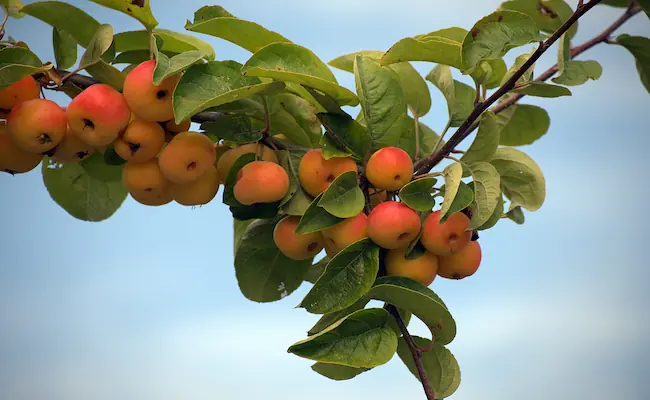
Keeping the Harvest Fresh, and What About Pets
Fresh crab apples keep for roughly one to two weeks when stored around 4ºC (39ºF) in the refrigerator, so most households process a large harvest into jam or dried slices fairly quickly rather than letting it sit at room temperature. For anyone maintaining a backyard tree year to year, general seasonal care from mulching around the base for winter protection to a light pruning back of damaged branches once the leaves drop helps keep the tree productive for the next harvest.
A light layer of mulch and a frost blanket over young roots during the first hard freeze also protects next year’s blossoms, which is really where the following season’s fruit begins.
Pets are the other consideration many people overlook. Dogs and cats that nibble a fallen crab apple occasionally are rarely at serious risk, but animals that gorge on a large pile of windfall fruit, seeds and all, can develop stomach upset or worse.
Horses, cattle and sheep are more vulnerable simply because they tend to eat in bulk, so fencing off a crab apple tree from grazing areas is worth the extra effort on a working property.
Final Thoughts:
The honest answer to are crab apples safe to eat raw is yes, for the flesh, as long as the seeds and core stay out of the bowl and the fruit has been identified correctly. So can you eat crab apples straight from a backyard tree without a second thought? In most home-garden cases, Yes the bigger question is really about taste, ripeness, and whether the plan is to eat it fresh or turn it into something sweeter on the stove. Treated with a bit of common sense, this small, often-overlooked fruit turns out to be far more useful than most backyards give it credit for.