Have you ever stepped outside on a cold morning only to find your favorite plants blackened, limp, and lifeless overnight? That’s exactly what happened to me, and it’s why learning how to protect plants from frost became more than just a gardening tip for me it became a survival skill. Living in Zone 5/6, I quickly learned that one calm, clear night can undo an entire season of hard work if you’re not prepared.
Over the years, through trial, error, and more ruined tomato plants than I’d like to admit, I’ve put together a real, practical playbook for protecting a garden from frost. This isn’t theory pulled from a random blog. It’s what actually works, tested season after season in my own backyard.
My Frost Disaster And Why I Wrote This Guide
I still remember the October morning I walked out to my backyard in my slippers, coffee in hand, and found my entire row of basil looking like it had been dipped in hot water and left to rot. Black. Limp. Gone. That was five falls ago, back when I thought “a light frost” meant nothing to worry about, and I had no idea how to protect plants from frost the right way. It meant everything.
Living and gardening in Zone 5/6 teaches you humility fast. One clear, calm night in late September and the whole season can end before you’re ready. So I started digging — through extension bulletins, through my own trial and error, through more than a few ruined tomato plants to actually understand how to protect plants from frost the right way, not just the Pinterest-pretty way.
This is everything I’ve learned. Not a copy-paste listicle. My actual backyard playbook the same one I hand to neighbors every October when they ask me how to protect plants from frost before their first real cold snap hits.
I’ll admit something else too: for years I thought protecting a garden from cold nights was mostly about luck. It isn’t. Once you know how to protect plants from frost properly, the panic mostly disappears.
You just watch a handful of signals and react fast:
- Clear night sky
- Calm, still air with no wind
- Falling evening temperatures after a warm day
- Low humidity readings on the forecast
What Frost Actually Does to Your Plants :
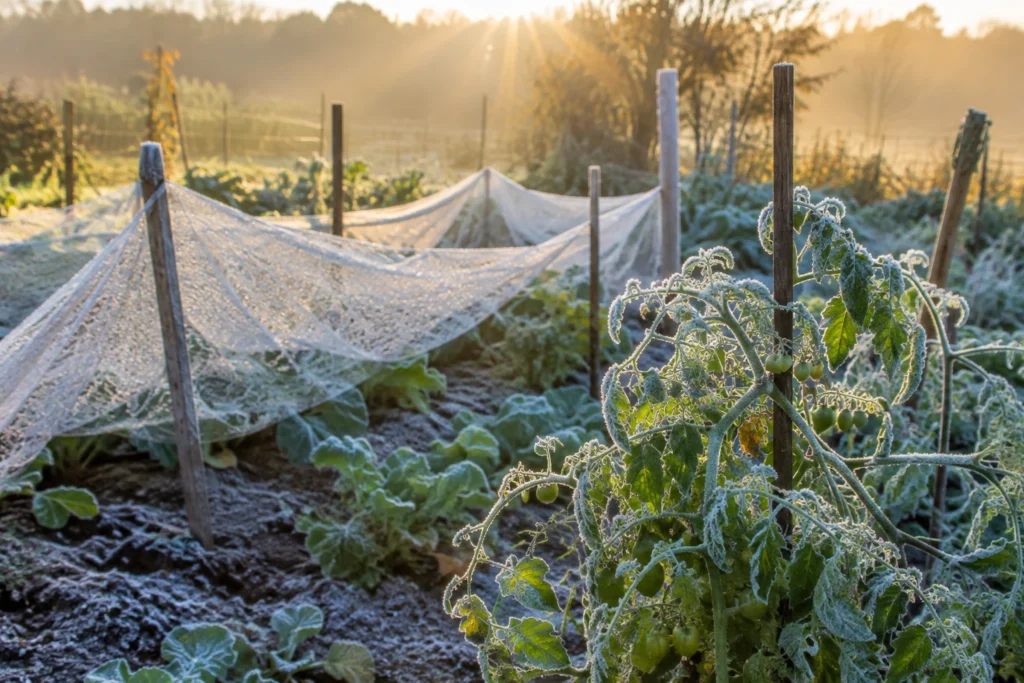
Frost forms on clear, still nights when heat radiates off the soil and plant surfaces faster than it can be replaced. Water inside the plant cells freezes, expands, and ruptures the cell walls from the inside out. By morning, you’re looking at blackened, mushy foliage that will never bounce back.
Here’s the part most people miss: ground-level temperature can run 5–8°F colder than what your porch thermometer says. I learned this the hard way my weather app said 34°F, my tomatoes said otherwise.
This is exactly why so many gardeners search for how to protect plants from frost only after they’ve already lost a plant or two. I did the same thing. Nobody teaches you this in a seed catalog. You learn it standing in your yard at 6 AM, staring at wilted leaves, wondering what went wrong.
My Temperature to Action Table :
I keep this taped inside my potting shed. It’s the single most useful tool I own for deciding how to protect plants from frost on any given night. No guesswork, no scrambling at 9pm in the dark trying to remember what I did last year.
| Temperature | Risk Level | What I Actually Do |
|---|---|---|
| 36°F – 33°F (2°C – 1°C) | Watch closely | Water soil in the afternoon, check forecast again at dusk |
| 32°F – 28°F (0°C – -2°C) | Moderate | Cover tender plants with row cover or an old sheet, bring in small pots |
| 27°F – 20°F (-3°C – -6°C) | Severe | Double-layer covers, heat lamp or old-style incandescent lights, move everything possible indoors |
| Below 20°F (-6°C) | Critical | Accept some losses; focus protection on high-value perennials and shrubs only |
Which Plants Actually Need Frost Protection :
Not everything in my yard panics at 32°F. Kale practically throws a party. Tomatoes, on the other hand, sulk and die. Part of learning how to protect plants from frost is figuring out which plants are even worth the effort on a given night you can’t cover everything, and honestly, you shouldn’t try.
Frost-Tender Plants (Protect These First)
- Tomatoes, peppers, eggplant, zucchini, basil
- Succulents, citrus, hibiscus
- Dahlias, gladiolus, cannas (dig up and store)
Frost-Hardy Plants (Usually Fine on Their Own)
- Kale, spinach, collards, Brussels sprouts
- Pansies, ornamental cabbage
- Established perennials once dormant
7 Methods I Actually Use to Protect Plants From Frost :
I’ve tried nearly every trick the internet suggests. These are the ones that earned a permanent spot in my garage after years of testing how to protect plants from frost the practical way, not the theoretical way.
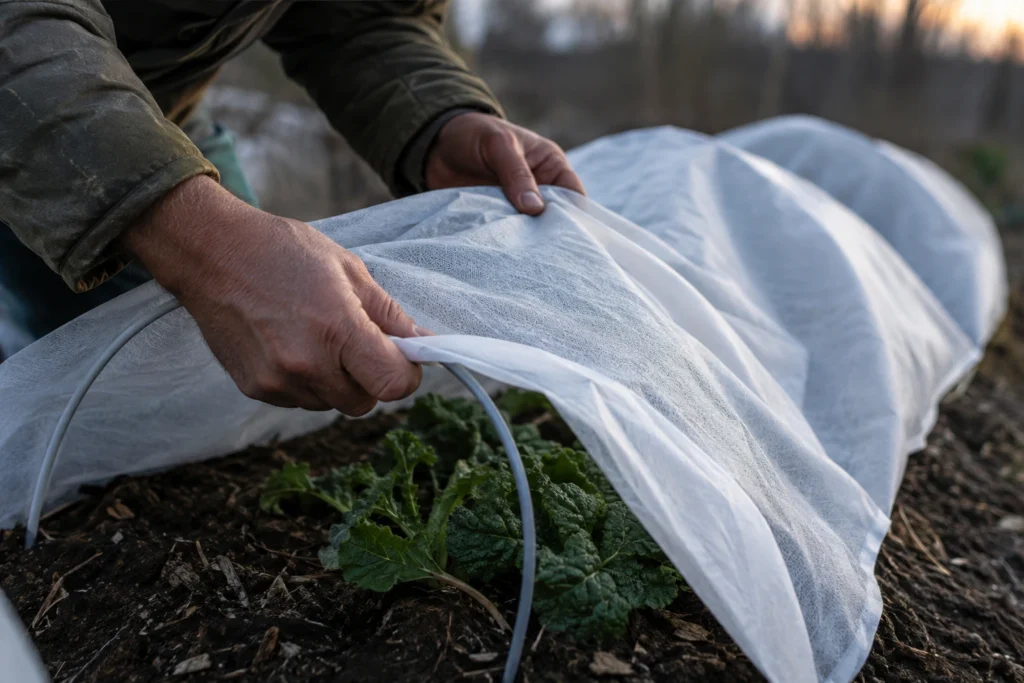
- Frost cloth or row covers drape over hoops or stakes so fabric never touches the leaves; secure edges with rocks or soil.
- Deep watering the day before moist soil holds and releases heat overnight far better than dry soil.
- Mulch, 3 to 4 inches deep straw, shredded leaves, or wood chips around the base, kept an inch or two off the stem.
- Bring containers in pots freeze from all sides, so their roots are more vulnerable than in-ground plants.
- Windbreaks burlap or plastic sheeting staked on the north or west side blocks the wind that strips heat away fastest.
- Old-style incandescent string lights never LEDs, they don’t emit heat tucked under a cover for extra warmth on brutal nights.
- Cloches or upside-down buckets quick fix for single seedlings when you’re caught off guard at 9pm.
Honestly, on my worst nights, I combine three or four of these at once. Overkill works.
Timing Matters as Much as the Method :
I’ve also learned that timing matters as much as the method itself. Cover too early and you trap daytime heat that hasn’t escaped yet not a huge deal, but why waste the effort. Cover too late and the damage is already done.
My rule now: covers go on within an hour of sunset, every single time, no exceptions.
Cost Comparison: Cheap vs Worth the Money :
Money matters here too. You don’t need a fancy setup to protect plants from frost some of my most reliable methods cost nothing but an old bedsheet and five minutes.
| Method | Approx. Cost | Best For |
|---|---|---|
| Bedsheet / old towel | $0 | One-off emergency cover |
| Plastic milk jug cloche | $0 | Single seedlings |
| Frost cloth (row cover) | $10–$25 | Repeated seasonal use |
| Cold frame | $50–$150 | Extending harvest weeks into winter |
| Heat cables / soil warmers | $40–$100 | High-value perennials, long term |
Mistakes I’ve Made So You Don’t Have To :
I’ll be honest I’ve messed this up more than once, even after years of writing about how to protect plants from frost for this very blog. Experience doesn’t make you immune to a dumb mistake at 10pm when you’re tired and just want to go to bed.
- I let plastic sheeting touch the foliage overnight. Every leaf that touched it burned anyway. Frost transferred right through the plastic.
- I left a heavy cover on until noon the next day. My peppers baked under there. Take covers off once temps climb back above freezing.
- I watered frozen ground once, thinking it would help. It just froze the roots harder. Don’t do that.
- I pruned frost-damaged growth too early, before the plant had fully shown what survived. Wait a week or two.
Actually, scratch that last one for tender annuals like basil, prune immediately since they’re not coming back anyway. For perennials and shrubs, wait.
What to Do After Frost Damage Hits :
Sometimes, despite everything, you lose the battle. It happens even to gardeners who know exactly how to protect plants from frost I’ve lost a favorite fuchsia two years running, and I still cover it every time anyway.
- Leave blackened foliage on perennials and shrubs it acts as extra insulation for the roots.
- Don’t prune anything until new growth confirms what’s alive and what’s dead, usually a couple weeks later.
- For tender annuals that turned to mush overnight, pull them and compost they won’t recover.
- Check the crown and lower stems on shrubs; if they’re still green and pliable underneath, the plant likely survives.
A Note for Zone 4, 5, 6, and 7 Gardeners :
My own backyard sits right on the Zone 5/6 line, so I get both a brutal first frost and a stretched-out spring one.
- Zone 4: Plan for your first frost by early-to-mid September; don’t gamble on tender annuals surviving past that
- Zone 5/6: Expect an early fall frost and a lingering spring one keep covers accessible through both seasons
- Zone 7: You get a longer buffer, but don’t get complacent; a rogue cold snap doesn’t check your hardiness zone before it shows up
I always double-check my local frost dates against the USDA Extension office recommendations for my county rather than trusting a generic online calculator.
For readers in the UK working through their allotments, the same principles apply, just swap the timeline your first proper frost usually lands later into autumn, and courgettes and aubergines behave exactly like their zucchini and eggplant cousins here: they hate the cold and will show it immediately.
Final Thoughts :
Knowing how to protect plants from frost isn’t complicated — it comes down to consistency, not luck. Watch the forecast, water the soil early, cover before sunset, and don’t panic when you still lose a few plants anyway. Every gardener does. My own backyard still humbles me every single fall, but each season I get a little better at reading the signs and reacting before the damage sets in.