Ever notice how a peony can sit in the yard for years, grow tons of leaves, and still never flower? That is rarely bad luck. It usually comes down to a few small choices on planting day, mostly depth, sun and spacing.
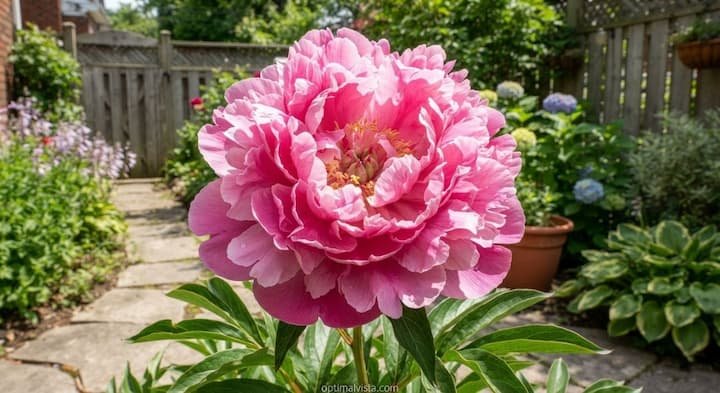
These plants live for decades, so the first hour matters more than ten years of fussing. Once you know how to grow peonies, they come back bigger every spring.
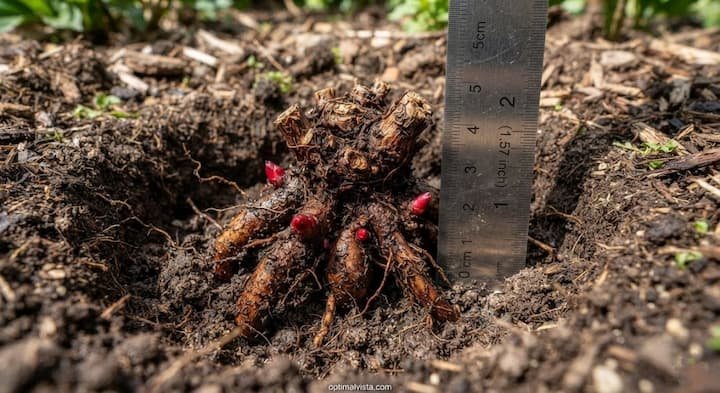
Short answer: plant healthy roots in fall, in full sun and well-drained soil, with the red buds just 1 to 2 inches under the surface.
Types of Peonies and Where Growing Peonies Works Best
There are three kinds, and the type changes how you plant and prune.
- Herbaceous: dies to the ground every winter, about 3 feet tall, hardy in USDA Zones 3, 4, 5, 6, 7 and 8.
- Tree peonies: woody stems that stay all winter, 4 to 6 feet tall, hardy in USDA Zones 4, 5, 6, 7, 8 and 9.
- Intersectional (Itoh): a cross of the two, with stiffer stems, tidier leaves and a longer bloom season.
Peonies also need a real winter. A few weeks below 40°F sets next year’s buds, so success with growing peonies drops fast in hot yards with mild winters. Once settled, one plant can bloom for decades.
Best Time for Planting Peonies: Fall or Spring
Fall wins for planting peonies. Roots settle in before the ground locks up, and the plant wakes up ready in spring. Aim for about six weeks before a hard freeze (28°F or lower).
Spring works too, as soon as the soil is workable. These spring planting steps cover it, but you will mostly find potted plants then, and they need steady watering all summer. Treat these windows as rough and shift them to your own first frost.
| USDA Zones | Fall planting | Spring planting |
|---|---|---|
| 3 and 4 | Early to late September | Late April to May |
| 5 and 6 | September to mid-October | March to April |
| 7 and 8 | October to early November | February to March |
Bare Root vs. Potted: What to Buy
Bare roots are dormant roots sold in fall. They cost less and settle fast. Potted ones show up in spring and often run about $35, and some cultivars hit $79.
Both work. Peony plants are slow to get going, so buy the biggest one you can afford, and check a specialist nursery before the big box store.
Look for these on bare roots:
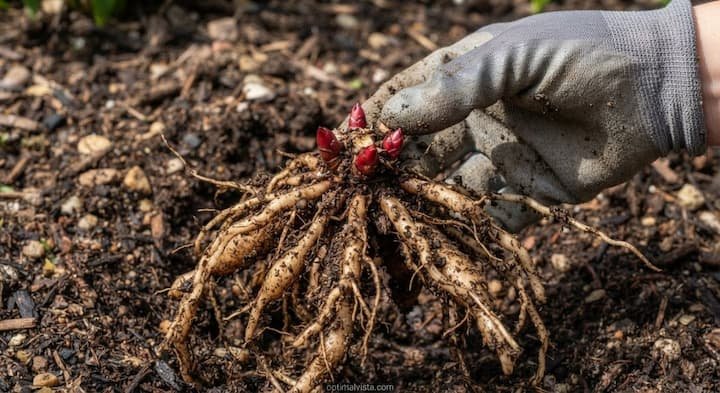
- 3 to 5 eyes (the red buds), since fewer than three usually means no flowers for years.
- Plump, firm roots with no mold, soft spots, damage or bugs, so unwrap the packaging and check right away.
- Skip peony plants that look dried out or shriveled.
Plant bare roots the day they arrive, because they dry out fast. If you can’t, keep them in a bucket of damp compost somewhere cool, or tuck them into a spare bed. Soak them for a few hours before planting.
Sun and Spot: Where Peonies Do Best
Peonies want full sun, meaning about 6 hours or more of direct light. A little afternoon shade is fine, but less sun overall gives you leaves and very few flowers.
- Pick a sheltered spot with good airflow.
- Stay away from tree and shrub roots, since they steal water and food.
- Put herbaceous types mid-border so neighbors hide the tired leaves in late summer, and tree peonies toward the back.
- In USDA Zones 8 and 9, growing peonies means morning sun and afternoon shade.
Good neighbors help, and these companion plants are a nice place to start.
Soil, pH and Drainage
Peonies like rich, loose soil that drains well but holds a little moisture. Aim for a pH between 6.0 and 7.0, which is neutral to slightly alkaline, the range most herbaceous types like. Heavy clay stays wet and rots roots, so never plant in waterlogged ground.
I like a quick hole test: dig 12 inches down, fill it with water, let it drain, then fill it again. If it drops about 1 inch an hour, you are fine. If water is still sitting there the next morning, build a raised mound or pick another spot. Mix in plenty of well-rotted compost or leaf mold to loosen clay, feed thin soil or help sandy soil hold water.
Spacing and Prepping the Hole
Give herbaceous peonies 3 to 4 feet of room and tree peonies 4 to 5 feet. Crowding blocks airflow and invites disease. Dig the hole 18 to 24 inches wide and about as deep, wider than the roots, then:
- Mix compost or leaf mold into the backfill.
- Add one small scoop of mycorrhizal fungi per plant, following the bag.
- Break up any hard clumps so roots can spread.
The fungi cost about a dollar per plant. They team up with the roots to pull in nutrients, improve the soil and help the plant handle pests and stress.
How to Grow Peonies Without Burying the Crown
Depth makes or breaks it. For herbaceous and Itoh types, set the eyes 1 to 2 inches below the finished soil line. In my experience, this is why most peonies give leaves and no flowers.
- Cold zones: closer to 2 inches. Warm zones: closer to 1 inch.
- Potted plants: check the soil line in the pot. If extra potting soil buries the eyes, scrape it back until you see them, then measure.
- Tree peonies: bury the graft union (the bulge on the stem) 4 to 6 inches deep so the top grows its own roots.
- Planting peonies deeper to “protect” them from winter is the classic mistake. Use mulch instead.
Planting Bare Root and Potted Peonies Step by Step
For bare roots:
- Set the roots on a small mound in the hole, eyes facing up.
- Backfill and tamp gently so there are no air pockets.
- Check the eyes sit 1 to 2 inches down, water deeply, then top up the soil once it settles so the eyes don’t end up deeper.
Potted plants take a little more care:
- The stems are full of water and snap like celery, so never yank.
- Dig around the pot edge, tip it out and lift by the crown.
- Loosen jammed roots gently.
- If the plant leans, leave it, because it straightens as it grows.
- Don’t prop it up with extra soil over the crown.

Watering and Mulching New Peonies
- Water deeply at planting, then give about 1 inch a week (roughly 3 to 5 gallons per plant) in year one when rain is short.
- Aim at the soil, not the leaves.
- Once established, a deep soak during dry spring weather is enough, since that is when buds form.
- Think steady moisture, never constant wet.
Spread 2 inches of shredded leaves, wood chips, leaf mold or compost, but keep it off the crown. In USDA Zones 3, 4 and 5, add 2 to 3 inches over new plants after the ground freezes. I pull it back in spring so the buds can push through.
Staking Peonies Before They Flop
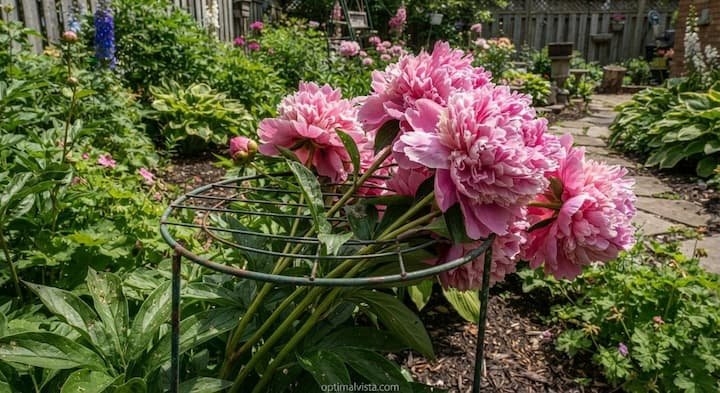
Big blooms get heavy, and one hard rain can flatten them. Set a ring or cage over the plant in early spring, when shoots are about 6 inches tall, and let the stems grow through it. Raise it as the plant grows.
For a tall potted plant, stake at planting. Rings keep air moving, which beats tying stems together. There are more options in this guide to peony cages.
Feeding Peonies Without Overdoing It
Peonies are light eaters. The UConn Home & Garden Education Center says extra nitrogen actually reduces blooms, and suggests only 1/4 to 1/2 cup of 5-10-10 per plant, placed at the bottom of the planting hole.
- Early spring or fall, once a year: a light scatter of slow-release, low-nitrogen fertilizer or a layer of compost.
- Peony care is mostly hands-off after the plant settles.
- Keep fertilizer off the crown.
Prefer going natural? Check these organic fertilizer options.
What to Expect in Years One, Two and Three
The old saying goes: first year they sleep, second year they creep, third year they leap. I think this is where new gardeners give up. Year one is roots, with few or no flowers. Year two brings more stems and maybe a few blooms. By year three you get the show, though some take longer. Peony care in year one is mostly watering and patience.
The downside is real: a short bloom season, and plain leaves the rest of the summer.
Why Peonies Don’t Bloom
- Planted too deep (the most common cause).
- Under 6 hours of sun.
- Too young, or fewer than three eyes.
- Too much nitrogen, or thick compost piled over the crown.
- Root competition from trees and shrubs.
- Dry spells while buds form.
- A late frost or gray mold hitting the buds.
If depth is the problem, lift the plant in fall and replant at 1 to 2 inches.
Ants on Your Peonies
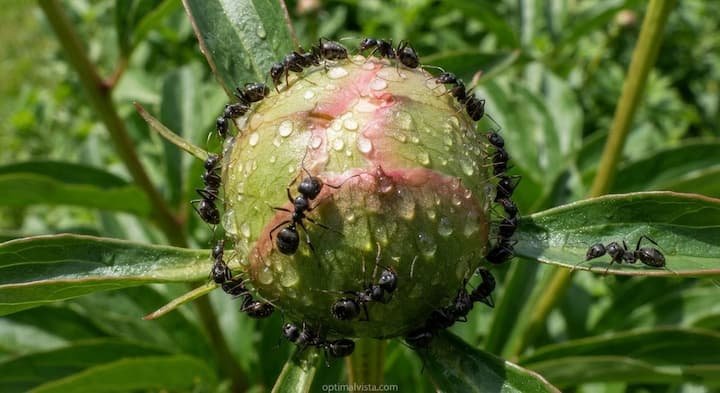
Ants love the sweet nectar on the buds. They don’t hurt the plant, and the flowers open fine without them, so don’t spray anything. For vase flowers, I shake the stems and dunk them in cool water first. The full story is in this post on ants on peonies.
Peony Care After Bloom: Diseases and Fall Cutback
Three problems show up most:
- Botrytis blight (gray mold): dark spots on leaves and stems, black buds and rotting stems (also called peony wilt).
- Powdery mildew: white film in late summer, mostly cosmetic.
- Leaf blotch: reddish brown spots.
Prevention is simple:
- Space plants out and thin weak stems from old clumps.
- Water the soil instead of the leaves.
- Cut off sick parts right away and wipe pruners with rubbing alcohol between cuts.
- Put clippings in the trash, not the compost.
Deer and rabbits usually leave peonies alone. If leaves just look brown late in summer, read about brown peony leaves.
In fall, let the foliage die back on its own instead of picking it off early. Then cut herbaceous and Itoh types to about 1 inch above the soil and label the spot so nobody steps on or digs up the sleeping buds while weeding.
Tree peonies get no cutback. Just remove dead wood and faded seed heads, and snip suckers coming from the rootstock, since their leaves look different. More in this tree peony guide.
Peony Plants in Containers, Dividing and Moving
Dwarf and Itoh types can live in a pot at least 18 to 24 inches wide and deep, about 15 gallons or more, with drain holes. Roots freeze faster in pots, so in USDA Zones 3, 4, 5 and 6 move it to an unheated garage for winter. Here is more on peonies in pots.
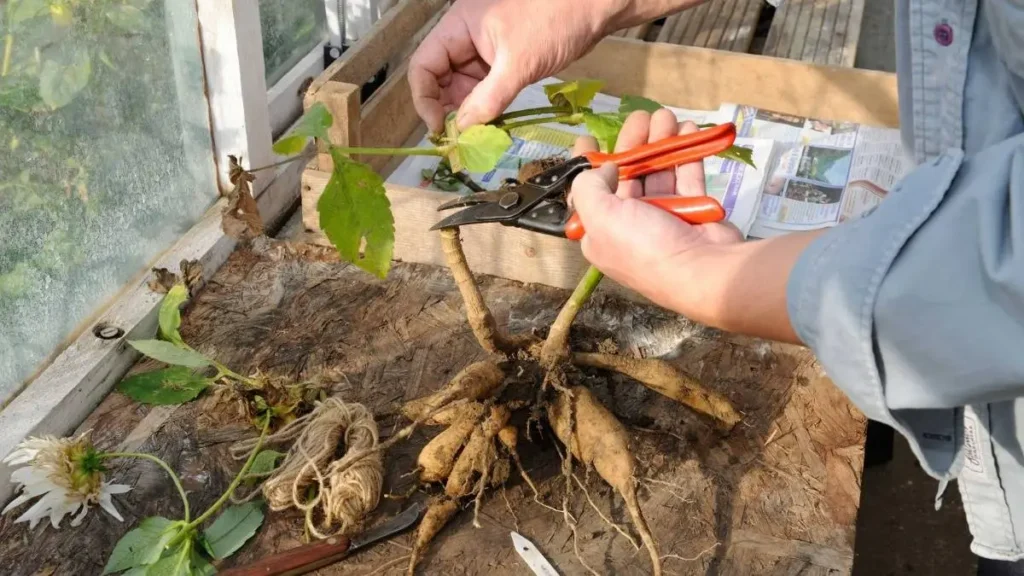
To divide, lift an older herbaceous clump in fall (October to early November in cold zones), wash it off and cut it with a clean knife or sharp spade into good-sized pieces with 3 to 5 eyes each.
Replant right away at 1 to 2 inches deep in soil refreshed with compost. Moving a plant follows the same fall steps, and you should dig wide to keep the roots. If you must transplant peonies in spring, expect a slow year. Tree peonies don’t divide well, so people try cuttings, layering or seed, and all of them are hit or miss.
For cuttings, take 4 to 6 inch pieces in late summer or early fall, dip the base in rooting powder and set them in a deep pot of cutting mix with a little perlite, somewhere warm. For layering, pin a bendy stem to the soil. Be ready for failures.
Cutting Peonies for Vases
Skip cutting in the first two or three years so the plant can build roots.
Later, follow this routine:
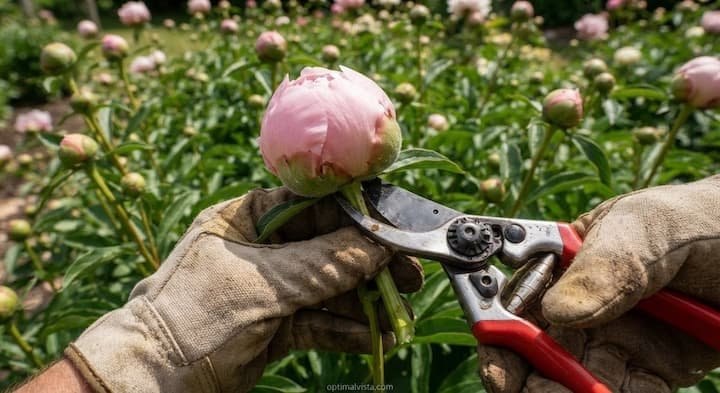
- Cut in the cool morning, when buds feel like soft marshmallows with color showing.
- Leave a few sets of leaves on the plant.
- Strip the lower leaves, cut at an angle and set stems in cool water.
- Wrapped in paper and chilled, buds keep for a couple of weeks.
A few more tricks for cutting peonies make them last longer.
Best Varieties by Zone and Bloom Time
One plant blooms about 7 to 10 days, so mix early, mid and late types to stretch the show to around six weeks. Depending on variety, peonies flower anywhere from April to July, and this peony bloom time breakdown shows the details.
Flowers come single, semi-double or fully double, and pink is the most common color, followed by white, red and apricot.
- Early: ‘Early Scout’ (single red).
- Midseason: ‘Sarah Bernhardt’ (pink) and ‘Festiva Maxima’ (white), both fragrant.
- Late: ‘Command Performance’ (red).
- Itoh: ‘Bartzella’ (yellow).
- Southern yards (USDA Zones 7 and 8): pick early bloomers, plant the eyes about 1 inch deep and give afternoon shade.
Want scent? See these fragrant peony varieties.
Common Peony Mistakes and Fixes
| Mistake | What happens | Fix |
|---|---|---|
| Eyes deeper than 2 inches | Leaves, no flowers | Lift in fall, replant at 1 to 2 inches |
| Too much shade | Weak stems, few buds | Move to 6+ hours of sun |
| Crowded plants | Gray mold, mildew | Space 3 to 4 feet apart |
| Wet, heavy soil | Rotting roots | Add compost or raise the bed |
| Too much nitrogen | Lots of leaves, fewer blooms | Use 5-10-10 lightly |
| Dried-out bare roots | Dead eyes | Plant the same day |
Conclusion:
Now you know how to grow peonies without the usual heartbreak. Pick a sunny, well-drained spot, plant healthy roots in fall, keep the eyes 1 to 2 inches deep, and stay patient for two or three springs. After that, one plant can bloom for decades with almost no work. Start with a single good root this fall and add more once you see it thrive.