Why do two petunias bought on the same day turn out so differently by July, one packed with blooms and the other all long, bare stems? It usually comes down to a few small cuts made early, not luck or fancy products. If you have been wondering how to make petunias bushy.
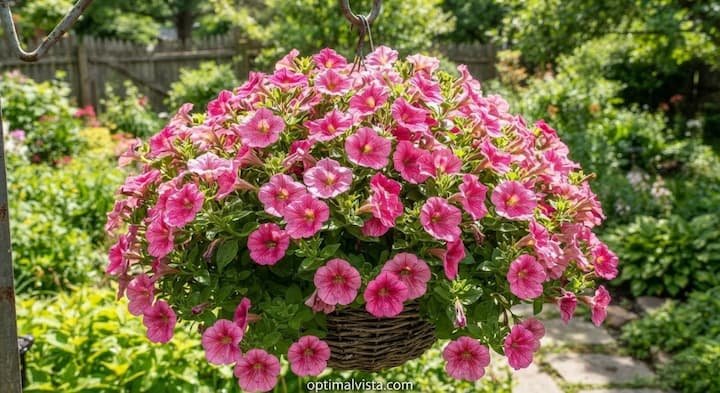
Here is the short answer: pinch the tips at 6 inches, give them 6 hours of sun, deadhead often, and cut back by one third when they stretch. The rest of this guide walks through each step so your baskets and beds stay full until fall.
Why Petunias Get Leggy in the First Place
Petunias grow fast, and each stem wants to race upward. The tip at the end sends a signal that holds back the buds lower down, so if nobody removes that tip, you end up with one long stem and flowers way out at the end.
Cut the tip and the plant starts branching. In my experience, that single idea explains most thin, stringy plants.
A few other things stretch stems too:
- Too little sun, so stems reach for light.
- Too much nitrogen, which pushes leaves over branches.
- Soggy soil or too much water.
- Pots that dry out completely between waterings.
- Crowded plants or a pot that is too small.
- Skipped pinching and deadheading.
Here is a quick way to tell which one you are dealing with. Long gaps between leaves point to low light. Tons of leaves and few flowers point to too much nitrogen. A wilted plant in a hot pot usually points to a water problem.
One more thing: garden center plants are sometimes treated with growth regulators to stay tight in the tray, and they can stretch once that wears off.
Know Your Petunia Type Before You Cut Anything
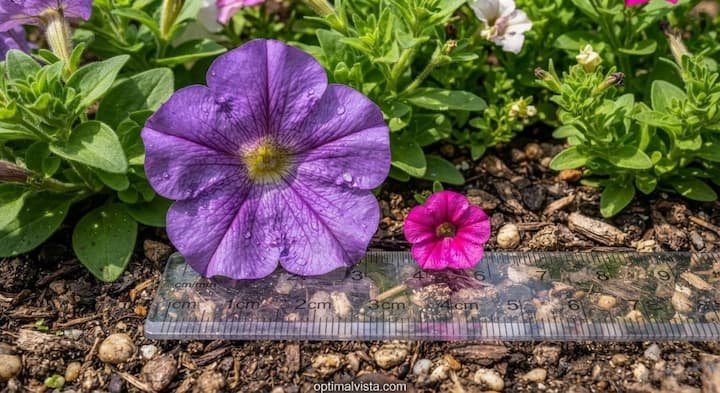
Not every petunia needs the same haircut. Flower size is the easiest clue, so check the plant tag or measure one bloom with a ruler.
| Type | Flower size | Growth habit | Needs pinching? |
|---|---|---|---|
| Grandiflora | 3 to 5 inches | Upright to mounded, big blooms | Yes |
| Multiflora | About 2 inches | Mounded, lots of flowers | Yes |
| Milliflora | 1 to 1.5 inches | Compact, small blooms | No |
| Spreading (Wave) | 2.5 to 3 inches | Trailing, fast growing | Light trim only |
Milliflora and spreading types clean themselves, which means you can skip most deadheading on them. Grandifloras and multifloras are the ones that go lanky without regular trims. The Wave petunia care guide covers how to trim the spreading kind.
Pick Varieties That Give You Bushier Petunias
Starting with a compact series gives you bushier petunias before you even pick up your pruners. Garden center tags often say “compact,” “mounding,” or “spreading,” so look for those words. Spreading and trailing types are bred to grow long, so they need trims to stay full, while compact series stay tight with less work.
A few series with a good reputation:
- Madness: compact plants with big blooms all summer, great for beds and borders.
- Easy Wave and Shock Wave: spreading, fast growers that fill baskets and ground cover.
- Supertunia: vigorous, heavy bloomers that look great in baskets and mixed pots.
- Multiflora mixes: lots of smaller flowers on mounded plants, good for borders.
Spreading series need more room, so read the spacing section below before you buy.
Give Them Full Sun, 6 Hours or More
Petunias need at least 5 to 6 hours of direct sun, and more is better. In shade, stems stretch toward the light and leave big gaps between leaves.
I like to hang baskets where the sun hits every side, and a quarter turn every few days keeps the back from leaning. The sunlight needs article goes deeper if you are unsure about your spot.
- Six or more hours of direct sun gives you bushier petunias with tight, short stems.
- Rotate pots and baskets a quarter turn every few days.
- Got a basket stuck in porch shade? Move it onto a plant stand in a sunnier spot.
- Indoors, turn the tray so every side gets even light.
- In USDA Zone 8 and warmer, a little afternoon shade is fine when highs pass 90°F, as long as the morning sun is strong.
Spacing Matters More Than You Think
Crowded plants fight over light and air, so they stretch. In beds, plant grandifloras and multifloras about 10 to 12 inches apart. Spreading types need far more room, around 2 to 2.5 feet, because one plant can cover a big patch of your backyard by August. Pair them with companion plants that stay short so nothing shades them.
- Standard petunias in beds: 10 to 12 inches apart.
- Spreading types: 2 to 2.5 feet apart.
- Crowding does not keep petunias compact, it just makes plants fight over light and water.
- Open spacing lets air move through, so leaves dry faster after rain.
Pot Size and Soil to Keep Petunias Compact
Containers dry out fast, and a cramped root ball makes plants stretch and stop blooming. A 12-inch pot holds roughly 2 to 3 gallons of mix and fits one to three plants. A single big spreading plant does better in something larger. If you are new to container petunias, that guide covers the basics.
Use a loose, well-draining potting mix with some compost, and make sure the pot has drainage holes. This soil mix article has a full recipe.
- Pots and baskets: 12 inches wide or bigger.
- Hanging baskets dry out faster than pots on the ground, so check them daily in summer.
- Garden beds: loosen the soil about 8 inches deep and mix in compost.
- Heavy clay: amend it or use a raised bed, since petunias bloom poorly in dense soil.
- Drainage holes in every container, no exceptions.
Pinch Back Petunias at 6 Inches
According to University of Minnesota Extension, grandifloras and multifloras should be pinched once they reach about 6 inches tall, while millifloras and spreading types should be left alone. Young plants bounce back fast and send out flowering side shoots, which is why the timing matters so much.
I pinch my seedlings the day they go outside, then again when new shoots reach 4 to 6 inches.
Store-bought plants already in bloom benefit from the same move: take the top inch off each stem before planting, even if that costs you a few flowers. If you grew your own plants, the guide on starting from seed covers the early steps.

How to Make Petunias Bushy: The Pinch and Prune Method
Pinching and pruning are the same move at different sizes. Pinching uses your fingers on soft tips, and pruning uses pruners on firmer stems.
Here is how to do it right:
- Find a node, the small bump where a leaf joins the stem.
- Cut or pinch 1/4 to 1/2 inch above that node.
- On young plants, take off the top inch. On long stems, take 2 to 3 inches.
- Pinch back petunias with your thumb and forefinger while stems are soft, and switch to pruners once they firm up.
- Leave a few leaves on every stem.
- Wipe pruner blades with rubbing alcohol between plants.
Sharp, clean pruners make cleaner cuts that heal fast. Thin gloves work fine, but thick ones make it easy to snip the wrong spot, and petunia leaves are sticky either way.

Deadhead Often and How Often Is Often
Spent flowers turn into seed pods, and the plant puts its energy there instead of into new growth. On grandifloras and multifloras, pinch off faded blooms every week or two.
Snap the stem just above the first healthy set of leaves, not only the flower head, so you don’t leave a little stub that rots. Fewer seed pods means more energy for stems and blooms, which gives you fuller petunias. Milliflora and spreading types drop their old flowers on their own. For a full walkthrough, see this deadheading guide.

The Mid-Season Cutback of One Third
By July, even good plants stretch. That is when you cut each stem back by about one third, just above a set of leaves. Some gardeners go down by half, and that works, but I think one third is safer because more leaves stay on to feed the plant. If you pinch back petunias a little all season, this bigger cutback stays gentle.
Expect new shoots in about a week and blooms back in 2 to 3 weeks. Do it on a cooler day, not when the afternoon is above 90°F, and water well afterward.
Staggered Pruning for Non-Stop Blooms
Cutting the whole plant at once leaves a bare stretch with no flowers.
Do it in thirds instead: cut one third of the stems now, another third in two weeks, and the last third two weeks after that. Something is always blooming. Cutting on that kind of schedule is how you keep petunias compact without losing color.
- Baskets: cut every third stem, working around the pot.
- Beds: cut every third plant in a row.
- Wait two weeks between rounds.
How to Rescue Petunias That Are Already Leggy
If your plants are already long and bare, don’t toss them in the trash. Petunias are tougher than they look. The leggy petunias article has more, but here is the short version:
- Cut stems back by half, or down to 3 or 4 inches above the base if they are really bad.
- Leave a few leaves on every stem, because bare stems may not regrow.
- Water well, then feed lightly once new growth shows.
- Expect 2 to 4 weeks before flowers return.
I’ve done this to a sad basket in late June and had it spilling over the rim again by August.

Watering Without Overdoing It
Too much water stretches plants just like too little does, and soggy soil leads to root rot. Water when the top inch of soil feels dry.
When highs hit 85°F or more, baskets in full sun may need water every day, while beds need far less, and rainy weeks mean you can skip a few waterings. Try the squeeze test: grab a pinch of soil from the pot.
If it drips, hold off. If it falls apart like dust, water. If it holds together without dripping, you are good. The watering schedule guide has more detail, and the yellowing leaves article helps if lower leaves start to fade.
- Water at the base in the morning or early evening, not over the leaves.
- Soak until water runs out of the bottom of the pot.
- Steady moisture, not soggy soil, is what gives fuller petunias strong stems.
- Check the soil first instead of watering on a fixed schedule.

Feeding for Fuller Petunias
Petunias are heavy feeders, but too much nitrogen gives you leaves and stretched stems with fewer flowers. Go with a balanced formula like 20-20-20, or one with a bit more phosphorus (the middle number) to support blooms, and read the label before mixing. The petunia fertilizer article compares products.
- At planting: mix slow-release granules into the soil.
- Pots and baskets: half-strength liquid feed every 1 to 2 weeks.
- Beds: liquid feed every 2 to 3 weeks.
- After a cutback: hold off until new shoots show, then feed lightly.
- Skip high-nitrogen-only products.
Protect New Growth From Pests
Fresh shoots after a trim attract aphids, and budworms and slugs chew at night, so you see damage in the morning with nothing in sight. Check your plants at dusk with a flashlight. The natural pest control guide covers more options.
- Aphids: spray off with the hose, then try insecticidal soap.
- Spider mites: neem oil.
- Budworms and slugs: hand-pick and drop them in the trash.
- Leaf miners: pick off the leaves with squiggly trails and trash them.
- BT: save it as a last resort.
Regular deadheading also removes hiding spots and damaged buds.
A Month-by-Month Petunia Care Calendar
Dates shift with your weather, so check your local last frost date. Use this as a rough guide.
| When | What to do |
|---|---|
| Planting window | Mid-May in USDA Zones 4 and 5, late April in Zones 6 and 7, late March in Zone 8, after the last frost |
| Planting day | Pinch the top inch, mix in slow-release fertilizer, set the right spacing |
| 2 to 3 weeks later | First pinch when stems hit 6 inches, start deadheading |
| June | Deadhead weekly, feed pots every 1 to 2 weeks |
| July | First one-third cutback, staggered if you can |
| August | Second round of cuts, watch for pests |
| Fall | Let plants run until frost, since 32°F ends them in most zones |
Quick Troubleshooting After You Cut
Even with good cuts, a few things can go sideways.
Here is what to check:
- Still leggy after pinching? Look at sun first, then nitrogen, then pot size. Cuts can’t fix shade.
- Yellow leaves after trimming? Usually too much water or too much feed. Ease off, then feed lightly once shoots show.
- Gray fuzz or mushy cuts? That is fungus. Remove affected parts, water at the base, and give plants more air.
- No flowers three weeks after a cutback? Add sun and a light feed, then give it another week.
Mistakes That Keep Petunias Thin
My biggest mistake in my first year was skipping the early pinch, and by July I had long stems with flowers only at the tips.
These are the other common ones:
- Waiting too long for the first pinch.
- Cutting all stems down in one day.
- Cutting bare, leafless stems.
- Over-fertilizing, especially with high-nitrogen formulas.
- Cutting back too late, with too little season left to regrow.
- Letting seed pods form.
- Planting in shade or crowding plants together.
- Using a pot that is too small.
Final Thoughts:
Now you know how to make petunias bushy: pinch early, give them plenty of sun, deadhead each week, cut back by a third when stems stretch, and feed and water with care. Start this weekend, even if your plants already look scraggly. Cut a third of the stems, and in a few weeks that backyard basket should look full again.