
Ever wonder why one petunia is buried in blooms while the same plant two steps away looks stretched and sad? Light is almost always the reason, and the gap between a good spot and a bad one can be just a couple of hours.
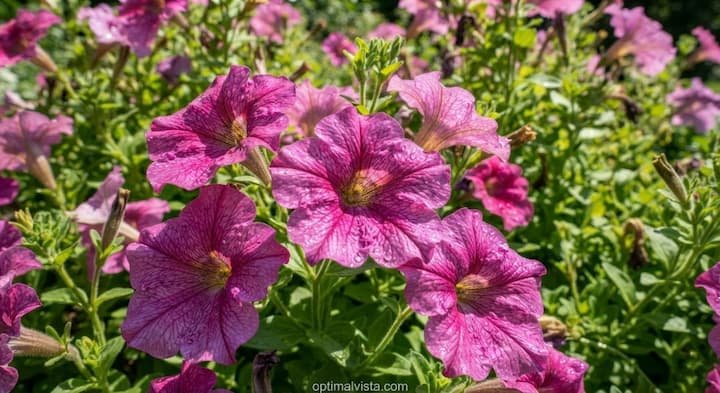
The petunias sun or shade requirements come down to this: give them at least 6 hours of direct sun, and aim for 8 if your yard allows it. Heat, plant type, and where you live change the details, so let’s go through each one and pick the right spot for your plants.
Petunias Sun or Shade Requirements in Hours: 6 vs 8
The numbers online range from 5 hours to 8 hours, and they are all a little right. Six hours of direct sun is the floor, where petunias stay healthy and bloom at a decent pace.
Eight hours or more is where they fill out and cover themselves in flowers. Under 5 hours, you get fewer blooms and longer, thinner stems. Guides that say 5 to 6 hours are describing the bare minimum, and the ones that say a flat 6 are describing the safe floor. Think of 6 hours as a passing grade and 8 as full marks.
Do Petunias Need Full Sun? What Full Sun Really Means
Full sun means direct light on the leaves, not just a bright spot. A bed can look bright all day and still get only 2 hours of real sun if a tree is in the way.
Sort your light like this:
- Direct sun: nothing blocks the light, no tree, roof, or wall.
- Dappled sun: light filtered through leaves, and I count it as about half.
- Bright shade: no direct rays at all, so it counts as zero.
Measure It: How Much Sun Do Petunias Need Where You Live?
Sun hours change with the season, so check your spot in late spring or early summer, when the plants will be growing. Stand there at these times and see if direct sun is hitting the ground:
- 9 am: morning sun, the gentle kind.
- 12 pm: the strongest light of the day.
- 3 pm: hot afternoon sun.
If the spot is lit at all three times, you likely have 6 hours or more. I run this check in my own backyard every spring before buying a single flat.
Sketch a simple sun map of your yard from those checks, with sunny spots marked in one color and shady ones in another, so you know where each plant belongs. A quick phone photo at each time works too if you can’t stand around watching.
Sun is not the only thing to check in a spot:
- Drainage: the soil should drain well and stay moderately fertile, so mix in finished compost if it’s poor.
- Airflow: open air dries the leaves fast and cuts down disease.
- Afternoon protection: in very hot areas, pick a spot that gets some shade after 2 pm.
Why Petunia Sunlight Requirements Are So Strict
Leaves turn light into sugar through photosynthesis, and blooms use a lot of that energy, so the number of flowers follows the hours of sun.
University of Minnesota Extension says petunias need at least 5 or 6 hours of good sunlight and do even better in full sun all day. Cut the light and the plant stops making buds and starts reaching for the sun with long, thin stems.
Petunias in Full Sun: What a Good Spot Looks Like
In full sun, mounding types stay neat and about 2 feet wide, while spreading types like wave petunias can run 3 to 4 feet, and some trailing varieties cover up to 10 square feet in ideal conditions.
The flowers cover the leaves, the color is deep, and the stems stay short and stiff, and most mounding types stay between 6 and 18 inches tall. If that’s what you see, leave the spot alone.
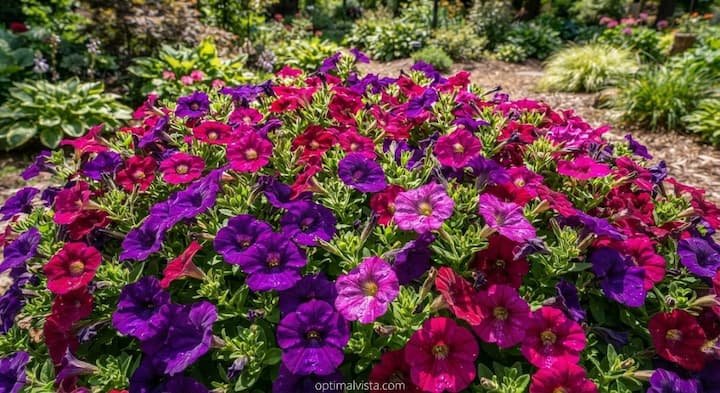
Petunias in Partial Shade: What You Can Expect
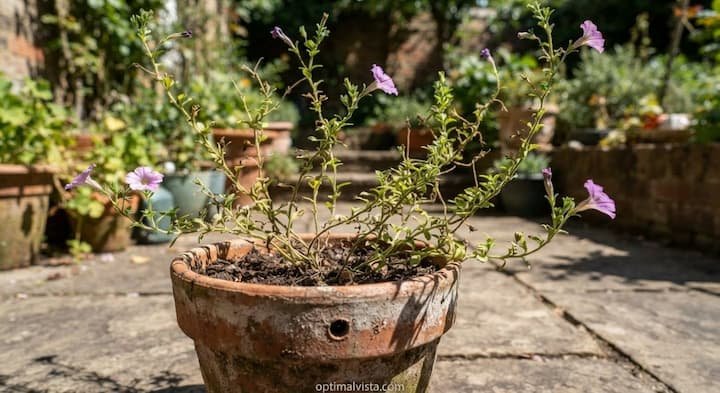
Partial shade means about 3 to 5 hours of direct sun. The plants live, but they bloom less and get leggy. The best version is morning sun with afternoon shade.
- 4 to 6 hours of morning sun: works for most types.
- Dappled light all day: stretched stems and fewer flowers.
- Around 3 hours: the plant survives, but flowers are few.
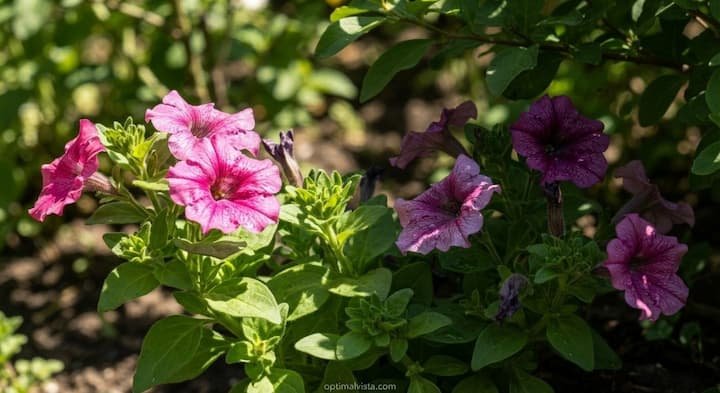
Petunias in Full Shade: Why They Struggle
In full shade, petunias turn thin and weak, and most of them die in time, even with good water and plant food.
Do petunias need full sun to stay alive? Almost always, yes. I think full shade is where most new gardeners go wrong, because the plant looks fine at the nursery and then fades in the yard.
Morning Sun vs Afternoon Sun
Morning sun dries the dew early, which cuts down fungus, and it is gentle on the leaves. Afternoon sun is hotter and harder, though petunias that only get afternoon sun can still do fine if you water them more often. Morning light gets the favor in hot zones, and afternoon light is fine in cooler ones.
Here is how each side of your house stacks up:
| Spot | Sun pattern | Verdict |
|---|---|---|
| South-facing | 6 to 8+ hours, strongest light | Best in cooler zones, needs more water |
| East-facing | Morning sun, afternoon shade | Great pick for hot zones |
| West-facing | Hot afternoon sun | Okay in cool zones, water often |
| North-facing | Little direct sun | Skip petunias here |
Too Much Sun and Heat Stress
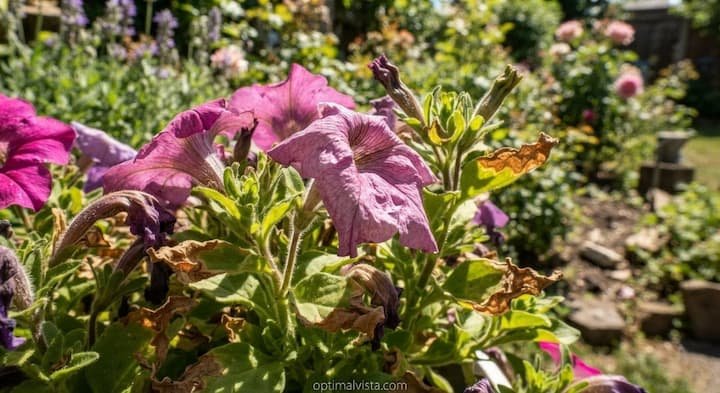
The question is not only how much sun do petunias need, but also how hot that sun gets. When the temperature stays above 90°F, many petunias slow down their blooming and the leaves can scorch.
In my experience, the dark-flowered kinds like black and deep purple wilt first. Hot walls, concrete, and bare patios bounce heat back and make it worse. A petunia that wilts at 2 pm and perks back up by evening is stressed by heat, not dying.
Try these fixes:
- Give them afternoon shade from a fence, a taller plant, or a patio umbrella.
- Put shade cloth over them from noon to 4 pm.
- Water deep in the early morning, before the heat.
- Move pots away from hot walls and concrete.
- Add about 2 inches of mulch around plants in beds.
Sun Needs by Petunia Type
Not every petunia wants the same amount of light. Here is a quick look:
| Type | Sun needed | Shade tolerance |
|---|---|---|
| Grandiflora | 6 to 8+ hours | Low |
| Multiflora | 6+ hours | Medium |
| Floribunda | 6+ hours | Medium |
| Milliflora | 4 to 6 hours | Best of the group |
| Spreading (Wave, Supertunia) | 6+ hours | Low |
Milliflora types handle petunias in partial shade better than the big-flowered ones, but they still bloom less than they would in full sun. In hot, humid summers, grandifloras can rot, so favor multiflora there.
Million bells (Calibrachoa), a close cousin, want the same 6 hours. Grandifloras also get beaten up by rain, so they do best in pots and baskets where you can move them.
Sun Needs by USDA Zone and Region
Petunia sunlight requirements shift a little by region. Petunias grow in USDA Zones 2 to 11, but they act as annuals in most of them and only come back as perennials in USDA Zones 9, 10 and 11. A petunia in Florida can get by on a bit less sun than one in Minnesota.
Use this as a guide:
- USDA Zones 3, 4, 5 and 6: full sun all day, because the growing season is short.
- USDA Zones 7 and 8: full sun, with a bit of afternoon shade in July and August.
- USDA Zones 9, 10 and 11: morning sun and afternoon shade, and fall planting for winter color.
- Hot zones: do petunias need full sun here too? Yes, but only until early afternoon.
Signs of Too Little Sun vs Too Much Sun
Your plants tell you fast, and when petunias stop blooming, light is the first thing to check. Watch for these signs:
Too little sun
- Long, thin stems with big gaps between the leaves.
- Few flowers, or none at all.
- Stretched stems on petunias in partial shade are the first warning.
- Pale, soft growth.
- Leaves that turn yellow, then brown, with drooping flowers.
- Weak stems that slowly die off in deep shade.
Too much sun
- Crispy brown leaf edges.
- Midday wilting that bounces back by evening.
- Faded flower color.
Yellow leaves can come from low light, but also from water or food problems, so check petunias turning yellow before you change the spot.
Diseases That Come With Too Much Shade
Shade stays cooler and damper. Water does not dry off as fast, so leaves stay wet longer, and that invites powdery mildew, which looks like white powder on the leaves, and root rot.
Water the soil in the early morning, not the leaves, and give each plant about 12 inches of space so air can move.
How to Fix Petunias Stuck in Shade
You don’t have to dig them up. Work through this list:
- Move pots to the sunniest spot you have.
- Cut leggy stems back by about half with clean pruners.
- Deadhead petunias and toss moldy flowers in the trash.
- Feed and water well after the cut so new growth fills in.
- Trim tree branches that block the light.
- Set up a reflective surface, like a white board or a light-colored wall panel, to bounce extra light onto the plants.
I like cutting them back by about half, because the plant looks rough for a week and then branches out. For more on shaping them up, read about bushy petunias and how to fix leggy petunias.
Sun in Containers and Hanging Baskets
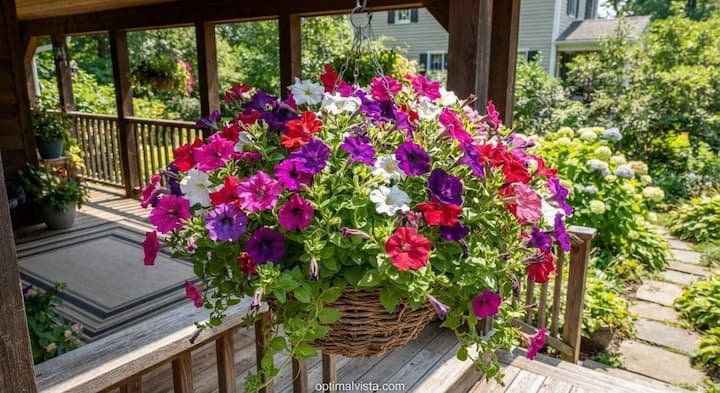
Pots are the easiest way to fix light problems because you can drag them around. Hanging baskets are the tricky ones. I once hung a basket under my porch roof and it barely bloomed all summer.
- Same petunia sunlight requirements as in the ground: 6 hours minimum, 8 is better.
- Keep baskets out from under eaves and awnings.
- Turn pots a quarter turn every few days so every side gets light.
- Use a 12-inch pot or larger so the soil doesn’t dry out too fast.
- Pick light-colored pots in hot zones, since dark ones soak up heat.
- On a balcony or patio, move pots as the sun shifts through the day.
- In beds, space plants about 12 inches apart so air can move and each one gets light.
For setup tips, see petunias in pots and a good petunia soil mix.
Seasonal Sun Changes and Tree Shade
The sun sits lower in fall, and trees fill in with leaves by late spring. A bed that gets 8 hours in April can drop to 5 once the maple leafs out. Recheck the spot in June and again in late summer.
If blooms fade in fall for no clear reason, new shade is usually the cause.
Sun, Water and Fertilizer Work Together
More sun means more water and more food. Petunias in full sun, especially in containers, can need water every day in peak summer, while in-ground plants do fine with a deep soak about once a week.
Plants in partial shade can usually go longer between waterings. The guide on watering petunias has the full schedule. Feed them once a month, or every 2 weeks for heavy bloomers, and check the best petunia fertilizer options.
Growing Petunias Indoors or in Low Light
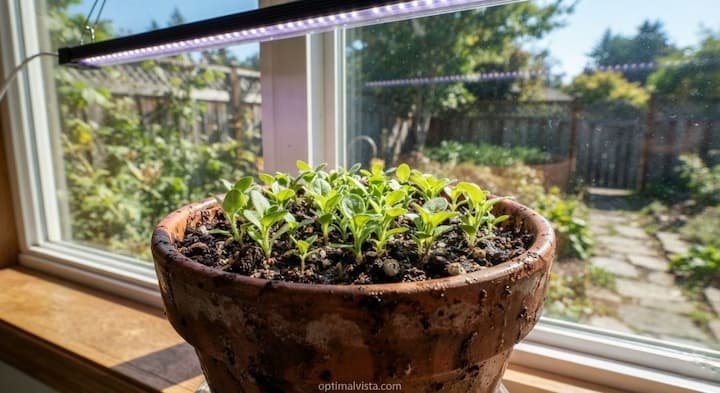
Indoors, a south-facing window is your best bet, but plants still bloom less than they do outside. A grow light fills the gap.
- How much sun do petunias need indoors? A south window plus a grow light gets close.
- Keep lights on about 16 hours a day, 4 to 6 inches above seedlings.
- Leave petunia seeds uncovered, since they need light to sprout.
Starting from seed? Follow the steps for petunias from seed so the seedlings stay short and strong, and start the seeds indoors 8 to 10 weeks before your last spring frost. Before the first frost at 32°F, bring potted plants inside and use the overwinter petunias guide for spring.
Best Shade Alternatives to Petunias
If your yard just can’t give 6 hours, pick plants built for shade:
- Impatiens: bright color in shade and partial shade.
- Begonias: nice leaves and flowers in shady spots.
- Fuchsias: colorful hanging blooms that like partial shade.
- Lobelia: soft, small flowers that work well in containers.
Mix a few near your sunny beds using these petunia companion plants. Petunias are also non-toxic to people and pets, so they are a safe pick around kids and dogs wherever you do have the sun.
Marigolds and zinnias also love full sun, so they make good partners for petunias in a sunny bed, though they grow in a different shape.
Final Thoughts:
Petunias sun or shade requirements are simple once you test your spot: 6 hours of direct sun gets them going, 8 hours makes them shine, and a little afternoon shade helps when it’s hot. Pick the sunniest corner of your yard, give them water and food to match the light, and watch for stretched stems. Fix the spot early and the blooms will follow.
Pingback: 25 Best Companion Plants for Petunias: Easy Garden Pairs