Ever notice how petunias look amazing in May and then turn into long, bare strings by July? The plant isn’t dying. It’s stretching, and that stretch tells you exactly what’s missing. Most of the time the cause is light, pruning, or feeding, and the plants bounce back faster than you’d guess.
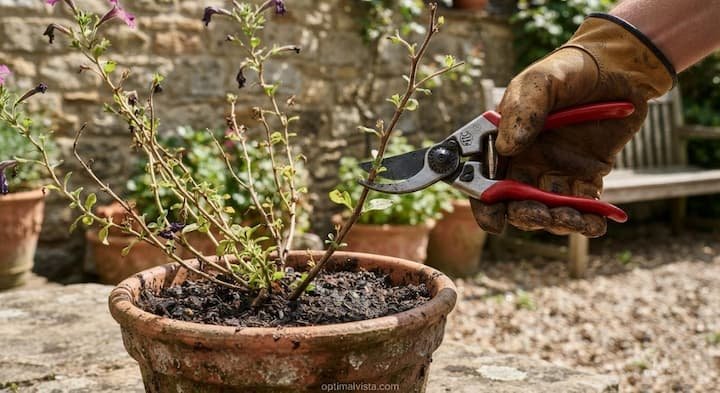
Short answer on how to fix leggy petunias: cut the stems back by one-third to one-half, move them into at least 6 hours of sun, then feed and water on a steady schedule. The sections below explain each step so you can match the fix to your own pots or beds.
What Leggy Petunias Look Like and What Is Normal
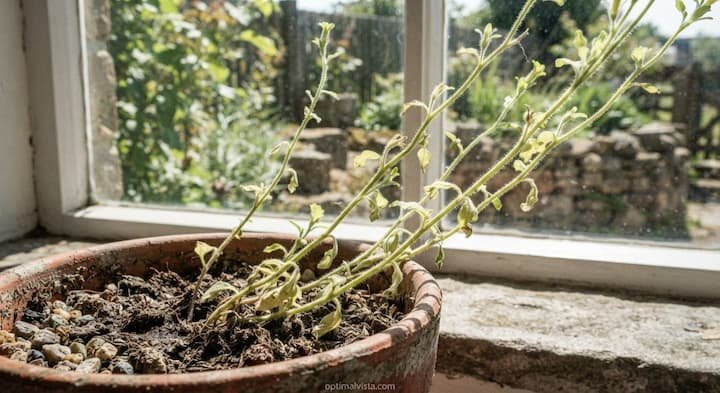
Leggy petunias have long, thin stems with big gaps between the leaves. The flowers sit only at the tips, and the base of the plant can look bare or woody. A little trailing is normal, because petunias naturally sprawl as they age. It turns into a problem when growth gets sparse, weak, and short on color.
Watch for these signs:
- Long stems with few leaves.
- Flowers only at the ends of the stems.
- A bare or woody center.
- Stems leaning toward one side.

Why Petunias Get Leggy: Light, Pruning, and Spent Blooms
Every time a flower fades, the plant pushes out a longer stem with new buds, so the stretch builds up over the season. Three things speed it along:
- Not enough sun: Stems reach for the light, a process called etiolation, and the growth comes out thin and weak. Aim for 6 to 8 hours of direct sun. If the stems all lean one way, the light is coming from that side.
- No pinching or pruning: Without tip removal, the plant grows tall instead of branching low.
- Seed pods left on: A green pod forms after each flower fades, and the plant spends energy on seed instead of leaves and new stems.
The number worth remembering comes from NC State Extension, which says petunias need at least 6 hours of sunlight per day and that cutting back overgrown plants brings new growth and flowers.
Feeding, Watering, Crowding, Heat, and Seedling Problems
Light and trimming are only part of the story. What happens in the pot matters just as much. Too much nitrogen is a common one, since lawn-type fertilizer pushes soft, stretched growth and fewer flowers. Pots have the opposite problem, because containers hold limited nutrients and frequent watering washes them out.
Swinging between bone dry and soggy stresses the plant and thins the stems. Packed plants compete for light, water, and air, so they stretch toward any open spot, and poor airflow invites fungus. Heat adds to it too.
When highs push past 90°F, petunias slow down and look tired. That’s the mid-summer slump, and it’s why a planter that looked perfect in June looks rough by the Fourth of July.
Indoor seedlings are a different case. They get leggy from too little light and too much warmth, and a windowsill rarely gives enough light. Hang a grow light 2 to 4 inches above the seedlings, run it 14 to 16 hours a day, and cool the room to about 65°F after they sprout.
Pinch the tips when they reach 4 to 6 inches tall so they branch. If you grow your own plants, read more on starting seeds indoors.
Match Your Symptoms to the Cause
Use this table to find the reason why petunias get leggy in your pots before you grab the pruners.
| What you see | Likely cause | Fix |
|---|---|---|
| Stems lean to one side | Not enough sun | Move or rotate the pot |
| Lots of green, few blooms | Too much nitrogen | Pause feeding and flush the soil |
| Pale, thin growth in pots | Too little food | Start a diluted liquid feed |
| Wilting, then recovery | Uneven watering | Water on a steady schedule |
| Blooms only at the tips | No pruning | Trim and pinch |
| Green nubs after petals drop | Seed pods | Deadhead fully |
| Tangled, packed plants | Overcrowding | Thin them out |
| Chewed buds, small holes | Pests | Check the pest section below |
Know Your Petunia Type Before You Cut
Not every petunia stretches the same way, so the type changes how you trim. Grandiflora types have big flowers on a mounding plant and need regular pinching and deadheading.
Multiflora types give you more flowers on a smaller plant and handle rain better. Milliflora types stay small and compact with little work.
Wave and other spreading types are fast trailing growers that need less pinching but still stretch by mid-season, and Wave petunia care covers them in detail. Self-heading varieties stay compact on their own, though they still need sun and food.
Some self-cleaning types need less deadheading, but a trim still helps. In short, mounding types need steady pinching, while spreading types do better with a mid-summer haircut.
How to Fix Leggy Petunias Step by Step
Start with the basics before you cut anything.
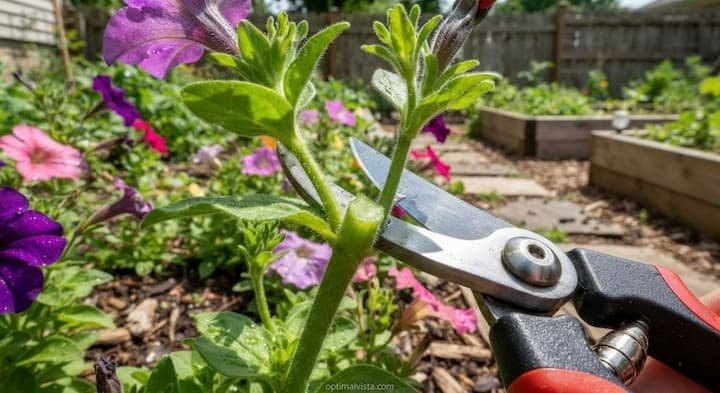
- Clean your tools: I wipe my sharp pruners with rubbing alcohol before every session, even on healthy plants, since dirty blades spread disease and dull ones crush stems.
- Find the node: Cut just above a leaf node, the spot where a leaf meets the stem. New branches grow from there.
- Leave leaves behind: Keep several leaves on each stem so the plant can recover.
How Much to Cut Back Leggy Petunias
The amount depends on how stretched the plant is. A light trim takes 1 to 2 inches off the tips every two to three weeks. A standard cut removes one-third to one-half of each stem once the plant starts sprawling.
For badly stretched plants, go with a hard cut, taking stems down by two-thirds to about 4 to 6 inches with a few leaves left on each. Do the hard cut in early to mid summer, while there’s plenty of warm weather left to regrow, and skip it during a heat wave.
Use light trims in late summer. Flowering dips for a couple of weeks after a hard cut, but the plant comes back. I like staggering the cuts, half the stems this week and the rest next week, so the pot never goes completely bare. Every cut makes new branches, which also helps with bushier growth.
Revive Leggy Petunias With Deadheading, Light, Food, and Water
Cutting is only step one. These changes keep the new growth from stretching again.
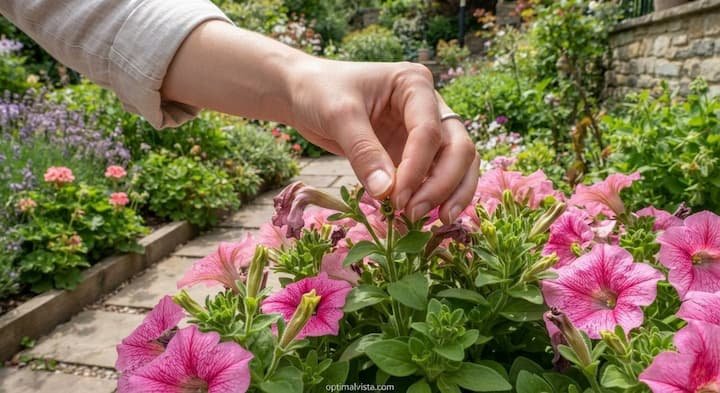
- Deadhead the right way: Pinch off the spent flower and the small green seed pod under it, and clip off any brown nubs along with the stem section below them. Pruners work better on stubborn stems. The deadheading steps show how.
- Fix the light: Move pots to a spot with 6 or more hours of sun and rotate them now and then. Shift plants over a few days if they’ve been in low light. More on sunlight needs.
- Reset the feeding: If you overfed, skip fertilizer for about two weeks and flush the pot by pouring water through until it drains, roughly 1 gallon for a 12-inch pot, two or three times. Then switch to a balanced or bloom formula. Compare petunia fertilizer options if you’re unsure.
- Reset the watering: Push a finger 1 inch into the soil and water when it feels dry. A steady watering schedule beats big splashes now and then.
- Thin crowded plants: Pull a few out early, before the roots tangle.
What to Expect After Pruning
Once you cut back leggy petunias, the plant looks bare and rough for the first week. In my experience, petunias look worse before they look better, so don’t panic around day four.
Keep watering, deadhead as needed, and give a light feed. New shoots show up at the nodes in about 7 to 10 days, and flowers return within 2 to 3 weeks as the plant fills in. After that, deadhead every 3 days and trim the tips whenever stems start stretching again.

Plant Them Right: Transplants, Spacing, Pots, and Soil
Prevention starts at the garden center. Pick compact, bushy transplants with green leaves, not tall ones with long, bare stems.
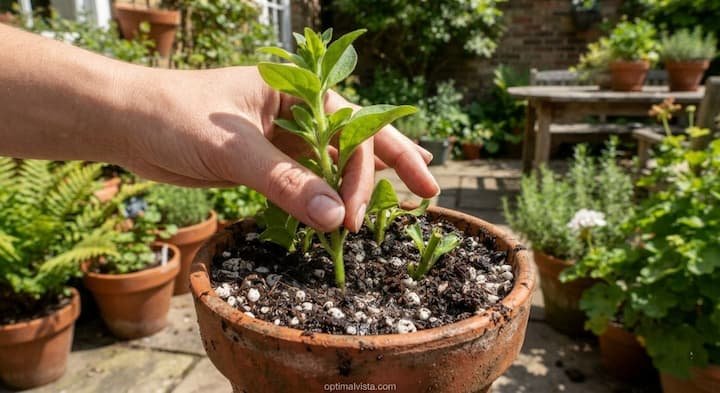
- Pinch tips at planting, when plants are 4 to 6 inches tall, to stop petunias from getting leggy later. Remove about 1/2 inch of the top growth, since losing the first flower means more blooms down the road.
- Space mounding types 8 to 12 inches apart, and Wave types 12 to 24 inches apart.
- Use a pot at least 12 inches wide, which holds about 2 to 3 gallons of mix.
- Choose a light potting mix, never heavy backyard dirt, and check for drainage holes.
The right petunia soil mix drains fast but holds enough moisture, and the basics of potted petunias are easy to follow.
How to Stop Petunias From Getting Leggy: Feeding, Water, and Trim Routine
A simple routine does most of the work. Mix slow-release granules into the soil at planting, then give a balanced liquid feed, such as a 10-10-10 or a bloom formula with a bit more phosphorus, mixed per gallon at the label rate, every 1 to 2 weeks in pots and every 2 to 3 weeks in beds.
Skip lawn fertilizer. Water pots daily in summer and twice a day in hot, dry spells, while beds need about 1 inch of water per week. Keep moisture steady, letting the top inch of soil barely dry out between waterings. Take the tips off every two to three weeks, and check for spent blooms every 3 days.
Hanging Baskets and Containers Need Extra Attention
Small soil volume is the problem. A basket in full sun can dry out in a few hours, and every watering flushes out some nutrients. Baskets on my backyard deck dry out by mid-afternoon in July, so twice-a-day checks are normal.
- Pick baskets at least 12 inches wide so the soil holds more water.
- Add slow-release fertilizer in spring, then liquid feed through summer.
- Cut back leggy petunias in baskets by one-third before stems hang far below the rim.
- If a basket dries out completely, soak it in a 5-gallon bucket of water for 15 to 20 minutes.
Zone and Region Tips for Your Yard
Petunias are annuals, but your USDA zone still sets the calendar. The weather changes the timing, but the same routine to stop petunias from getting leggy works everywhere.
In USDA Zones 4 and 5, plant after the last frost, usually mid to late May, and plan one big trim around mid-July. In USDA Zones 6, 7 and 8, summers run hotter and the slump hits sooner, so trim in late June or early July and give pots afternoon shade when highs pass 90°F.
In USDA Zones 9 and 10, treat petunias as Fall-to-spring plants, since summer heat is rough on them.
Pests and Diseases That Look Like Legginess
Sometimes bare stems come from something chewing or rotting, not stretching.
- Budworms: Small green caterpillars chew buds and flowers. Pick them off at dusk, or try natural pest control such as Bt spray.
- Aphids: Sticky leaves and twisted tips. A strong spray of water knocks them off.
- Spider mites: Fine webbing and speckled leaves in hot, dry weather.
- Gray mold: Fuzzy gray patches on spent flowers in cool, wet weather. Remove them and give plants room.
- Root rot: Soggy soil, wilting even when wet, and yellow leaves. Read about yellowing leaves.
- Order matters: Treat the pest first, then revive leggy petunias with a trim.
Turn Your Cuttings Into Free Plants
Don’t toss the trimmings in the trash. Healthy tips root easily, and cuttings are easy to share, which community gardeners love. Cut 4-inch tips without flowers or buds, strip the lower leaves, and push the stems into moist potting mix.
Keep them in bright light, out of harsh sun, and roots form in about 2 to 3 weeks. I like to root a handful every July, because they make good backups for Fall baskets.
Late Season: Save the Plants or Replace Them?
If it’s mid-September and the stems still show green growth, you can revive leggy petunias with one more trim and a feeding. Plenty of petunias that look finished in late summer can still bloom until the first frost.
- Save them if stems are green, no disease is present, and frost is still a few weeks away.
- Replace them if stems are mostly brown and woody, disease has spread, or the weather has turned.
- Put diseased plants in the trash, not the compost pile.
Petunias handle a light frost near 32°F, but a hard freeze ends them. Take cuttings before then, or look at overwintering indoors to carry a favorite plant into spring.
Month-by-Month Care Calendar
In USDA Zones 4, 5, 6, 7 and 8, last frost dates range from late March to late May, so shift this schedule a few weeks earlier in the South and later in the North.
| Month | What to do |
|---|---|
| March to April | Start seeds under lights about 10 to 12 weeks before the last frost |
| May | Harden off for a week, plant after the last frost, pinch tips, add slow-release food |
| June | Start liquid feeding, deadhead every few days, trim the tips |
| July | Cut back stretched plants, then feed and water steadily |
| August | Do light trims and watch for budworms and mites |
| September | Make a final trim, feed once more, and take cuttings |
| October | Move pots or cuttings indoors before frost near 32°F |
Common Mistakes to Avoid
- Guessing at why petunias get leggy instead of checking light, soil, and stems first.
- Cutting every leaf off a stem, which leaves nothing to regrow from.
- Overfeeding to rush recovery, which only makes stems softer.
- Yanking spent blooms by hand and snapping the stems.
- Skipping tool cleaning between plants.
- Using lawn fertilizer on flowers.
- I think the biggest mistake is planting too tightly to get an instant full look.
Final Thoughts:
Now you know how to fix leggy petunias: find the cause, cut the stems back, then keep light, food, and water steady. Most plants show new shoots within a week and blooms in about three weeks. Keep trimming the tips every couple of weeks, and your pots and beds will stay full until fall frost.