
You water on schedule, keep it in a bright spot, and it still happens spider plant yellow leaves showing up week after week can feel like a mystery even to someone who’s been at this a while.
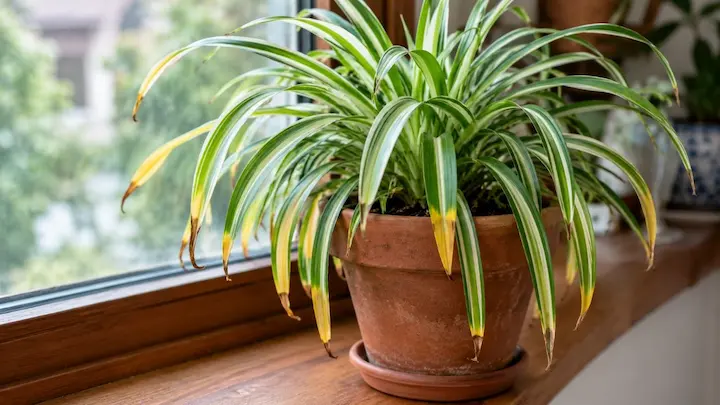
I’ve dealt with this exact issue on my own plants, and the cause is usually way simpler than people assume. Let’s break it down.
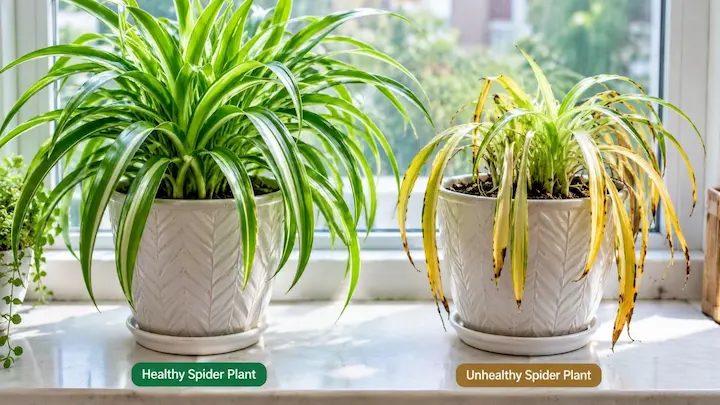
Yellow Leaves or Just Natural Variegation?
Spider plants (Chlorophytum comosum) naturally carry cream and pale stripes down the center or edge of each leaf that’s variegation, not damage, and which pattern you see depends on the cultivar.
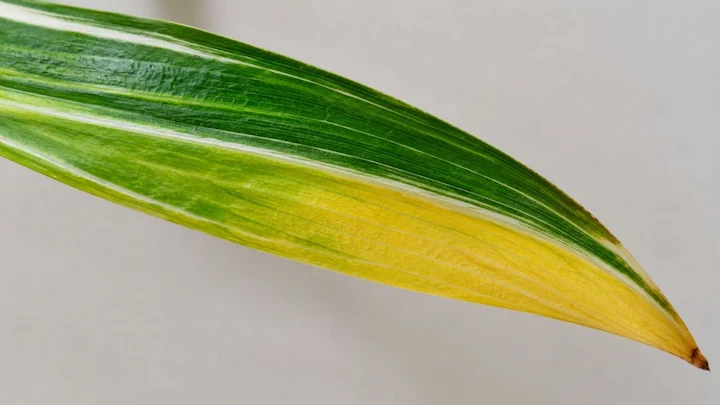
‘Vittatum’ has a light center stripe; ‘Variegatum’ has pale edges with a green center. If that color has been there since day one and looks symmetrical, your plant is fine. The real spider plant leaves turning yellow problem is solid yellow tissue on parts that used to be plain green.
- Variegated cultivars: the pale color is built in, not a symptom.
- Solid green cultivars: any yellow tint is worth checking.
- New leaves emerging pale yellow instead of the usual white stripe is a genuine red flag.
How to Diagnose Spider Plant Yellow Leaves in 3 Steps
Before fixing anything, figure out what you’re dealing with.
I always ask three questions first: Is the soil wet or dry right now? Is it older leaves or new growth? Any other symptom, like soft tissue or bugs? This is the step most people skip when they’re wondering why is my spider plant turning yellow in the first place.
| Cause | What You’ll See | Quick Fix |
|---|---|---|
| Overwatering | Soft, mushy, yellow leaves; soil wet for days | Let soil dry 2 inches deep before watering again |
| Underwatering | Dry, crispy yellow leaves; unusually light pot | Water deeply until it drains from the bottom |
| Too little light | Pale, faded, leggy growth | Move to bright, indirect light |
| Too much direct sun | Bleached or scorched patches | Filter light with a sheer curtain |
| Chlorine or fluoride | Yellow-to-brown leaf tips | Switch to filtered or rain water |
| Overfertilizing | Yellowing plus a crusty soil surface | Flush the soil, skip feeding for a month |
| Nutrient deficiency | Uniform pale leaves, slow growth | Diluted balanced fertilizer in the growing season |
| Pests | Yellow spots, webbing, sticky residue | Rinse leaves, apply insecticidal soap |
| Root rot | Foul smell, black, mushy roots | Trim roots, repot in fresh mix |
| Root-bound plant | Roots circling or poking out of drainage holes | Repot into a pot 1–2 inches larger |
| Cold drafts | Stunted new growth, patchy yellowing | Keep away from windows below 50°F |
| Wrong pot or material | Soil staying too wet or drying too fast | Match pot size to the plant; terracotta drains best |
Pests deserve their own breakdown since “insecticidal soap” alone doesn’t tell you what you’re looking at:
| Pest | Look For | Action |
|---|---|---|
| Spider mites | Fine webbing, tiny specks on leaf undersides | Rinse leaves, recheck in a few days |
| Mealybugs | White, cottony clusters near stems | Dab with rubbing alcohol, then neem oil |
| Aphids | Small clustered insects on new growth | Rinse off or spray insecticidal soap |
| Scale | Firm, flat bumps stuck to stems or leaves | Scrape off, then treat with horticultural oil |
Fixing Watering, Soil, and Water Quality
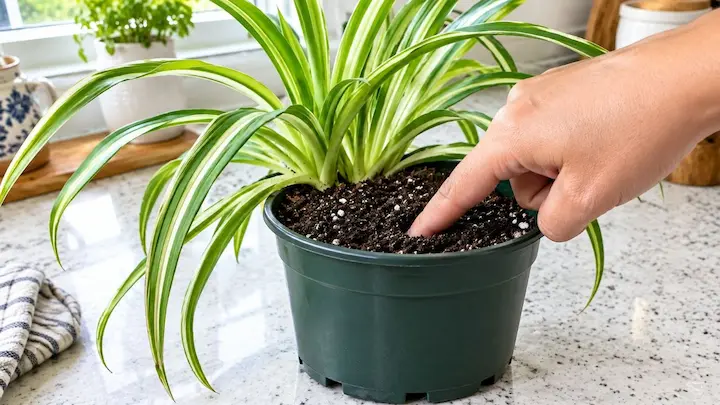
Most yellow leaves on spider plants trace back to water. Stick a finger 2 inches into the soil before watering again; if it’s still damp, wait. A cheap moisture meter takes the guesswork out.
- Water thoroughly (roughly half a gallon for a 6-inch pot) until it runs out the drainage holes, then let it drain fully don’t leave the pot in a full saucer.
- Leave tap water out overnight so some chlorine evaporates, though that won’t touch fluoride.
- If your water is heavily mineralized, switch to distilled water or rainwater instead.
The University of Arkansas Cooperative Extension: notes that fluoride builds up gradually in plant tissue until it hits a toxic threshold, and lily-family plants like spider plant are especially prone to this tip burn (source).
Soil pH between 6.0 and 6.5 keeps nutrients available, so if you’re still stuck, a cheap pH strip kit or a TDS meter for your tap water removes the guesswork. Pot material matters too: terracotta breathes and dries fastest, plastic holds moisture longest, glazed ceramic sits in between.
Rescuing a Plant With Root Rot
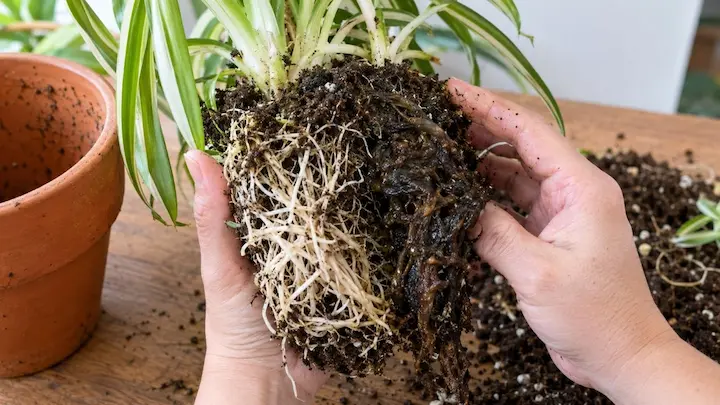
If yellowing is spreading fast and the crown feels soft, pull the plant out and check the roots. Healthy roots are firm and pale; rotted ones are dark, mushy, and smell sour. I’ve seen root rot wreck plants that looked healthy a week earlier.
- Rinse the root ball under running water so you can see clearly.
- Cut away any black or mushy roots with clean pruners.
- Toss the damaged material in the trash/garbage, not the compost pile, since rot pathogens can survive there.
- Repot in a fresh mix: 2 parts potting soil, 1 part perlite, 1 part compost (this compost ratio guide helps if you make your own).
- Skip fertilizer for at least 4 weeks after repotting.
The University of Florida IFAS Extension fact sheet on Chlorophytum comosum lists root rot in poorly drained soil as a documented problem for the species (source). Soggy soil is also the top reason people notice fungus gnats around the pot, confirming the diagnosis.
Special Situations: Repotting, Pups, and Water-Grown Plants
- After repotting: mild yellowing for a week or two is normal transplant shock; skip fertilizer and keep the soil lightly moist.
- Moved the plant to a new spot recently? A sudden shift in light or humidity can trigger temporary yellowing give it 2–3 weeks before judging the new spot.
- Attached pups turning yellow: check the parent plant’s health first, since pups pull resources from it.
- Separated pups: treat them like a baby plant steady moisture without soggy soil while roots establish.
- Growing in water: change the water weekly, since stale water starves roots of oxygen and causes the same yellowing you’d see in soil.
Do Different Spider Plant Varieties Yellow Differently?
I think this part gets overlooked a lot. Solid green cultivars show plain yellowing faster since there’s no white pattern hiding it, while heavily variegated types like ‘Vittatum’ just look washed-out before anything looks properly yellow.
Curly types (like Bonnie) hold moisture differently in their tight curls, so check near the base of the curl, not just the tip.
Winter vs. Summer Yellowing Patterns
| Season | What Changes | Bigger Risk |
|---|---|---|
| Winter | Lower light, slower soil drying, dry indoor heat | Overwatering |
| Summer | Stronger sun, faster-drying soil | Underwatering, sun scorch |
The season doesn’t cause yellowing directly it just shifts which mistake is more likely. In USDA Zones 4, 5, 6, or 7, winter heating dries the air more than the soil, so don’t confuse the two.
Outdoor pots in a backyard (common in USDA Zones 9–11) dry out faster and face more pests, while indoor plants tend to suffer from a fixed watering schedule instead.
Will Yellow Leaves Turn Green Again?
No, Once a leaf turns fully yellow, the chlorophyll is gone for good and it won’t turn back to green. Trim it off at the base with clean pruners; that won’t fix the underlying issue, but it tidies the plant up and makes new yellowing easier to spot.
If only the tip is affected, trim just that portion instead of the whole leaf. Losing one or two of the oldest leaves a month is completely normal aging, not something to fix.
When Spider Plant Turning Yellow Means Real Trouble
| Monitor | Act Soon | Urgent |
|---|---|---|
| One or two older leaves yellowing slowly | Yellowing spreading beyond the lower leaves | All leaves yellowing at once |
| No other symptoms | Growth noticeably slower than usual | Soft, smelly roots or rapid leaf drop |
Preventing Yellow Leaves Going Forward
- Water only when the top 2 inches of soil are dry.
- Feed a diluted 2-4-4 or balanced 4-4-4 fertilizer once every 4–6 weeks in spring and summer; skip it entirely in winter.
- Repot every 1–2 years, sizing up by 1–2 inches, once roots show at the drainage holes.
- If your pot spends summer on the porch or backyard, bring it back to a sheltered yard spot or indoors before the first Fall frost drops temps near 32°F.
- Wipe leaves occasionally so pests get caught early, not after they’ve spread; a neem oil spray every couple of weeks keeps mites and mealybugs from taking hold.
- Low humidity shows up as crispy, pale-yellow tips, so a pebble tray or light misting helps in dry indoor air.
- A community gardener friend of mine swears by a once-a-month diluted sugar-water feed for a little extra shine optional, but harmless.
Mistakes I See Gardeners Make
- Watering more the moment leaves turn yellow, when underwatering usually isn’t the real cause.
- Repotting into a huge pot “for growing room” which just holds excess water longer.
- Feeding heavily the moment growth slows, which is often the opposite of what the plant needs.
- Moving the plant around the house looking for a fix, which just piles stress on top of stress.
If you’re still asking why is my spider plant turning yellow after trying one fix, you likely corrected the wrong cause. In my experience, the fastest recoveries happen when you pick one likely cause, fix it, and leave the plant alone for two to three weeks.
The same watering-and-light logic carries over to almost every other houseplant on your windowsill. I’ve broken down nearly identical patterns for pothos leaves, peace lily leaves, ZZ plant leaves, orchid leaves, and snake plant leaves, plus a similar guide for sunflower leaves if you’re a community gardener working outdoors too.
Final Thoughts:
At the end of the day, spider plant yellow leaves almost always trace back to water, light, or root health rarely anything more complicated. Pick the pattern that matches your plant, make one change, and give it a few weeks. I like how forgiving this plant really is once you get the basics right; it rewards you with fresh, healthy growth before long.
Pingback: Tulips Turning Yellow? 7 Proven Fixes for Healthy Blooms