
Why does one basil taste like pizza night while its lookalike tastes like licorice? Both carry the same species name, yet they grow, cook, and handle your backyard in very different ways. This sweet basil vs thai basil care guide walks through how each one grows, what each one wants, and where each one belongs in your yard and your kitchen.

Short answer: sweet basil is the mild, tender, Italian-style herb that wants steady water and moderate heat, while Thai basil is the tougher, purple-stemmed, anise-flavored herb that handles heat and humidity better. Let’s get into the details.
What Is the Difference Between Sweet Basil and Thai Basil
Here’s the funny part: they’re the same species. The real difference between sweet basil and thai basil comes down to variety, flavor, and how each one handles heat and water. They do share green leaves and a knack for flavoring sauces, salads, and soups.
- Both are Ocimum basilicum and both belong to the mint family, so expect square stems and leaves growing in pairs.
- Sweet basil is the Genovese or Italian basil most of us grew up with.
- Thai basil is variety thyrsiflora and comes from Southeast Asia.
- Both are used fresh, and both are tender annuals in most of the country.
How to Tell Them Apart in the Nursery
Nursery tags often just say “basil,” so I always check the stem first. Thai basil has purple to magenta stems on nearly every variety, while sweet basil stems stay green.
A few sweet types like Purple Ruffles have burgundy leaves, but their stems are still green.
| Feature | Sweet Basil | Thai Basil |
|---|---|---|
| Stem | Green | Purple to deep magenta |
| Leaf | Broad, cupped, smooth or wavy edges | Narrow, pointed, serrated edges |
| Flowers | White to pale lavender, loose clusters | Purple spikes with pink-purple blooms |
| Height | About 1 to 2 feet, depends on the variety | About 1.5 to 2 feet, upright |
| Seeds | Glossy, round-oval | Smaller, matte, a bit angular |
Flip a leaf and check the edges too. Narrow and serrated means Thai. Broad and cupped means sweet.
Habit helps too. Thai basil grows compact, bushy, and upright, while sweet basil is more open and gets leggy without pruning. Thai leaves also look darker and feel rougher.
When Thai basil flowers, you get dense purple spikes with dark bracts, pretty enough that some community gardeners plant it as a border. If a tag says only “basil” and the stem is purple, it’s likely a Thai type like ‘Siam Queen’.

Thai Basil vs Sweet Basil Flavor and the Chemistry Behind It
Sweet basil tastes mild, slightly sweet, and peppery. Thai basil is bold, with anise and licorice notes and a light spicy kick. The reason is chemistry.
- Sweet basil leans on linalool, a floral compound that fades fast under heat.
- Thai basil leans on estragole, the same compound found in tarragon and fennel, and it holds up in a hot pan.
Here’s a fact that surprised me: researchers studying basil oils found that the oil chemotype had little connection to how varieties are classified within Ocimum basilicum (Grayer et al., 1996). So a shared species name tells you nothing about taste.
That’s the whole thai basil vs sweet basil flavor story: floral and gentle on one side, anise and tough on the other.
Which Basil to Use for Which Dish
The flavor split decides where each one goes in the kitchen.
- Thai basil: stir-fries, green and red curries, tom yum, pho, and spring rolls.
- Thai basil flowers: edible, and nice as a garnish.
- Sweet basil: caprese, pesto, pizza, bruschetta, and marinara added off the heat.
- Sweet basil: infused oils, vinegars, and baked dishes like lasagna.
- Thai basil vs sweet basil flavor in pesto: Thai basil turns it into a licorice sauce, so skip it.
I once tossed sweet basil into a screaming hot wok, and it browned in seconds and added nothing. In raw dishes like salads or fresh herb plates you can swap them, you’ll just get mild instead of anise.
If you must use Thai basil in an Italian dish, use less and add a little fresh parsley to soften the anise. If you must use sweet basil in a cooked Thai dish, a small pinch of fennel seed helps replace the missing anise note.
Thai basil also works in a Thai-style pesto with roasted peanuts, fish sauce, and lime. Chefs often drop whole Thai sprigs into simmering broth and pull them out before serving, like a bay leaf.
Sweet basil goes in last: tear or slice it after cooking, and try it in herb butter or compound salt.

Sun and Heat Needs
Both basils want 6 to 8 hours of direct sun. Partial shade slows growth and weakens flavor, though Thai basil copes with a little shade better than sweet basil.
- Sweet basil: happiest on mild to warm days, and above 90°F the leaves can turn yellow, flavor drops, and it flowers early.
- Thai basil: handles summer heat and humidity better.
Yellow leaves during a heat wave? Our guide on yellow basil leaves covers the other causes.
Best Soil and pH
Both want loose, well-draining soil packed with organic matter. Heavy clay in your yard just needs a little help.
- Loose, loamy, well-draining soil.
- pH between 6.0 and 7.5
- Compost or perlite mixed into heavy soil so water doesn’t sit around the roots.
Watering Differences
Anyone asking how to grow sweet basil usually fights the same problem: dry spells. Sweet basil needs about 1 inch of water a week, which is roughly 0.6 gallons per square foot. It wilts hard under heat stress and recovers slowly. Thai basil likes steadier moisture and shrugs off humidity.
- Water deeply when the top inch of soil feels dry.
- Water at the base, not over the leaves, to avoid fungal trouble.
- Spread 2 to 3 inches of mulch to hold moisture.
I like watering in the morning so the leaves dry out by afternoon. For a full schedule, see watering outdoor basil.

How to Grow Thai Basil: Sowing and Transplanting Timeline
Neither basil likes cold soil. Wait until the soil hits 65°F to 70°F before transplanting.
- Start seeds indoors 6 to 8 weeks before your last frost date.
- Germination takes about 5 to 10 days, and Thai basil is often a bit slower.
- Thai basil likes warmer soil, so sow it 1 to 2 weeks after sweet basil.
In colder areas, plan on transplanting in late May to early June. From Zone 8 south, April works once nights stay above 50°F. Our guide on when to plant has more timing, and basil from seed covers indoor starts.
Seed temperature matters too. Thai basil seeds germinate best around 75°F to 85°F, while sweet basil sprouts well at 65°F to 75°F. If you’d rather skip transplants, direct sow sweet basil outdoors after frost, once the soil is at least 70°F.
Spacing and Pot Size
- Sweet basil: 10 to 12 inches apart.
- Thai basil: 12 to 15 inches apart, since its bushy growth needs airflow.
- How to grow sweet basil in a container: use a pot at least 6 inches wide, though a 1-gallon pot is better.
- Thai basil in a pot: 10 inches wide or bigger, roughly 2 gallons.
Pots dry out faster than yard soil, so check them more often.
Fertilizer Schedule
Basil is a light feeder. Too much nitrogen gives you lots of leaves with less flavor.
- Mix in a balanced 5-5-5 organic fertilizer at planting.
- Feed again at mid-season.
- For potted plants, use a balanced liquid feed every 2 weeks.
Need product ideas? Check organic basil fertilizer.
How to Grow Sweet Basil Bushy: Pinching and Pruning Each One
Sweet basil gets leggy and top-heavy fast, so it needs regular pinching. Thai basil branches on its own, so I think it needs about half the pinching.
- Sweet basil: pinch just above the second set of leaves at 6 inches tall, then repeat every 2 to 3 weeks.
- Thai basil: pinch the tip once at 6 inches, then keep flower buds off.
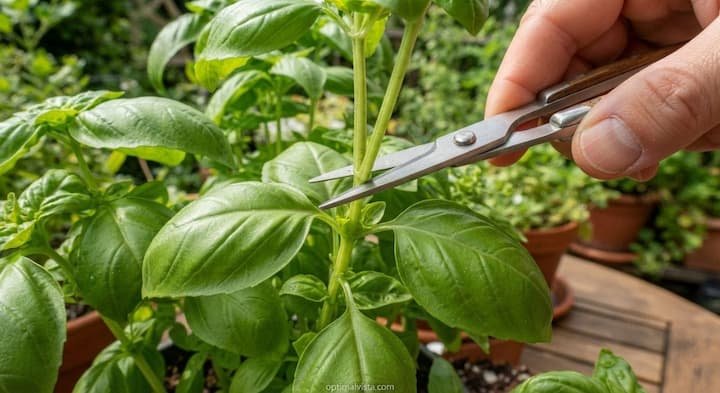
- Always cut right above a leaf pair so two new stems grow.
Never strip more than about a third of the plant at once. More on that in pruning basil.

Bolting: Which One Goes to Seed First
Sweet basil, especially Genovese, bolts earlier under heat stress. Thai basil holds out longer, though neither is bolt-proof.
- Pinch flower buds the moment you see them.
- Once a plant sets seed, leaf growth and flavor drop fast.
- Thai basil flowers are edible and tasty, while sweet basil flowers are milder.
Pests and Diseases
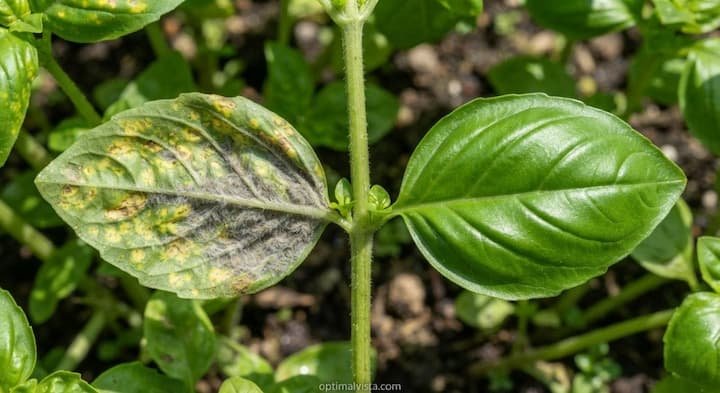
Downy mildew is the big one. Sweet basil, especially Genovese, is highly susceptible, and in humid yards you’ll often see yellowing and gray-white fuzz under the leaves by late July. Thai basil is much more resistant.
- Sweet basil pests: aphids, whiteflies, and spider mites.
- Thai basil pests: thrips and flea beetles.
- Resistant sweet basil picks: ‘Prospera’, ‘Rutgers Passion’, and ‘Rutgers Obsession’.
- Prevention: full sun, wide spacing, watering at soil level, and pulling infected leaves right away.
- Organic control: neem oil, insecticidal soap, ladybugs, lacewings, and marigolds nearby.
Sweet basil can also get powdery mildew, and stagnant, humid air makes both mildews worse. Bacterial spot can show up when leaves stay wet. After a bad season, plant basil in a different bed next year.
Aphids can also twist leaves, so see curling basil leaves if yours look off.
Cold, Overwintering and Growing Indoors
Frost kills both. Leaves blacken below 40°F, and Thai basil stops growing under 55°F. In USDA Zones 4, 5, 6, 7 and 8, treat both as annuals. In USDA Zones 9, 10 and 11, Thai basil can live on as a woody perennial, and sweet basil does the same only in Zones 10 and 11.
- How to grow thai basil indoors: give it your warmest, sunniest window or a grow light for 6 to 8 hours.
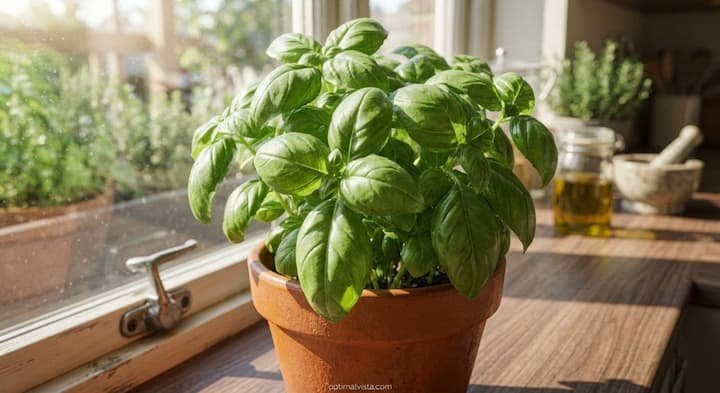
- Sweet basil indoors: same light, and slightly cooler rooms are fine.
- Bring pots inside before nights drop near 50°F.
For a full indoor setup, read growing basil indoors.
Can You Grow Sweet and Thai Basil Together
Yes. Their light, water, and soil needs are close, so they get along in one container 12 inches wide or bigger.
- Keep both pinched so neither bolts.
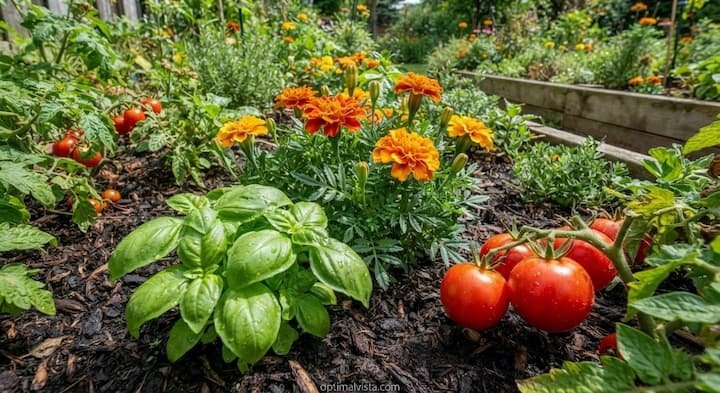
- Tomatoes make a good neighbor in the yard, and you can find more in basil companion plants.
- Watch out if you save seed: basil can cross-pollinate, so plants growing close together may give you mixed seedlings.
If you want true seed, read saving basil seeds first.
Harvesting and Storing Each One
Harvest before the flowers open for the best flavor, and pinch the top leaves so the plant keeps branching. Here’s a safe method: harvest basil safely.
In my experience, sweet basil turns black in the fridge because cold damages the leaves, usually below about 50°F and a fridge runs near 37°F. Thai basil handles the chill a bit better.
- Sweet basil: keep stems in a glass of water on the counter, out of direct sun.
- Thai basil: same glass method works great.
- Freezing: chop leaves into ice cube trays with a little water or oil.
More options in storing fresh basil.

Side-by-Side Sweet Basil vs Thai Basil Care Guide Table
| Care Point | Sweet Basil | Thai Basil |
|---|---|---|
| Sun | 6 to 8 hours | 6 to 8 hours, tolerates a little shade |
| Heat | Declines above 90°F | Handles heat and humidity better |
| Water | About 1 inch a week | Steady, even moisture |
| Soil pH | 6.0 to 7.5 | 6.0 to 7.5 |
| Spacing | 10 to 12 inches | 12 to 15 inches |
| Pot size | 1 gallon or larger | 2 gallons or larger |
| Pinching | Often, every 2 to 3 weeks | Once early, then buds |
| Downy mildew | Highly susceptible | Much more resistant |
| Bolting | Earlier | Later |
| Perennial in | USDA Zones 10 and 11 | USDA Zones 9, 10 and 11 |
Which One Is Easier to Grow for You
If you’re wondering how to grow thai basil with the least fuss, it’s the lower-maintenance pick in most yards. It grows taller, gives more leaves per plant, resists downy mildew, and bolts later. The trade-off is a flavor that fits fewer Western dishes.
- The difference between sweet basil and thai basil matters most in humid areas like the Southeast, Mid-Atlantic, and Pacific Northwest, where downy mildew hammers sweet basil.
- Dry climates like the Southwest: both do fine.
- Italian cook: grow sweet basil. Southeast Asian cook: grow Thai basil. Both: grow one of each.
- Both starts cost about $3 to $6 at the garden center.
Don’t Mix Them Up With Holy Basil and Other Types
Holy basil (Ocimum tenuiflorum) is a different species with a clove-peppery flavor. Traditional pad krapow uses holy basil, not Thai basil. Holy basil is hard to find in most US garden centers, so Thai basil is the common substitute. Look for holy basil seed at specialty Asian grocery stores or online seed suppliers.
Holy basil has small, fuzzy, toothed leaves that are often green and purple mottled. The taste is peppery and a little bitter with a medicinal punch, which is why it shows up in herbal tonics and religious offerings more than everyday stir-fries.
It’s also touchier about cold, living on as a perennial only in USDA Zones 10 and 11. If your Thai basil tastes strongly medicinal, you may have holy basil.
- Lemon basil: citrus flavor, narrow yellow-green leaves.
- Greek basil: small, crinkled, olive-green leaves.
- Cinnamon basil: warm cinnamon scent and reddish stems.
Common Mistakes and Quick Fixes
- Planting Thai basil in cold soil: wait for the warm weather.
- Putting sweet basil in the fridge: use a glass of water instead.
- Watering over the leaves: water at the base.
- Skipping pinching on sweet basil: pinch every 2 to 3 weeks.
- Overfeeding with nitrogen: stick to a light, balanced feed.
- Using Thai basil in pesto: save it for cooked dishes.
- Trusting the plant tag: check the stem color.
- Mistaking mildew for thirst: yellow leaves with gray fuzz underneath mean downy mildew, not dry soil.
- Leggy, bitter plants: you pinched too late or let flowers form.
Good news for pet owners: the ASPCA lists basil as non-toxic to cats and dogs.
Final Thoughts:
Now you’ve got the full sweet basil vs thai basil care guide. Sweet basil is ideal for Italian dishes if you keep it pinched and water it at the base. Thai basil handles heat, humidity, and downy mildew better and shines in cooked dishes. I’d grow one of each in the backyard and move on. Check the stem color, plant after soil warms, and harvest often.


Pingback: Why Are My Basil Leaves Curling? 14 Causes and Fixes