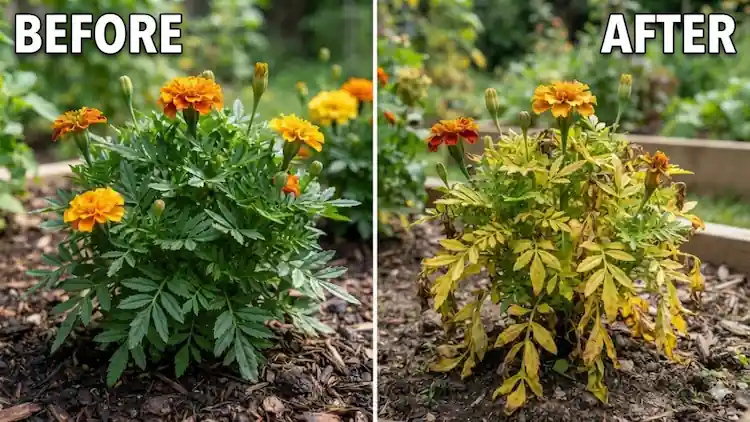
Ever notice how some sunflowers in your neighbor’s backyard bounce back looking stronger every spring, while others just collapse after the first hard frost?

I used to wonder about that too. After six years of growing sunflowers in my own yard, I’ve learned that sunflower winter care really comes down to a handful of simple habits done at the right time.
Whether you’re growing a towering annual or a perennial patch, here’s everything you need to protect your plants through the cold months.
Annual or Perennial? Know Your Sunflower Before Winter Hits
This is the one thing most guides skip, and honestly, it’s the most important. Most backyard sunflowers (Helianthus annuus) are annuals they bloom, produce seed, and die naturally once a hard freeze hits.
No amount of winterizing sunflower plants will bring an annual back; it’s simply done for the season once the frost takes it. Perennial types, like Maximilian sunflower, are different the top growth dies back, but the roots stay alive underground and re-sprout in spring.
It’s a similar seasonal pause to what gardeners see with phalaenopsis orchid winter care, where the plant rests instead of dying outright.
- Annual sunflowers: one growing season only, no need to protect the plant itself.
- Perennial sunflowers: roots go dormant, benefit from mulch and cold protection.
- Not sure which you have? Check the seed packet or ask at your local nursery.
I think this one distinction saves a lot of community gardener folks unnecessary work every fall.
When Does Cold Become a Real Threat?
Researchers at South Dakota State University Extension found that sunflowers can tolerate light frost fairly well, but tissue damage becomes likely once temperatures drop into the mid-20s°F, especially once the plant hits its flowering stage (SDSU Extension).
Here’s when I start taking action in the yard:
- Mulch once nighttime lows drop below 32°F consistently.
- Add row covers if temperatures stay below 20°F for several nights in a row.
- Move potted sunflowers indoors before 0°F hits containers freeze faster than ground soil.
- Stake or support tall stems before snow or winds above 25 mph roll in.
Winterizing Sunflower Plants: Fall Cleanup and Pruning
Before mulching, clean up the bed first, the same way you’d clear out your zucchini and eggplant rows once fall wraps up. Cutting back dead stems and spent flower heads removes hiding spots for disease, but there’s a trade-off worth knowing about.
| Choice | Benefit | Downside |
|---|---|---|
| Leave heads standing | Feeds birds, allows self-seeding | Less tidy backyard look |
| Cut back now | Cleaner beds, lower disease risk | No seed drop for next season |
- Cut stems down to the ground once foliage turns brown and dry.
- Sterilize your pruners between cuts with rubbing alcohol to avoid spreading disease.
- Toss diseased material in the trash, not your compost pile.
- Leave a few healthy stalks standing if you want a bird-feeding corner in your community garden plot.
Mulching: Your Best Defense Against Frozen Roots
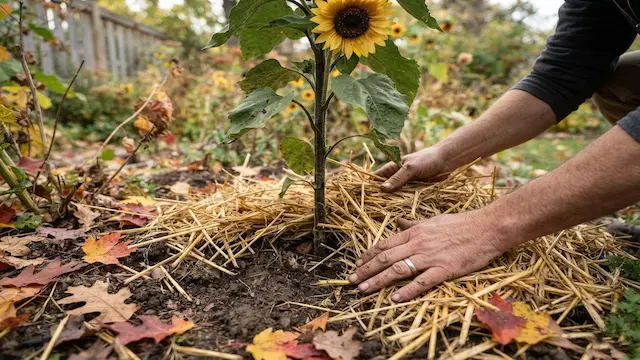
A layer of mulch 3 to 4 inches deep is honestly the single best thing you can do to protect roots headed into winter. Here’s how the common options compare:
| Mulch Type | Pros | Best For |
|---|---|---|
| Straw | Light, insulates well | USDA Zones 4-6 |
| Fallen leaves | Free, easy to find each fall | Any zone |
| Compost | Adds nutrients to soil | Poor or sandy soil |
| Wood or bark chips | Long-lasting, neat look | Front-yard flower beds |
- Apply mulch after the first hard frost, not before.
- Keep mulch 2 to 3 inches away from the stem to prevent rot.
- Pull mulch back gradually each spring once new growth appears.
Extra Protection When Temperatures Really Drop
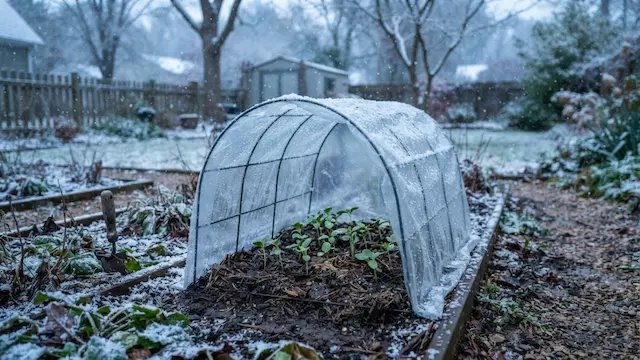
For USDA Zones 4 and 5, mulch alone often isn’t enough. A simple row cover or cloche over your perennial patch, added once the forecast shows sustained cold, traps a few extra degrees of warmth around the base.
That small buffer can be the difference between a plant surviving winter and one that doesn’t. Just pull the covers off once daytime temperatures climb back up in spring leaving them on too long can trap heat and actually stress the plant.
That same before-the-freeze mindset is what works for peace lily winter care too moving containers indoors ahead of a hard freeze beats scrambling after the damage is done.
Potted Sunflowers: Winterizing Made Simple
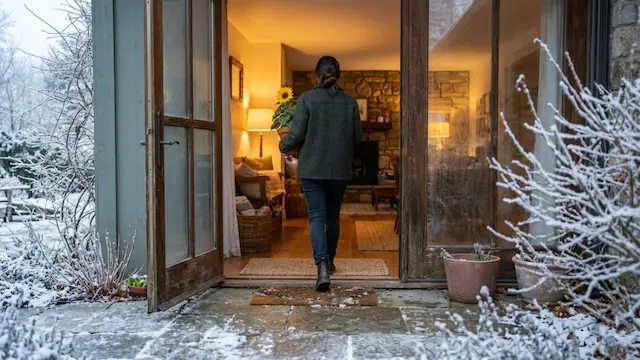
If you’re growing sunflowers in containers on a patio or small backyard, care looks a little different. Move pots into a garage, shed, or basement before hard freezes arrive roots need to stay out of freezing temperatures, but they don’t need light while dormant.
It’s a routine similar to how many gardeners handle pothos winter care, shifting container plants away from cold drafts each year.
Once the danger of frost has fully passed in spring, bring the pots back outside gradually over 5 to 7 days so the roots and stems can adjust to sunlight and temperature swings again instead of getting shocked.
Watering Before the Ground Freezes
Dry soil in winter can actually damage roots more than cold air does.
Water deeply, around 1 to 2 gallons per plant, before the first freeze so moisture is locked into the soil profile the roots stay mostly inactive after that, similar to how little watering snake plant winter care needs once it settles into dormancy.
Fertilizing Sunflowers Before Winter
It’s worth testing your soil pH in fall sunflowers prefer slightly acidic to neutral soil, and getting the nutrients right now gives the roots a head start before next season’s planting begins.
- Work in lime if your soil test shows low pH, following the rate on the test report.
- Apply a balanced 10-10-10 fertilizer at about 1 pound per 100 square feet, 6 to 8 weeks before the ground freezes.
- Prefer something gentler? Organic options work too many backyard growers use worm castings as fertilizer to feed soil microbes without the risk of burning roots.
- Skip fertilizing again once temperatures drop consistently below 40°F, since dormant roots can’t use the extra nutrients anyway.
Best Cold-Hardy Sunflower Varieties for Your Yard
If you live somewhere with harsh winters, picking the right variety upfront cuts down on protecting sunflowers in winter later on.
- Teddy Bear sunflowers: compact, fluffy blooms, handles USDA Zones 4-9.
- Dwarf sunflowers: shorter stems resist wind and snow damage.
- Maximilian sunflower: true perennial, hardy through Zone 3.
These varieties have become a favorite in backyard and community garden circles I’ve talked to, mostly because they need less babysitting once cold weather arrives the same low-fuss appeal that makes zz plant winter care such an easy routine indoors.
Harvesting and Storing Sunflower Seeds for Next Year
Before your plants fully die back, this step is worth doing:
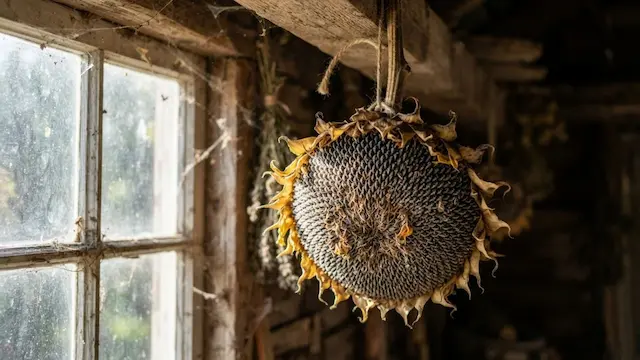
- Cut the flower head once the back turns brown and petals drop.
- Hang it upside down in a dry, ventilated spot, never a sealed bag, or it molds fast.
- Rub seeds loose by hand once fully dry, usually 2 to 3 weeks.
- Store seeds in a paper envelope in a cool, dry spot until spring.
I learned the hard way that sealing a damp head in plastic turns it moldy within days.
Watch for Winter Pests and Disease
Caring for sunflowers in cold weather doesn’t stop once the mulch is down. Dead plant material left in the yard over winter can shelter aphids, fungal spores, and other pests that resurface in spring.
Cleaning the bed each fall, as covered above, is your best defense. Keep an eye out for gray mold (Botrytis cinerea), a fungal disease documented on sunflower heads by researchers at Rothamsted Research (Rothamsted Research) it’s one of the more common issues gardeners report after wet, mild winters.
If you notice fuzzy gray growth on old flower heads, remove and trash that material right away.
Sunflower Winter Care by USDA Zone
Your approach to overwintering sunflowers shifts quite a bit depending on where your backyard sits on the map:
| USDA Zone | Typical Winter Low | Action Needed |
|---|---|---|
| Zone 8 | 20°F | Light mulch, minimal protection |
| Zone 7 | 10°F | Mulch plus row cover for perennials |
| Zone 6 | 0°F | Mulch, cover, move pots indoors |
| Zone 5 | -10°F | Full winterizing, indoor storage for pots |
| Zone 4 | -20°F | Heavy mulch, move all potted plants indoors |
Final Thoughts:
At the end of the day, sunflower winter care isn’t about babying your plants it’s about a few smart habits done on time: mulch before the deep freeze, water before the ground locks up, and know whether you’re dealing with an annual or perennial from the start. I’ve followed this same routine in my own backyard for years, and it hasn’t let me down yet. Get these basics right, and your sunflowers will reward you with color again come spring.