I get asked this constantly in my community gardener group every fall how often to water spider plant in winter, once the plant just seems to stop growing?
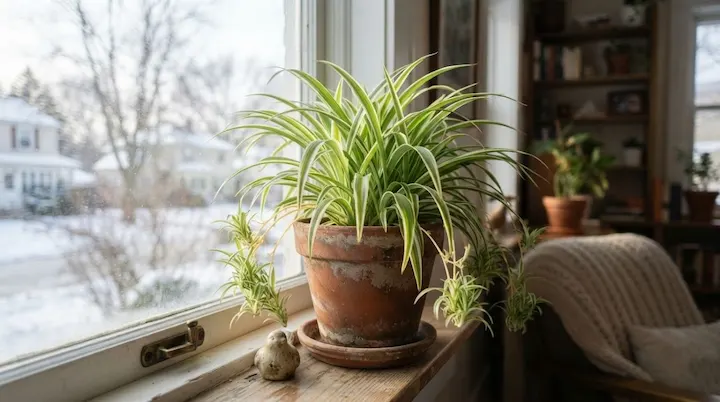
After six years of keeping a windowsill full of these things, I can tell you it isn’t about counting days. It’s a soil-reading habit, and here’s exactly how I do it.
Why Your Spider Plant’s Winter Watering Needs Drop
Once daylight hours shrink, your spider plant slows way down. Less light means less photosynthesis, and less photosynthesis means the roots pull far less moisture from the soil.
Spider plants (Chlorophytum comosum) also store water in their thick, almost tuberous roots that’s their built-in drought insurance, and it’s a big reason watering spider plants in winter looks so different from summer care. Compare that to a thirsty summer bloomer like sunflowers, which I cover in my how often to water sunflowers guide, and you’ll see just how much the season flips a plant’s water demand.
Here’s a fact I find genuinely useful: according to the New York Botanical Garden, Chlorophytum comosum is native to parts of coastal Africa that go through a real winter dry season, so this plant is naturally wired to expect less water this time of year.
I think that’s the piece most care guides skip the “why” behind the whole slowdown, not just the schedule.
How to Check If Your Spider Plant Actually Needs Water
Forget the calendar. This is the part I lean on the most:
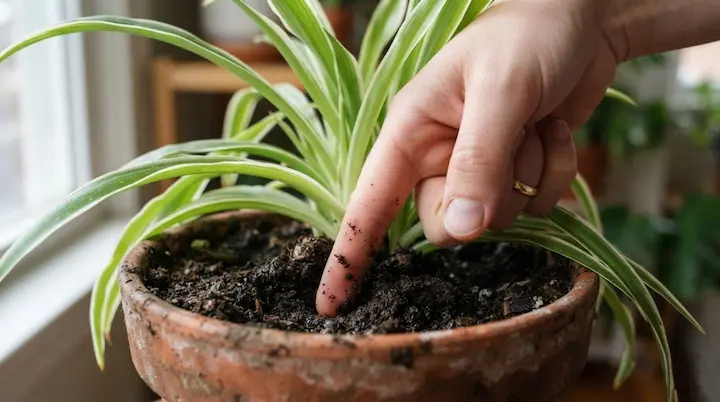
- Finger test: Push your finger 1 to 2 inches into the soil. Dry all the way down? Time to water. Still cool or damp? Wait a few more days.
- Moisture meter: If you don’t trust your finger, a cheap meter takes the guesswork out completely.
- Leaf clues: A slight droop, faint browning along the leaf edges, or leaves starting to curl inward all mean the plant is getting thirsty.
- Soil pulling from the pot: A visible gap between the soil and the pot wall means that soil has been dry for a while.
In my experience, the finger test alone gets you 90% of the way there I only pull out the meter when I’m second-guessing myself.
How Often to Water Spider Plant in Winter: By Soil Dryness
This depends on your home’s conditions, not a universal schedule. Here’s the breakdown I actually follow:
| Top-Inch Soil Condition | Water Interval |
|---|---|
| Barely dry | Every 2 weeks |
| Dry, no cracking | Every 3 weeks |
| Dry with a light crust | Every 4-5 weeks |
| Hard and cracked | Every 6 weeks |
| Still cool or damp | Skip, recheck in a few days |
If you’re gardening in colder USDA Zones 4, 5, and 6, your indoor heating runs longer through winter, which can actually dry pots out faster near vents even though it’s freezing right outside.
In milder Zones 7 and 8, homes tend to run cooler overall, so you can often stretch the gap a bit longer. Either way, your spider plant winter watering schedule should follow the pot, not the outdoor thermometer.
The Right Way to Water Your Spider Plant This Season
Checking the soil is half the job how you water matters too:
- Use room-temperature water. Cold water straight from the tap can shock the roots.
- Let tap water sit out overnight in an open container so chlorine and fluoride dissipate spider plants are sensitive to both and will show it as brown leaf tips. If your tap water is especially hard, distilled water or collected rainwater works even better and skips the chemical buildup entirely.
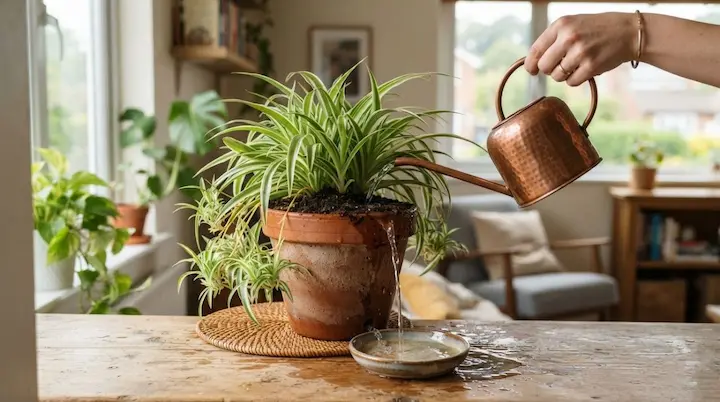
- Water slowly and thoroughly until it runs out the drainage holes, roughly 1-2 cups for a 6-inch pot (up to half a gallon for larger floor pots).
- Always empty the saucer afterward. Standing water is the fastest route to root rot.
- Bottom watering works too set the pot in a tray of water for 10-15 minutes, then let it drain.
I always water in the morning so any excess has the whole day to drain and evaporate before night temperatures drop.
Factors That Affect Your Spider Plant Winter Watering Schedule
Winter watering frequency for spider plants isn’t fixed it swings with a handful of conditions:
- Light: A bright window means slightly faster drying; a dim corner of a backyard sunroom means longer gaps.
- Temperature: Homes running 65°F to 70°F dry out faster than ones sitting closer to 60°F.
- Humidity: Dry winter air from central heating increases water loss through the leaves, though spider plants tolerate it better than most houseplants.
- Pot material: Terracotta breathes and dries faster than plastic or ceramic.
- Pot size: Smaller pots dry out quicker than larger ones with more soil volume.
- Soil type: A loose, well-draining mix dries out faster than a heavy, compacted potting soil, so check that inch of soil a little sooner if you’re using a lighter blend.
If you’re comparing notes with other low-water houseplants, a snake plant can actually go even longer between waterings than a spider plant I break that comparison down fully in my snake plant winter watering guide.
Overwatering vs Underwatering And Mistakes to Avoid
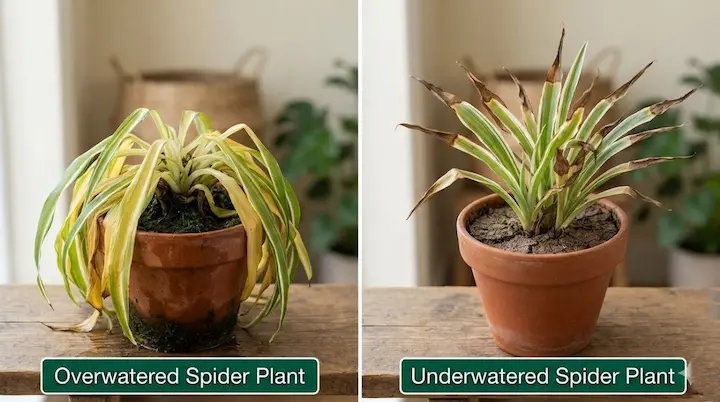
People often ask how often should you water a spider plant during winter once root rot has already started the honest answer is less, and much more carefully.
| Symptom | Likely Cause | Fix |
|---|---|---|
| Yellow, soft, mushy leaves | Overwatering | Stop watering, check drainage |
| Brown, crispy leaf tips | Underwatering or hard water | Water sooner, switch to distilled water |
| Musty smell from soil | Root rot starting | Repot, trim away rotted roots |
| Wilting with wet soil | Root rot / poor drainage | Same as above |
| Wilting with dry soil | Underwatering | Give it a thorough deep soak |
The most common mistakes I see from other community gardeners:
- Watering on a fixed schedule instead of checking the soil first.
- Using pots with no drainage holes.
- Placing the pot near a heating vent that dries the top layer while the roots stay soggy underneath.
- Fertilizing during winter dormancy.
If root rot has already set in, don’t panic I’ve pulled plants back from the edge before, and I walk through the full rescue process in my root rot in houseplants guide.
Other Winter Care Tips for a Healthy Spider Plant
- Fertilizer: Stop feeding completely from November through March. The plant isn’t actively growing, so fertilizer just sits in the soil and can burn the roots. Resume a balanced, diluted feed once you see new leaf growth in spring that’s your cue the plant is out of dormancy. If you’re also managing a compost pile through the cold months, I’ve got a full guide on how to speed up decomposition in winter worth checking out.
- Humidity: Keep it above 40% if you can a small humidifier or a light misting helps.
- Placement: Keep the plant at least 3 feet from drafty windows, radiators, and heating vents; a bright, indirect spot is ideal.
- Pruning: Trim any mushy or yellowed leaves with clean pruners and toss them in the trash rather than the compost pile, since damaged tissue can spread disease.
- Repotting: Skip it until spring. Slow winter growth means the plant won’t bounce back from root disturbance quickly.
- Going out of town? A self-watering pot or watering globe works fine, but set the reservoir low a dormant plant really doesn’t need much.
How Spider Plants Compare to Other Houseplants in Winter
If you’re managing a whole windowsill of plants and not just one spider plant, it helps to know none of them follow the same rulebook:
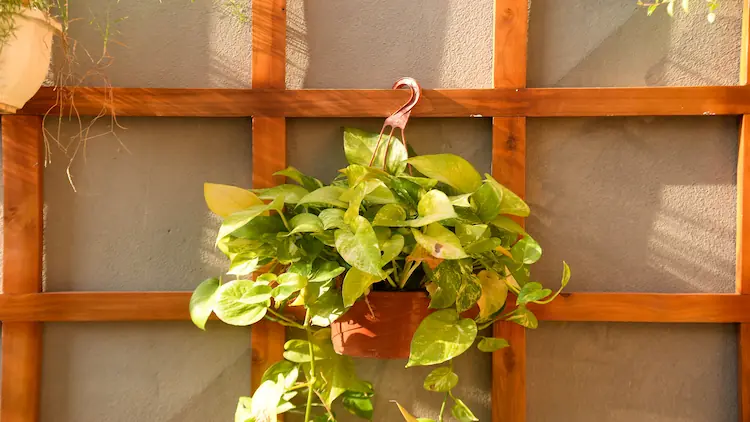
- Pothos: slows down too but tends to want water a touch more often see my pothos winter watering guide for the exact interval.
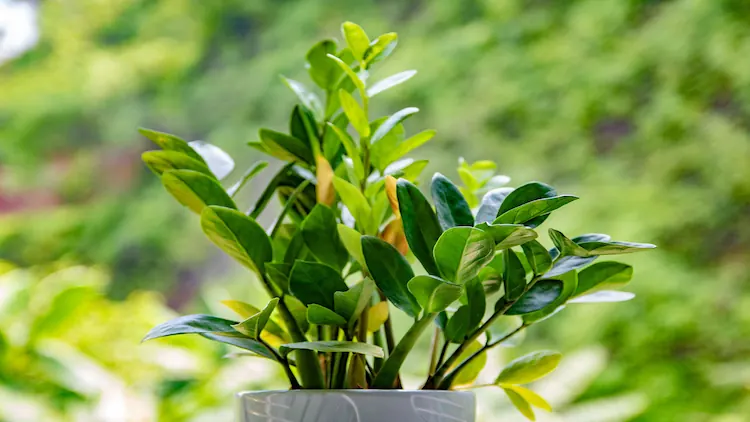
- ZZ plant: is even more drought-tolerant than a spider plant and can coast for a month or more full details in my ZZ plant winter watering guide.
- Peace lily: is the opposite story it likes consistently moist soil even in winter, so don’t apply the same dry-out rule; my peace lily winter watering guide covers that.
- Orchids: need a completely different watering method altogether check my orchid winter watering guide before you treat one like a spider plant.
Quick Recap: Spring/Summer vs Winter Watering
| Season | Watering Frequency |
|---|---|
| Spring/Summer | Every 7-10 days |
| Fall | Every 10-14 days |
| Winter | Every 2-4 weeks |
Once you spot fresh green-and-white color on new leaf growth in spring, that’s your cue to go back to a weekly schedule. Spider plants stay a favorite among community gardeners exactly because they’re this forgiving.
Final Thoughts:
At the end of the day, how often to water spider plant in winter isn’t about counting days on a calendar it’s about reading your soil and your room. I check mine every week, water maybe twice a month, and that’s carried it through six winters straight. Trust the finger test over the clock, and your spider plant will sail right into spring.