Ever wonder why some tulip beds come back thick and colorful every April while a neighbor’s patch just quietly disappears over the winter?
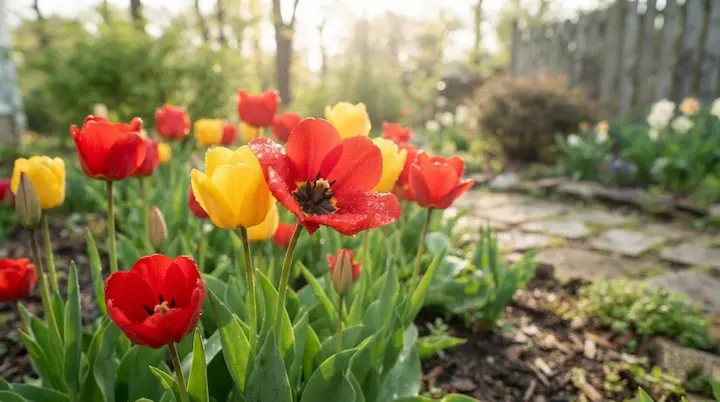
It almost never comes down to luck. Tulips winter care is really just a handful of small decisions depth, drainage, mulch timing, and water made at the right moment.
I’ve been growing bulbs in my own yard for about six years now, and once you understand what a dormant bulb actually needs, the whole thing stops feeling mysterious.
Tulips Winter Care: Zone-by-Zone Guide
Where you garden changes almost everything here. In USDA Zones 4, 5, 6, and 7, winter does most of the heavy lifting for you the ground stays cold enough, long enough, for bulbs to go through natural vernalization (the cold period that triggers spring blooming). You mainly just need to protect them from extreme swings.
In warmer regions USDA Zone 8 and up the ground rarely gets cold enough for long enough. Gardeners there usually have to dig bulbs up, or buy pre-chilled bulbs, and refrigerate them for several weeks before planting. Skip this step in a warm climate and you’ll likely still get leaves, just no flower, which is a frustrating way to lose a season.
| USDA Zone | Natural Chilling Sufficient? | What You Need to Do |
|---|---|---|
| 3–7 | Yes | Mulch, water sparingly, protect from pests |
| 8 | Marginal | Consider fridge chilling 8–10 weeks |
| 9–10 | No | Refrigerate bulbs, treat as annuals or pot indoors |
Best Time to Plant Tulip Bulbs Before Fall Frost
Plant your bulbs 6 to 8 weeks before the ground freezes solid for most of the country that means sometime in Fall, once soil temps drop below 60°F. Set them 6 to 8 inches deep, pointed side up, in soil that drains well.
If your yard tends to stay soggy, mix in some compost or sand, or move tulips to a raised bed. This single step is honestly how to care for tulips in winter the right way from day one everything after this is just protection and patience.
Space the bulbs about 4 to 6 inches apart. Planted too close, they compete for water; too far apart, and your spring display looks thin instead of like a full, colorful centerpiece for the yard. After planting, water once deeply roughly half a gallon per square foot to settle the soil around the bulbs before the ground firms up for winter.
Mulching Tulip Beds for Winter Protection
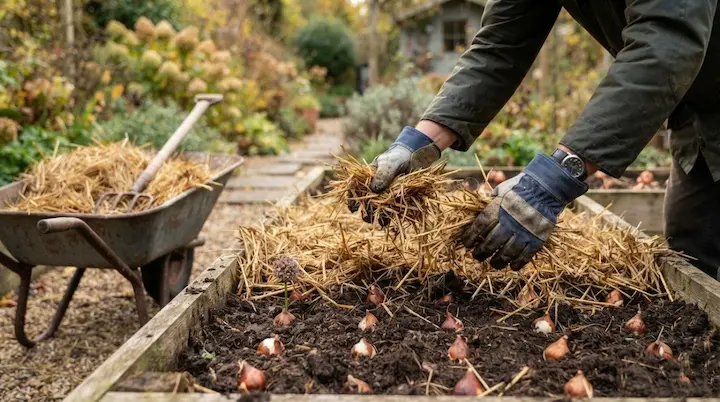
Once the ground has frozen not before lay down 2 to 3 inches of mulch over the bed. This keeps soil temperature stable through freeze-thaw cycles, which is what actually damages bulbs, not the cold itself.
I always point beginner gardeners toward this winter mulch protection breakdown when they ask what to use.
- Don’t pull mulch back until hard frost risk has passed in spring.
- 2 to 3 inches is the sweet spot more can trap too much moisture.
| Mulch Type | Insulation | Breaks Down | Best For |
|---|---|---|---|
| Straw | Good | Slow | Large beds |
| Shredded leaves | Excellent | Fast | Backyard plots, free and easy |
| Bark chips | Good | Very slow | Formal beds, tidy look |
| Pine needles | Moderate | Slow | Acidic-soil gardens |
How Much Water Do Dormant Tulip Bulbs Need?
Almost none, Dormant bulbs aren’t actively growing, so extra water just sits in the soil and invites rot especially in clay. Unless you’re in a dry stretch with zero snow cover, skip watering entirely once the ground freezes. If you do water, a light soak (no more than a gallon per square foot) is plenty.
Protecting Bulbs From Wind, Rodents, and Wildlife
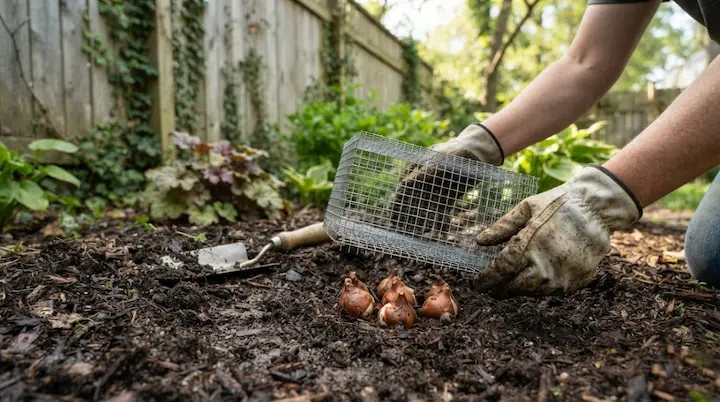
- Bury wire mesh a few inches below the bulbs to block digging rodents.
- Fence off beds if deer or rabbits are a problem in your backyard.
- Use evergreen shrubs or a temporary barrier as a windbreak to stop soil from drying out.
- Community gardener plots benefit from shared fencing since animals target the whole row, not just one bed.
- Scatter blood meal or predator urine granules around the bed edge the smell keeps squirrels and voles from digging in the first place.
- Tuck a few soap shavings or a handful of human hair into the top few inches of soil; both are cheap, natural deterrents pruners-and-gloves gardeners already have on hand.
- Plant daffodils or alliums along the border rodents avoid both, so they act as a living fence around your tulips.
Caring for Tulips in Winter Once They’re Already Planted
If your bulbs went in months ago, winter care mostly means leaving them alone. Don’t fertilize, don’t dig around them, and don’t remove mulch on the first warm day that’s the timing mistake I made my first year, and half my bed suffered frost heaving because of it (bulbs literally pushed partway out of the soil by freeze-thaw cycles).
If you spot a heaved bulb, don’t panic just gently push it back down to its original depth with your hand, firm the soil around it, and pile a fresh 2 to 3 inches of mulch back over the spot. Bulbs caught early almost always bloom fine.

Signs Your Tulip Bulbs Are in Trouble
- Soft, mushy texture when you check a bulb = rot, usually from poor drainage.
- No sprout at all by the time neighbors’ tulips are up = bulb likely didn’t survive.
- Yellow, moldy-smelling soil around the bulb = overwatering or waterlogging.
If you spot any dead or damaged foliage once growth starts in spring, snip it away with clean pruners rather than pulling tugging can disturb bulbs that are still trying to root nearby.
Forcing Tulips Indoors for Winter Blooms
If you’d rather see color sooner, you can force tulips indoors. Not every bulb is built for this Triumph tulips are the classic pick because their stems stay sturdy in low indoor light, while Single Early and Double Early varieties bloom faster and need a slightly shorter chilling window than late-season types.
According to University of Wisconsin-Madison Extension horticulture educator Lisa Johnson, bulbs need a 12- to 16-week chilling period, starting around 45–50°F for the first few weeks and dropping to 38–42°F after that. A refrigerator drawer works fine just keep bulbs away from apples and other ripening fruit, since the ethylene gas they release can ruin the flower bud.
No fridge space? An unheated garage that stays above freezing, or a mulched cold frame outside, does the same job you’ll just need to check the temperature more often.
Once chilling is done:
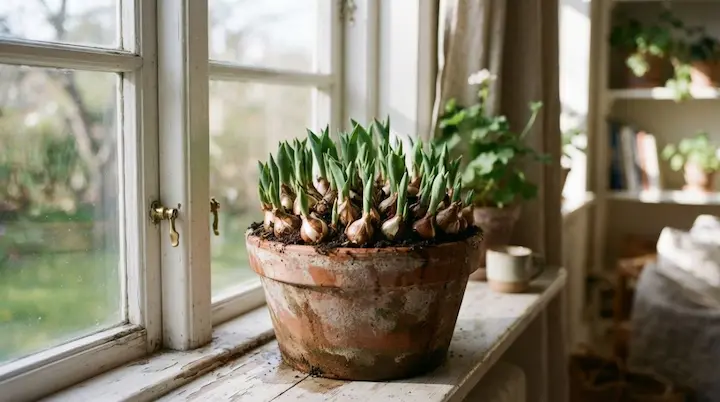
- Soil method: pack bulbs shoulder to shoulder in a pot with drainage holes, tips just showing.
- Water method: rest bulbs on pebbles in a jar, water just below the base never touching it, or it’ll rot.
This is really tulip winter care taken indoors, and it’s a nice option if you’re deciding when to bring houseplants indoors for the season anyway tulip pots can join the same cool spot. Once shoots turn from pale yellow to green, move the pot into brighter light gradually and turn it a quarter turn every few days so the stems grow straight instead of leaning hard toward the window.
Caring for Potted Tulips Left Outdoors
Containers freeze faster than garden soil since cold hits from all sides, not just the top. Wrap pots in burlap or move them against a house wall for extra insulation.
In my experience, caring for tulips in winter in containers really just means giving the pot the same mulch treatment you’d give a garden bed, plus a bit more wind protection.
If you’re already going down the winter-checklist rabbit hole for the rest of your yard and windowsill, it’s worth handling everything at once. I usually knock out spider plant winter care, snake plant winter care, pothos winter care, peace lily winter care, and phalaenopsis orchid winter care the same weekend I mulch my tulip beds, since most of it just comes down to less water and more careful placement.
Winter Care for Tulips: Mistakes to Avoid
- Planting too shallow (frost damage) or too deep (delayed sprouting).
- Skipping mulch, or removing it before the last hard frost.
- Overwatering: the single biggest killer of tulip bulbs.
- Ignoring pest signs: voles and squirrels can clean out a bed by spring.
- Ignoring your zone: winter care for tulips in Minnesota looks nothing like it does in Georgia.
Will Your Tulips Come Back Next Year?
I think this is the part most articles skip. Most large hybrid tulips the classic Darwin or Triumph varieties you see with rich color at the garden center tend to fade after a year or two in the ground, even with perfect care.
Even a well-mulched, well-drained bed can only do so much once a hybrid bulb has used up its stored energy on that first big bloom.
If you want tulips that reliably naturalize, look for species tulips instead; they’re smaller but far more likely to return year after year. When your hybrids do finish for good, pull the spent bulbs and add them to the compost pile rather than the trash they break down fast and won’t attract the rodents a garbage bag full of bulbs sometimes does.
It’s the same end-of-season cleanup logic as sunflower winter care clear out the spent plant material, compost what you can, and your bed is ready for next year.
Final Thoughts:
At the end of the day, tulips winter care isn’t complicated it’s mostly about picking the right depth, mulching at the right time, and resisting the urge to water or fuss with the bed once it’s dormant. Match your steps to your USDA zone, protect against rodents and wind, and your tulips will reward you with a full, colorful yard every spring.