Here’s something that surprises most gardeners: the same tomato plant can need a full gallon on Tuesday and nothing on Wednesday.
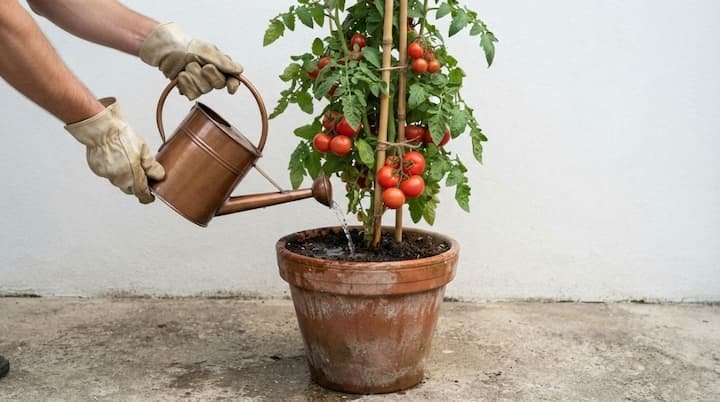
Rigid day-by-day plans are why so many harvests split, rot, or stall. So how often to water tomato plants, really? It depends on your soil, weather, and plant size, and this guide shows how to read all three.
How Often to Water Tomato Plants: The Real Baseline
Tomatoes are picky. When the soil gets too dry, growth stops, and when it stays too wet, the roots rot. No single schedule fits every yard, and calendar watering fails because a cool, cloudy Tuesday can turn into a hot, windy Wednesday.
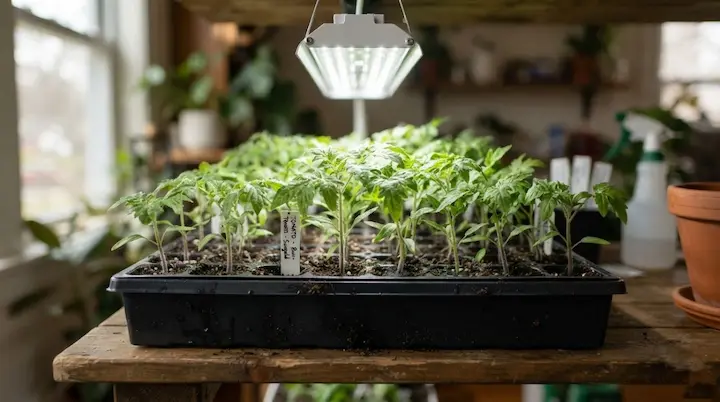
The baseline is about 1 inch of water per week, rain included, split into 1 to 2 deep soaks. Seedlings and new transplants need water daily or every 2 days, while mature plants do well with a deep soak 2 times a week.
Steady moisture beats big amounts, because dry-then-soaked swings split fruit and cause rot. A good tomato watering schedule is really just a soil check.
Fix for calendar watering: skip the calendar and push a finger 2 inches into the soil before each watering. Water only if it feels dry.
Here is how the pattern shifts with your setup:
| Growing setup | Typical frequency | Why |
|---|---|---|
| In-ground loam | 1 to 2 deep soaks per week | Big soil reservoir |
| Raised bed | 2 to 3 times per week | Sides and drainage dry it out |
| Sandy soil | Every 2 to 3 days | Water drains fast |
| Clay soil | Every 5 to 7 days | Holds moisture longer |
| Containers | Daily in warm weather | Small soil volume |
How to Check If Your Tomatoes Need Water
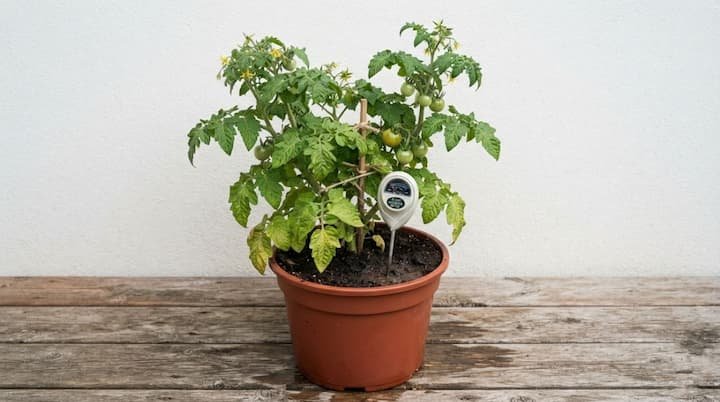
I like the finger test for quick checks: push a finger in to the first knuckle, about 1 inch, and water if it feels dry. For plants taller than 2 feet, use a trowel to check 2 to 3 inches down, about 4 inches from the stem. A dry surface can fool you, because the top inch dries fast in the sun while the roots below still have water.
- Tools that help: a trowel, a moisture meter pushed 4 to 6 inches deep, and a wooden chopstick that comes out clean when the soil is dry.
- Pot-lift test: lift the pot right after watering, then again each morning. Light means thirsty.
- Afternoon droop at 90°F that perks up by evening is heat stress, not thirst. Wilt that lasts until 7 AM means real trouble.
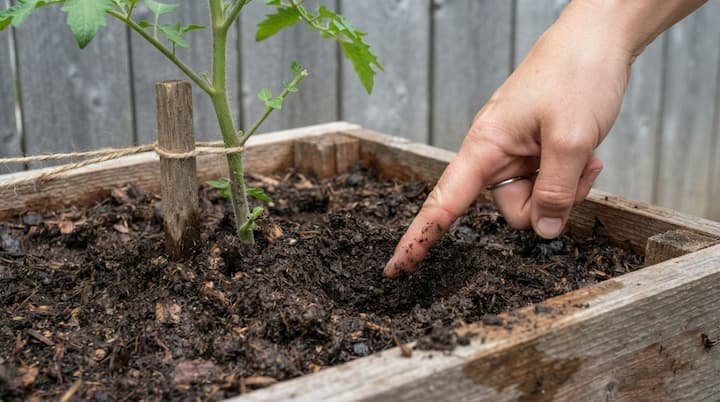
Run the 5-factor check before every watering:
- Root zone moisture 2 to 3 inches down.
- Weather over the last 3 days.
- Soil type or container size.
- Plant size and fruit load.
- Rain or irrigation in the last 3 days.
Then match what you see to an action:
- Surface dry, deeper soil moist: wait a day and check again.
- Soil dry 3 inches down: water 1 to 1.5 gallons.
- Droop at 3 PM but soil moist: wait until evening.
- Wilted at 7 AM and soil dry: water deeply right away.
- Wilted and soil soggy: stop watering and look at drainage.
- Hot, windy, and heavy with fruit: check every day.
Fix for wilting in soggy soil: hold all water for 3 days, then follow the overwatering steps below.
How Much Water Tomatoes Need in Gallons
The baseline is 1 inch per week. One inch over 1 square foot equals about 0.62 gallons, so a backyard plant that owns a 2 by 2 foot patch (4 square feet) needs about 2.5 gallons per week.
For in-ground plants, that works out to roughly 1 to 1.5 gallons per soak, 2 times a week. Depth matters as much as volume, and watering tomato plants deeply pushes roots down where the soil stays cooler.
A simple test: an hour after watering, dig down with a trowel and the soil should be damp 6 inches deep. If only the top 1 to 2 inches are wet, run the hose twice as long, at a trickle, until 6 inches are damp. On hard or clay soil that sheds water, pour 0.5 gallon, wait 15 minutes, then pour another 0.5 gallon, twice.
Variety and size change the numbers too. Determinate types stop at 3 to 4 feet and drink less than indeterminate vines that climb past 6 feet, and cherry types need a bit less than heavy beefsteaks.
In sandy soil, wind, or heavy fruiting, raise the total to 2 inches per week, about 5 gallons per plant. That is how much water tomatoes need at their peak.
Watering Tomatoes by Growth Stage
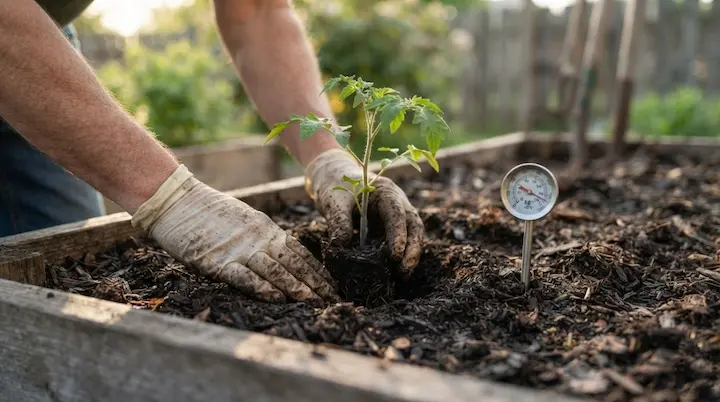
- Transplant day: soak with 1 to 1.5 gallons to settle the soil around the roots.
- First 1 to 2 weeks: check daily, because roots only cover about 6 inches.
- Rapid growth, weeks 3 to 6: shift to deeper, less frequent soaks.
- Flowering and fruiting: demand climbs, so avoid dry-then-wet swings.
- Ripening: keep the soil damp, but ease off by about a quarter. Never starve plants hoping for sweeter fruit.
| Stage | How often | Gallons per plant |
|---|---|---|
| Transplant day | Once | 1 to 1.5 |
| Weeks 1 to 2 | Every 1 to 2 days | About 0.5 |
| Weeks 3 to 6 | 2 times a week | 1 to 1.5 |
| Flowering and fruiting | 2 to 3 times a week | 1.5 to 2 |
| Ripening | 1 to 2 times a week | About 1 |
Fix for a plant that dried out during flowering: give 1 gallon slowly, wait 1 day, then return to 2 times a week. Don’t flood it to make up for lost time.
Watering by Soil Type and Bed Type
Sandy soil favors short gaps between soaks, so water every 2 to 3 days. Fix: mix 2 to 3 inches of finished compost, ideally from hot composting, into the top 8 inches, then mulch.
Clay holds water, so water every 5 to 7 days, and the fix for waterlogging is to loosen the bed 12 inches deep, mix in compost, and stay off wet beds. Loam is the easy baseline at 1 to 2 soaks a week. Raised beds dry faster, so water them 2 to 3 times a week.
The fix is 2 inches of mulch, a drip line, and beds at least 12 inches deep. In-ground beds hold a bigger moisture buffer than raised beds or pots.
Before you plan anything, run a drainage test: dig a 12 inch hole, fill it with water twice, and see if it’s still standing after 24 hours. If the soil stays soggy, add 3 inches of compost, build the bed 8 to 12 inches higher, and water every 7 days instead of every 3.
Watering Tomatoes in Pots and Grow Bags
Containers dry out fast because they hold so little soil. Watering tomatoes in pots takes daily attention in summer, and twice a day (7 AM and 4 PM) above 95°F or in strong wind.
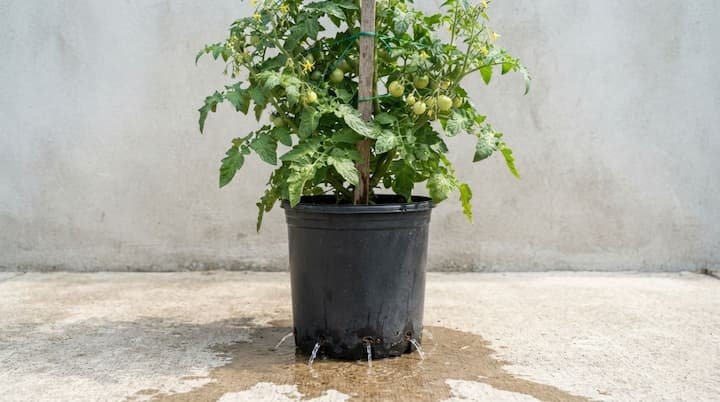
A 5-gallon pot often needs water every day, a 10-gallon pot every 1 to 2 days, and a 15-gallon pot about every 2 days. Water until 10 to 20 percent runs out the bottom, and never leave pots sitting in standing water.
If a pot dries out before the day ends, move up to 15 gallons, add 2 inches of mulch, and move it out of the 2 to 6 PM sun or shade it. If a pot stays soggy and smells bad, drill four 1/2 inch holes, mix in 30 percent perlite from a garden center, and empty the saucer after 15 minutes. Fabric grow bags and terra cotta dry fastest, plastic holds water longer, and self-watering tubs need a refill every 3 to 5 days.
Use potting mix, not garden soil, and add a handful of worm castings. Other vegetables in pots follow similar rules. For a bone-dry pot that repels water, set it in a tub with 6 inches of water for 30 minutes.
Watering by Season, Weather, and USDA Zone
Spring: wait until soil hits 60°F, and check when to plant for your zone or start seeds indoors 6 to 8 weeks early. Cool, wet soil needs water only every 5 to 7 days, so don’t water transplants into muddy soil. Wait 3 days instead.
- Summer heat above 85°F: check daily. In-ground plants still often need just 2 soaks a week. Before a heat wave, pre-soak with 1.5 gallons the day before.
- Wind and full sun pull water out quickly, so add 1 extra watering per week.
- Fix for heat wilt versus drought: if leaves recover by 8 PM, skip watering. If they are limp at 7 AM, give 1 gallon.
- Heavy rain: skip watering after 1 inch of rain. Fix for pooling water that lasts over 2 hours: dig a 4 inch drain trench, pull mulch back, and cover the bed with plastic.
- Dry spells and water limits: water at 5 AM, twice a week, with drip.
- Vacation: soak with 2 gallons, mulch 3 inches deep, and use a drip timer. Ask a neighbor to check after 7 days.
- Fall: once nights drop below 50°F, water every 7 to 10 days.
By USDA Zone, here is what I see community gardeners doing:
- Zones 2 to 4: short season, 2 soaks a week through July.
- Zones 5 to 7: across the Northeast and Midwest: the standard 1 inch per week.
- Zones 8 to 10: in the humid Southeast: watch rainfall closely, because wet leaves invite fungus.
- Zones 9 to 10: in the Southwest: 3 soaks a week once temperatures pass 100°F.
- Zones 8 to 9: in the Pacific Northwest: dry summers, so 2 deep soaks a week.
Best Time and Best Way to Water
I water around 7 AM so the leaves are dry by 10 AM. If a plant is truly dry at noon, water it right then, since waiting for tomorrow just adds stress. Evening watering leaves the foliage wet overnight, so finish by 6 PM at the latest.
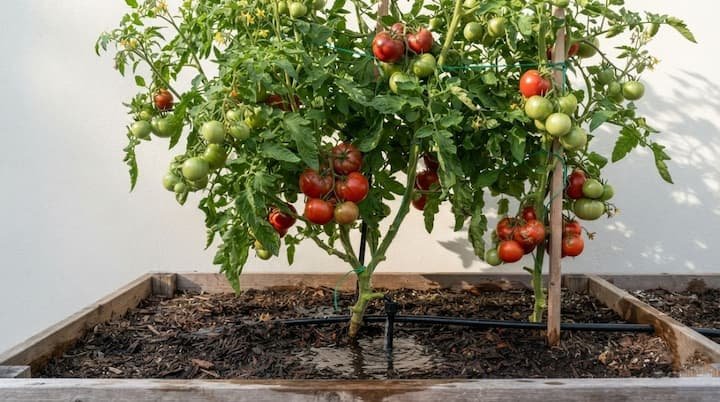
Water the soil, not the leaves, about 4 inches from the stem. Drip lines give the most even moisture, soaker hoses come close, and hand watering works fine for a few plants.
If you use overhead sprinklers, switch to drip, or run them before 6 AM for no more than 20 minutes. With a hose, use a wand at low flow and fill a 3 inch tall basin ring around each plant, about 30 seconds per plant. For drip timers, a 1 gallon-per-hour emitter running 90 minutes delivers 1.5 gallons, twice a week.
Mulch and Water-Saving Setups
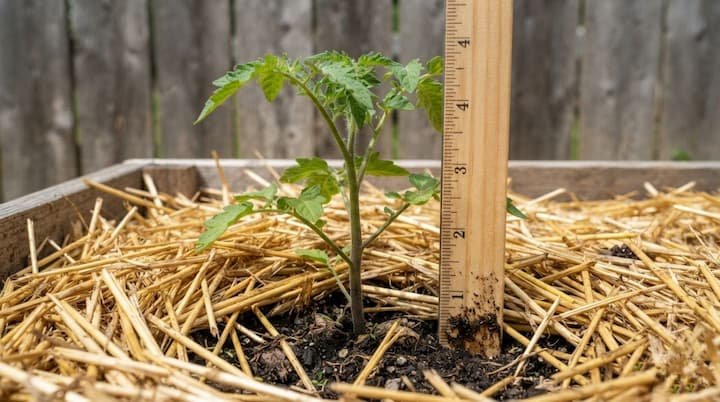
Mulch cuts evaporation and keeps soil cooler. Low companion plants like basil can shade the soil too. Use 2 to 3 inches of straw, shredded leaves, or clean grass clippings, kept 2 inches off the stem.
Mulch blocks soil splash, which keeps dirt off lower leaves, and straw also cuts splitting since it keeps moisture steady between soaks. I think straw beats wood chips because it breaks down in one season. If mulch is over 4 inches deep or touching the stem, pull it back to 2 to 3 inches and 2 inches away.
For water-saving gear, drip kits with timers and rain sensors take the guesswork out. A 50-gallon rain barrel, or a clean garbage can with a spigot, covers about 25 plants at 2 gallons each, and a buried clay olla needs a refill every 3 to 4 days. To fix a high water bill, run drip for 45 minutes twice a week instead of daily sprinkling.
Signs of Underwatering and How to Fix Them
Look for wilting that lasts into the morning, curling leaves, crispy edges, slow growth, and dropping flowers.
- Cause: shallow, infrequent watering. Fix: give 1.5 gallons twice a week instead of daily sips.
- Cause: sandy, fast-draining soil. Fix: mix in 3 inches of compost and add 2 inches of mulch.
- Cause: a small pot. Fix: repot into a 15-gallon container.
- Cause: heat and wind. Fix: pre-soak, mulch 3 inches deep, and check daily above 85°F.
- Recovery for a badly wilted plant: give 0.5 gallon slowly, wait 30 minutes, then add 1 gallon. Check again in 24 hours.
- Fix for soil that repels water: loosen the top 2 inches and water in 3 rounds, 10 minutes apart.
Signs of Overwatering and How to Fix Them
Watch for soggy soil, wilting in wet soil, yellow tomato leaves, weak growth, a sour smell, and mushy roots. Saturated soil pushes out air, and roots need oxygen to work.
- Cause: watering every afternoon droop. Fix: poke 2 inches deep first.
- Cause: poor drainage. Fix: add 3 inches of compost, drill holes in pots, or raise the bed 8 inches.
- Cause: a fixed schedule that ignores rain. Fix: skip 3 days after any 1 inch rain.
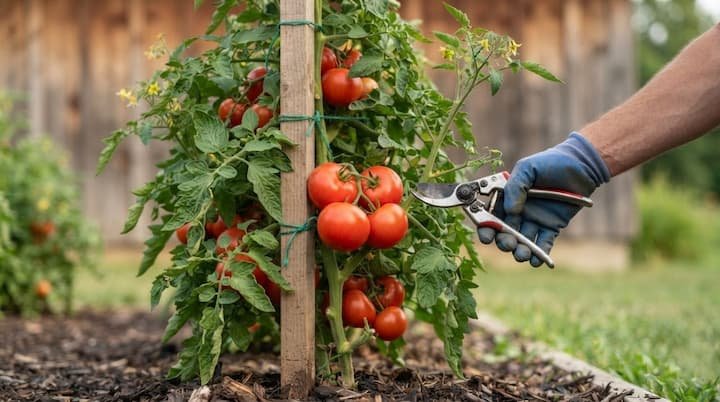
- Recovery steps: stop watering for 3 to 5 days, cut yellow or soggy leaves with clean pruners, water again only when the top inch is dry, skip deep soaks until then, fix drainage as above, and add 2 inches of mulch.
- Wilt in moist soil points to damaged roots or disease. Firm white roots are healthy. Brown, mushy ones mean root rot, so trim them and repot in fresh mix.
- Fix when over half the roots are mushy: pull the plant and set a new transplant 3 feet away.
Cracking, Blossom-End Rot, and Poor Fruit Set From Uneven Watering
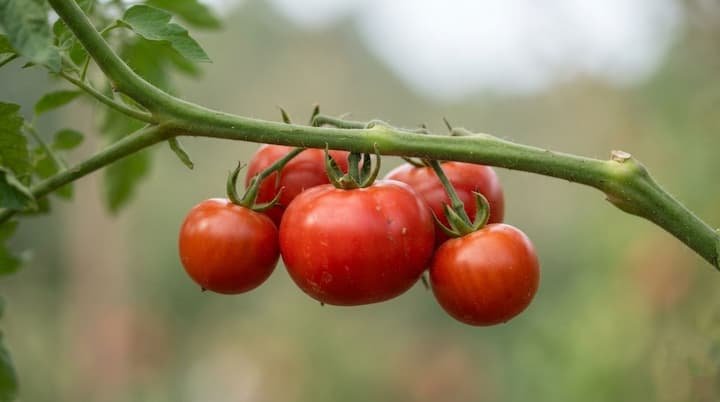
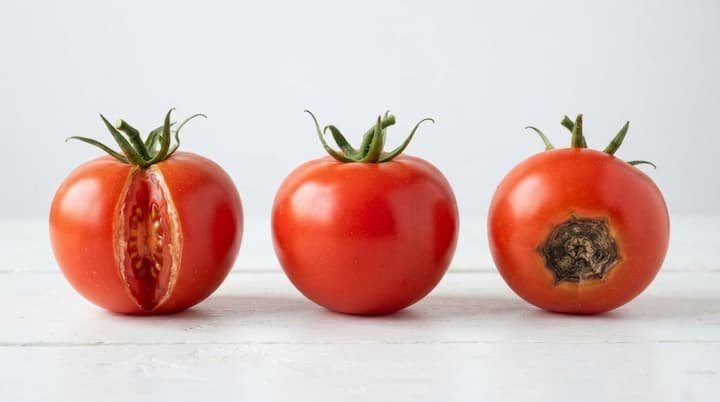
Cracking comes from a dry spell followed by a soak. Water 2 times a week, keep 2 to 3 inches of straw down, and check the soil daily. When over 1 inch of rain is forecast, pick fruit at first blush color and ripen it indoors at 65°F to 70°F.
Blossom-end rot is a calcium delivery problem. UW-Madison Extension says wide swings in soil moisture block calcium from reaching fruit even when the soil has plenty, and it recommends at least 1 inch of water weekly plus 2 to 3 inches of mulch. In my experience, uneven watering causes this far more often than low soil calcium. Fix: hold steady at 1 to 1.5 inches per week, pick off affected fruit, and run a soil test before adding any calcium.
Flower drop shows up when days pass 90°F or nights stay above 75°F. Fix: hang 30 percent shade cloth and water 1 gallon in the morning. Watery, bland fruit usually comes from too much water at ripening, so cut back to about 1 gallon per week. Quick recap:
- Cracking: steady moisture, mulch, 2 soaks a week.
- Blossom-end rot: 1 to 1.5 inches weekly, soil test first.
- Flower drop: 30 percent shade cloth and a 1 gallon morning soak.
When to Cut Back Watering at the End of the Season
Once fruit starts ripening, extra water splits tomatoes, makes them watery, and dulls flavor. Cut about a quarter of your usual volume, down to 1 gallon, 1 to 2 times a week, but never stop completely. Yellowing and drooping leaves late in fall are normal. Skip deep soaks, and give 0.5 gallon whenever the top 2 inches turn dry.
Before frost, water lightly the day before 32°F, because damp soil holds heat. Cover plants at 35°F, and pick green tomatoes before 32°F. If late rain splits fruit, pick at first blush color and cover the bed with plastic.
Safe Watering Practices
- Municipal water is fine. Test well water yearly, and use rainwater only from a clean roof.
- Use a drinking-water-safe hose, and flush the first 30 seconds from a hose baked in the sun.
- Greywater and contaminated water don’t belong on edibles. Fix: use tap or rainwater only.
- Wet leaves and splash spread disease. Fix: use drip, mulch 2 to 3 inches deep, and water before 10 AM.
- Fertilizer salts build up in pots. Fix: follow the label on your tomato fertilizer, and flush each 5-gallon pot with 1 extra gallon every month.
- Follow local water restrictions, water only on your allowed days, and save water with drip and mulch.
- Plug timers into an outdoor-rated GFCI outlet, or use battery models.
- Tomato foliage is toxic to cats and dogs, so keep pets out of the bed.
Common Watering Mistakes and a Prevention Routine
- Watering tomato plants by calendar. Fix: check 2 inches down first.
- Shallow sprinkling. Fix: soak 1 to 1.5 gallons, twice a week.
- Waiting for heavy wilt. Fix: check at 7 AM daily in summer.
- Watering every afternoon droop. Fix: water only if the soil is dry 2 inches down.
- Letting pots dry completely. Fix: use a 15-gallon pot and check daily.
- Soaking foliage. Fix: water 4 inches from the stem.
- Ignoring drainage. Fix: add 3 inches of compost or raise beds 8 inches.
- Treating rot with calcium alone. Fix: hold 1 to 1.5 inches per week first.
I run this 7-step routine every morning:
- Dig 2 to 3 inches down.
- Check the weather for 3 days.
- Think about the setup: pot, raised bed, sand, or loam.
- Consider plant size and fruit load.
- If the root zone is drying, water slowly.
- If it is still damp, wait.
- Dig again 1 hour later to confirm 6 inches are wet.
Prevention checklist: 2 to 3 inches of mulch, a drip line, 3 inches of compost, a 15-gallon pot minimum, and a timer. Next, learn how to prune tomato plants for better airflow.
Final Thoughts:
Now you know how often to water tomato plants without guessing. Check the soil, aim for about 1 inch per week, and adjust for heat, pots, and plant size. Steady beats soggy every time. This weekend, spread 2 to 3 inches of mulch and set a drip timer, then watch your plants settle in.