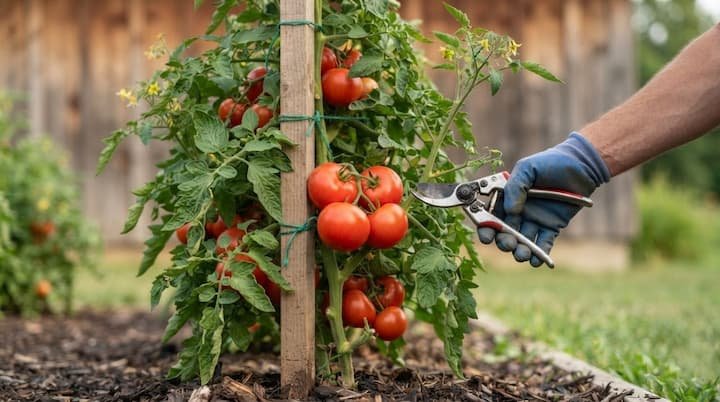
Ever notice some tomato beds look healthy all summer while the one next door gets chewed up by aphids and hornworms?
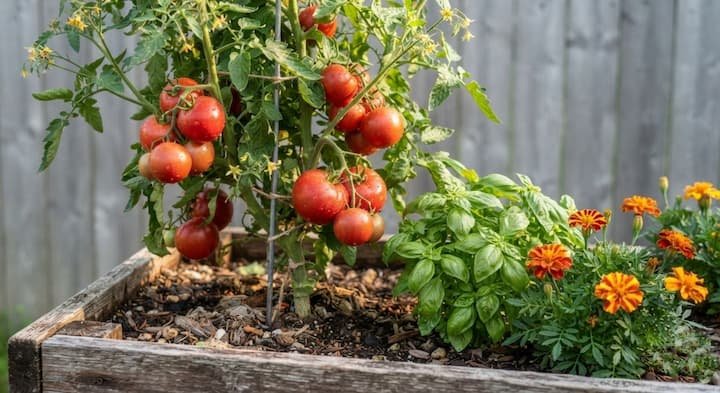
Part of that comes down to the neighbors. The right tomato companion plants can pull pests away, bring in pollinators, and feed the soil, while the wrong ones quietly drag your harvest down. Here’s what actually works, what’s just backyard folklore, and where to plant each one.
Why Tomato Companion Plants Actually Work
Every companion does one of five jobs. Once you know the job, picking the plant gets easy:
- Repel: strong scents from basil, garlic and chives make it harder for pests to find your tomatoes.
- Trap: nasturtiums pull aphids away from the plants you care about.
- Call in helpers: flowers feed hoverflies, lacewings and parasitic wasps that eat aphids and hornworms.
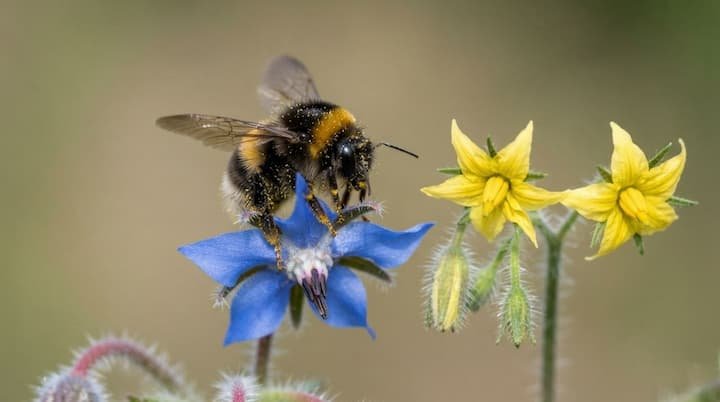
- Pollinate: borage and sunflowers bring in bumblebees, and bumblebees shake tomato flowers loose.
- Fix the soil: beans add nitrogen, carrots loosen the dirt, and some roots discourage nematodes.
A PLOS ONE study found that French marigolds protect tomatoes from whiteflies by releasing a compound called limonene. That’s real science, not backyard talk. Still, tomato companion planting lowers pest pressure, it doesn’t erase it.
Mixed plantings also make your bed harder for pests to find than a block of one crop. Think of it as one layer, next to weekly scouting and the occasional spray.
How Much Proof Is Behind Each Pairing
Not every pairing has the same backing, so here are three buckets:
- Proven: French marigolds against whiteflies and root-knot nematodes, onions against Verticillium wilt, cowpeas and white mustard against nematodes, beans for nitrogen.
- Mixed: basil against thrips and hornworms, marigold scent against hornworm moths, garlic masking the smell of ripening fruit.
- Folklore: “sweeter” tomatoes from basil, carrots or cilantro.
Folklore isn’t useless. I’ve grown basil next to tomatoes for six years and can’t taste any difference, but the plants look healthier and the basil keeps the root zone cooler.
Quick Pick Table: Spacing and Timing
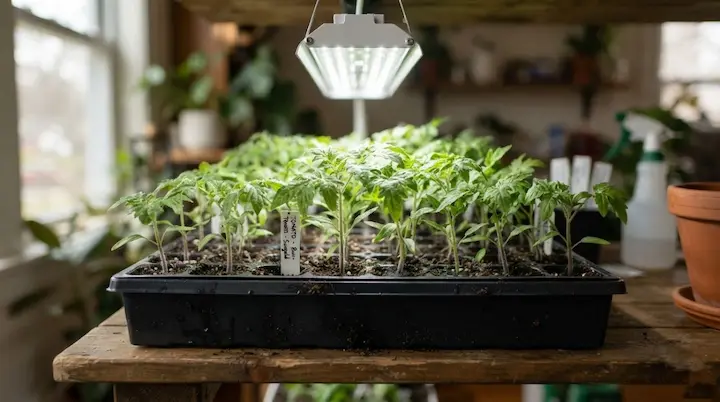
Use this as your cheat sheet. Set most companions out the same week you transplant, and check your planting dates first. Basil, marigolds and nasturtiums all grow easily from seed, so the same tray routine for starting seeds indoors works for them too.
| Plant | Main job | Proof | Distance from tomato | When to plant |
|---|---|---|---|---|
| Basil | Repels thrips, flies | Mixed | 8-12 inches | At transplant |
| French marigold | Whiteflies, nematodes | Proven | Bed border, 6-8 inches in | Early spring |
| Nasturtium | Aphid trap | Good | Bed edge, about 2 feet | At transplant |
| Borage | Bumblebees, wasps | Good | Bed ends, 2+ feet | Spring, reseeds |
| Chives, scallions | Mites, aphids, moths | Mixed | 6-8 inches | Early spring |
| Onions | Verticillium wilt | Proven | 6-8 inches | Early spring |
| Garlic | Mites, moths | Mixed | 6 inches | Fall before |
| Parsley, cilantro | Hoverflies | Good | 6-12 inches | Spring, let bloom |
| Carrots | Loosen soil | Practical | Between plants | Spring |
| Bush beans | Nitrogen | Proven | 12-18 inches | After last frost |
| Lettuce | Shade, moisture | Practical | Under the canopy | Spring or fall |
| Sweet alyssum | Feeds predators | Studied | Edges, ground level | Early spring |
Herb Companions That Earn Their Spot
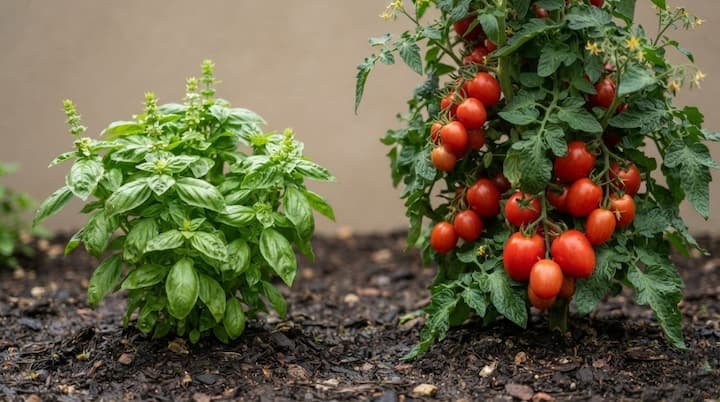
- Basil: repels flies and aphids. Keep it 8-12 inches back and pinch the tops so air moves freely. I think it’s the best starter pick because it’s cheap and you’ll eat it all summer.
- Chives and scallions: the onion smell confuses moths, and scallions fit right under the tomato canopy. Plant scallions the same day as your transplants and you get an early harvest too. Chive flowers feed bees.
- Garlic: goes in during fall and comes out midsummer, so leave gaps for your transplants or grow it as green garlic.
- Parsley: low and leafy, so it holds moisture and blocks weeds. Let a few plants bloom for hoverflies. Swallowtail butterflies may lay eggs on it, which is a fair trade for the color.
- Cilantro: tomato shade slows its bolting, and the flowers bring in hoverflies and parasitic wasps. Let the seeds dry and you’ve got coriander.
- Oregano and sage: both bloom for pollinators and wasps that go after hornworms. Oregano works as a living mulch.
- Mint: repels ants and flies but spreads like crazy. In my yard, mint left in the ground took over a whole corner in one summer, so keep it in a pot beside the bed. Peppermint works well here, and brushing or lightly crushing the leaves releases the most repellent scent.
- Hyssop: bees love the purple spikes, and small trials found tomatoes grew better beside it, though the evidence is still thin.
Best Flowers as Companion Plants for Tomatoes
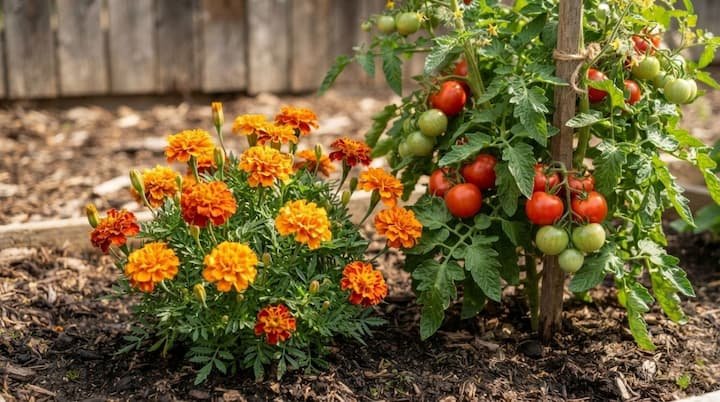
- French marigold: ring the bed with it. The flowers also draw ladybugs and hoverflies that eat aphids. Skip the tall African type, and know that nematode control needs a dense planting for a full season before tomatoes go in.
- Nasturtium: plant at the edge as an aphid trap. Check it weekly, and the leaves and flowers are edible.
- Borage: a bumblebee magnet that also hosts aphid-eating wasps. Give it room, since it gets big and reseeds.
- Calendula: not the same plant as marigold, but it blooms all summer and repels hornworms and thrips.
- Sweet alyssum: a low ground cover that feeds predators and never competes for water.
- Cosmos and yarrow: lacewings and ladybugs love them. Both get tall, so plant them at the margins.
- Sunflowers: put them on the north side so they don’t shade the tomatoes. They also block wind.
- Lavender: brings bees and adds color. Bonus if you like the smell.
- Wildflower mix: broadcast a regional blend along the garden edge, not inside the bed. Even 10 feet away it pulls in pollinators and predators.
Most of these flowers favor full sun like tomatoes do, and the best companion plants for tomatoes pull double duty as cut flowers or salad toppers. If space is tight, put edible veggies and herbs inside the bed and save flowers for the edges.
Vegetables: Best Plants to Grow With Tomatoes
- Carrots: loosen soil, attract ground beetles that eat cutworm larvae, and slip in anywhere there’s bare ground. Tomato leaves also help keep carrot flies away.
- Lettuce and radishes: lettuce likes the dappled shade, and radishes finish in about a month, before tomatoes need the space. Radishes can also lure pests away.
- Onions and celery: onions go 6-8 inches from the stem, celery just likes the shade.
- Beans and peas: they fix nitrogen. Bush beans sit 12-18 inches out, and peas go on a trellis to the north so they don’t block sun.
- Squash and zucchini: a ground cover that shades weeds. Pick bush types and plant them 24-36 inches away. A zigzag of tomato, zucchini, tomato, zucchini works nicely.
- Asparagus: tomatoes repel asparagus beetles, and gardeners swear asparagus returns the favor against nematodes.
- Chard: needs 8-12 inches, and fades once tomatoes shade it.
- Dandelion greens: may help against Fusarium wilt. Harvest before they flower.
- Chickweed: pulls up potassium and phosphorus, but it’s invasive in some areas, so skip it there.
Pick Companions by Problem
Figure out the pest first, since each companion only helps with certain bugs. Then match it:
- Aphids: nasturtium, parsley, sweet alyssum.
- Whiteflies: French marigold.
- Thrips: basil, parsley.
- Hornworms: sage, borage, scallions.
- Spider mites: garlic, chives, cilantro.
- Nematodes: French marigold, cowpeas.
- Verticillium and Fusarium: onions, dandelion greens.
- Low nitrogen: bush beans, peas.
- Poor pollination: borage, sunflowers, cosmos.
Plants to Keep Away From Tomatoes
| Plant | Why it’s a problem | Where to put it |
|---|---|---|
| Fennel | Releases chemicals that stunt tomatoes | Its own pot, far away |
| Brassicas (cabbage, broccoli, cauliflower, kale, Brussels sprouts, turnips) | Heavy feeders that compete for nutrients | A separate bed |
| Corn | Corn earworm and tomato fruitworm are the same insect, and corn shades tomatoes | Far side of the yard |
| Potatoes, eggplant | Same plant family, same blight | A different bed |
| Strawberries | Share Verticillium wilt | A different bed |
| Cucumbers | Thirsty, and raise fungal disease risk | A different bed |
| Black walnut, stone fruit trees | Walnut roots release juglone, and apricot, cherry, plum and peach host aphids and fungus | Well away from the bed |
The Debated Ones: Dill, Peppers and Basil
Sources don’t agree on a few plants, so here’s the straight version:
- Dill: young dill brings beneficial insects, but mature dill can stunt tomatoes and attract hornworms. My rule: let it flower far from the bed and pull it near the tomatoes.
- Peppers: same family as tomatoes, so they share diseases. Many gardeners grow them side by side with no trouble, but rotation matters more.
- Alliums and thrips: onions, garlic and leeks are great companions, but thrips love them too. If thrips are your main problem, skip them.
- Basil and hornworms: studies are mixed, so don’t count on it as your only defense.
- Cucumbers vs. zucchini: skip cucumbers, but zucchini works. Both squash and tomatoes hate wet leaves, so water at the base.
Raised Bed and Row Layouts That Work
If you’re still stuck on what to plant next to tomatoes, start with basil, French marigolds and scallions. Then adjust for your tomato type. Indeterminate (vining) tomatoes grow up a trellis, so lettuce or squash can fill the space below.
Determinate (bush) tomatoes stay compact, so keep companions 24-36 inches out.
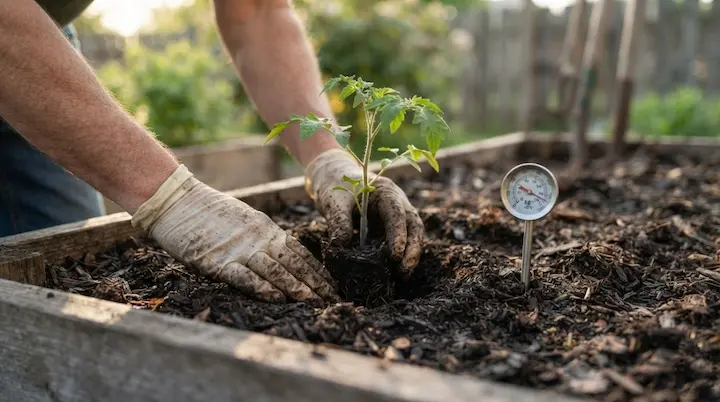
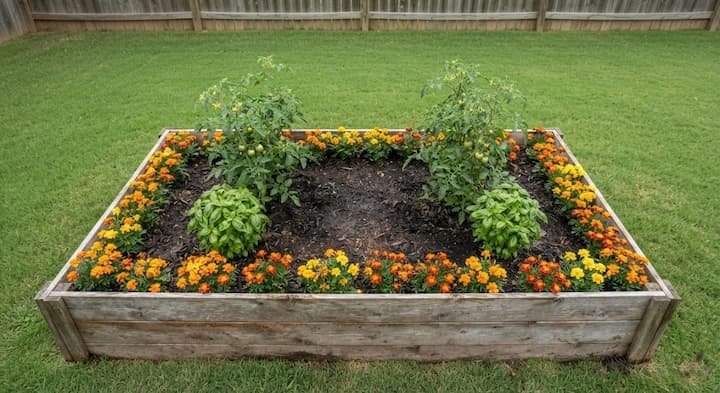
- 4×8 raised bed: 2-3 tomatoes spaced 24-30 inches apart down the center, a basil beside each, marigolds along the edges, nasturtiums in one corner, and chives in the gaps.
- 2×4 bed: one tomato, one basil, a few marigolds and a handful of scallions.
- Row garden: tomatoes 3 feet apart, bush zucchini between them, marigolds and borage at the row ends.
Container and Grow Bag Pairings
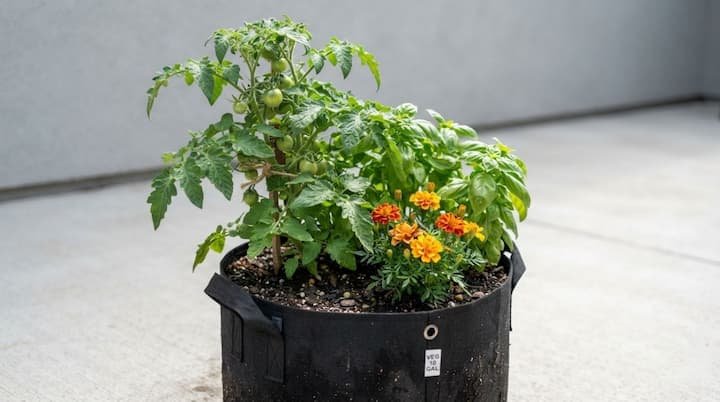
Pots get crowded fast. Give one tomato at least a 10-gallon grow bag, and bump up to 15 gallons if you want to add a companion.
- Basil and chives: compact and fine in the same container.
- Dwarf marigolds: small enough to fit around the edge.
- Nasturtium: trails over the side without taking much room.
- Lettuce: shallow roots, fine under the leaves.
- Mint: keep it in its own pot next to the tomato.
Skip beans, squash and anything deep-rooted unless the container is 20 gallons or more.
Companions by USDA Zone and Season
- USDA Zones 4 and 5: short season, so wait until after the last frost and lean on fast crops like radishes, lettuce, scallions and marigolds. Keep frost blankets handy when nights dip toward 32°F.
- USDA Zones 6 and 7: cool-season plants like lettuce, cilantro and chard go under tomatoes in spring. Basil and marigolds take over in summer. Plant garlic in fall.
- USDA Zone 8 and warmer: cilantro and lettuce bolt in the heat, so lean on the tomato shade. Basil, oregano and sweet alyssum handle it better. Basil wants nights above 50°F.
Mistakes That Make Companions Backfire
- Crowding: tomatoes need airflow. Trim lower leaves with clean pruners, and see pruning tomato plants for how.
- Feeding too little: more plants means more thirst and hunger. Stick to a best tomato fertilizer schedule, or try molasses compost tea.
- Mismatched needs: pick companions that like the same sun and water as tomatoes, and keep shallow-rooted, shade-tolerant ones under the canopy.
- Bad timing: fast growers like squash and borage can outgrow young tomatoes, so stagger planting dates.
- Aggressive spreaders: mint, borage, nasturtium vines, dandelions and chickweed can take over fast.
- Tall plants on the south side: sunflowers, corn and pea trellises shade the tomatoes.
- One ring of marigolds and done: that won’t clear nematodes. It takes dense planting for a full season.
- Letting everything bolt: good for parsley, cilantro and dill flowers, bad for basil.
- No change after a full season: usually the wrong plant for the pest, planted too far away, or left to bolt. Match it to the problem and try again.
- Skipping the checks: tomato companion planting doesn’t replace scouting. I check my beds every Saturday morning and drop hornworms into a bucket of soapy water. If aphids pile up on the nasturtiums, spray just those plants with insecticidal soap.
Crop Rotation and Shared Diseases
Tomatoes, potatoes, peppers and eggplant all get early blight, late blight and Verticillium. Plan on rotating them so no nightshade goes back in the same spot for about 3 years. If you’re a community gardener sharing beds, ask what grew there last year.
- Healthy marigold and herb trimmings go in the compost pile, balanced with a good compost ratio.
- Diseased tomato leaves go in the garbage, never the pile.
- Running a worm bin? Check whether citrus peels belong in it before you toss in salsa scraps.
- At the end of the season, winterize raised beds so the soil is ready for spring.
Final Thoughts:
Good tomato companion plants don’t need to turn your backyard into a science project. Start with basil, French marigolds and scallions, keep fennel and corn far away, and rotate your nightshades. I’d add one new pairing each season and watch what changes. Within a year or two you’ll know which neighbors your tomatoes actually like in your own yard.