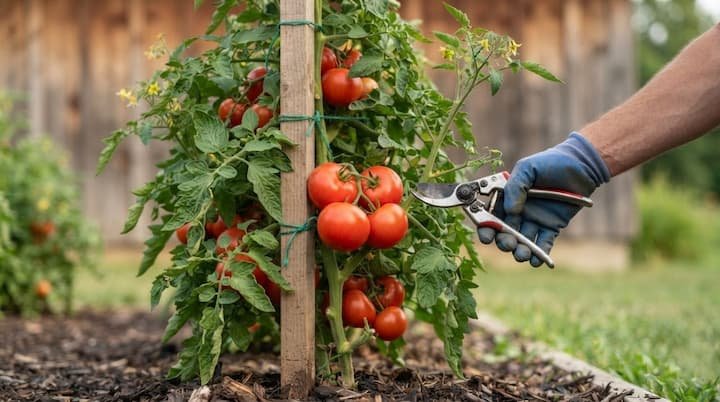
Why does one balcony tomato plant drip with fruit while another in a big backyard bed gives a sad handful?
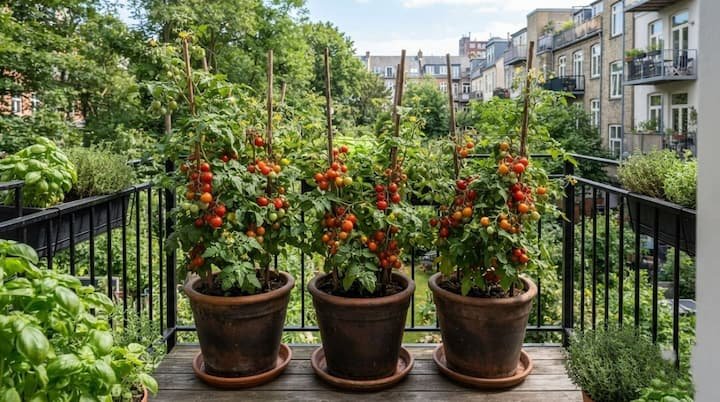
It is rarely luck. Growing tomatoes in pots comes down to a few quiet choices, like pot size, soil mix and watering rhythm. Here they are, in the order you will need them.
Is Growing Tomatoes in Pots Worth the Work?
You can grow tomatoes in pots on an apartment balcony, patio, rooftop or backyard corner, and move them to chase sun or dodge frost. You control the soil, and fresh mix means fewer diseases.
The catch: pots dry out fast, small pots stunt plants, and black pots cook roots. Expect roughly 100 to 200 cherry tomatoes (or 10 to 20 slicers) per plant, for about $40 to $80 of starter gear. Try these veggies for pots too.
Best Container Tomatoes by Type
Determinate (bush) plants stop at 2 to 4 feet and ripen most fruit in a 4 to 6 week window. Indeterminate vines keep growing until frost and need big pots. Dwarf types stay tiny. I think Sungold is the easiest first pot.
Match plant to plate: cherry for snacking, slicers for sandwiches, paste for sauce.
- Cherry and grape: Sungold, Sweet 100, Tumbling Tom, Tiny Tim. Slicers: Celebrity, Bush Early Girl, Bushsteak, Patio Princess. Paste: Roma or Window Box Roma.
- Low light: favor Tumbling Tom, Red Robin or Micro Tom. Hot yard: look for “heat tolerant” on the tag.
- Days to harvest: cherry types 55 to 70, slicers 70 to 85, big vines 80 or more.
- Letters V, F and N on a tag mean resistance to verticillium, fusarium and nematodes.
- To grow tomatoes in pots with less stress, skip heirlooms like Brandywine, Cherokee Purple and Mortgage Lifter. They reach 6 feet.
Pot Size and Container Types
Container tomatoes live or die by pot size. Roots match the plant above them, and bigger pots hold more water.
- Dwarf and cherry: 5 gallons minimum, about 14 inches wide and 12 inches deep.
- Determinate: 10 to 15 gallons, 18 inches wide and deep.
- Indeterminate: 15 to 25 gallons, around 24 inches wide and 20 inches deep.
- One plant per pot, or two cherry plants in 15 gallons or more.
Light-colored pots stay cooler, so shade dark ones or wrap them in pale fabric. I like fabric bags because roots get air, but they dry fast.
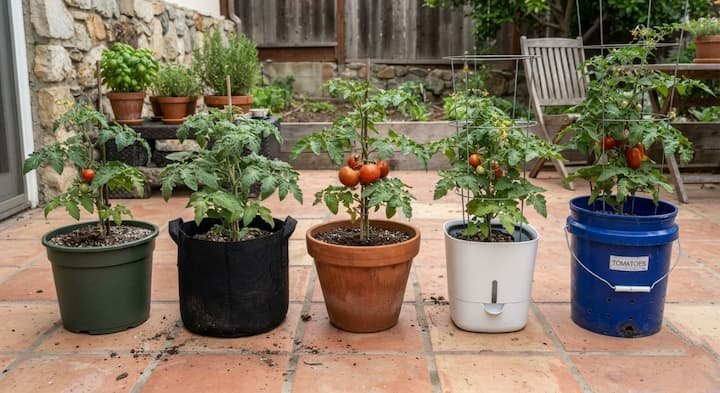
| Container | Good | Watch out |
|---|---|---|
| Plastic | Cheap, light | Overheats if dark |
| Fabric bag | Airy roots | Dries out quickly |
| Terracotta | Looks great | Heavy, dries fast, cracks in cold |
| Self-watering | Steady moisture | Reservoir needs checking |
| 5-gallon bucket or tote | Cheap DIY | Needs holes and washing |
Drainage and Soil Mix
Drill 5 to 8 holes, about 1/2 inch wide, in the bottom. Lift pots on feet or bricks, use a wheeled caddy for big ones, skip the gravel layer (it doesn’t help), and empty saucers within an hour.
Backyard dirt packs down and chokes roots. Use a vegetable potting mix, or blend 60% potting soil, 20% compost, 10% perlite and 10% coco coir. Tomatoes like a pH of 6.0 to 6.8, so test it, then add garden lime if it runs low or sulfur if it runs high. Mix in a slow-release starter fertilizer, then top with 2 inches of straw or shredded leaves, kept 1 to 2 inches off the stem.
Sun, Wind and Spot Selection
Tomatoes need 6 to 8 hours of direct sun, and morning sun is best because it dries the dew. Too little light means tall skinny stems, pale leaves and no flowers after 6 weeks.
Light walls bounce heat: a boost in cool areas, trouble in hot ones. Wind dries pots and snaps stems, so shelter them by a wall or fence but leave airflow.
- South-facing balcony wins. East is gentle, west is hot (potted tomato plants need afternoon shade), north is weak.
- Low light fix: a white wall or reflective board behind the pot, plus a quarter turn every day.
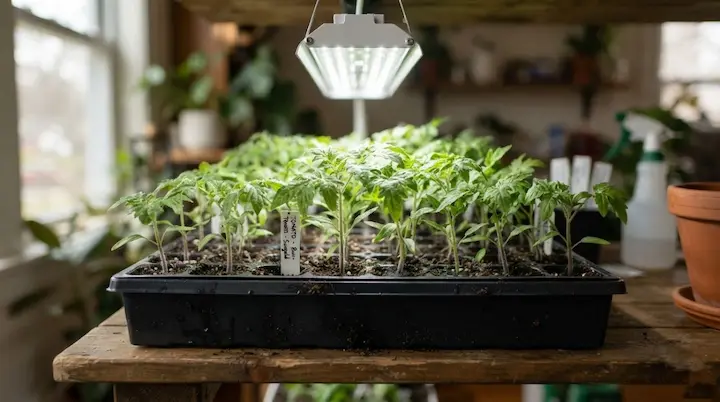
- Indoors: LED grow light 6 to 12 inches above the plant, 14 to 16 hours a day.
Temperature, Frost Dates and When to Plant
Tomatoes want days of 70°F to 85°F and nights of 55°F to 75°F. Under 50°F they stall and 32°F kills them. The North Carolina Cooperative Extension says fruit won’t set when nights run above 75°F or below 55°F, or when days pass 90°F. Look up your last frost date by ZIP code, then plant 1 to 2 weeks after it, once nights stay above 55°F. See when to plant.
- USDA Zones 4 and 5: mid May to early June.
- USDA Zones 6, 7 and 8: mid April to mid May.
- USDA Zones 9 and 10: early spring, plus a second Fall planting in late summer.
Cold snap: roll pots indoors or use frost cloth. Heat wave: 30% shade cloth in the afternoon. Roots sulk below 60°F, so lift pots off cold concrete. Spring plants and feeds, summer waters daily, Fall tops plants and picks green fruit, winter rests. Add a quick cherry plant 6 to 8 weeks before first frost to stretch the season.
Tomatoes in Containers: Transplants, Seeds and Planting Steps
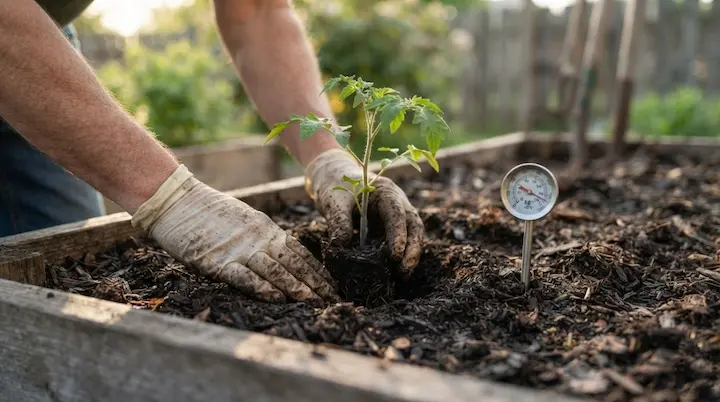
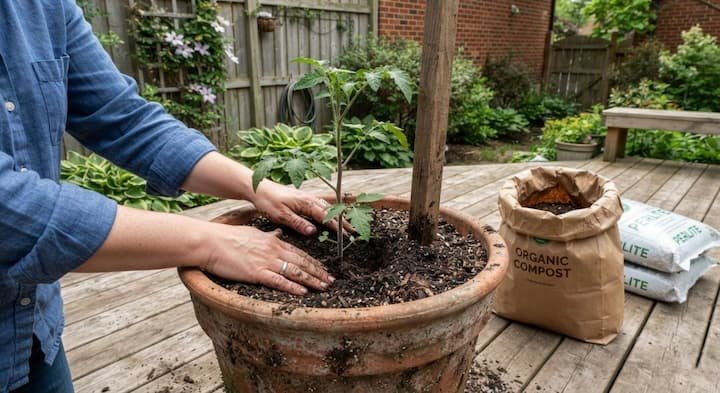
Tomatoes in containers root all along a buried stem, which is why deep planting works. Buy stocky garden center transplants with no flowers or fruit.
To grow from seed, start seeds indoors with warmth and bright light 6 to 8 weeks before the last frost, then move them into 4-inch pots first. Harden them off for 7 to 10 days: 1 to 2 hours in shade on day one, a full day outside by day seven, overnight by day nine.
- Set the pot in its final spot first.
- Fill with damp mix, leaving 1 to 3 inches at the top.
- Push in the stake or cage now.
- Pinch off the lowest 2 or 3 leaves.
- Bury the stem up to the top leaves. Leggy plant? Lay it sideways in a shallow trench.
- Backfill, press gently, water slowly, wait 10 minutes, water again, then mulch 1 to 2 inches.
Watering Without the Guesswork
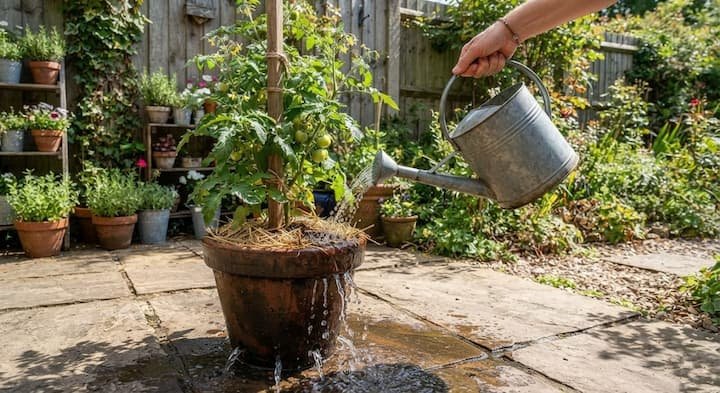
Push a finger 2 inches down. Dry means water, damp means wait. Soak slowly at the base, ideally in the morning, until water runs out the bottom. Pot size, heat, wind and plant size set the schedule.
In my experience, a big pot in July still wants a drink every day, sometimes twice. See this watering guide. A midday droop that perks up by evening is normal.
- Too wet (poor drainage): yellow leaves, mushy stem base, soggy soil. Fix: stop watering, add holes, repot in lighter mix.
- Too dry (heat, small pot): crispy edges, wilting even at dawn. Fix: deep soak, add mulch, move to a bigger pot.
- Away for a week: self-watering pot, drip line with a timer, or a buried clay olla.
Feeding Your Plants
Pots hold little food, so potted tomato plants need a schedule. Wait 2 weeks after planting, then follow this table.
The best fertilizer changes with stage, and worm castings make a gentle top dressing. Synthetic tomato food works fast but builds salts, so flush monthly with plain water.
| Stage | Feed | How often |
|---|---|---|
| Planting | Slow-release organic mixed into soil | Once, then every 4 to 6 weeks |
| Leaf growth | Balanced 10-10-10 | Every 2 weeks |
| Flowers and fruit | Lower nitrogen, like 5-10-10 or 3-4-6 | Every 1 to 2 weeks |
| Organic option | Fish emulsion or compost tea | Every 10 to 14 days |
- Pale old leaves: low nitrogen. Use a balanced feed.
- Purple tint: cold roots first, low phosphorus second.
- Yellow shoulders: low potassium or heat. Add a potassium-rich feed.
- Yellow between veins: low magnesium. Use 1 tablespoon Epsom salt per gallon of water.
- Calcium: water steadily first, then add gypsum if fruit bottoms rot.
- Too much food: lots of leaves, few flowers, crusty soil. Skip feeding for 3 weeks and flush.
Support and Pruning
- Install support at planting, not later.
- Bush types: 3 to 4 foot stake or cage. Vines: 5 to 6 foot cage, 6 to 8 foot stake, or trellis.
- Balcony: tie to the railing or wall, and weigh the base with bricks.
- Tie loosely with soft twine every 6 to 8 inches. A Florida weave suits pot rows.
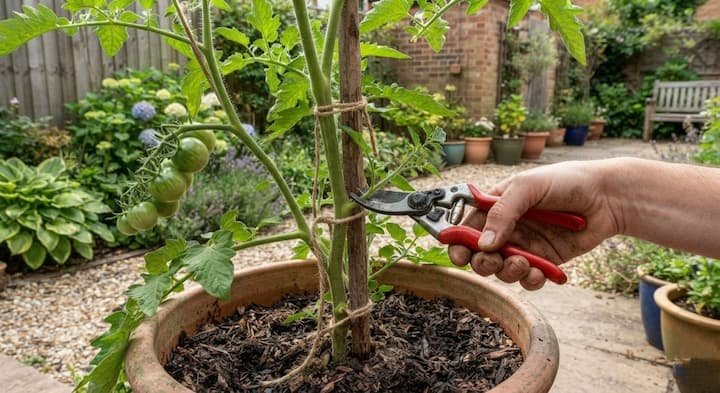
Pinch suckers (shoots between stem and branch) at 2 to 4 inches long. Remove leaves that touch soil. Train vines to 1 to 3 stems and top them about 4 weeks before first frost so energy goes into ripening.
Bush types need light trimming. Never cut more than a third at once, work on dry mornings, and wipe pruners with rubbing alcohol between plants. I keep my pruners by the back door. See how to prune tomato plants.
Pollination and Flower Drop
Balconies lack bees and breeze, so tap flowers or buzz them with an electric toothbrush each morning. Heat above 90°F needs afternoon shade cloth, and nights under 55°F mean bringing pots inside.
- Humid air: prune for airflow.
- Dry air: mist in the morning.
Too much nitrogen means no flowers, so switch to a 5-10-10 feed. Steady wind needs a windbreak. Try self-fruiting types like Oregon Spring or Siletz.
Leaf and Fruit Problems, With Fixes
Slowly yellowing lower leaves are normal, so pinch them off. Fast yellowing leaves with soggy soil mean poor drainage, so hold water and add holes. Heat curls leaves, so add afternoon shade; curl after heavy pruning or in a tiny pot means trim less or go bigger.
Leggy stems need more light. Slow growth means cold soil or tight roots, so warm or repot. Sunscald patches need leaf cover and shade cloth. Sour soil and mushy brown roots mean root rot: trim, repot in fresh mix with perlite, or start over.
- Blossom end rot: calcium can’t travel when water swings. Keep moisture steady, mulch, remove bad fruit.
- Cracking: a big drink after a dry spell. Water evenly and pick fruit at first blush.
- Fruit drop: stress or a heavy load. Support branches, feed steadily.
- Small or no fruit: low light, too much nitrogen or over-pruning. Fix each one.
- Birds and squirrels: net the plant or pick at first blush.
Pests and Diseases
Most trouble starts with wet leaves and old soil. Blast aphids with water or use insecticidal soap. Trap whiteflies with yellow sticky cards and weekly neem oil.
Spider mites leave webbing and speckles: spray water, then neem. Hand-pick hornworms, but leave any with white cocoons, those are helpful wasps. For slugs and fungus gnats, let the top inch dry between drinks. Basil, marigolds and borage draw helpers like ladybugs and lacewings. See companion plants.
- Early blight: ringed spots on lower leaves. Remove leaves, mulch, water at the base, use copper if bad.
- Late blight: gray-brown blotches spreading fast. Bag it for the trash, never compost.
- Septoria: tiny spots with gray centers. Strip lower leaves, mulch.
- Powdery mildew: white dust. Space pots, spray potassium bicarbonate.
- Fusarium or verticillium wilt: one side yellows and wilts. No cure, so use fresh soil and V, F, N types next time.
- Prevention: fresh mix, clean pots, airflow, pots 2 feet apart, base watering.
Weekly Routine and Safety
Daily: check moisture, wilting, pests. Weekly: pinch suckers, retie, feed. Monthly: flush, top up mulch, check pH. Journal the variety, pot size, dates and problems.
- Use food-safe pots, not treated lumber, old painted buckets or tires.
- Read pesticide labels, wear gloves, and wait the listed days before picking. I skip homemade sprays like boric acid and strong peroxide.
- Leaves, stems and green fruit can upset pets and kids.
- A wet 15-gallon pot can top 100 pounds, so never perch it on a railing.
- Clean pots with 1 part bleach to 10 parts water, then rinse.
- Wash tomatoes before eating. Community gardener? Clean shared tools between plants.
Harvest and End of Season
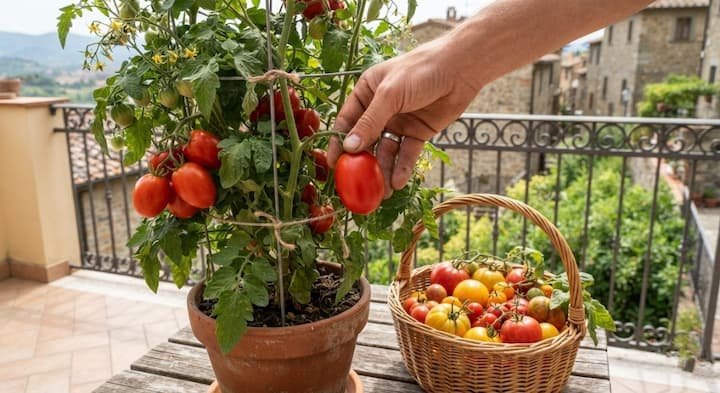
Pick fruit with full color, slight give, glossy skin and a tomato smell at the stem. Twist or snip with pruners every 2 to 3 days. Before 32°F hits, pick blush and mature green fruit and ripen it in a paper bag with a banana.
Never refrigerate, because anything under 50°F turns them mealy. Keep ripe ones on the counter, stem side down, up to a week, or freeze or can extras.
- My Fall routine: pull spent plants, bag sick ones for the trash, add healthy ones to the compost pile.
- Reuse mix for 2 to 3 seasons with half fresh mix plus compost. Replace it after disease, and scrub pots with the bleach mix and store them dry.
- Zones 9 and 10 can overwinter a cherry plant. Elsewhere, bring one inside by a grow light.
- Save open-pollinated seeds: ferment 2 to 3 days, rinse, dry. Hybrids won’t come true.
- Note fixes for next year, like a bigger or self-watering pot.
Final Thoughts:
Growing tomatoes in pots comes down to three habits: a big pot, steady water and early support. Get those right and the rest is small fixes. Pick a sunny spot, start with one plant, keep a journal and adjust each season. A ripe cherry tomato off your balcony beats any store tomato.