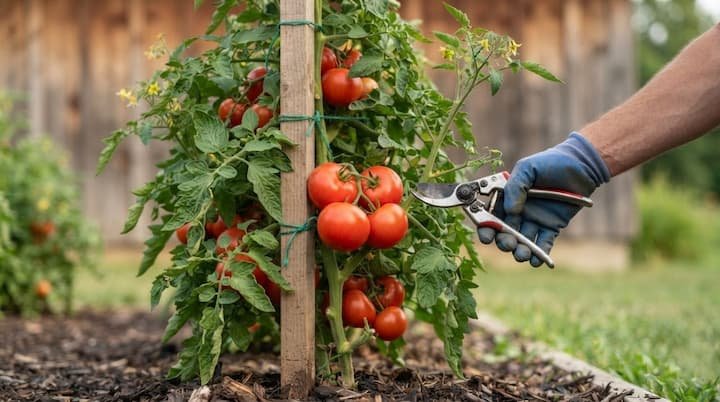
Why does one tomato plant stop at 3 feet and give you a bucket of fruit in two weeks, while its neighbor climbs past 7 feet and keeps going until frost?
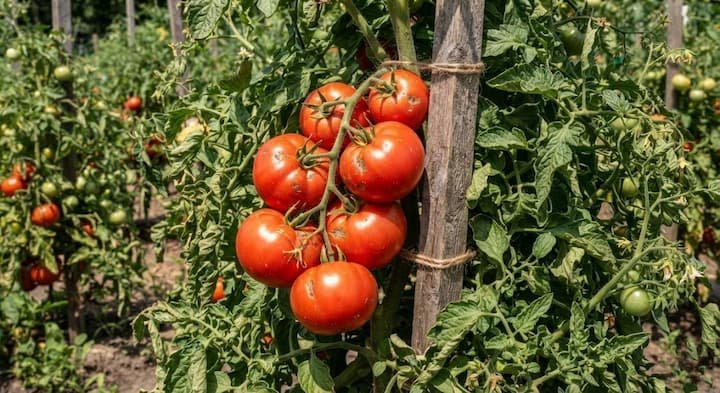
It comes down to one label on the seed packet. Learn the real story behind determinate vs indeterminate tomatoes and you’ll plan your yard, your support gear, and your harvest way better.
Determinate vs Indeterminate Tomatoes: What Actually Changes
Every tomato falls into one of two growth habits. Determinate plants grow to a set height, flower and fruit over a short window, then fade. Indeterminate plants keep growing and flowering until frost or disease stops them.
Gardeners also call this bush vs vining tomatoes, and I think the labels confuse people more than the plants do. It has nothing to do with flavor, color, size, or nutrition. Potatoes, cucumbers, and beans use the same labels.
Where the Flowers Form:
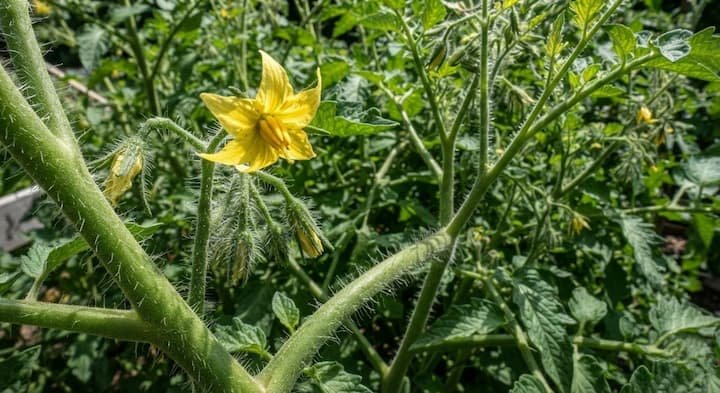
The real difference sits at the tips of the branches. On a determinate plant, each branch ends in a flower cluster, so growth stops once those clusters set. On an indeterminate plant, the tips end in leaves and the flowers form along the sides, which lets the stem keep climbing.
Researchers traced this to a single recessive gene called SELF-PRUNING. According to published plant genetics research, the mutated form gives the determinate habit, while the normal form gives the indeterminate one.
Where Semi-Determinate Types Fit:
Semi-determinate tomatoes sit in the middle. They stay fairly short and bushy, but not every branch tip ends in a flower, so they keep setting some fruit until frost. Celebrity is the classic confusing one, since some catalogs list it as determinate and others as semi-determinate.
When a tag says semi, treat it like a determinate for support and like an indeterminate for a longer harvest.
How to Tell Which Type You Have
Check the seed packet or plant tag first. You’ll see D, I, or SD, or the full words. If a plant has no tag, wait until it’s a couple of feet tall and look at the stem tips.
- Flowers at the end of every branch tip means determinate.
- Leaves on some tips and flowers on the sides means indeterminate.
- New flower clusters showing up higher and higher each week also points to indeterminate.
In my experience, the stem tips never lie. One catch: San Marzano gets sold in both determinate and indeterminate versions, so read the packet instead of trusting the name.
Indeterminate vs Determinate Tomatoes Side by Side
| Trait | Determinate | Indeterminate |
|---|---|---|
| Height | 3 to 4 feet, some up to 5 | 6 to 10 feet or more |
| Harvest window | About 2 to 4 weeks | Mid-summer until frost |
| Spacing | 18 to 24 inches | 24 to 36 inches |
| Container size | 5 to 10 gallons | 15 to 20 gallons |
| Support | Wide cage or short stake | Tall stake, string, or trellis |
| Pruning | Light, lower leaves only | Regular sucker removal |
| Best for | Canning, sauce, small yards | Fresh eating, long seasons |
Picking a Type for Your USDA Zone
Season length decides most of this. In USDA Zones 4, 5 and 6, summers are short, so early determinate types or fast cherry tomatoes make sense. In USDA Zones 7 and 8, either works. Further south, long seasons favor indeterminate types, with a determinate tucked in for a fall crop.
Heat matters too. Blossoms drop when days top 90°F or nights fall below 55°F, and poor pollination or a cramped pot can do the same. Indeterminate vs determinate tomatoes react differently here. A hot spell can wipe out a determinate’s single crop window, while an indeterminate keeps flowering and recovers when it cools.
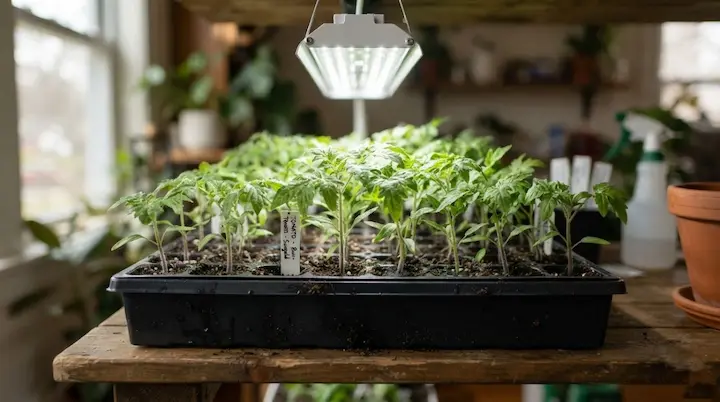
Timing matters as well. Count back from your last spring frost (32°F), check when to plant for your area, and start seeds indoors about 6 weeks earlier. Pinch off early flower buds on seedlings before transplanting.
Pots vs In-Ground Beds
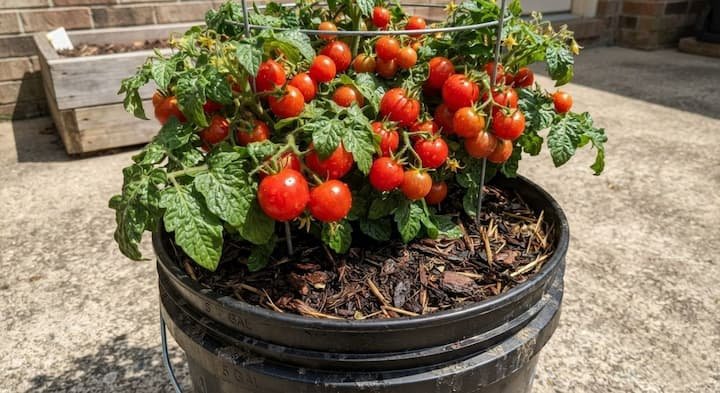
Determinate types fit pots better because they stay compact. I keep one in a 5-gallon bucket on the patio every year, and it gives a steady handful.
- Determinate tomato plants sold as patio or dwarf types do well in 5 to 10 gallons.
- An indeterminate can live in a pot too, even though people say it can’t. It needs 15 to 20 gallons and a sturdy stake.
- In a raised bed or backyard row, indeterminate plants get room to climb.
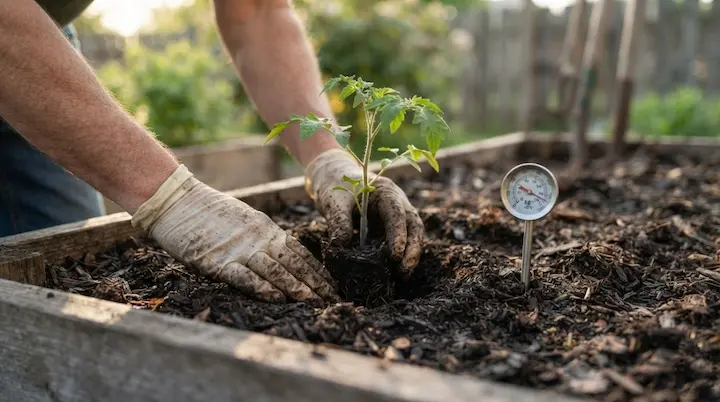
- At planting, mix organic matter into the soil and water new transplants regularly for 7 to 10 days.
- The guide on tomatoes in pots covers soil and drainage.
Pruning Each Type Without Hurting Yield
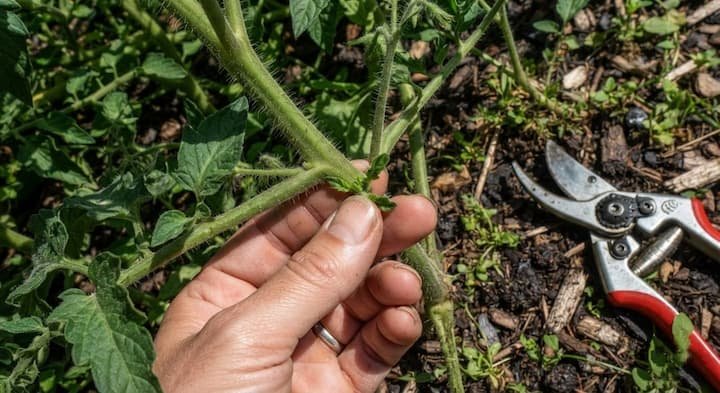
Indeterminate plants need regular sucker removal. Suckers are the shoots that grow in the joint between the main stem and a leaf branch. Pinch them while they’re small with your fingers or clean pruners. I like doing it once a week, before they get thicker than a pencil.
Determinate plants are the opposite. Each sucker carries flowers that count toward the one big crop, so leave most of them alone.
- Indeterminate: remove suckers weekly and trim leaves touching the soil.
- Determinate: trim only the lower leaves and any yellow or diseased ones.
- Both types: wipe pruners with rubbing alcohol between plants.
- Never cut the growing tips off a determinate, and skip heavy leaf removal, since bare fruit gets sunscald.
Staking and Trellis Options
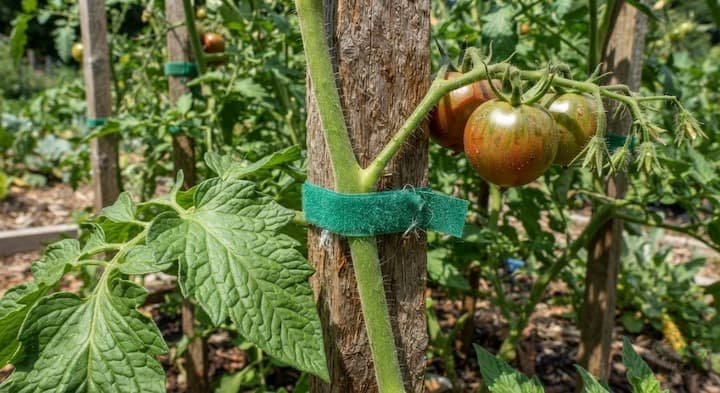
Determinate plants get bushy and heavy, so a wide cage works best, and a single stake holds only the main stem. Indeterminate plants need something at least 6 feet tall since they climb all season.
- Wire cages: good for determinate, but cheap store cages get outgrown, so buy tall, sturdy ones or bend a DIY cage from fencing.
- Single stake: works for indeterminate if you keep one main stem.
- String trellis: lets you train two or three stems.
- Florida weave: handy for a long row of indeterminate plants.
- Soft ties or Velcro tape: hold stems without cutting in.
For a sturdy setup, follow the steps for a tomato trellis.
Watering, Feeding, and Plant Health
- Water: 1 to 2 inches a week, or about 1 to 2 gallons per in-ground plant each time. Potted plants may need water daily in July heat.
- Indeterminate plants drink steadily all season, while determinate plants need the most during fruit set.
- Mulch with straw or shredded leaves. Swings between dry and soaked soil cause cracking and blossom end rot. The page on watering tomatoes has a full schedule.
- Water at the soil level and give leaves airflow to cut fungal disease.
- Rotate tomatoes to a new bed each year, and check weekly for hornworms and aphids.
Feeding splits the types. Indeterminate plants produce for months, so they want a feed every 2 to 3 weeks. Determinate plants get one feeding at planting and another at first fruit set, using a fertilizer higher in phosphorus and potassium once flowers show.
Epsom salt can help where soil runs low on magnesium. Homemade compost works for both. Get the compost ratio right, and go easy on citrus peels if you run a worm bin.
Harvest Timing and Preserving Plans
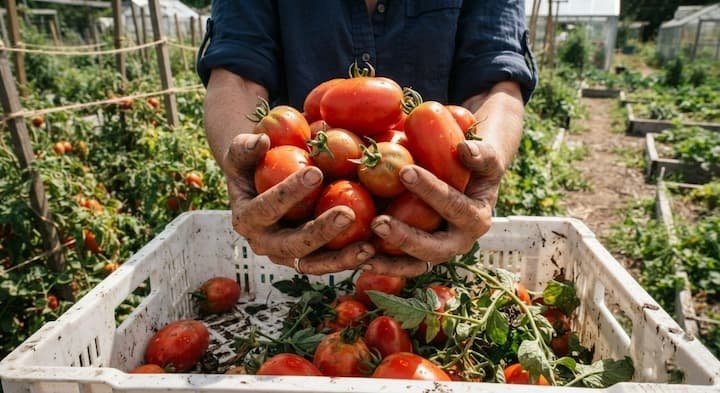
Determinate tomatoes ripen mostly at once, over about 2 to 4 weeks. Great for sauce and canning, but it can bury you if you aren’t ready. Last fall my freezer was packed with sauce from one row of Romas.
- Determinate tomato plants: pick when several fruits show full color, then freeze, dehydrate, or cook them into sauce right away.
- Indeterminate: check every 2 or 3 days and pick before the skins split. Pick one at a time, or wait for a whole truss to ripen.
- Succession planting: set out a new determinate every 2 weeks for 4 to 6 weeks to spread the harvest.
If a flush gets out of hand, drop the extras at a community garden table.
Popular Varieties by Type
Choose by type and days to maturity. Letters like V, F, N and T on a tag mean resistance to Verticillium wilt, Fusarium wilt, nematodes, and tobacco mosaic virus, so look for those too. For flavor picks, see the best tasting varieties.
| Variety | Type | Fruit | Days to maturity | Best use |
|---|---|---|---|---|
| Roma | Determinate | Paste | 75 to 80 | Sauce, canning |
| Bush Early Girl | Determinate | Slicer | 55 to 65 | Pots, early fruit |
| Patio | Determinate | Small slicer | About 70 | Containers |
| Better Bush | Determinate | Large slicer | About 70 | Small spaces |
| Celebrity | Determinate or semi | Slicer | 70 to 75 | All-purpose |
| Sungold | Indeterminate | Cherry | 57 to 65 | Snacking |
| Big Boy | Indeterminate | Slicer | 75 to 80 | Sandwiches |
| Brandywine | Indeterminate | Beefsteak | 80 to 90 | Fresh eating |
| Cherokee Purple | Indeterminate | Beefsteak | 80 to 90 | Fresh eating |
| San Marzano | Indeterminate (check packet) | Paste | 80 to 90 | Sauce |
Early Girl is indeterminate, while Bush Early Girl is determinate, so check the full name.
Common Mistakes and Myths
I made the mistake of stripping every sucker off a determinate early on and lost a good chunk of fruit.
- Topping or heavy pruning a determinate.
- Using a 4-foot cage on an indeterminate that hits 8 feet.
- Putting both types on one trellis, where the tall one shades the other.
- Buying by name alone without reading the type.
A few myths worth dropping:
- “Determinate means small fruit.” Plenty make big slicers.
- “Determinate never needs pruning.” Lower leaves still come off.
- “Indeterminate can’t grow in pots.” It can, with 15 to 20 gallons.
- “Determinate gives one harvest only.” Mostly, though a smaller second flush can follow.
End-of-Season Care for Indeterminate Tomato Plants
Indeterminate plants won’t stop on their own, so give them a push in fall.
- About 4 weeks before your first expected frost, pinch off the growing tip and any new flowers so energy goes into fruit already set.
- Frost at 32°F kills the plants, so cover them or pick green tomatoes and let them ripen on a kitchen counter.
- In frost-free zones, or with a pot you can move inside before nights near 40°F, you can overwinter a plant by cutting it back hard and giving it bright light.
- For more on long-season care, read about growing indeterminate tomatoes.
Determinate plants are finished after the main flush. Pull them, and put diseased plants in the trash, not the compost pile.
How to Pick for Your Garden
- Small backyard, patio, or deck: determinate in pots.
- Big canning batches: determinate paste types like Roma.
- Fresh salads all summer: indeterminate cherry types like Sungold.
- Short season in Zones 4 and 5: early determinate varieties.
- Beginners or short on time: determinate, since it needs less pruning. Indeterminate isn’t harder, it just wants weekly attention.
- Experienced gardeners with space and a long season: indeterminate.
- Still stuck on bush vs vining tomatoes? Plant two of each and see which fits your routine.
Final Thoughts:
With determinate vs indeterminate tomatoes sorted out, the choice gets easy. Pick determinate for compact space and a big harvest in one go, or indeterminate for steady fruit all season. Read the tag, match the support and pruning to the type, and plant both if you have room. Your yard will tell you which one you like more by fall.