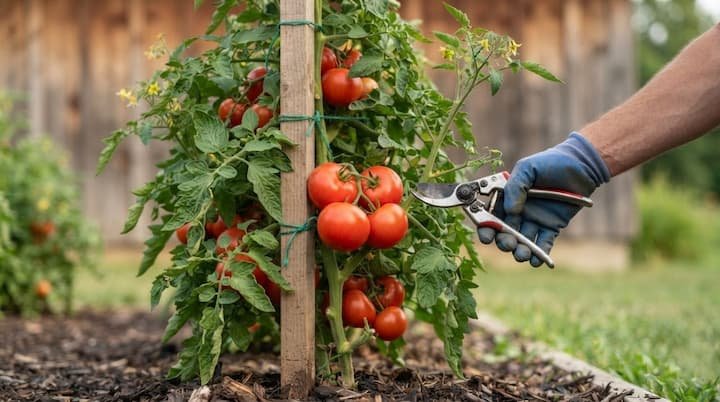
Why does one backyard gardener swear Epsom salt rescued a sad, yellow tomato patch, while the neighbor saw nothing happen at all?
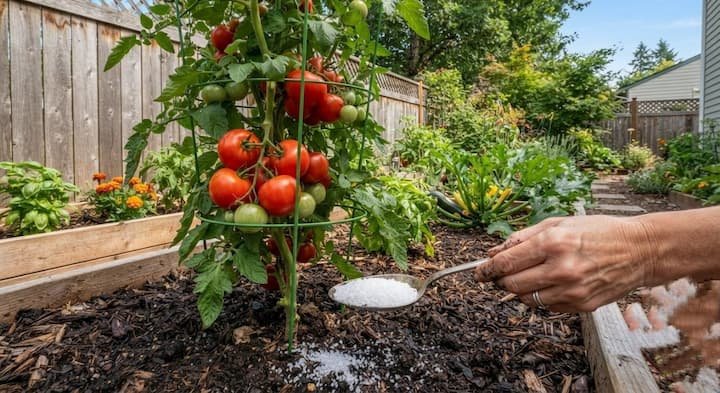
The answer sits in your soil, not the box. Epsom salt for tomato plants works well in some yards and does zero in others, and the difference is easy to spot once you know what to check.
What Epsom Salt Actually Is
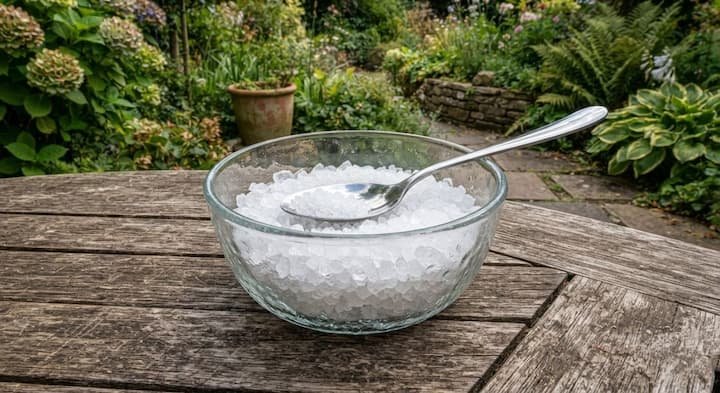
Epsom salt isn’t real salt. It’s magnesium sulfate, a mineral compound first found in a bitter spring near Epsom, England. It’s nothing like the table salt in your kitchen, and it tastes awful, so keep it out of the food.
It comes from the mineral epsomite, while table salt comes from seawater. People soak in it for sore muscles, but that has nothing to do with tomatoes.
- Magnesium: about 10% by weight.
- Sulfur: about 13% by weight.
- Looks like white crystals that dissolve fast in water.
- Table salt is sodium chloride, a totally different thing.
Both dissolve in water, but they act nothing alike in a garden bed, so never swap one for the other.
What Magnesium and Sulfur Do for Your Plants
Magnesium sits at the center of every chlorophyll molecule, the green pigment that turns sunlight into plant food. No magnesium means pale leaves and less energy left for flowers and fruit. Think of magnesium sulfate for tomatoes as a single-nutrient supplement, not a full meal.
- Magnesium builds chlorophyll, helps enzymes work, and supports flowering.
- Sulfur helps build proteins and vitamins and keeps growth steady.
Old, heavily farmed soil and sandy beds lose magnesium fastest, because water washes it right through.
Does It Really Work? What the Research Says
Here’s the honest version. Gardeners credit Epsom salt with a long list of wins, but only one is solid: it fixes a real magnesium shortage.
The New York Botanical Garden’s plant information service says most garden soil isn’t short on magnesium, especially with regular compost, and it recommends a soil test before using Epsom salts. In my experience, beds loaded with compost almost never need it.
Here’s what gardeners claim, with no real proof behind it:
- Sweeter fruit (if flavor is the goal, pick one of the tasting tomato varieties instead).
- Faster seed germination.
- Less transplant shock.
- Stronger roots and cell walls.
- Keeping slugs and snails away.
- Fixing leaf curl.
Taste only changes when soil is short on micronutrients, and then a balanced fertilizer beats Epsom salt alone. So the salt is a fix, not a growth hack.
Epsom Salt and Blossom End Rot: The Big Myth
Dark, sunken spots on the bottom of the fruit send plenty of people straight to the Epsom salt box. Blossom end rot is a calcium delivery problem, and uneven watering is the usual trigger. Epsom salt has zero calcium in it. Worse, magnesium competes with calcium at the roots, so extra magnesium in soil that’s already fine can make rot more likely. I think this is the biggest myth in tomato gardening.
Too much nitrogen can add to the problem, because it feeds leaves over fruit. If rot keeps showing up after you fix the watering, test for calcium and add a calcium source only if the test says so.
Steady moisture and a layer of mulch do far more. Get the full fix in the guide to blossom end rot, and sort out your routine on how to water tomato plants.
Signs Your Tomatoes Need Magnesium
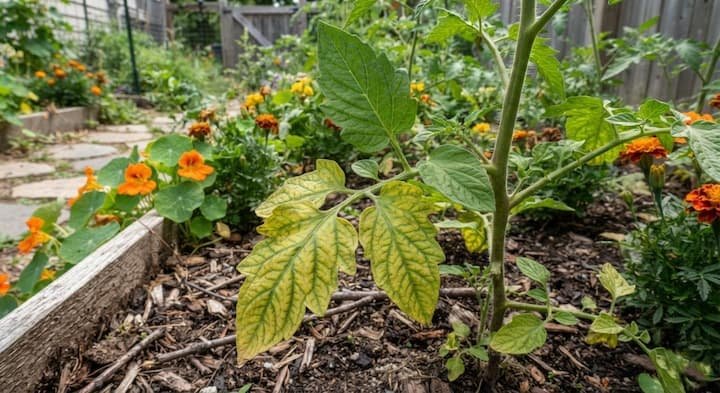
Magnesium moves around inside the plant, so it robs old leaves to feed new growth. Trouble shows up on the bottom leaves first.
- Yellow between the veins while the veins stay green.
- Starts on lower, older leaves and creeps upward.
- Leaf edges may curl or turn brown late in the season.
- Slow growth and weak fruit set.
Plenty of other things turn leaves yellow, so check this table before you grab the box. More causes are covered in the post on yellow tomato leaves.
| Problem | Where it starts | What you see | Quick check |
|---|---|---|---|
| Low magnesium | Lower, older leaves | Yellow between green veins | Sandy soil or a low soil test result |
| Low nitrogen | Lower leaves | Whole leaf turns pale yellow | Slow, pale growth overall |
| Early blight | Lower leaves | Brown spots with rings, then yellowing | Spots look like targets |
| Overwatering | Anywhere | Droopy, yellow leaves | Soil stays soggy for days |
Test Your Soil Before You Buy Anything
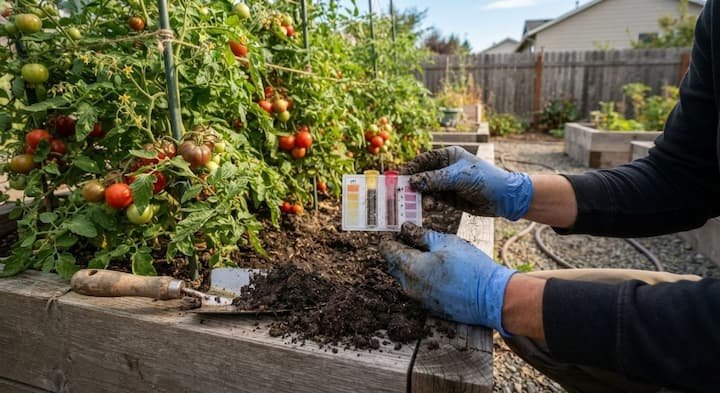
A soil test beats guessing every time. You’ve got two options.
- Home kit from a garden center: cheap and fast, but rough.
- Cooperative Extension lab: more detailed, so ask for magnesium, calcium, potassium and pH.
I like starting with a cheap home kit, then sending a sample to the lab if something looks off. Look at the balance, not one number. Too much potassium or calcium can block magnesium uptake, and pH changes what roots can actually grab. Sandy beds and containers lose magnesium fastest, so they’re the likeliest candidates.
Run this quick yes-or-no check:
- Do older leaves show yellow between green veins?
- Did a test show low magnesium, or is the bed sandy and watered often?
- Have you ruled out watering swings, low nitrogen and disease?
Three yeses means go ahead. Anything less, skip it.
Best Time to Use Epsom Salt for Tomato Plants
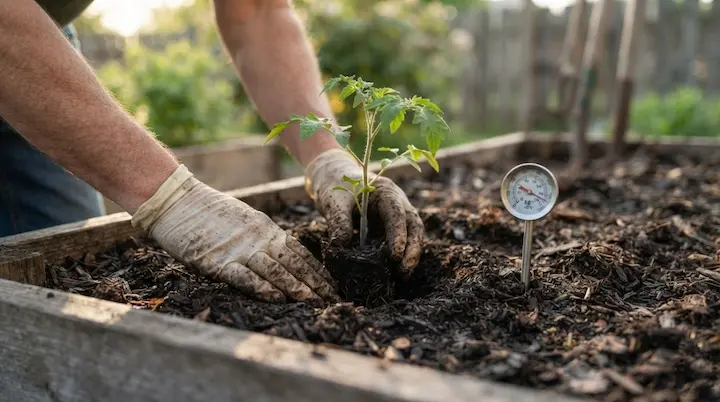
Timing follows the plant’s stage. In USDA Zones 4, 5, 6, 7 and 8, tomatoes go in after the last frost, once nights stay above 50°F and soil has warmed past 60°F.
- At planting: 1 tablespoon in the hole, only if a test or your soil type calls for it.
- First flowers: a drench or side dressing as the plant starts setting fruit.
- Fruit set: one more light feeding if lower leaves start fading.
- Mid-season: only when deficiency signs show, and no more than every 4 to 6 weeks.
Stop by late summer. Fall is no time to push growth, and a frost at 32°F ends the season anyway.
Planting Hole Method
Here’s how to use Epsom salt on tomatoes at planting time, when roots haven’t spread yet.
- Dig a hole about twice as wide as the root ball.
- Drop 1 tablespoon of Epsom salt in the bottom.
- Cover it with a thin layer of soil so crystals never touch the roots.
- Set the plant, backfill, and water well.
Skip this step if your bed is full of compost or a test showed plenty of magnesium.
Soil Drench and Side Dressing
These two methods cover plants that are already growing.
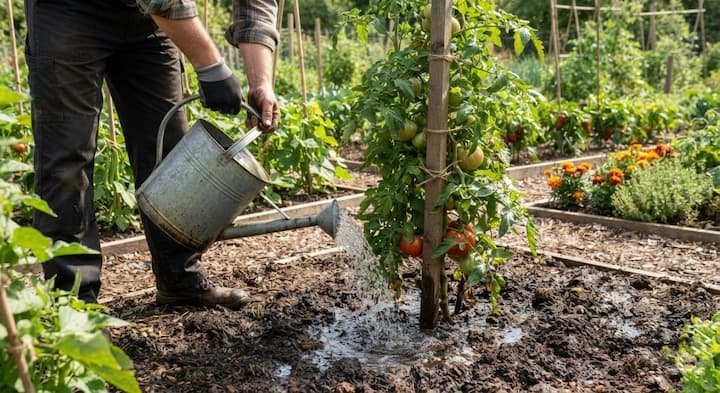
- Drench: dissolve 1 tablespoon in 1 gallon of water and pour it at the base, every 2 to 4 weeks at most.
- Side dressing: sprinkle 1 to 2 tablespoons in a ring 6 to 12 inches from the stem, scratch it into the top 1 to 2 inches, then water deeply.
- Repeat side dressing every 4 to 6 weeks.
- Never do a drench and a foliar spray in the same week.
Dry crystals sitting on top do almost nothing, so always water them in.
Foliar Spray Method
A foliar spray gets magnesium into the leaves fast, which helps when yellowing is already showing. Mix 1 tablespoon per gallon of water and stir until every crystal is gone.
- Spray early morning or late afternoon, never in hot midday sun.
- Skip days above 85°F and windy days.
- Coat the tops and undersides of the leaves, and keep it off open flowers and small fruit.
- Repeat every 2 to 4 weeks while symptoms last.
I only spray in the early morning, because wet leaves in strong sun scorch fast.
How do you know it worked? Old yellow leaves won’t turn green again. Watch the new growth over the next two to three weeks. Green new leaves mean it’s working. If nothing changes, the problem probably isn’t magnesium. Cut the worst leaves off with clean pruners and toss them in the trash.
Epsom Salt for Tomatoes in Containers
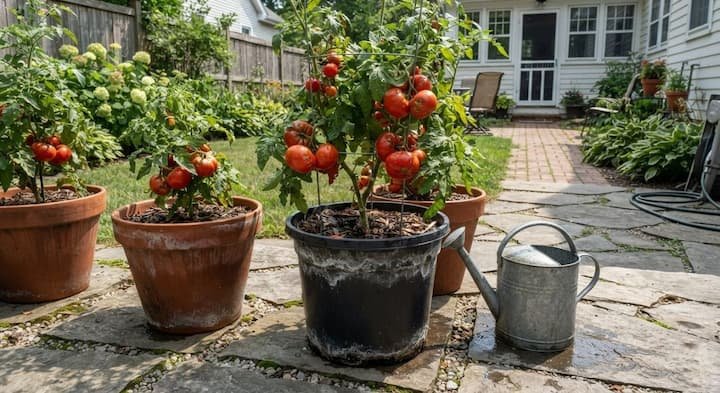
Pots flush nutrients out with every watering, so potted plants run low on magnesium sooner than in-ground ones. If you’re growing tomatoes in pots, use 1 tablespoon per gallon of water once a month, in place of a regular watering.
Watch for a white crust on the soil or the pot rim. That’s salt buildup. Flush with plain water until it runs out of the drainage holes. Peppers and other container vegetables can handle the same low dose.
Dosage Cheat Sheet
Advice online is all over the place, from 1 tablespoon to 2 tablespoons per gallon, to a full cup per 100 square feet of bed. The numbers clash because some writers dose per gallon, some per plant height (1 tablespoon per foot of height, twice a month, is a common one), and few base any of it on a soil test.
That height rule adds up fast on a tall plant, and the cup is worse, so skip both unless a test says so. Start low, because you can always add more later, but you can’t pull magnesium back out.
| Method | Amount | How often | Skip it when |
|---|---|---|---|
| Planting hole | 1 tbsp per hole | Once | Test shows enough magnesium |
| Soil drench | 1 tbsp per gallon | Every 2 to 4 weeks | Plants look green and healthy |
| Side dressing | 1 to 2 tbsp per plant | Every 4 to 6 weeks | Same week as a drench |
| Foliar spray | 1 tbsp per gallon | Every 2 to 4 weeks | Hot, sunny or windy day |
| Container | 1 tbsp per gallon | Monthly | White crust on the soil |
Common Mistakes and Signs of Too Much
- Pouring dry crystals right onto the roots.
- Spraying in midday sun.
- Dosing every week.
- Pairing it with a high-potassium feed, since potassium also blocks magnesium uptake.
- Using it as a blossom end rot cure.
I made the weekly dosing mistake in my second season, and the leaf edges crisped up fast.
Too much shows up as scorched leaf edges, stalled growth and, ironically, blossom end rot as calcium gets crowded out. To fix it, water deeply and slowly with plain water for a few days to push the extra salts below the roots, then hold off on more.
Excess salts can also wash into groundwater, so don’t dump leftover solution on the driveway or down a storm drain. Pour it on a garden bed.
Epsom Salt Tomato Fertilizer Alternatives and a Full Feeding Plan
An Epsom salt tomato fertilizer routine only covers magnesium and sulfur. Tomatoes also need nitrogen, phosphorus, potassium and calcium, so Epsom salt is a supplement, never the main feed.
- Compost: slow and balanced, and easy to make if you start a compost pile.
- Worm castings: a gentle feed that won’t burn roots.
- Dolomite lime: adds calcium and magnesium together, but it raises pH, so use it only on acidic soil.
- Balanced tomato fertilizer, applied on the label schedule.
- Sulfur shortage: horticultural sulfur works better than Epsom salt.
- Magnesium sulfate for tomatoes: only when a test or clear symptoms back it up.
Then cover the basics: 6 to 8 hours of sun, deep watering, mulch, good air circulation, well-draining soil, and solid support like a sturdy tomato trellis. Add good companion plants and the bed needs a lot less rescuing.
Small doses are fine in organic gardens. Store the box dry and sealed, away from kids and pets. I’d rather build soil with compost than keep rescuing plants with Epsom salt.
Final Thoughts:
Epsom salt for tomato plants is a fix, not a growth hack. Test first, use it only when leaves show a real magnesium shortage, and stick to small doses. Water evenly, feed the whole plant, and keep the box for the days it’s truly needed. Do that, and your backyard tomatoes get what they need without extra salt piling up in the soil.