You’ve probably heard two completely opposite opinions about this one neighbor swears by it, another warns it will wipe out your entire worm colony overnight. So can you put citrus peels in vermicompost without any risk, or is that just another gardening myth passed around online?
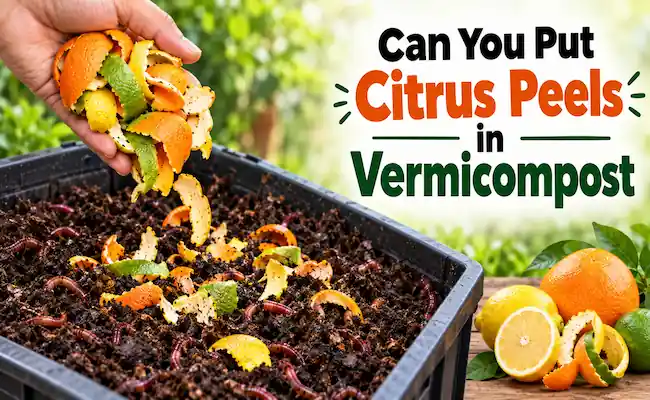
I get asked this question a lot, and the honest answer sits somewhere between the two extremes. Before you toss that orange peel into your worm bin, here’s what I’ve learned from testing it myself.
Why People Are Scared to Add Citrus Peels to a Worm Bin
The fear isn’t random, and most of it comes down to a handful of repeated claims:
- Citrus is acidic, and worms breathe through their skin.
- Strong orange or lemon oil smell feels “too harsh” for a bin.
- Peels are known to take longer to break down than other scraps.
- Old gardening forums repeat that citrus “kills” worm colonies.
I used to think the same way. My first worm bin was tiny, and I was terrified of killing my red wigglers with one wrong scrap. But acidity alone doesn’t tell the whole story it’s the concentration and quantity that actually matters, not the fruit itself. Most guides about composting citrus peels only talk about backyard piles, not worm bins, which is exactly where the confusion starts.
Can You Put Citrus Peels in Vermicompost? What The Science Says
Let’s answer this properly. Citrus peels contain a compound called d-limonene, the oil responsible for that strong citrus smell. Research published in the journal Molecules (2022) found that d-limonene extracted from citrus peel waste showed measurable antibacterial activity against common bacteria strains (source: PMC/NIH).
That’s a real, science-backed reason citrus peels can slow microbial activity in large amounts not because they’re “toxic,” but because they interfere with the same microbes worms rely on for digestion.
In small quantities, this effect is minimal:
- Your worm bin already holds millions of microorganisms doing the heavy lifting.
- A few chopped peels won’t shift that microbial balance.
- Concentration, not the citrus itself, decides the outcome.
I like to think of it the same way I’d think about spice in cooking a pinch adds flavor, a handful overwhelms the dish. So yes, you can put citrus peels in vermicompost, but the quantity and preparation decide whether it helps or hurts.
How Worms Actually React to Citrus Waste
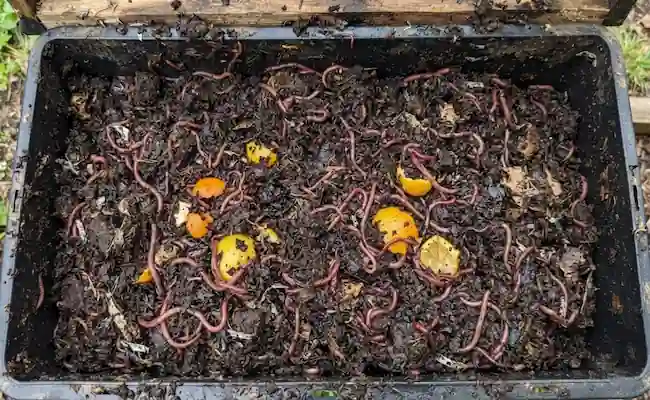
Red wigglers, the worms most people use in vermicomposting, are sensitive to strong odors and moisture changes. In my experience, they don’t get harmed by citrus so much as they avoid it temporarily:
- Worms often crawl away from a fresh peel for a day or two.
- This is avoidance behavior, not injury.
- Once oils dissipate and the peel softens, worms return and feed normally.
- Real trouble only starts with bulk additions or unburied surface waste.
Before You Add Any Citrus Peel to the Bin
This part gets skipped in most guides, and it matters more than people think:
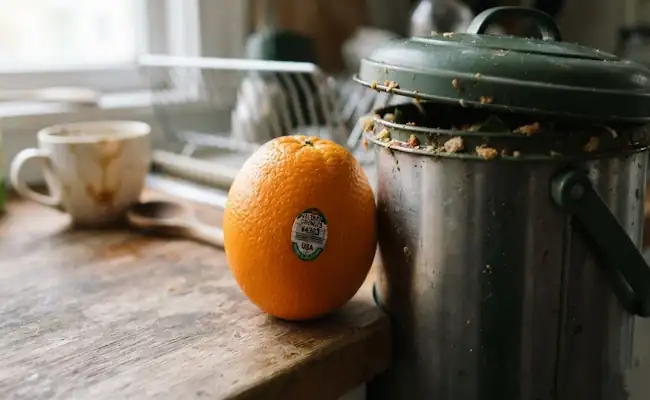
- Peel off and discard any stickers or produce labels first.
- Wipe or rinse off commercial wax coating if the fruit isn’t organic.
- Skip peels from fruit treated with visible fungicide residue.
- Never add whole citrus fruit always cut it open and use the peel in pieces.
- Store-bought citrus almost always carries some coating that won’t break down like organic matter, so this small prep step saves a headache later.

Orange Peels in a Worm Bin vs Other Citrus: Which Is Safer
Not all citrus behaves the same way once it hits the bedding.
| Citrus Type | Acidity Level | Worm Bin Safety |
|---|---|---|
| Orange | Mild | Safest option, small pieces only |
| Mandarin/Clementine | Mild | Breaks down fastest |
| Lemon | High | Use very sparingly |
| Lime | High | Same caution as lemon |
| Grapefruit | Moderate, thick rind | Slow to break down, chop small |
Adding orange peels in a worm bin is generally the easiest starting point if you’re nervous about vermicomposting citrus for the first time. A few quick pointers on why:
- Lemons and limes carry a sharper acid load keep those to a tiny buried amount.
- Grapefruit rinds are thick, so cut them small or expect a slower breakdown.
- Thin mandarin peels soften within days; thick navel orange rinds can take weeks.
- When in doubt, start with the mildest citrus you have and build confidence from there.
The Right Way to Add Citrus Peels in Worm Compost
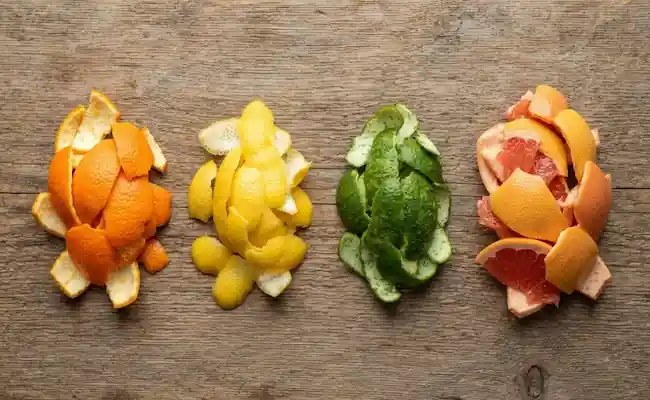
- Chop peels into pieces roughly half an inch (1.3 cm) or smaller.
- Bury them under the bedding instead of leaving them exposed.
- Add only a small handful per week, not a daily habit.
- Mix with shredded cardboard or dry leaves to balance moisture.
- Wait until worms have processed one batch before adding the next.
I follow this exact routine in my own bin, and citrus peels in worm compost stopped being a concern the moment I started chopping and burying instead of tossing pieces in whole. If you’re setting up a bin for the first time, treat it the same way you’d approach building a compost pile from scratch start small, watch how it behaves, then scale up.
How Much Is Too Much for Your Worm Bin
There isn’t a single fixed number that works for every bin, but here’s a rough guide:
- Small indoor bin, around 2 feet (60 cm) wide 1–2 tablespoons of chopped peel per week
- Larger outdoor worm bin, 3 to 4 feet (0.9 to 1.2 m) wide slightly more, spread across different spots
- Any bin, any size stop adding more once worms stop touching the last batch
Watch your worms instead of the calendar. A healthy bin should show worms actively working through the peel within about a week bin size, bedding moisture, and room temperature all affect this timeline, so treat these numbers as a starting point, not a strict rule.
Signs Your Worm Bin Isn’t Handling Citrus Well
- A sour, fermented smell instead of an earthy one.
- Worms clustering at the bin’s edges or lid.
- Peels sitting untouched for over two weeks.
- Excess moisture pooling at the bottom.
If you notice any of these, don’t panic it’s usually fixable. Remove the unprocessed citrus, add dry bedding like shredded newspaper, and give the bin a week to recover before adding anything acidic again. I made this exact mistake once after adding too many lemon peels during juicing season, and the bin bounced back within ten days once I backed off and slowed down.
Vermicomposting Citrus Waste vs Regular Composting
If your worm bin still feels risky, remember that vermicomposting citrus waste isn’t your only option. A regular outdoor compost pile handles citrus more easily because it isn’t dependent on live animals reacting to smell or acidity:
- EPA’s home composting guidance classifies fruit scraps, including citrus peels, as ordinary compostable “greens” (source: EPA).
- Finished compost consistently tests near neutral pH regardless of citrus input.
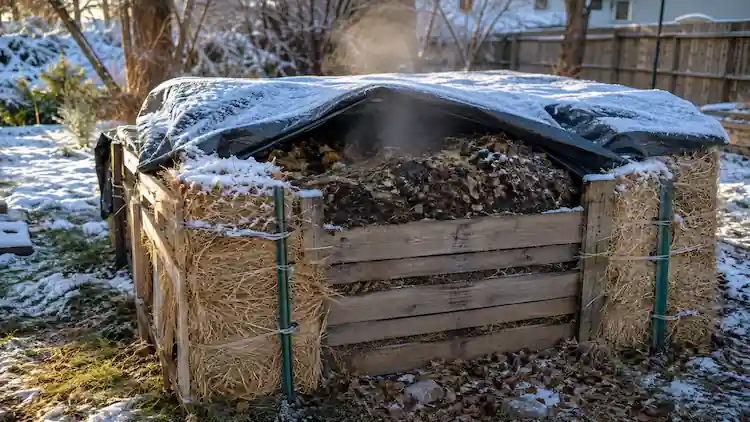
- Hot composting piles reach around 60ºC (140ºF) at the core, breaking down peels fast and neutralizing acidity.
- A worm bin, by comparison, should stay closer to 15-25ºC (59-77ºF) for the worms to stay healthy.
If you already run both systems, sending citrus scraps to hot composting instead of the worm bin avoids the whole guessing game, and it’s worth checking what else belongs in your compost bin if you want to balance the pile properly.
What Not to Add, Even If It’s “Citrus”
A short list worth keeping in mind before you start:
- Whole citrus fruit dumped in one go always chop first.
- Heavily waxed or stickered rinds that haven’t been cleaned.
- Large batches of citrus added on the same day.
- Citrus mixed with strong-smelling alliums like onion or garlic in the same handful.
Smart Alternatives If You’d Rather Not Risk It
You don’t have to choose between wasting citrus scraps or worrying about your worms:
- Freeze citrus peels and add them slowly, a little at a time, over several weeks.
- Dry peels in the sun first this reduces oil concentration significantly.
- Route citrus waste to your outdoor pile and save the worm bin for softer scraps.
- Pair peels with high-carbon material like dry leaves, or even coffee grounds, to balance acidity.
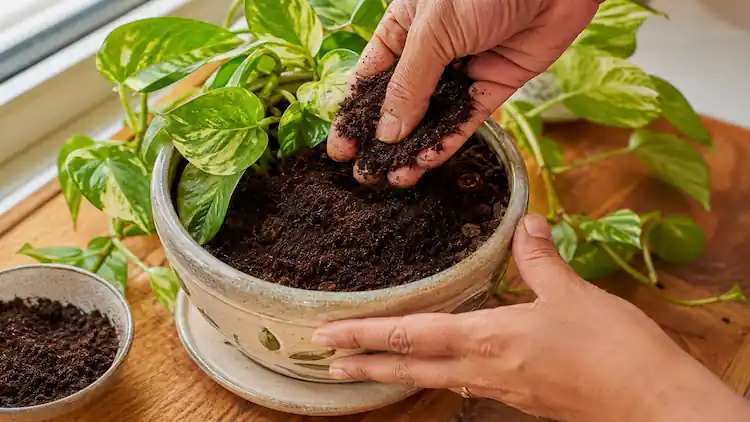
I personally split my kitchen scraps this way softer waste goes to the worms, and citrus goes to the outdoor pile, especially during winter composting months when the pile needs the extra nitrogen boost anyway. The leftover worm castings from the softer scraps still work brilliantly as fertilizer for indoor plants, so nothing really goes to waste either way.
So, can you put citrus peels in vermicompost? Yes, in small, chopped, buried amounts just don’t treat it like every other kitchen scrap. Worms tolerate citrus fine when it’s introduced slowly and mixed with enough bedding to soften the acidity and smell.
Final Thoughts:
What I’ve found over time is that patience matters more than any exact formula here. Start small, watch how your bin actually reacts instead of following someone else’s numbers blindly, and adjust as you go. Once you get the balance right, composting citrus peels in a worm system stops being something to fear and just becomes another regular part of a healthy routine no drama, no dead worms, just one more scrap put to good use.