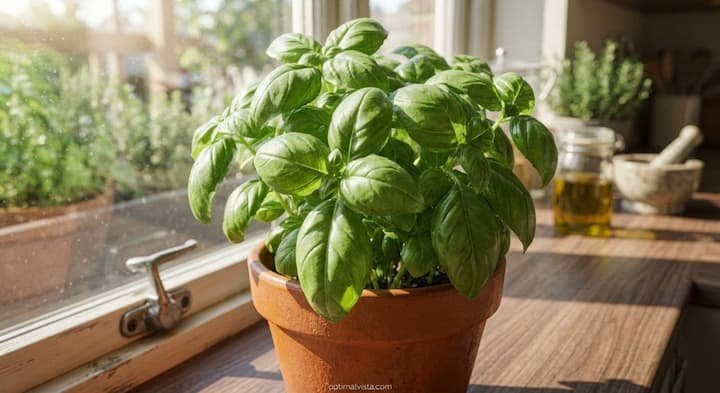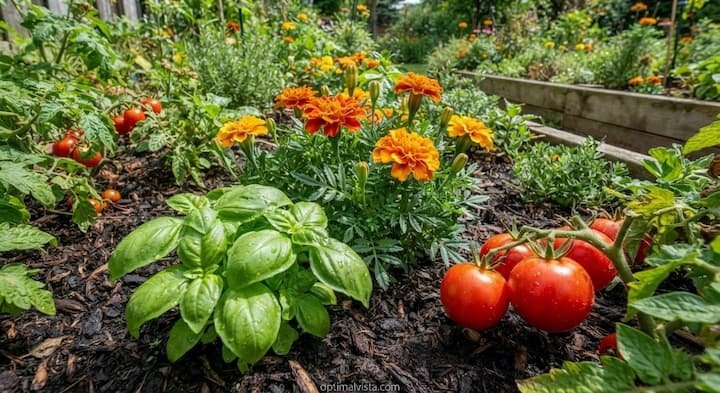
Ever wonder why one basil plant turns into a thick, leafy bush while the one right beside it stays tall, skinny, and bitter? Most of the time, it comes down to a single snip. If you’re after how to prune basil for maximum growth.
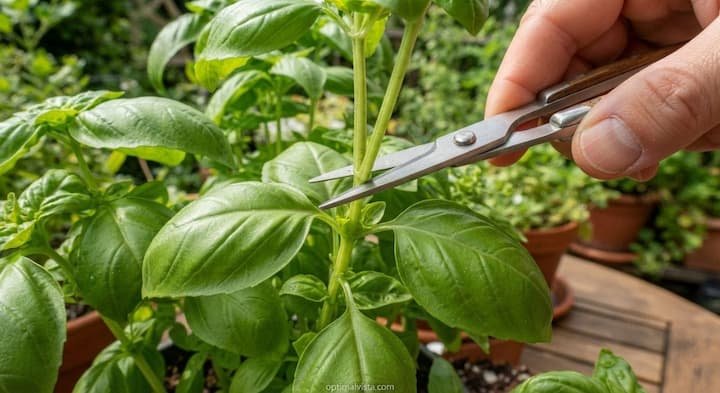
Here’s the short answer: cut the main stem about 1/4 inch above a pair of leaves once the plant has three or four sets, then repeat every couple of weeks. That’s the whole idea behind a full, bushy plant. I’ll walk through the timing, the tools, and the small mistakes that quietly stall your harvest.
Why Pruning Basil Plants Makes Them Bushier
Basil grows from one main stem, and the tip at the top sends down a signal that keeps the buds below it asleep. So the plant just keeps stretching upward.
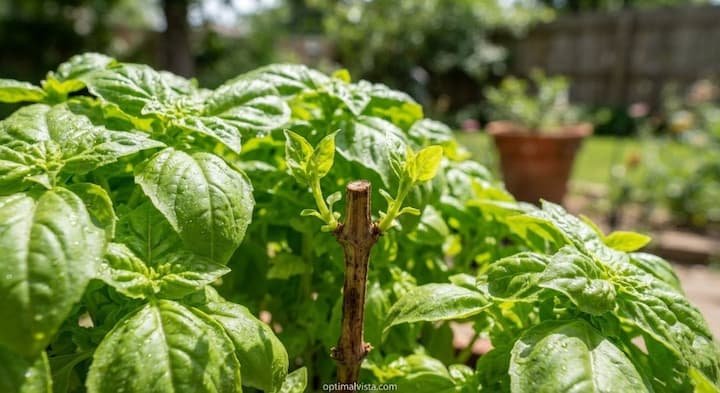
Snip that tip off and the sleeping buds, tucked in the joint where each pair of leaves meets the stem, wake up and grow into two new stems. One stem becomes two, two become four, and the plant fills out fast.
Flavor ties in too. Basil’s taste comes from aromatic oils in the leaves, and a plant racing upward spreads those oils thin, while a bushy one keeps making fresh leaves full of them.
- More stems means more leaves on every plant.
- Fresh growth keeps the leaves tender and sweet, since the plant keeps making new leaves instead of tough, stretched-out stems.
- Pruning basil plants opens up the center, so light and air reach the inner leaves and fungal problems like downy mildew have a harder time.
Pruning vs Pinching vs Harvesting
These three get mixed up all the time. Pinching means nipping off a soft tip with your fingernails. Pruning is a cleaner cut on a thicker stem with pruners or scissors. Harvesting is just picking what you plan to eat. The nice part is that one good cut does all three jobs at once.
What doesn’t work is plucking single leaves off the sides. You get dinner, but the plant never gets the message to branch, and you end up with a bare stalk and a tuft on top. Take whole stem tips instead. For the kitchen side of things, here’s how to harvest basil safely.
Tools You Need Before You Cut
Sharp matters more than fancy. A dull blade crushes the stem, and a crushed stem heals slowly and invites rot, and a torn cut gives disease an easy way in.
- Fingernails: perfect for soft new tips and flower buds.
- Herb snips or small scissors: my go-to for almost every cut.
- Hand pruners: worth grabbing for thick, woody stems, especially if you’re learning how to trim basil on an older plant.
- Rubbing alcohol and a rag: wipe the blades between plants so nothing spreads.

When to Make the First Cut
Wait until the plant is 6 to 8 inches tall with three or four sets of true leaves, which is roughly six to eight leaves total. Any earlier and a seedling doesn’t have enough leaf area to bounce back.
If you start from seed, that usually lands a few weeks after sprouting. Plan on the first real harvest about a month after planting, once small shoots are ready to take.
Outdoors, wait until frost is behind you. Basil sulks when nights fall under 50°F, and frost at 32°F kills it outright. In USDA Zones 4, 5, 6, 7 and 8, that usually means late spring, and our planting time guide covers the details.
How to Prune Basil for Maximum Growth, Step by Step
- Follow the main stem down to a pair of leaves. In the joint where the leaf stalks meet the stem, you’ll spot two tiny baby leaves. That joint is the node.
- Cut about 1/4 inch above that pair. A short stub is fine, but a long bare one dries out and turns brown.
- Make a clean, straight cut. Don’t twist or yank, because torn stems heal slowly.
- Leave at least one or two sets of leaves below the cut so the plant can keep feeding itself.
- Work from the top down, one stem at a time, so the plant stays balanced.
Within a week or two, those baby leaves turn into a pair of new stems. When each one has a few sets of leaves, repeat the cut. Everything you snip is edible, so you’re harvesting while you prune.

How Much Can You Cut at Once
Stick to about one-third of the plant per session. Leaves feed the roots, so stripping too many at once stalls everything underground. In my experience, a plant cut back harder than that just sits there for two weeks.
Never cut down to bare soil either, because a stem with no leaves has nothing left to regrow from. After a bigger harvest, give the plant 7 to 10 days before the next one.
Think of the plant in layers:
- Top third: your cutting zone, with growing tips, long stems, and flower buds.
- Bottom two-thirds: the protected zone, where big mature leaves catch sun and feed the roots.
- Take too much and the roots starve and die back, and the bare inner stems can sunscald.
How to Trim Basil From a Grocery Store Pot
That supermarket pot is usually a pile of seedlings packed together. Gently split the clump into small groups, repot each in fresh potting mix, and let them settle for a few days.
Then cut each plant back by about a third, just above a pair of leaves. That’s how to trim basil that showed up tall and thin, and it turns a sad windowsill herb into a real plant within a few weeks.

Pruning in Pots, Yard Beds and Indoors
Pruning basil plants in containers follows the same steps, but the conditions change how often you’ll be cutting.
- Patio pots: soil heats up and dries out quickly, so cut in the morning and water at the base afterward.
- Backyard beds: leave 10 to 12 inches between plants so air moves through, and keep up with watering outdoor basil.
- Indoors: a sunny south window or a grow light for 6 to 8 hours a day, and since plants stretch fast without it, cut sooner. Our indoor basil pots guide covers the setup.
Pruning Different Types of Basil
Genovese, lemon, and other sweet basils follow the standard cut. Greek globe basil grows in tight little domes with tiny leaves, so skip the node-by-node routine and shear it lightly, like a small hedge.
Thai basil has purple stems and flower stalks that show up early, so keep shears nearby and clip those stalks as they appear. Purple types hold their deepest color with plenty of sun, and holy basil (tulsi) takes the same node cut. If you’re deciding between types, our Thai basil care guide compares them.
A few varieties make life easier. Everleaf and Emerald Towers flower weeks later than most, and Pesto Perpetuo doesn’t flower at all.
Pinch Back Basil Flower Buds Before They Open
Flower buds show up at the tip of a stem as a tight cluster of tiny leaves. Left alone, they stretch into spikes with small white flowers, or purple ones on Thai basil.
Clemson Cooperative Extension notes that many basil varieties start making flower spikes by mid-summer, and the buds should come off as soon as they show for the most flavorful leaves. Once a stem flowers, the plant sends its energy into spikes and seed, leaf growth slows down, the stem turns tough and woody, and the taste turns bitter.
Heat, dry soil, and plain old age all push basil toward flowering, so steady water and sun buy you extra weeks. It’s much easier to pinch back basil early than to fix a flowered plant later.
- Look at the top of each stem for a dense cluster of tiny leaves.
- Pinch back basil buds right above the next set of leaves.
- Check every week, or twice a week during July heat.
- Toss the buds in pesto or a salad instead of the trash.
- Let one plant bloom for the bees, or to save basil seeds for next year.

Cutting Back Basil That Got Leggy or Flowered
Missed a few weeks? It happens to everyone, and the plant can still recover. Cutting back basil in two rounds, about a week apart, is gentler than one big chop.
- Snip every flower spike first.
- Cut each stem back to just above a pair of healthy leaves, taking no more than a third of the plant per round.
- Remove any bare, woody stem that has no leaves.
- Never go below the lowest healthy leaves, because cutting back basil to a bare stalk usually kills it.
After that, water well, give it full sun, and look for new shoots within a week or two.

Best Time of Day and Weather for Pruning
Morning, after the dew dries, on a mild day is the sweet spot. I like to cut before the heat builds because fresh cuts lose water fast in afternoon sun.
Skip pruning in a heat wave, and skip it when the leaves are wet, since damp cuts are an open door for fungus. Cutting right before a cold snap is a bad idea too, because the plant can’t push out new growth when nights are chilly.
How Often to Prune Basil
You’ll see advice anywhere from every week to every four weeks, and both can be right. It depends on how fast the plant is growing.
My rule: cut again once the new shoots have two or three sets of leaves.
| Situation | What to do | How often |
|---|---|---|
| Young plant, 6 to 8 inches tall | First cut above a pair of leaves | Once |
| Peak summer, hot and sunny | Trim tips and pinch buds | Every 1 to 2 weeks |
| Cooler or slower stretch | Light trim only | Every 3 to 4 weeks |
| Right after a big harvest | Rest the plant | 7 to 10 days |
| Before the first fall frost | Final harvest | Once |
New shoots usually show up within a week or two after a cut, so don’t worry if nothing happens in the first few days.
Care After Pruning
Fresh cuts need a little backup.
- Water the soil, not the leaves, so the cuts stay dry.
- Give the plant 6 to 8 hours of sun to power new growth.
- Feed lightly every 3 to 4 weeks with an organic basil fertilizer, and after a big harvest give it a splash of liquid fish emulsion, since leafy growth runs on nitrogen.
- Keep lower leaves off wet soil to cut down on soil-borne disease.
- Space plants so air moves through the leaves, which keeps downy mildew down.
Common Pruning Mistakes
- Plucking single leaves instead of whole stem tips.
- Cutting below the lowest set of leaves.
- Leaving a stub longer than about 1/2 inch above the node, and I think this one trips up the most people.
- Using dull or dirty blades.
- Taking more than a third of the plant at once.
- Pruning a tiny seedling with only two leaves.
- Cutting in midday heat.
- Waiting until the flowers open.
Basil Not Branching After Pruning?
Cut it and nothing happened? Check the table below for the usual suspects.
| Problem | Likely cause | Fix |
|---|---|---|
| No new shoots after two weeks | Cut too low, too little sun, or cold nights | Move to full sun, wait for warm weather, and cut above a leaf pair next time |
| Black or soft stem at the cut | Torn cut or a stub that stayed wet | Re-cut cleanly above the next pair with a clean blade |
| Leaves drooping after pruning | Too much removed at once, or dry soil | Water deeply and hold off on cuts for 7 to 10 days |
| Flower buds coming back fast | Heat or dry-soil stress | Pinch more often and water deeper |
If regrowth is just slow, weak light or cool nights are the usual cause, so move the pot to a sunnier spot and give it another week.
If the leaves turn yellow after a cut, read up on yellow basil leaves. If they start to curl, see curling basil leaves.
End-of-Season Pruning and Using Your Trimmings
Fall calls for one last big cut. In USDA Zones 4, 5, 6, 7 and 8, the first frost ends the season, so harvest every stem before nights hit 32°F.
Here’s what to do with the pile:
- Chop the leaves and freeze them in olive oil in ice cube trays, and our guide on storing fresh basil has more options.
- Dry small bundles tied with twine in a warm room out of direct sun for a week or two, though freezing usually keeps more flavor.
- Blend a batch of pesto.
- Root soft stem tips in a glass of water to propagate basil cuttings for a windowsill plant.
- Share extras with neighbors, or at the swap table if you’re a community gardener.
Conclusion:
That’s how to prune basil for maximum growth: wait for three or four sets of leaves, cut a quarter inch above a pair, take no more than a third, and pinch every flower bud. Do that every week or two through summer and your plants stay thick, tender, and loaded with leaves until the first fall frost. Grab your pruners and go cut something.