
Why does one basil stem grow roots in a week while another rots in the same glass of water?

It comes down to where you cut and what you strip off. Once you know how to propagate basil from cuttings, one healthy plant in your backyard can turn into ten, and you stop buying seed packets. Most beginners clip the wrong spot on the stem, and that one slip decides everything.
Short answer: cut a 4 to 6 inch stem with no flowers just below a leaf node, strip the bottom leaves, and set it in water or moist potting mix. Roots show up in 10 to 14 days.
Why It Is Smarter to Grow Basil From Cuttings
Seeds are slow. In USDA Zones 2, 3, 4, 5 and 6, you start basil seed indoors 6 to 8 weeks before the plants go outside. In USDA Zones 7, 8, 9 and 10 you can sow right in the yard, but you still wait about 8 weeks before there is anything to clip.
If you want the seed route anyway, here is a guide on starting basil seeds, and one on saving basil seeds for next spring.
- About half the wait you get with seed.
- You can grow basil from cuttings all year, even on a winter windowsill.
- The new plant is a clone, so you get the same flavor you liked.
- Costs nothing when you already own a plant.
How to Propagate Basil From Cuttings in Each Season
Late spring through early August is when it works best, because the plants are growing fast and every stem is full of energy. That is the easiest window to grow basil from cuttings, and success rates drop in fall.
Take them in the morning, when stems hold the most water, and cut before the plant starts flowering. You can clip every 2 to 3 weeks, just never take more than a third of the plant at once.
- Outdoors, wait until nights stay above 50°F.
- Best clipping hours are between 7 and 9 AM.
- Fall and winter: go indoors with a bright window or a grow light, and expect slower rooting.
- For a longer winter setup, read up on indoor basil pots.
Where to Get Basil for Cuttings
The grocery store pot is the best deal I know of. Each pot usually holds five or six plants jammed together, and splitting that tangle of roots kills about half of them. Clipping basil stem cuttings from the tops is much easier, and the bottoms push out fresh growth afterward.
- Grocery store pots, sold all year.
- Garden centers, where bigger plants can be trimmed back and the trimmings rooted.
- Your own backyard plant, clipped in mid-summer for a fall crop.
- A friend’s garden, since most gardeners have more basil than they can use.
- Farmer’s market bunches, with the ends trimmed fresh before rooting.
Whatever the source, pick plants that look green and firm, with no spots and no bugs on the undersides of the leaves.
Which Basil Varieties Root Easily
Almost every type works. Genovese, Thai, lemon, Greek and purple basil all root well, and plain sweet basil is the most reliable of the bunch. Heirloom types can be fussier, and holy basil (tulsi) gets woody fast, so take a few extra stems when you try those.
If you cannot decide between types, the sweet versus Thai care guide lays out the differences.
How to Pick the Perfect Stem
- No flowers or flower buds, since flowering stems root poorly.
- 4 to 6 inches long with at least 2 sets of leaves.
- 2 to 3 nodes, and about 1/8 inch thick.
- Fresh growth from the top of the plant, which roots faster than older stems.
Check the parent plant too. Pests and downy mildew, which shows up as yellow leaves with gray fuzz underneath, travel right along with your cutting. Never take stems from a sick plant.
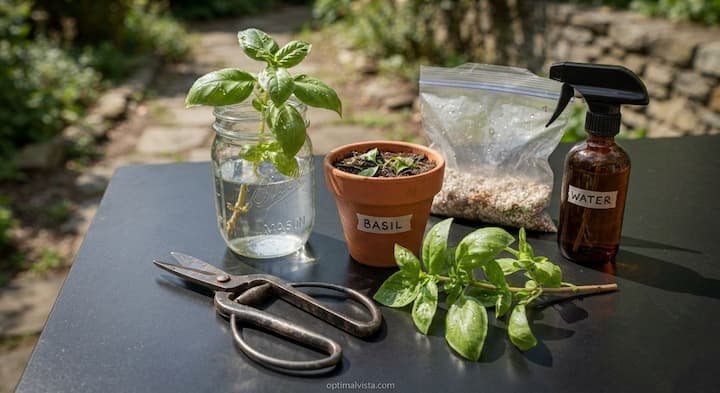
Tools and Supplies You Need
- Sharp snips or pruners for basil stem cuttings, wiped with 70% rubbing alcohol.
- A clear glass or mason jar at least 4 inches deep, washed with mild soap.
- 4 inch pots with drainage holes, or yogurt cups with holes poked in the bottom.
- Fresh potting mix, pre-moistened.
- A clear plastic bag or dome.
- A spray bottle for misting.
Dull blades crush stems and invite rot, so keep them sharp.
Taking Basil Stem Cuttings the Right Way
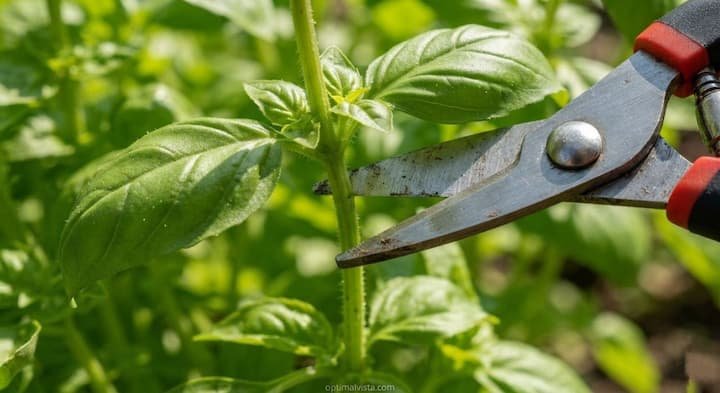
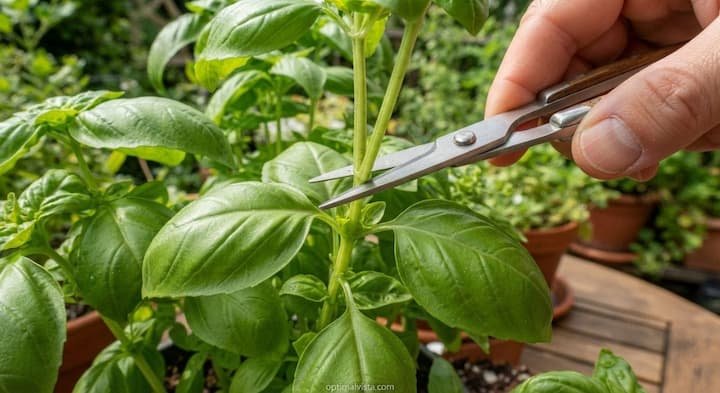
Count 2 to 4 nodes up from the soil line, then cut about 1/4 to 1/2 inch below a leaf node at a 45 degree angle. The node is the bump where leaves meet the stem, and that is where roots form.
Cuts through the smooth stretch between nodes almost never root. Use one clean snip so you do not crush the stem.
- Strip every leaf from the bottom 2 to 3 inches.
- Keep the top 2 or 3 sets of leaves so the stem can still feed itself.
- Never leave a leaf underwater, since it rots and clouds the jar.
- Optional for experienced growers: a tiny vertical slit near the node can mean more roots.
Water or Soil: Which Method Wins
Both work, so it comes down to what you want out of it. Rooting basil cuttings in water lets you watch the roots grow and is less messy, which is great for beginners. Basil cuttings in soil take a little longer and you cannot see the roots, but there is no move from jar to pot later.
| Water | Soil | |
|---|---|---|
| First roots | 7 to 14 days | 2 to 4 weeks |
| See the roots? | Yes, through the glass | No, use the tug test |
| Daily work | Change water every 2 to 3 days | Mist daily and vent the bag |
| Transplant shock | Higher | Lower |
| Best for | Beginners and windowsills | Rooting a big batch |
My pick is water for the first round, because spotting a problem early saves stems. Switch to soil once you know the routine.
Rooting Basil Cuttings in Water Step by Step
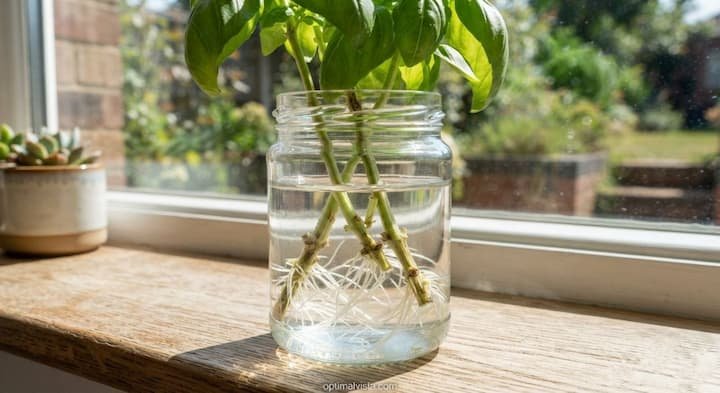
- Fill a jar with filtered or spring water. Chlorine can slow roots, so tap water should sit out for 24 hours first, though filtered is the safer bet.
- Pour in enough water to cover the bottom 2 inches of the stem, with no leaves touching it. Every node under water can sprout roots.
- Set the jar in bright, indirect light for 6 to 8 hours a day, where the room stays between 70°F and 80°F. Keep the air humid, around 60 to 70 percent, and away from drafts and heaters.
- Mist the leaves every day so they do not dry out, and check the water level daily.
- Leave the jar uncovered. No bag needed.
Changing Water and Preventing Rot
Swap the water every 2 to 3 days. Rinse the jar and the underwater part of the stem each time, because a slimy film builds up fast. Keep the jar out of direct sun and the water around 70°F to 75°F so algae and bacteria have a harder time.
- Cloudy or smelly water.
- Black or mushy spots at the bottom of the stem.
- Slime on the glass.
Cut above any dark spot and restart in fresh water.
Planting Basil Cuttings in Soil the Easy Way
- Fill a 4 inch pot with pre-moistened potting mix and press it down gently without packing it.
- Poke a hole and drop in the stem so 1 or 2 nodes sit under the surface, then firm the mix around it.
- Use 2 or 3 stems per pot so it does not get crowded.
- Cover the pot with a clear bag or dome to hold in humidity, and set it in bright, indirect light.
- Lift the cover once a day to mist and let in fresh air.
Keep the mix lightly damp, never wet. Leave the cover on until new leaves appear, usually around 2 weeks, then take it off for a little longer each day. A pot of plain perlite works too and drains fast, as long as you water it lightly every day or so.

Do You Need Rooting Hormone?
No. Basil roots on its own. Some guides call rooting hormone optional, but powder is a bad idea on an edible plant you plan to eat soon. I skip it every time.
- Plain water or clean mix is enough.
- Aloe vera gel and willow water are optional extras some gardeners use.
- Plain, moist mix is all basil cuttings in soil need.
- If nothing roots, fix the light, warmth and cut before adding anything.
Basil Cutting Timeline, Day by Day
- Day 1: cut, strip the leaves, and set the stem in water or mix.
- Days 3 to 5: first water change, and nothing shows yet, which is normal.
- Days 7 to 14: rooting basil cuttings in water starts to show small white roots.
- Days 14 to 21: water roots reach 1 to 2 inches, and soil cuttings push out new leaves.
- Weeks 3 to 4: transplant or pot up.
- 2 to 3 weeks after transplant: first pinch.
- About 5 to 6 weeks from the day you cut: first real harvest.
When Cuttings Are Ready to Transplant
For water cuttings, wait for roots 1 to 2 inches long. Move them sooner and the stem is not strong enough for soil. For soil cuttings, give a stem a very gentle tug. If it feels anchored and new leaves are growing, it has rooted, and roots peeking out of the drainage holes is another sign.
Going outside? Harden the plants off over a week, with a little more outdoor time each day. Then wait until nights stay above 54°F and the soil is near 65°F, and check the best planting time for your area.
Moving Water Roots Into Soil Without Killing Them
Roots grown in water are thin and soft, so heavy mix can shock them. A cutting can sit in water for a few weeks, but it will not thrive there for long, so do not wait too long to pot it up.
- Use pre-moistened mix so the roots never hit dry soil.
- Rinse the roots gently to clear any slime, then bury them 1 to 2 inches deep at the same depth the stem sat in the jar.
- Water thoroughly once after potting.
- Keep the pot in shade for a few days, then move it into brighter light.
- Water lightly and do not drown it.
- Some gardeners root the stem in wet, mushy mix for a few days first, then move it to regular mix.

Best Potting Mix and Pot Size
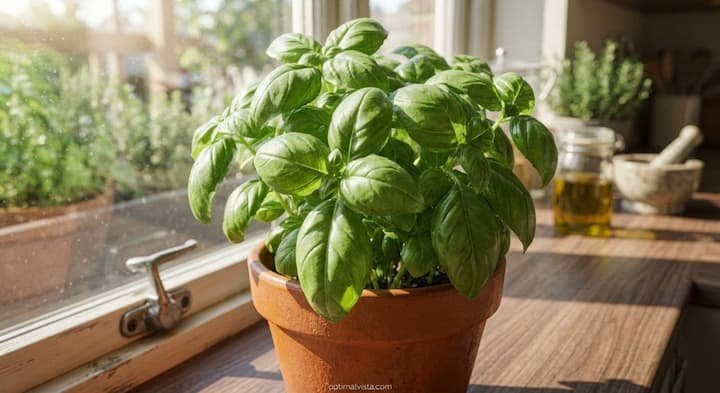
Basil wants loose mix that drains well. A blend with peat or coco coir, perlite, vermiculite and some compost works great. Start in a 4 to 6 inch pot with drainage holes, because roots sitting in water will rot.
Once the roots start circling the bottom, move up to a 1-gallon pot, or plant it in the yard about 12 inches from the next plant.
Light, Water and Temperature After Transplant
- 6 to 8 hours of direct sun a day (8 hours outdoors), or a grow light running 12 to 14 hours.
- Let the top inch dry out between waterings, and keep the mix damp but never soggy.
Outdoors, about 1 inch of water a week is a good start, and the watering outdoor basil guide covers how often. Temperature matters more than most people think.
In storage tests covered in a 2023 Rutgers review in Frontiers in Plant Science, basil leaves were injured below 54°F and badly damaged below 50°F, and they could turn black in about 3 days at 41°F. In my experience, a cold windowsill at night does more harm than any bug.
Pinching, Harvesting and Stopping Flowers
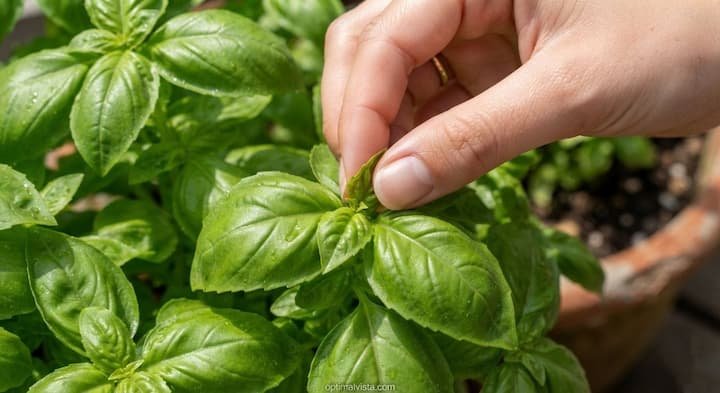
Once the plant has a few sets of leaves, pinch the top just above the second set. That makes two new stems, then four, and the plant gets bushy instead of tall and thin. Repeat every 2 to 4 weeks.
The pruning basil properly guide covers the full routine, and harvesting basil safely shows what to take. Got extras? Look at storing fresh basil.
Flowers are the real enemy. Once basil blooms, the leaves turn bitter and the stems get woody. Harvesting often keeps flowers away too. Cuttings also carry the age of the parent plant, so they can flower sooner than seedlings, and I clip a few stems every week so they never get the chance.
You can take cuttings from your cuttings too. Each round gets a little leggier and quicker to flower, so start fresh with a young plant or seed once a season.
When to Start Fertilizing
Cuttings do not need food while they root, so water only. Wait until the plant is settled in its pot and pushing new leaves, usually about 2 weeks after transplant.
Then use a diluted liquid fertilizer every 2 weeks and keep the soil pH between 6.0 and 6.8. An organic basil fertilizer is a good fit since you eat the leaves.
Why Basil Cuttings Fail and How to Fix Them
| Problem | Likely cause | Fix |
|---|---|---|
| Black or slimy stem | Leaves underwater or stale water | Re-cut above the dark spot, strip leaves, use fresh water |
| No roots after 4 weeks | Weak or flowering stem, cold room, dim light | Take a fresh stem from young top growth and keep it at 70°F to 80°F |
| Wilting after potting up | Transplant shock or soggy soil | Shade it for a few days and water lightly |
| Yellow leaves | Too much water or too little light | Cut back watering and brighten the spot. See yellowing basil leaves |
| Curling leaves | Dry air, heat or pests | Mist, move it somewhere cooler, check for bugs. See curling basil leaves |
| Aphids in the first 2 weeks | Pests that came with the parent plant | Treat right away |
Mistakes to Avoid
- Leaving leaves underwater.
- Using dull or dirty snips.
- Jumping to soil before roots reach 1 to 2 inches.
- Overwatering fresh pots.
- Setting bare cuttings in hot, direct afternoon sun.
- Taking stems from plants that already flowered.
- Leaving cuttings on a cold windowsill at night.
Other Herbs You Can Root the Same Way
The same steps work for other soft-stemmed herbs like mint, lemon balm, oregano, marjoram and bee balm. Even woody rosemary roots in water, but it takes about a month, so be patient.
Final Thoughts:
Now you know how to propagate basil from cuttings, and it really is just a clean cut, a jar or a pot, and a couple of weeks of patience. Start with three or four stems so one bad one does not sink the batch. Keep them warm, change the water, and pinch early. By next month your yard or windowsill will have more basil than you can use.


Pingback: How to Save Basil Seeds for Spring: 7 Easy Steps and Tips
Pingback: How to Grow Basil from Seed Indoors: A Step-by-Step Guide