Ever wondered why one basil plant that bolts and looks half dead in late summer can hand you enough seeds to fill a whole backyard bed next year? Those fuzzy flower spikes you keep pinching off are seed factories.

Here is the short answer on how to save basil seeds for spring: let one plant flower, wait until the spikes turn brown and crispy, rub out the tiny black seeds, dry them well, and keep them cool and dry until planting time. Do it right and you will never buy a packet again. Here is the full process, step by step.
Why Saving Basil Seeds Is Worth Your Time
One healthy plant can drop hundreds of seeds, far more than any backyard needs.
Here is why it pays off:
- Money: a packet runs a few dollars, while homegrown seed costs nothing once you own a plant.
- Your favorite variety: the exact basil you love comes back every year.
- Local adaptation: seeds from plants grown in your yard slowly adjust to your soil and weather. I think this is the best reason of all.
- Sharing and sustainability: less packaging, more self-reliance, and extra seeds for easy trades with a neighbor or a community gardener.
Home-Saved Seeds vs Store-Bought Seeds
Both work, but they act a little differently.
| Factor | Home-saved seeds | Store-bought seeds |
|---|---|---|
| Cost | Free after the first plant | Around $2 to $5 a packet at a garden center |
| Purity | Depends on how well you isolate plants | Usually high, often certified disease-free |
| Adaptation | Adjusts to your backyard over time | General purpose |
| Germination | Good when dried and stored well | Tested before sale |
Store-bought gives a more guaranteed start. Home-saved gives you free seed that fits your yard.
Can You Save Seeds From Every Basil Plant?
No. Basil is an annual in most places and a perennial only in USDA Zone 10, and not every plant makes seed worth keeping.
- Open-pollinated or heirloom: seeds grow into plants like the parent.
- F1 or hybrid: seeds may not sprout, or the plants come out different. GMO plants have the same problem. Check the packet or plant tag.
- Grocery store pots: could be either, so treat the first batch as a test.
- African Blue and other sterile types: skip seeds and use basil cuttings instead.
Best Basil Varieties for Seed Saving
These are the easiest picks:
- Genovese: classic sweet basil for pesto and a seed-saving favorite.
- Thai basil: anise flavor, purple stems, and flowers that bees love. Also a seed-saving favorite.
- Lemon basil: citrusy, with smaller leaves, and it crosses with other types.
- Purple basil: deep color for beds and borders, but it crosses with green types.
Not sure which one fits your yard? Read this sweet vs Thai comparison first.
How to Pick the Best Mother Plant
The plant you choose passes its traits to every seed, so skip weak or diseased ones.
Look for:
- Strong stems and rich leaf color, with no spots.
- The best flavor in your patch (taste a leaf).
- No pest damage.
- A plant that holds off bolting.
Fix problems early. Yellow basil leaves and curling basil leaves usually point to water or feeding trouble. Steady care matters too, so try an organic basil fertilizer and a good routine for watering outdoor basil.
How Basil Flowers and Makes Seeds
Basil is self-pollinating, so the flowers do not need bees, but insects still carry pollen between plants. Small white or purple blooms open along a spike. After pollination the petals fall off, and a small cup called the calyx stays behind with seeds inside.
Understanding this cycle is the key to saving basil seeds.
- Flowering: blooms open at the stem tips.
- Pod forming: petals drop and green pods remain.
- Maturity: pods turn brown and dry out.
When to Let Basil Flower Timing by USDA Zone
Seeds need 4 to 6 weeks after flowering, plus another week or two of drying. So start the clock about 8 weeks before your average first frost date, and stop pinching tips on your seed plant.
Here are rough starting points for USDA Zones 4, 5, 6, 7 and 8:
- Zones 4 and 5: let blooms open by mid-July.
- Zones 6 and 7: late July to early August.
- Zone 8: mid-August.
Check your own frost date, because Fall can arrive early. Long, warm summers mean ripe seed heads by late summer, while cooler areas get them right at the end of the season. Keep pruning basil on every other plant until then.
Leaves or Seeds? Keep Harvesting While You Wait
Flowers make leaves taste bitter, so you cannot have both from the same plant. The upside is that blooms attract pollinators your yard needs. In my experience, one or two plants per variety is plenty for seed.
- Seed plants: stop pinching and let the spikes bloom.
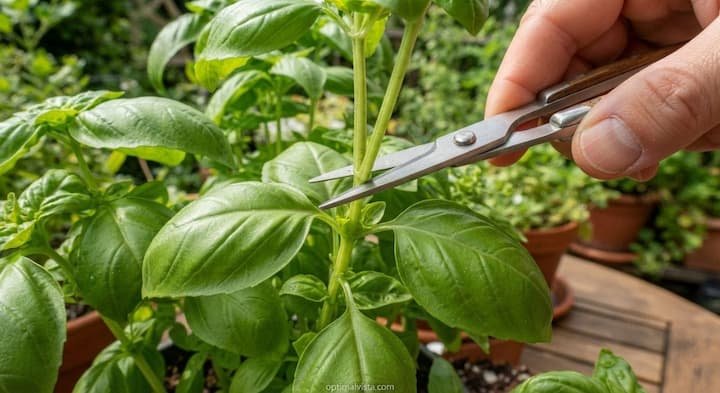
- Leaf plants: pinch off buds the moment they appear.
- Leaves from seed plants: pick them early, before buds show.
Use these tips to harvest basil properly from your leaf plants, and see storing fresh basil for the extras.
How to Tell When Basil Seeds Are Ready
Pods turn from green to brown and feel dry and brittle. Inside, the seeds are black, round and hard. Green or white seeds are not mature and will not sprout. Squeeze a spike, and it should crackle.
Once the spikes crackle, it is time to collect basil seeds. Check the plant daily as pods brown, since rain or wind can scatter ripe seed. Left alone, basil also self-seeds.
Mistakes to avoid:
- Picking too early, which gives you empty or soft seeds.
- Waiting too long, when pods split and scatter seed.
- Harvesting after rain, since wet pods invite mold.

How to Prevent Cross-Pollination
Basil mostly pollinates itself, but bees still move pollen between varieties, and seeds from crossed plants may not come true. Seed-saving groups often suggest about 150 feet between varieties, which is hard to pull off in a backyard.
Try these instead, or hand-pollinate one variety with a small brush:
- Let only one variety flower per season.
- Slip a fine mesh bag over each spike before the blooms open, and take it off once pods turn brown. Row covers over a whole bed also block pollinators.
- Stagger planting dates so varieties do not bloom together.
- Label every plant so nothing gets mixed up.
How to Collect Basil Seeds Without Losing Them
Seeds scatter easily, so do not shake the plant. Snip the whole spike instead.
- Pick a dry morning, after the dew is gone.
- Cut spikes with clean pruners.
- Drop them upside down in a paper bag.
- Collect basil seeds only when they are dry, because wet seeds turn to slimy gel.
- Slip a mesh bag over a ripening spike to catch anything that drops early.
I like to tie the mesh bag on a week before harvest. New spikes keep ripening, so you can gather several batches.

How to Dry the Spikes Properly
Paper bags beat plastic because they breathe, and plastic traps moisture. Keep the bag in a warm, airy spot away from rain, heat and humidity. Drying takes anywhere from 5 days to 4 weeks, so check weekly.
Shake the bag now and then, and pick any seeds stuck in husks by hand. Any spike with mold goes straight in the trash. I favor plain paper lunch bags.
- Warm, not hot.
- Low humidity.
- Top of the bag left open.
Frost Coming? Finish Drying Indoors
When Fall frost is in the forecast, 32°F will kill basil, and it already sulks under 50°F. Cut mostly brown spikes with about 6 inches of stem, hang them upside down in a paper bag indoors, and let them finish.
Fully green spikes usually will not ripen. You can also pot the whole plant in a 1-gallon container and bring it inside. This indoor basil pots guide covers the care.
How to Clean Basil Seeds
Cleaning is simple, and you do not need special tools.
- Rub dry spikes between your fingers over a tray.
- Use a sieve or colander for medium batches, with a bowl underneath.
- Winnow by blowing gently across the pile or running a fan on low, so the light chaff floats away.
- Pick out stubborn bits by hand and toss small, pale or damaged seeds.
- Clean basil seeds over a white plate so the black seeds stand out.
- Skip water, since wet seeds turn to gel.
Hand crumbling suits small batches, a sieve suits medium ones, and mechanical threshing only makes sense for huge batches. I do everything by hand because a few plants never need more.

Final Drying Before Storage
Seeds can feel dry and still hold moisture, and moisture means mold. Spread them in one layer on a plate or screen. Two to three days works in dry air, while a week or two in front of a low fan is safer in humid Fall weather.
Do not skip this step after you clean basil seeds. They are ready when they feel hard, not soft or tacky.
How to Store Basil Seeds: Containers and Labels
- Store basil seeds in paper envelopes, which breathe, or in a glass jar with a silica gel packet.
- Resealable plastic bags work only if the seeds are bone dry.
- Write the variety and the date on every container.
- Printable seed packets look nice and work well.
I write the variety and year on every envelope, because three unlabeled packets look identical by spring.

Best Temperature and Humidity for Seed Storage
Cool, dark and dry wins. A closet shelf is fine if you plan to store basil seeds for just one year. For longer, aim below 40°F, since a fridge works well, and keep humidity under 40%.
- Keep seeds away from the oven and other hot appliances.
- Use opaque containers or a dark shelf. The sweet spot is 32°F to 41°F.
- For long-term storage, a freezer works. Let the container reach room temperature before opening it, so condensation does not form.
- Freeze new seeds for 48 hours first to kill any insect eggs hiding in leftover debris.
How Long Do Saved Basil Seeds Last
According to Colorado State University Extension, vegetable and flower seeds keep at least one year on a room-temperature shelf without a significant drop in germination, and proper storage can stretch that to 10 or more years.
Basil usually stays good for 3 to 5 years when kept cool, but the sprout rate falls each year.
- Year 1: shelf storage is fine.
- Years 2 and 3: cool storage matters more.
- Years 4 and 5: expect fewer sprouts and sow thicker.
How to Test Seed Viability
Test older seeds before you plant a whole tray.
- Put 10 seeds on a damp paper towel.
- Fold it and slide it into a plastic bag.
- Keep it somewhere warm.
- Check after 5 to 7 days.
- Count the sprouts. Seven out of 10 means about 70%.
If the number is low, just sow a little thicker. Test once a year.

How to Save Basil Seeds for Spring: Sowing Them Right
Start seeds indoors 6 to 8 weeks before your last frost, which lands anywhere from March to early June across USDA Zones 4, 5, 6, 7 and 8. You can also direct sow once the soil is warm. See planting basil outdoors for dates and basil seed starting for the indoor routine.
- Barely cover the seeds with about 1/8 to 1/4 inch of mix, since they like light.
- Sow two seeds per pot, then thin to one.
- Keep the mix moist, not soggy, and near 70°F. Expect sprouts in 5 to 10 days.
- Give them a bright window or a grow light.
- Harden off, then transplant when nights stay above 50°F.

Why Saved Basil Seeds Fail Troubleshooting
Most problems come from timing, moisture or crossed plants.
| Problem | Likely cause | Fix |
|---|---|---|
| Few or no seeds | Poor pollination, heat waves, pests | Attract pollinators, shade plants in extreme heat, dab flowers with a small brush |
| Empty husks | Picked too early | Wait for brown, crispy spikes |
| Mold | Damp pods or slow drying | Dry fully and add silica gel |
| Insects in the seed | Leftover debris carrying eggs | Clean well and freeze for 48 hours |
| Low germination | Old or immature seeds | Test first and sow thicker |
| Plants look different | Crossed pollen or a hybrid parent | Isolate varieties and check for F1 |
| Seeds will not sprout | Sown too deep, or soil too wet or compacted | Barely cover, keep moist, not wet, and use a loose mix |
Level Up: Selection, Breeding and Seed Swaps
Repeat the whole cycle every midsummer, and each round gets easier.
- Save seed from your best plants, and pull weak or off-type plants before they flower.
- Over a few seasons, your seeds adapt to your yard, a bit like the climate-adapted lines university breeding programs build.
- Cross two varieties by hand with a small brush, snip the male anthers off the receiving blooms, then bag the flowers.
- Join a seed swap or Seed Savers Exchange to find rare basils.
- Keep notes on every season of saving basil seeds: variety, flowering date and germination result.
Final Thoughts:
Now you know how to save basil seeds for spring, from picking a healthy mother plant to a labeled envelope in a cool closet. Start with one plant and one variety this year. Dry everything fully, test a few seeds, and sow when nights stay above 50°F. Next summer you will have free basil, and extra seeds to share with a neighbor.