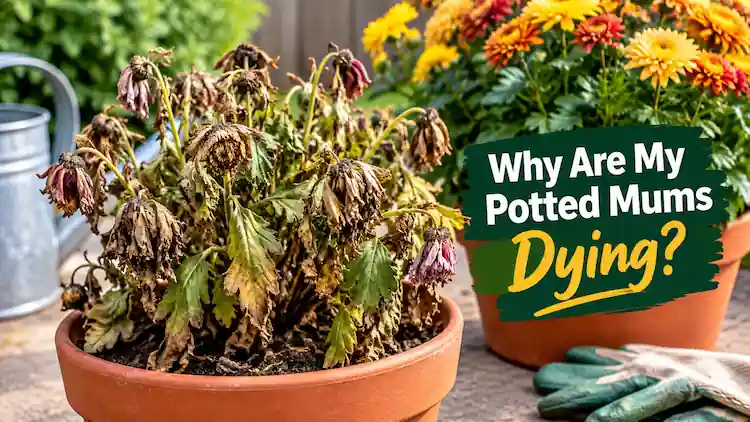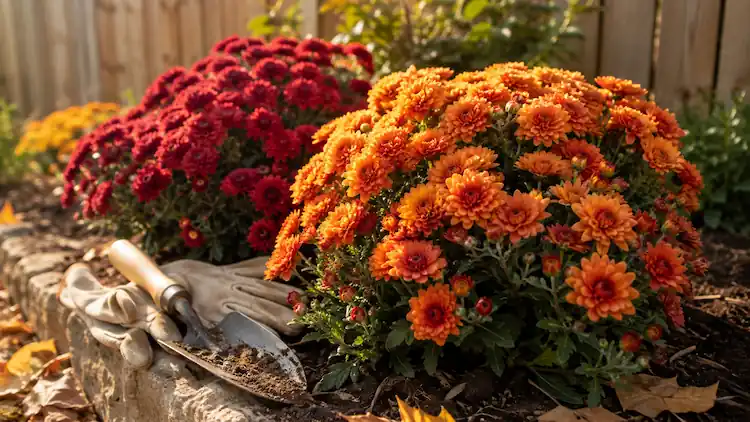
Ever wonder why the mums on your neighbor’s porch are still loaded with color in November while yours turned brown by mid-October? It usually comes down to a handful of small habits, not luck.

If you’re searching for how to keep mums blooming in fall, the answer is really a mix of the right variety, the right spot, and some regular maintenance with your pruners. I’ve grown mums in my own backyard for years, and the plants that last the longest all get the same basic treatment.
Why Fall Mums Fade So Fast
Mums are what’s called short-day plants they set flower buds once nights get longer than about 10 hours, which is why they explode with color right as summer fades.
The University of Wisconsin–Madison Extension covers this trigger in its own chrysanthemum growing guide, and it explains a lot about why mums behave the way they do. That biology also means mums won’t rebloom on command; the plant needs another full dark cycle before it tries again, which is why a spent mum sitting in a shady spot rarely perks back up no matter how much you water it.
This is really the starting point for good chrysanthemum care in fall once you understand the plant is racing against the calendar, the rest of the tips make a lot more sense, and you’ll stop expecting a tired plant to suddenly bounce back on its own.
Choosing Mums That Will Last Longer
The mum you pick at the garden center matters almost as much as anything you do afterward. Look for pots with more tight, closed buds than fully open blooms those plants still have weeks of color ahead of them. Skip anything with yellowing leaves, spindly stems, or bone-dry soil, since a stressed plant rarely bounces back once it’s home.
There’s also a real difference between the two types sold every fall:
| Type | What to Expect |
|---|---|
| Florist (Annual) Mums | Bred mainly for looks, usually won’t survive winter, best used for short-term porch color |
| Garden (Hardy) Mums | Bred for cold tolerance, can return as perennials in USDA Zones 5 through 9 |
On average, a healthy mum stays in bloom for 4 to 8 weeks, so timing your purchase around when you actually want the color Halloween, Thanksgiving, or just general curb appeal makes a real difference.
If your goal is to keep mums blooming all fall rather than just for a couple of weeks, hardy garden varieties are worth the extra couple of dollars, since they come back next year instead of ending up in the trash after one season. Community gardeners splitting a shared plot often go this route for exactly that reason, since one good hardy clump can be divided and shared with neighbors within a couple of seasons.
Planting Mums the Right Way
If you want mums that come back year after year, spring is actually the better planting time, since it gives roots months to establish before winter hits. Fall planting can still work, but only if you get the plant in the ground at least 6 weeks before your first expected frost.
A few basics matter here no matter when you plant:
- Use well-drained soil with a pH between 6.0 and 7.0, and mix in compost or aged manure before planting.
- Dig a hole about twice as wide as the root ball, plant at the same depth as the pot, and water thoroughly right after.
- Space plants 18 to 24 inches apart so roots have room to spread.
- In containers, use a lightweight potting mix; in garden beds, mulch right away to steady soil moisture.
I usually work a shovelful of my own compost into the backfill soil, and the difference in root growth by midsummer is pretty noticeable.
Caring for Mums Indoors
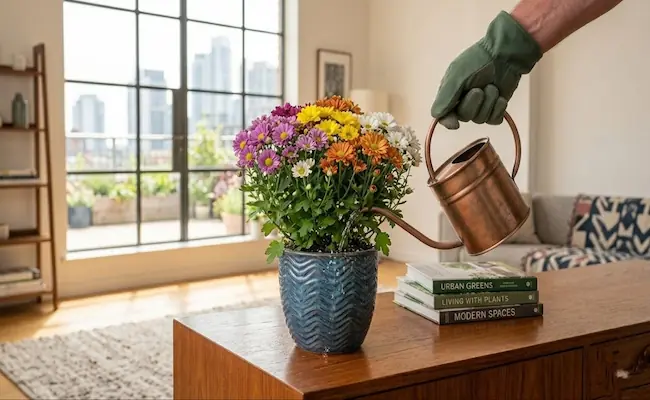
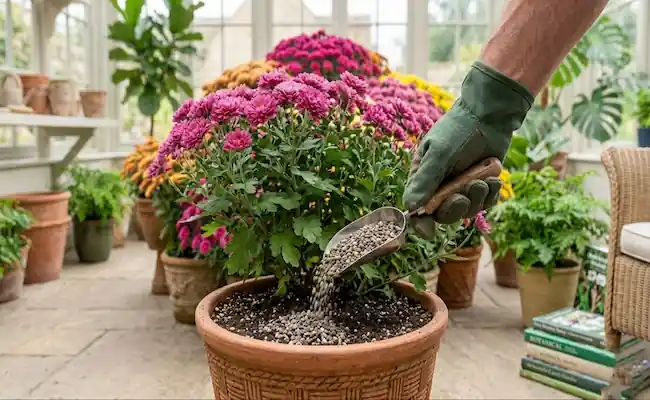
If you’re keeping a pot on a windowsill or a covered porch, a few extra mums blooming tips apply. Most store-bought mums arrive root-bound, so repot into a slightly larger container with a fresh, well-draining potting mix as soon as you get it home.
Place the pot near a south-facing window that gets good light but isn’t blasted by direct afternoon heat, and keep it away from heating vents that dry out the blooms fast.
Mums also do best indoors with cooler night temperatures, around 60°F. I like keeping one pot on a sunny windowsill for exactly this reason it tends to outlast the ones I leave in a dim corner by weeks. Once blooming slows, you can move the plant outdoors and treat it like any other garden mum.
Give Your Mums the Right Spot and Water
Outdoors, mums want 6 to 8 hours of sun a day, with morning sun and a bit of afternoon shade being the sweet spot too much hot afternoon sun speeds up fading.
Their roots are shallow, so they dry out quickly, especially in containers sitting on a hot patio or driveway:
- Check the soil with your finger; if the top inch feels dry, it’s time to water.
- Water at the base of the plant, not over the blooms, to avoid fungal spots.
- Container mums may need close to half a gallon of water a day in hot weather.
For potted mums, the University of Kentucky Cooperative Extension recommends setting the pot in a bucket of water for about 15 minutes so roots soak up moisture from below rather than pouring water over the top.
That one habit alone goes a long way toward helping you keep mums blooming all fall instead of watching the petals brown early.
Feed Them Right, Then Stop
Fertilize in spring and early summer with a balanced feed, something like a 10-10-10, every 2 to 3 weeks. By midsummer, switch to a bloom-boosting formula higher in phosphorus, around 5-10-5, then stop feeding by mid-August.
I always tell people this is the one step that trips folks up fertilizing mums in fall tricks the plant into pushing tender new growth instead of putting its energy into flowers, and that new growth won’t survive the first frost anyway.
How to Keep Mums Blooming in Fall With Pinching and Deadheading
This is honestly the biggest factor in how to make mums bloom longer, and it only takes a few minutes a week with a decent pair of pruners:
- Pinch: stems back by about 1 inch once they reach 6 to 8 inches tall, starting in late spring and repeating every 2 to 3 weeks until mid-July. This forces the plant to branch out into a fuller, bushier shape instead of growing tall and leggy.
- Deadhead: spent blooms weekly through fall snip faded flowers off just above the nearest set of leaves. This stops the plant from wasting energy on seed production and pushes it toward new buds instead.
In my experience, the plants I deadhead every week easily outlast the ones I ignore by two or three weeks, sometimes longer. It’s a small chore that pays off in a big way by the time the season winds down.
Getting Mums Through Winter
Once a hard frost hits and nighttime temperatures drop below 32°F, cut the stems back to 3 to 4 inches tall and pile on 4 to 6 inches of mulch straw, shredded leaves, or pine needles all work fine.
Don’t clean the plant up too early, since the fading foliage actually helps insulate the roots through the cold. For container mums, move the pot into an unheated garage or basement and keep the soil just barely moist until spring.
Gardeners in USDA Zones 4 through 8 can usually get hardy mums through winter outdoors with this level of protection, though colder pockets within Zone 4 may want an extra layer of frost blanket for good measure.
This step is often the most overlooked part of chrysanthemum care in fall, but skipping it is exactly why so many otherwise healthy mums end up in the trash by December instead of coming back next year. If you’re already doing fall cut back on other perennials in your beds, mums fit right into that same routine.
Common Problems That Cut Blooms Short
Even with good care, a few issues show up. Aphids and spider mites usually respond well to neem oil or insecticidal soap, while powdery mildew and rust are signs the plant needs better airflow and less water on the leaves.
If blooms are dropping early, the cause is almost always one of three things: too much shade, underwatering, or a plant that was already stressed at the time you bought it.
I’ve noticed bloom drop traces back to inconsistent watering far more often than pests. A lot of this overlaps with general backyard pest management the same habits that protect your zucchini or eggplant plants work just as well on mums.
Walk your yard every few days, catch problems early, and most issues never get bad enough to hurt the overall bloom count.
Dividing Mums and Picking Hardy Varieties for Next Year
Mums get crowded and bloom less after 2 to 3 years, so plan on dividing them in spring. Dig up the clump, split it into smaller sections with roots and shoots attached, and replant in soil mixed with fresh compost.
Look for named hardy cultivars like Clara Curtis or Sheffield Pink if you want color that reliably returns year after year, and double-check your USDA zone before buying so you’re not wasting money on a variety that was never going to survive your winters in the first place. If you already dig up other tender plants for winter, like storing dahlia tubers in a cool spot, dividing mums in spring fits the same general rhythm.
If you want a simple mental calendar, it looks like this: pinch through early July, feed through mid-August, deadhead from September onward, then cut back and mulch after the first hard frost. Follow that rhythm, and you won’t need to think much harder about it than that.
Final Thoughts:
At the end of the day, how to keep mums blooming in fall isn’t complicated it just takes consistency. Pick a healthy plant, give it real sun and water, feed it on schedule, and stay on top of pinching and deadheading with a decent pair of pruners. I think that’s really the whole secret, honestly. Do that, and your yard will hold onto that classic fall color well past the first frost, with plants strong enough to come back and fill your backyard with the same rich color again next year.