You just brought home a pot of chrysanthemums for the porch, and now you’re wondering if you’ll be doing this again next fall. It’s one of the most common questions I hear this time of year: are chrysanthemums perennial or annual?
The honest answer isn’t a simple yes or no it depends on which type you bought, when you plant it, and which USDA zone you garden in. I’ll walk you through exactly what decides whether your mums come back, and how to give them the best shot at surviving winter.
Chrysanthemum Annual vs Perennial: What’s the Actual Difference
In plain terms, an annual completes its whole life sprout, bloom, seed, die in one growing season. A perennial dies back in the cold but returns from its own roots the following spring.
Here’s the twist with mums: most garden varieties are technically perennial by nature, but they only act that way if the roots get enough time to establish before a hard freeze hits. So the chrysanthemum annual vs perennial debate isn’t really about the plant’s DNA it’s about timing, root strength, and how much cold protection you give it before winter.
Garden Mums vs. Florist Mums
This one distinction explains most of the confusion around whether chrysanthemums perennial or annual status even matters for the plant sitting on your steps.
| Feature | Garden Mums | Florist Mums |
|---|---|---|
| Root system | Spreading stolons | Weak, shallow roots |
| Typical use | Backyard beds | Grocery store gift pots |
| Cold survival | USDA Zones 5-9 | Usually dies below 32°F for long stretches |
| Best time to buy | Spring | Fall |
| Bloom size | Smaller, more compact | Larger, showier |
Garden mums (sometimes labeled “hardy mums”) grow underground stolons that act like a survival kit for winter. Florist mums are bred for big, showy blooms you’d give as a gift, not for toughing out a Zone 5 winter in your yard. If the tag on your pot just says “chrysanthemum” with no mention of “garden” or “hardy,” treat it as a one-season plant and cover it on any surprise cold night the same way you would protect other tender plants from frost.
Where Mums Come From And a Surprising NASA Fact
Chrysanthemums were first cultivated in China as far back as the 15th century B.C., originally grown as a medicinal herb before they became a fall garden staple across the U.S.
Here’s a fact I didn’t expect the first time I read it: in NASA’s 1989 Clean Air Study, potted chrysanthemums removed 53% of the benzene and 61% of the formaldehyde from sealed test chambers within 24 hours, outperforming almost every other houseplant tested (source).
So even the mums you’re growing purely for color are quietly doing extra work if you bring a pot indoors before frost.
Cultivars: Which Mums Are Bred as Annuals and Which Are Perennials
Not every mum behaves the same way, and knowing the cultivar helps you plan your yard instead of guessing every October.
Usually grown as annuals:
- Painted Lady (Chrysanthemum carinatum): bushy, up to 2 feet tall, purple-centered flowers
- Crown Daisy: fern-like foliage, white to golden-yellow blooms
Usually perennial in the right zone:
- Korean Chrysanthemum hybrids (C. rubellum) spreads into clumps, pink or red daisy-like flowers
- Double American Spray half-hardy, sprays of bronze, yellow, and pink
- Cushion and Pompon types compact, rounded, and common garden center favorites for fall color
I like the Korean hybrids best for a backyard border because they clump up fast and don’t need babying every winter. If you’re growing other cold-hardy perennials alongside your mums, our guide on winterizing roses in cold climates covers a lot of the same zone-by-zone thinking.
USDA Zones: Are Chrysanthemums Perennial or Annual in Your Area?
This is really where the answer gets decided for you before you even plant. Garden mums are rated hardy in USDA Zones 5 through 9, meaning they can survive winter minimums as low as -20°F.
Here’s roughly what to expect by zone:
- Zone 4: treat as annual unless heavily mulched and planted very early in spring.
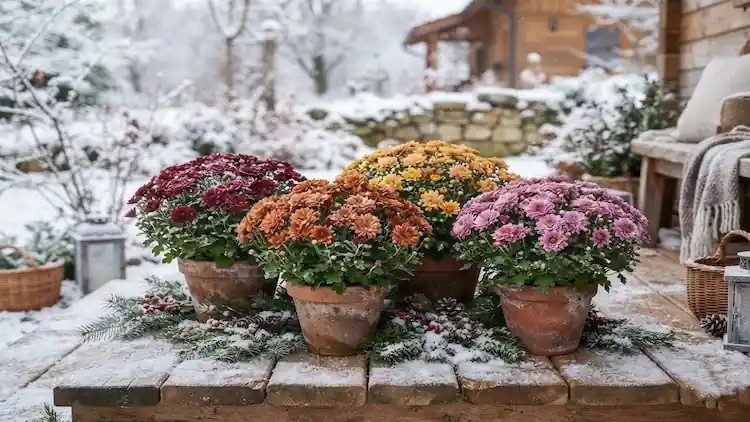
- Zones 5 and 6: perennial with 3-4 inches of mulch after the first hard frost.
- Zones 7 and 8: reliably perennial, minimal winter protection needed.
- Zone 9: perennial, though hot, humid summers can stress the roots more than the cold does.
You can check your exact zone on the USDA Plant Hardiness Zone Map before you buy it takes about 30 seconds and saves you from planting the wrong mum in the wrong yard. Once you know your zone, our zone-by-zone mulch guide will help you decide exactly how much winter protection your mums actually need.
How to Plant Mums So They Come Back Every Year
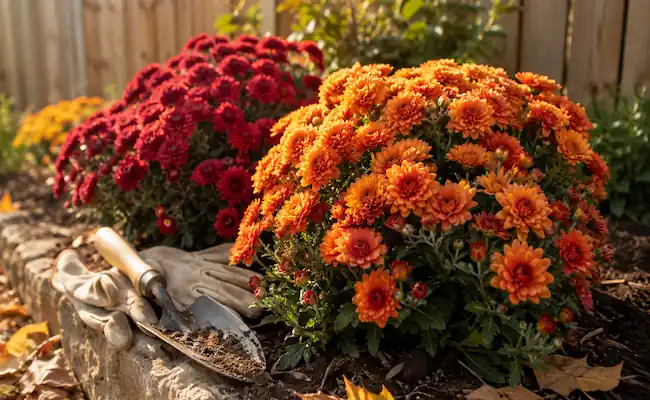
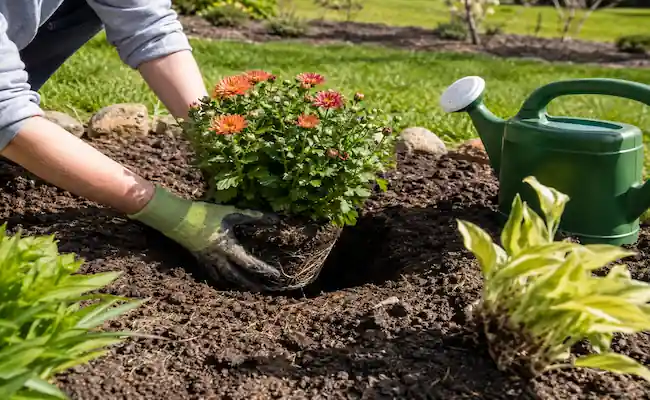
If your goal is a perennial patch, plant in spring, not fall. Spring planting gives the roots months instead of weeks to establish before the first freeze:
- Dig a hole about 2 inches wider than the root ball, no deeper than the pot itself.
- Water with roughly 1 gallon right after planting, then soak weekly if there’s no rain.
- Give the spot at least 6 hours of direct sun a day.
- Pinch back the growing tips every couple of weeks until early July, then stop so buds can form for fall.
- After the first hard freeze, cut stems back and add 3-4 inches of mulch around the base.
I’ve had the best luck planting in April here by the time fall color rolls around, the roots are strong enough to handle a real cold snap without extra fuss.
Growing Mums as Annuals for Fall Color
If you’re just after a burst of color for the season the same way you’d pull out spent zucchini and eggplant at the end of summer it’s fine to treat the mum as disposable décor.
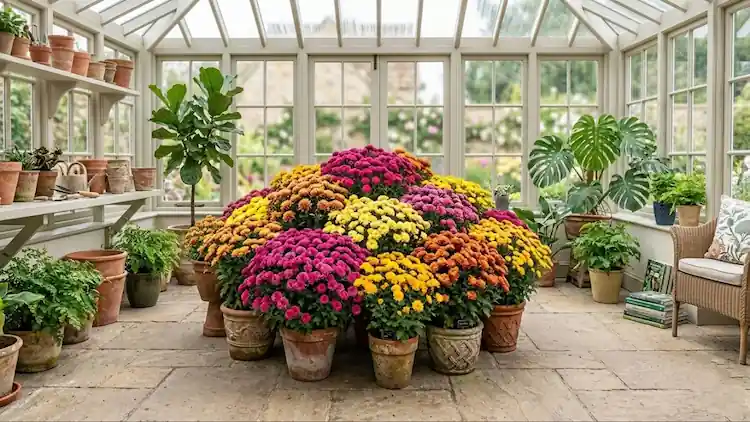
Repot it into a container an inch or two larger than what it came in, using a well-draining potting mix. Water whenever the top inch of soil feels dry, and don’t let it wilt between waterings. Expect the blooms to last about 2-3 weeks.
Once the display fades, you can dig it into a garden bed to see if it survives the winter, or toss the spent plant into your bin check our guide on protecting marigolds and other fall annuals from frost if you want to squeeze a few extra weeks of color out of it first.
Turning Annual Mums into Perennials: Overwintering
You can push an annual mum toward perennial status with three things working together:
- Timing: plant or transplant in spring, giving roots a full season to grow before cold weather.
- Hardiness: check the tag for “garden mum” or “hardy,” not just “chrysanthemum”.
- Overwintering: if it’s already fall, pot it up, trim stems to about 8 inches, and store it in a cold, dark spot like a garage or basement until spring.
This is basically the same overwintering approach I use for other tender perennials in my own yard, just adjusted for how mums go dormant. For the full step-by-step, check our guide on overwintering geraniums geraniums face the exact same “tender perennial, not really an annual” mix-up mums do.
Why Your Mums Didn’t Come Back
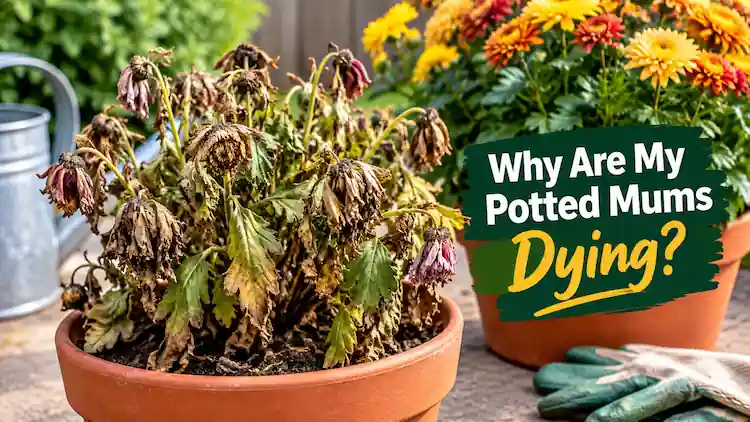
Before you assume the plant is dead, wait until late spring mums are slow to show new growth and can look completely lifeless for weeks.
Common reasons they don’t return:
- Planted too late in fall, so roots never fully established.
- Soil stayed too wet over winter and the roots rotted.
- No mulch, and a hard freeze hit an exposed crown.
- It was actually a florist mum, never bred to survive outdoors.
If you’re still asking are mums annual or perennial for the exact plant in your yard, scratch the base gently in April any green under the surface means it’s alive and just slow to wake up.
Dividing Mums for Years of Blooms
A healthy perennial mum usually needs dividing every 2-3 years, or it gets woody and blooms less over time. In spring, once new shoots appear, dig up the whole clump, use a sharp spade or clean pruners to slice it into sections, and replant each piece with room to spread.
None of this changes whether your mums perennial or annual status was decided the day you bought them dividing just extends the years of color you get out of a hardy one.
This is a simple job any community gardener can handle in an afternoon, and it pairs well with our fall pruning guide for perennials it’s the difference between a tired, leggy plant and a full, colorful mound by fall.
Final Thoughts:
So, are chrysanthemums perennial or annual? In my experience, it comes down to three things: the type you buy, when you plant it, and your USDA zone. Garden mums planted in spring with a little mulch will reward you for years in the backyard. Florist mums are best enjoyed as short-term color. Either way, once you know what you’re working with, you can stop guessing every fall and actually plan your yard around it.