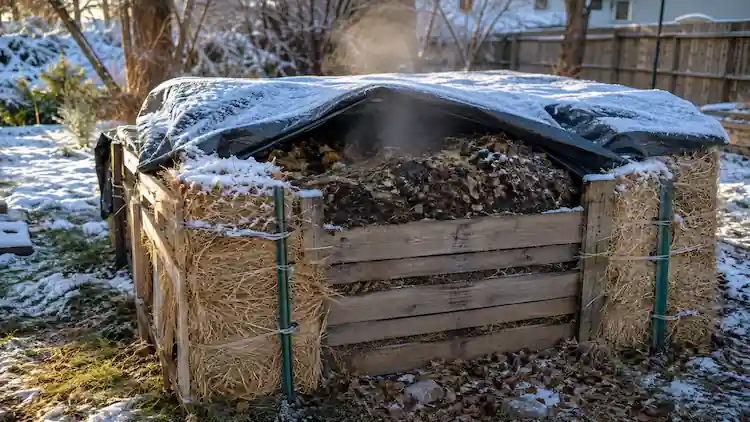
Ever walked past your compost bin and gotten hit by a smell that belongs in a sewer, not a garden? That rotten-egg or ammonia stink means your pile has gone anaerobic, and you don’t have to live with it.

I’ve rescued more than one stinking pile over the years, and once you understand what’s actually happening inside it, learning how to fix smelly anaerobic compost takes a few days, not weeks.
Why Compost Smells Bad In The First Place
A healthy pile should smell like a forest floor after rain, not a swamp. Compost only starts to stink when the microbes that need oxygen die off and get replaced by ones that don’t.
Cornell University’s Waste Management Institute found that compost organisms need oxygen levels above roughly 10% inside the pile’s pores; once it drops below that, entire sections turn anaerobic and start releasing methane and hydrogen sulfide, which is what actually smells like rotten eggs (Cornell Composting, Factsheet ).
The same research group also notes that the ideal moisture range sits between 40% to 60 % , with a carbon-to-nitrogen ratio near 30:1 (Cornell Composting, Factsheet ). Push either of those numbers too far and the pile suffocates.
Three things almost always cause this: too much water squeezing out air pockets, a pile packed too tight to breathe, or too many “green” nitrogen-rich scraps dumped in at once without enough dry material to balance them.
Fresh grass clippings are the biggest repeat offender, since they mat into a wet, airless sheet within a day or two. Kitchen scraps, manure, and coffee grounds behave the same way in large quantities. Once oxygen disappears from the middle of the pile, sulfate-reducing bacteria move in and produce the compounds responsible for that swampy odor.
This isn’t a sign your compost has “failed.” Anaerobic decomposition still breaks material down, just slower and smellier. You haven’t ruined anything you’ve just created the wrong working conditions for the microbes you actually want.
Signs Your Pile Has Gone Anaerobic
Before you even touch the pile, it usually tells on itself:
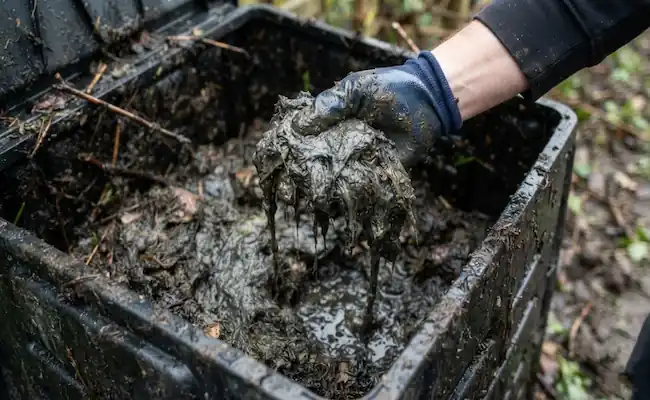
- Color: a dull, uniform gray instead of rich brown or black, from iron and manganese being consumed by anaerobic bacteria.
- Texture: slimy, heavy, and matted rather than light and crumbly.
- Smell: ammonia, sulfur, vinegar, or plain rot instead of an earthy scent.
- Activity: almost no worms or beetles, since they need oxygen too.
- Temperature: stays cool instead of warming up in the center, meaning active decomposition has stalled.
That anaerobic compost smell is honestly the clearest early warning you’ll get, so trust your nose before your eyes. Most gardeners notice the odor days before they’d spot the color change, which is why acting fast matters.
How To Fix Smelly Anaerobic Compost: Step-By-Step
This is the part most people actually search for, so here’s exactly what I do whenever my own bin starts stinking:
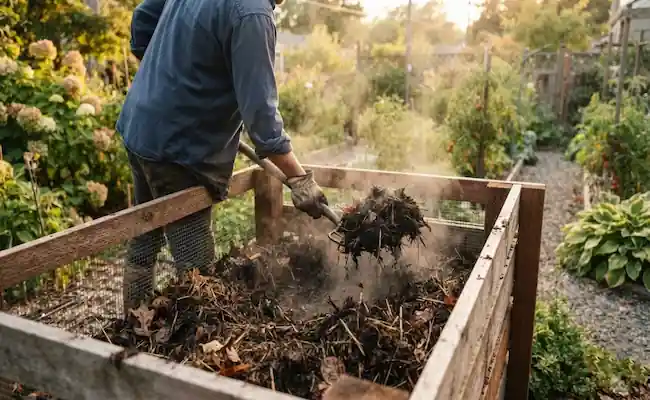
- Turn it aggressively: Use a pitchfork or aerator tool and dig all the way to the bottom, not just the top layer. The first turn often smells worse before it smells better that’s normal, and it means trapped gas is finally escaping.
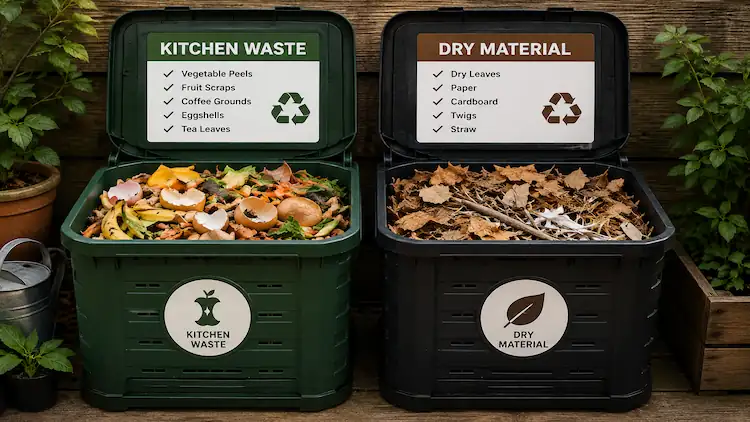
- Add dry browns generously: Shredded cardboard, straw, sawdust, or dried leaves in a layer roughly 3 to 4 inches thick will soak up excess moisture and physically prop the pile open so air channels can form.
- Break up wet clumps by hand: Matted grass clippings or soggy food scraps trap water like a sponge and need to be pulled apart before mixing them back in, otherwise they just recreate the same airless pockets.
- Check the moisture level: Grab a handful and squeeze a couple of drops is fine, a steady stream means it’s still too wet and needs more dry material.
- Improve drainage underneath: If the bin sits directly on soggy ground, raise it on pallets, bricks, or a layer of coarse gravel so excess water has somewhere to go.
- Cover it during heavy rain: using a tarp or lid, but leave gaps or vents open so airflow can continue underneath.
- Re-check after 2 to 3 days: and turn again if any smell lingers. Most piles need two or three rounds of turning before the odor is fully gone.
| Smell | Likely Cause | Quick Fix |
|---|---|---|
| Rotten eggs / sulfur | Waterlogged, no oxygen | Turn immediately, add dry browns |
| Sharp ammonia | Too much nitrogen (greens) | Mix in carbon-rich material, 3:1 ratio |
| Sour or vinegar-like | Compacted and wet | Loosen, aerate, improve drainage |
| Rotting garbage smell | Meat, dairy, or oily food added | Remove the item, bury the rest deeper, add absorbent browns |
How Long Until The Smell Actually Goes Away
Most piles clear up faster than people expect. Once you turn the pile and mix in dry browns, the sharpest part of the ammonia or rotten-egg odor usually fades within 24 to 48 hours, simply because fresh oxygen kills off the anaerobic bacteria almost immediately.
A pile that was seriously waterlogged might take a full week and two or three separate turnings before it smells consistently earthy again.
If you’re still smelling anything foul after seven days of regular turning, that usually means the underlying moisture or drainage problem hasn’t actually been solved yet.
Tools That Make This Job Easier
You don’t need much, but the right tool saves a lot of effort:
- A pitchfork or a dedicated compost aerator tool for turning.
- A moisture meter or simply your hands for the squeeze test.
- A tarp or fitted lid for rain protection.
- A garden fork or broad fork if you also need to break up compacted soil underneath the bin.
Common Mistakes That Make Things Worse
A few habits quietly keep a pile stuck in an anaerobic state even after you’ve tried to fix it:
- Adding water to a smelly pile thinking it’s dry, when the real problem is almost always too much moisture already.
- Turning only the top layer instead of digging all the way to the bottom where the anaerobic core actually sits.
- Piling fresh grass clippings in one thick layer instead of mixing them with browns as you go.
- Ignoring drainage and assuming turning alone will fix a bin that’s sitting in a puddle after every rain.
Is Anaerobic Compost Safe To Use On Plants
Smelly, anaerobic material isn’t dangerous to touch, but you shouldn’t spread it directly around edible plants or seedlings while it’s still in that state. It can be mildly phytotoxic to young roots and often carries a lower nutrient value until aerobic microbes finish the job properly.
The safest approach is simple: fix the aeration and moisture issues first, let it cure for another one to two weeks once it smells earthy again, and then use it as normal. If you only have a small amount of anaerobic material, mixing it into a larger, healthy pile also works and lets the good bacteria take back over quickly.
Which Compost Bin Type Handles Odor Best
The container you’re using has a real effect on how often this happens in the first place.
| Bin Type | Odor Risk | Why |
|---|---|---|
| Open pile | Moderate to high | Great airflow, but exposed to rain and easy to overload with wet greens |
| Enclosed bin | Low to moderate | Contains smell well, but needs vents or drilled holes or it traps moisture |
| Tumbler | Very low | Frequent turning is built in, so anaerobic pockets rarely form |
Getting The Moisture Right So You Don’t End Up With A Smelly Compost Pile Again
Most of my own mistakes over the years came down to moisture, not ingredients. A properly aerobic pile can actually heat up to around 60°C (140°F) at its core during active decomposition that heat is a good sign, not something to worry about, and it’s part of what kills weed seeds and pathogens.
If your compost never gets warm and stays soggy instead, that’s usually the anaerobic culprit at work rather than a lack of nitrogen.
Keep the pile roughly the size of a cube 3 to 5 feet on each side. Smaller piles lose heat and moisture too fast, while oversized ones trap water at the core where you can’t reach it with a fork.
During heavy rain, a shallow trench around the base or slightly higher ground prevents pooling underneath a cause of anaerobic problems people rarely trace back to its real source.
Best Materials To Add When Your Pile Stinks
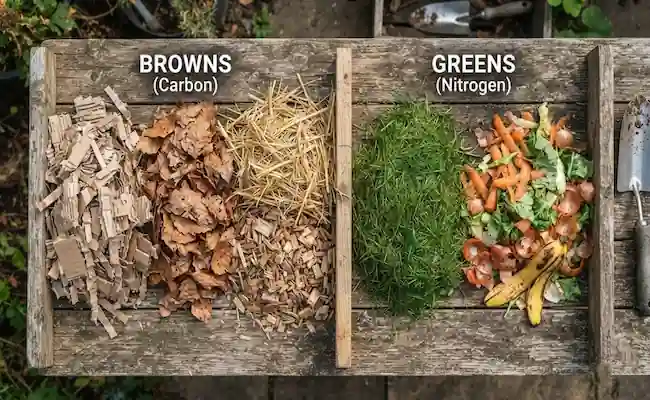
Dry, bulky carbon sources are your best friend here because they physically prop the pile open so air can move through it:
- Shredded cardboard and newspaper, torn into smaller pieces so they break down faster.
- Dried leaves and straw, which are two of the lightest and most effective bulking materials around.
- Wood chips or sawdust, ideal for heavier, wetter piles that need real structure.
- Coffee grounds, but only in moderation I cover exactly how much is safe to add in my guide to using coffee grounds in compost.
A rough target is two to three parts browns for every one part greens by volume. That ratio alone prevents most odor problems before they start, since it keeps enough structure in the pile for oxygen to move through freely.
If you’re still unsure what belongs in the bin at all, I put together a full breakdown in what to put in your garden compost bin that covers every material category, wet and dry. And if you’re building a system from zero, my post on starting a compost pile from scratch walks through the setup and sizing that prevents most of these problems before they ever start.
Stopping A Stinky Compost Pile Before It Starts
Prevention really is easier than the fix itself, and it takes almost no extra effort once it becomes a habit:
- Layer greens and browns as you add them instead of dumping everything in one go.
- Never add meat, dairy, or oily foods they rot rather than compost and attract pests.
- Turn the pile weekly, even when it isn’t smelling yet.
- Keep a stash of dry browns near the bin so you can cover fresh scraps immediately.
- Avoid packing the bin down tight; loosely tossed material composts better.
- Curious about safely composting pet waste, which has its own odor and safety rules? I go into the details in composting dog poop for an ornamental lawn.
Cold weather makes a stinky compost pile more likely because turning gets harder and moisture doesn’t evaporate. I’ve found the tips in speeding up compost decomposition in winter genuinely useful once temperatures drop. And once your compost finishes, pairing it with worm castings as an indoor fertilizer stretches it further for houseplants.
When To Just Restart Your Pile
If you’ve turned, added browns, and fixed drainage but the smell keeps returning after two or three attempts, something structural is usually wrong a bin with zero ventilation holes, a spot that floods every time it rains, or a pile that’s grown too large to aerate by hand.
In that case, empty it onto a tarp, fix the setup, drill extra holes or relocate the bin, and rebuild from scratch rather than keep fighting the same conditions. A fresh start with the right browns-to-greens balance is often faster than endlessly rescuing a pile that was set up wrong to begin with.
Final Thoughts:
At the end of the day, how to fix smelly anaerobic compost comes down to three things: air, balance, and patience. Turn the pile, feed it enough dry carbon, and keep an eye on moisture, and the rotten-egg or ammonia smell genuinely does disappear within days. You’ll know it’s working the moment your bin starts smelling like fresh earth again instead of something you want to avoid.